Understanding the parts of a chimney helps homeowners identify potential problems and understand how their chimney works. Each component has a specific purpose, from directing smoke outdoors to protecting the structure from rain and heat.
A chimney system may include a chimney cap, crown, flue, flue liner, smoke chamber, damper, and firebox. The exact components depend on the chimney design and the connected heating appliance.
This guide explains the main parts of a chimney, their functions, common problems, and essential maintenance practices.
What Is a Chimney?
A chimney is a vertical structure or venting system that carries smoke and combustion gases from a fireplace, stove, or compatible heating appliance to the outdoors. Its design helps manage airflow and direct exhaust away from indoor living spaces.
A chimney contains several connected components. Blockages, damaged liners, deteriorated masonry, or faulty flashing can affect its performance and create safety risks.
What Are the Main Parts of a Chimney?
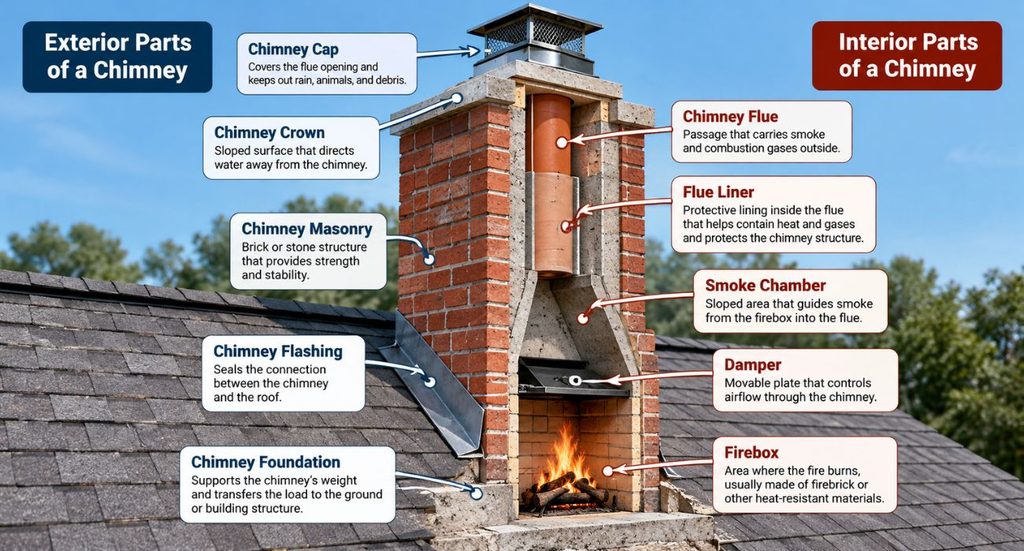
The main parts of a chimney can be divided into exterior and interior components. Exterior parts help protect the structure from weather, while interior components support combustion, airflow, and exhaust ventilation.
Not every chimney contains the same components. Traditional masonry fireplaces and factory-built chimney systems have different designs, so some parts are optional or system-specific.
Exterior Parts of a Chimney
The exterior parts of a chimney protect the structure from moisture, weather exposure, and deterioration. They also help maintain the connection between the chimney and the roof.
1. Chimney Cap
A chimney cap is a protective cover fitted over a chimney’s flue opening. It helps keep rain, birds, animals, and debris from entering the flue.
Some chimney caps also include mesh designed to help contain sparks or embers. The correct cap depends on the chimney type and the connected appliance.
Main functions of a chimney cap:
- Helps prevent rainwater from entering the flue.
- Keeps birds and animals from nesting inside.
- Reduces the risk of debris-related blockages.
- Protects the flue opening from weather exposure.
A missing, loose, or corroded cap may leave the flue more exposed to moisture and debris.
2. Chimney Crown
The chimney crown is the protective top surface of a masonry chimney. It usually slopes away from the flue opening to direct rainwater toward the outer edges.
A properly constructed crown helps protect the masonry from water penetration. Cracks or deteriorated material can allow moisture to enter and contribute to damage.
Signs of chimney crown damage include:
- Visible cracks in the crown.
- Crumbling or deteriorated material.
- Water stains inside or around the chimney.
- Damaged masonry near the chimney top.
The chimney crown and chimney cap serve different purposes. The crown protects the top of the masonry, while the cap covers the flue opening.
3. Chimney Masonry and Mortar Joints
Brick, stone, or other masonry materials form the exterior structure of many chimneys. Mortar joints hold the masonry units together and help maintain structural stability.
Weather exposure, moisture, and repeated freeze-thaw cycles can damage bricks and mortar over time.
Common warning signs include loose bricks, missing mortar, surface cracks, and crumbling joints. Depending on the damage, repairs may involve repointing, replacing damaged masonry, or addressing the source of moisture.
4. Chimney Flashing
Chimney flashing is the weather-resistant assembly installed where a chimney meets the roof. It helps prevent rainwater from entering the building through this vulnerable junction.
Flashing typically includes metal sections that integrate with the roofing materials and chimney surface. Proper installation is essential for effective water protection.
Common signs of flashing problems include:
- Water stains near the chimney.
- Roof leaks around the chimney base.
- Loose, damaged, or corroded metal.
- Deteriorated joints around the flashing.
If water enters near a chimney, the source may be faulty flashing, damaged masonry, a cracked crown, or another component. A professional assessment can help identify the actual cause.
5. Chimney Foundation
The chimney foundation supports the structure’s weight and transfers that load to the supporting ground or building structure.
Foundation design depends on the chimney’s size, construction, and location. Cracks, noticeable movement, or a leaning chimney may indicate a structural concern.
These symptoms should be evaluated by a qualified professional rather than treated as ordinary surface damage.
Interior Parts of a Chimney
The interior parts of a chimney help contain heat, manage airflow, and carry combustion gases outside. Their arrangement depends on the fireplace or heating appliance.
6. Chimney Flue
The chimney flue is the passage through which smoke and combustion gases travel toward the outdoors. Its dimensions and design must be compatible with the connected appliance.
A blocked or damaged flue can interfere with ventilation. In wood-burning systems, creosote buildup can also increase the risk of a chimney fire.
Regular inspections and appropriate cleaning help identify obstructions, deposits, and other problems before they become more serious.
7. Flue Liner
A flue liner is the protective lining inside a chimney flue. Depending on the system, it may consist of clay tiles, metal, or a suitable cast-in-place material.
The liner helps protect the surrounding chimney structure from heat and combustion byproducts. It must be suitable for the appliance, fuel type, and chimney design.
Cracked clay tiles, gaps, corrosion, or other damage can compromise the liner’s protective function. A professional inspection can determine whether repairs or replacement are necessary.
Flue vs. flue liner: The flue is the passage that carries exhaust gases. The liner is the material that lines that passage in systems that use one.
8. Smoke Chamber
The smoke chamber is found in many traditional masonry fireplaces between the firebox and the flue. Its sloped surfaces guide smoke from the wider fireplace opening into the narrower flue.
A poorly maintained or damaged smoke chamber may contribute to drafting problems and soot accumulation. Its condition should be checked during an appropriate chimney inspection.
Not every chimney design includes a traditional smoke chamber.
9. Damper
A fireplace damper is a movable plate or mechanism that controls airflow through the fireplace opening. It is generally opened before lighting a fire and kept open while the fire burns.
After the fire has completely extinguished and the fireplace is safe, a conventional damper may be closed to reduce heat loss. Never close it while smoke or combustion gases are still being produced.
Some systems use a top-sealing damper instead of, or in addition to, a traditional throat damper.
10. Firebox
The firebox is the area where a fireplace fire burns. It is commonly constructed from firebrick, refractory mortar, or other heat-resistant materials.
The firebox contains the fire and helps protect nearby building materials from high temperatures.
Cracked firebricks, damaged mortar joints, or gaps in the firebox may indicate a need for repair. Have significant damage assessed before using the fireplace again.
11. Chimney Connector or Stove Pipe
A chimney connector, commonly called a stove pipe, carries exhaust gases from a compatible stove or heating appliance toward the chimney system.
It is not the same as the chimney flue. The connector links the appliance to the approved venting system, while the flue carries exhaust gases through the chimney.
Connector materials, clearances, and installation requirements depend on the appliance and the manufacturer’s instructions.
12. Ash Dump and Cleanout Door
Some traditional fireplaces have an ash dump that allows ashes to pass into a chamber beneath the firebox. A cleanout door provides access for removing accumulated ash and debris.
Not every chimney has an ash dump or separate cleanout chamber. These components depend on the fireplace’s design.
Ash should always be handled carefully because it can retain heat long after a fire appears to have gone out.
What Is the Top of a Chimney Called?
The top of a chimney may include a chimney crown, a chimney cap, and the flue opening. These components have different functions.
The chimney crown covers the top of the masonry and directs water away from the structure. The chimney cap covers the flue opening to help keep out rain, animals, and debris.
Some factory-built systems use a metal termination cap and may have a separate chase cover. A chase cover closes the top of a framed enclosure around the chimney pipe; it is not the same as a masonry crown.
Knowing these differences helps homeowners identify the correct component when discussing chimney repairs.
How Do the Parts of a Chimney Work Together?
The parts of a chimney operate as a connected system. When a compatible fireplace or heating appliance produces combustion gases, the flue carries those gases outdoors.
In a traditional masonry fireplace, the firebox contains the fire, the smoke chamber directs smoke toward the flue, and the flue liner helps protect the surrounding structure. The damper controls airflow through the fireplace opening.
Outside, the cap and crown help protect the upper chimney from moisture, while flashing helps seal the connection between the chimney and roof. Masonry and the foundation support the structure.
Damage or obstruction in one area can affect the system’s performance. Proper inspection helps identify problems before they lead to more extensive damage or unsafe operation. If your chimney needs professional attention, explore our chimney services in NYC.
Common Chimney Problems and Warning Signs
Understanding chimney components makes it easier to recognize signs of damage. Several problems can affect ventilation, weather protection, and structural stability.
Water Leaks
Damaged crowns, missing caps, deteriorated masonry, and faulty flashing can allow water to enter the chimney or home. Moisture may cause staining, damaged mortar, and further deterioration.
Blocked Flues
Leaves, animal nests, debris, or creosote can obstruct a flue. A blockage may interfere with ventilation and allow smoke or dangerous gases to enter the living space.
Cracked Liners or Firebox Damage
A damaged flue liner or cracked firebox can compromise the protection between combustion gases, heat, and surrounding materials. These problems should be assessed by a qualified professional.
Deteriorating Bricks and Mortar
Cracked bricks, missing mortar, and loose masonry can develop after prolonged weather exposure. Repairs may include repointing, masonry replacement, or addressing the source of moisture.
Smoke or Unusual Odors
Smoke entering a room, persistent unusual odors, or recurring drafting problems may indicate a blockage or another chimney issue. Stop using the appliance if it is not venting properly and arrange a professional inspection.
If a carbon monoxide alarm sounds, leave the building and contact emergency services from a safe location. Carbon monoxide cannot be reliably detected by smell.
Chimney Maintenance Tips
Regular maintenance helps identify chimney problems before they become more serious.
- Schedule professional inspections: Arrange inspections at appropriate intervals for your chimney and appliance, and after events that may have caused damage.
- Keep the flue clear: Have the chimney inspected and cleaned when needed, especially if you use a wood-burning fireplace.
- Check the exterior: Look for damaged mortar, loose bricks, cracks, and visible water stains.
- Inspect the cap and crown: Check for visible deterioration and make sure the cap is secure.
- Check roof flashing: Address leaks or damaged flashing where the chimney meets the roof.
- Use the damper correctly: Ensure it operates properly and never close it while combustion gases are being produced.
Avoid climbing onto the roof or attempting repairs that require specialized equipment. A qualified professional can assess hard-to-reach areas safely.
When Should You Hire a Chimney Professional?
Professional chimney services may be necessary when you notice water leaks, deteriorating masonry, damaged liners, persistent smoke problems, or other signs of deterioration.
Depending on the problem, a contractor may recommend masonry repair, repointing, flashing repair, or waterproofing. Chimney sweeping and internal flue work should be handled by an appropriately qualified chimney professional.
For exterior chimney damage, water intrusion, or deteriorating brickwork, NuEra Contracting provides construction, masonry, roofing, and waterproofing services in NYC. Explore our roofing services in NYC and waterproofing services in NYC to learn more about relevant solutions.
Frequently Asked Questions
What Are the Main Parts of a Chimney Called?
Common chimney parts include the cap, crown, masonry, flashing, foundation, flue, flue liner, smoke chamber, damper, and firebox. Some systems also have a chimney connector, ash dump, or cleanout door.
What Is the Top of a Chimney Called?
The top commonly includes a chimney crown and a chimney cap. The crown protects the masonry top, while the cap covers the flue opening.
What Are the Exterior Parts of a Chimney?
Exterior parts commonly include the cap, crown, masonry structure, mortar joints, flashing, and foundation. The exact components depend on the chimney design.
What Is the Difference Between a Chimney Flue and a Flue Liner?
The flue is the passage that carries smoke and combustion gases outdoors. The flue liner is the protective material lining that passage in systems that use one.
Why Should Chimney Parts Be Inspected?
Inspections can identify damaged masonry, deteriorated mortar, blocked flues, liner problems, and faulty flashing. Regular professional assessment helps identify problems before they become more serious.
Conclusion
The parts of a chimney work together to carry combustion gases outdoors and protect the structure from heat and moisture. Understanding the cap, crown, flue, liner, damper, firebox, masonry, and flashing helps homeowners recognize common problems.
Regular inspections and timely repairs can help maintain chimney performance and reduce the risk of costly damage. If you notice deteriorating masonry, water intrusion, or roofing damage around your chimney, contact NuEra Contracting to discuss suitable repair and waterproofing solutions.
Have Questions? Call NuEra Contracting Today!
📞 347-444-9028
We’re here to help with expert construction, brickwork, roofing, and waterproofing services. Get reliable solutions, friendly support, and professional results for your next project.

