A parapet wall is an important part of many New York City buildings. It extends above the roof edge and helps protect the building from weather, fire, and falling hazards. However, constant exposure to rain, wind, snow, and freezing temperatures can cause damage over time.
For NYC property owners, maintaining a parapet wall is essential for building safety and water protection. Cracked bricks, loose mortar, damaged coping, and failing flashing can lead to leaks or falling masonry.
This guide explains parapet wall types, common problems, repair methods, NYC inspection requirements, and maintenance tips for building owners.
What Is a Parapet Wall?
A parapet wall is a low wall that extends above the edge of a roof, terrace, or balcony. It is usually built as an extension of an exterior wall, party wall, or fire-rated wall.
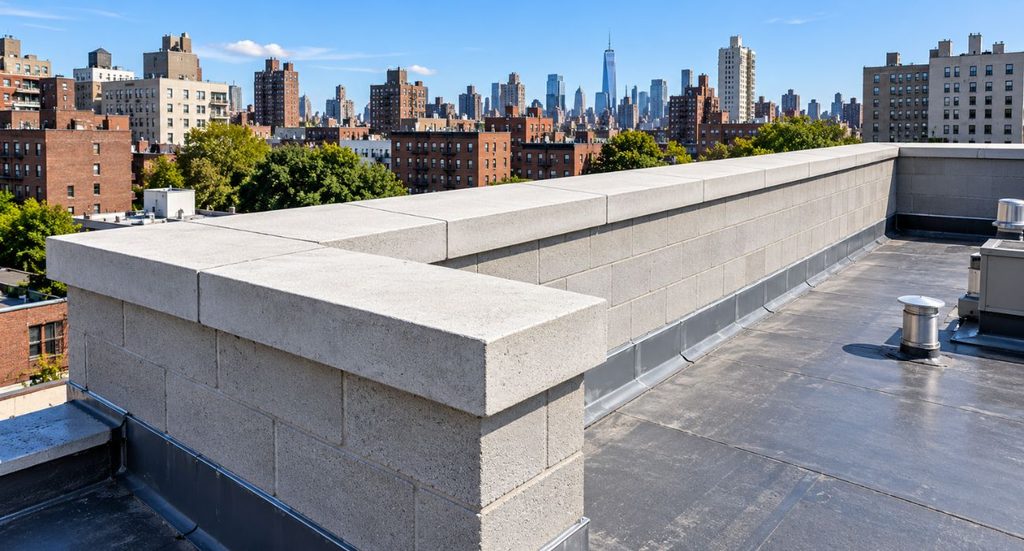
On many NYC buildings, a parapet appears as a brick or masonry wall along the rooftop perimeter. You can often see it above the top floor of brownstones, apartment buildings, and commercial properties.
A parapet wall serves several purposes:
- Safety: It can provide a protective barrier along the roof edge when designed for that purpose.
- Fire protection: Certain parapets help limit the spread of fire between buildings or roof areas.
- Weather protection: It helps protect the roof edge from wind and weather when properly designed.
- Water management: Proper coping, flashing, and roof connections help direct water away from vulnerable areas.
- Appearance: It creates a finished roofline and can hide rooftop equipment.
To perform these functions, the wall must remain stable and properly sealed. Damaged masonry or failed waterproofing can put the building and people below at risk.
Why Parapet Walls Matter in NYC
New York City has many older brick buildings, including brownstones, row houses, prewar apartments, and mixed-use properties. Many have masonry parapets exposed to harsh weather throughout the year.
Because a parapet sits at the top of a building, wind and rain can reach both sides. Snow and ice can also collect around the roof edge during winter.
Repeated freezing and thawing can damage mortar joints, bricks, coping, and flashing. Water may enter small openings, freeze, expand, and make existing damage worse.
A deteriorating parapet can become a public safety concern. Loose bricks, coping stones, or other masonry pieces may fall onto a sidewalk or nearby property.
Regular inspections and timely repairs help NYC building owners reduce these risks and protect their properties.
Common Types of Parapet Walls
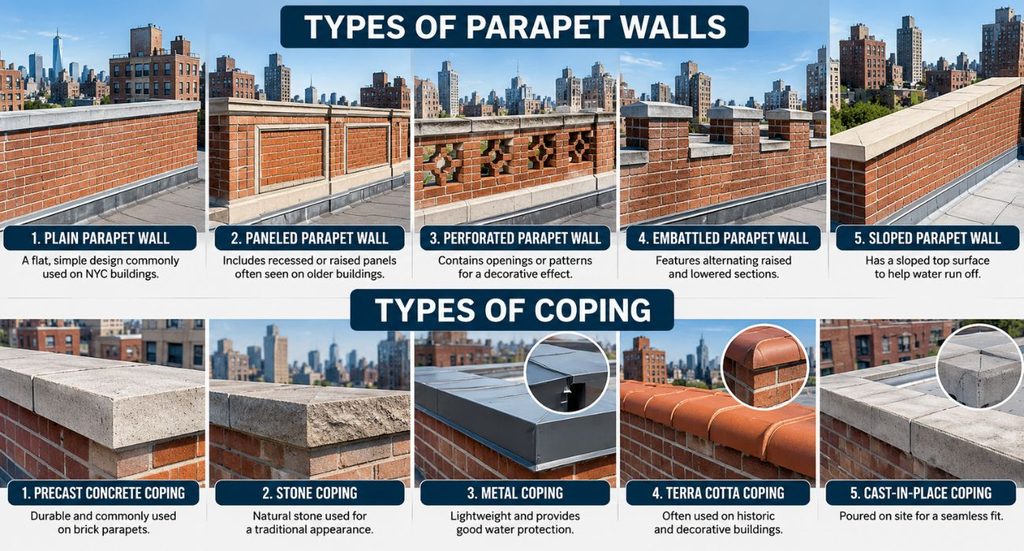
Parapet walls can be classified by their shape, design, or construction material. The appropriate repair method depends on the wall’s construction and condition.
Types by Shape
1. Plain Parapet Wall
A plain parapet has a flat, uninterrupted surface along the roof edge. This design is common on NYC row houses and apartment buildings.
2. Paneled Parapet Wall
A paneled parapet includes recessed or raised decorative sections. These designs often appear on older buildings with ornamental facades.
3. Perforated Parapet Wall
A perforated parapet contains openings or patterns through the wall. Its design may provide a decorative effect or allow airflow.
4. Embattled Parapet Wall
An embattled parapet has alternating raised and lowered sections. This design is less common and may appear on landmark or institutional buildings.
5. Sloped Parapet Wall
A sloped parapet has a top surface designed to help water run off. Proper slope and drainage reduce the chance of water collecting on the wall.
Types by Material
Brick masonry: Brick is common on NYC parapets. The wall needs sound mortar joints and properly installed coping to help keep water out.
Concrete and concrete block: These materials appear on newer and commercial buildings. Cracks, open joints, and failed waterproofing can affect their performance.
Stone and terra cotta: Older and decorative buildings may feature stone or terra-cotta parapets. Repairs require suitable materials and careful workmanship.
Wood or metal framing: Some newer buildings use framed parapets finished with siding or panel systems. Repair methods depend on the framing and exterior finish.
Identifying the wall’s material and construction helps determine the correct repair approach.
How Tall Should a Parapet Wall Be?
There is no single parapet wall height that applies to every building. The required height depends on the applicable building code, the wall’s purpose, roof access, and other site conditions.
Certain fire-rated exterior walls under the International Building Code may require a parapet to extend at least 30 inches above the point where the roof meets the wall. This requirement does not apply to every parapet.
Worker fall-protection standards also use guardrail heights of approximately 42 inches in applicable situations. However, workplace guardrail requirements are not the same as building code requirements for parapet walls.
In New York City, the applicable NYC Construction Codes and the building’s specific conditions must be considered. Older buildings may also have been constructed under earlier requirements.
Before building, raising, or modifying a parapet wall, consult a qualified architect or engineer to confirm the required height and applicable regulations.
Common Parapet Wall Problems
Parapet walls can develop several types of damage as they age. Recognizing these warning signs helps owners arrange repairs before conditions become more serious.
1. Deteriorated Mortar Joints
Mortar holds masonry units together and helps limit water entry. Weather exposure can cause mortar to crack, loosen, or disappear from the joints.
Open joints allow moisture to enter the wall. Repointing removes deteriorated mortar and replaces it with a compatible mix. For damaged or missing mortar, professional brick pointing services can help restore the joints and reduce water entry.
2. Cracks in the Masonry
Small cracks may be related to surface deterioration. However, wide, stair-step, or growing cracks can indicate movement, water damage, or other underlying problems.
A qualified professional should evaluate significant cracks before repairs begin.
3. Leaning or Bulging Walls
A parapet that leans outward, bows, or appears out of alignment may have lost part of its structural stability or connection to the building.
This condition can create a serious safety hazard. Keep people away from the area below a visibly unstable wall and arrange a professional assessment promptly.
4. Damaged Coping
Coping is the protective cap installed on top of a parapet wall. It helps prevent rainwater from entering the masonry.
Cracked coping, loose sections, open joints, or poor drainage can allow water to reach the wall below. Repairs may involve resealing joints or replacing damaged coping.
5. Failed Roof Flashing
Flashing protects the joint where the roof meets the parapet. If it becomes loose, cracked, or improperly sealed, water can enter behind the roofing membrane or into the masonry.
A lasting repair should address the flashing connection and any related roof damage.
6. Efflorescence and Water Stains
Efflorescence appears as a white, powdery deposit on brick or masonry. It usually forms when moisture carries dissolved salts to the surface.
White deposits and dark stains can indicate water movement through the wall. Cleaning the surface alone will not solve the problem if the source of moisture remains.
7. Spalling Bricks
Spalling occurs when the face of a brick flakes, cracks, or breaks away. Trapped moisture and repeated freezing and thawing are common causes.
Damaged bricks may need replacement, along with repairs to the joints and water entry points that contributed to the problem.
8. Interior Water Leaks
Water stains on top-floor ceilings or walls near the roofline may originate from the parapet rather than the main roof surface.
An assessment should examine the roof membrane, flashing, coping, masonry joints, and nearby drainage details.
Why Do Parapet Walls Fail?
Water intrusion is one of the most common causes of parapet deterioration. Rain and melting snow can enter through damaged mortar, cracked coping, and failed flashing.
When moisture remains inside masonry, freezing can cause expansion and further damage. Repeated exposure gradually weakens the wall.
Other contributing factors include:
- Previous repairs using mortar that is too hard for older brick.
- Corroding steel anchors or other metal components inside the wall.
- Building movement or settlement.
- Roofing work that damages existing flashing.
- Poor drainage or water collecting near the roof edge.
- Long periods without inspection or maintenance.
The key is to identify the underlying cause. Repairing visible cracks without correcting water entry or structural movement may lead to recurring problems.
Where the Roof Parapet Wall Meets the Roof
The connection between the roof and parapet is a common location for leaks. On flat and low-slope roofs, the roofing membrane often extends up the inside face of the parapet.
A roof parapet wall works alongside the roofing membrane, flashing, and coping to help protect the building from water intrusion. The membrane’s upper edge must be properly secured and protected from moisture.
Flashing covers or seals the membrane termination, while coping protects the top of the wall from direct water exposure. These components work together to reduce the risk of leaks.
When one component fails, building owners may notice loose flashing, bubbling roofing material, interior stains, or damp masonry.
During a parapet repair, the roof edge should be assessed along with the wall. Repairing masonry without addressing damaged flashing or waterproofing may allow the leak to return.
NuEra Contracting provides roofing, masonry, and waterproofing services for properties across NYC and Nassau County. If damaged flashing or roof-edge leaks are affecting your building, explore NuEra’s roofing services and above-grade waterproofing solutions.
NYC Parapet Inspections: Local Law 11 and Local Law 126
New York City has requirements intended to help building owners identify unsafe exterior conditions. Two important requirements are the Facade Inspection and Safety Program, commonly called Local Law 11, and the separate annual parapet observation requirement.
Local Law 11: Facade Inspection and Safety Program
NYC buildings taller than six stories generally fall under the city’s Facade Inspection and Safety Program, subject to applicable rules and exceptions.
Parapets form part of the building exterior and may be examined during facade inspections. Inspectors look for conditions that could affect the safety and stability of exterior walls and related components.
Facade conditions are generally classified as:
- Safe: No unsafe conditions were identified under the applicable inspection.
- Safe With a Repair and Maintenance Program (SWARMP): Conditions require repair or maintenance within the specified period.
- Unsafe: Conditions require immediate protective action and repairs under applicable requirements.
When a report identifies an unsafe parapet, the owner must follow the required public-protection measures and repair process.
A Local Law 11 facade inspection and report must be completed by a Qualified Exterior Wall Inspector. Contractors carry out the repair work; they do not replace the qualified inspector’s role.
Annual Parapet Observation Under Local Law 126
NYC also requires annual observations of parapets that face the public right-of-way under the applicable city code provisions. This requirement took effect on January 1, 2024, and generally applies regardless of building height, subject to exceptions.
The observation checks for visible signs of deterioration, movement, and unsafe conditions. Items may include:
- Loose or missing bricks and coping stones.
- Cracked or deteriorated mortar joints.
- Horizontal, diagonal, or other significant cracks.
- Leaning, displacement, or other signs of instability.
- Spalling, rot, or deteriorated materials.
- Unstable attached items such as railings, antennas, ladders, and signs.
A competent person must perform the observation in accordance with current requirements. Building owners should confirm applicable rules, qualifications, reporting procedures, and recordkeeping requirements with the NYC Department of Buildings.
If an observation identifies an unsafe condition, the owner must follow the city’s notification and public-protection requirements and arrange the necessary correction.
The annual parapet observation is separate from the Local Law 11 facade inspection cycle. A building may need to comply with both requirements.
If a report identifies parapet damage, review the findings with the appropriate design professional and obtain repair estimates early. Access arrangements, permits, and public-protection measures can affect the project schedule.
How Parapet Wall Repair Works
The correct repair method depends on the type of damage, wall material, and overall condition. A typical project includes the following steps.
1. Inspect the Wall
The contractor examines accessible areas of the parapet, including mortar joints, bricks, coping, flashing, and the roof connection. Signs of movement or loose masonry need particular attention.
2. Determine the Scope of Work
After assessing the condition, the contractor identifies the work required. This may include repointing, brick replacement, coping repair, flashing work, or partial or full rebuilding.
Structural concerns may require evaluation by a qualified architect or engineer before repair begins.
3. Arrange Access and Permits
Some projects require scaffolding, a suspended platform, a sidewalk shed, or other safe access equipment. Depending on the work, permits and additional documentation may also be required.
The access plan should protect workers, residents, pedestrians, and nearby property.
4. Complete the Necessary Repairs
Common repair methods include:
Repointing: Deteriorated mortar is removed and replaced with a compatible mortar mix. Matching the mortar to the existing masonry helps avoid damage to older brick.
Brick replacement: Cracked, loose, or severely spalled bricks are removed and replaced with suitable units.
Partial rebuilding: Unstable or severely damaged sections are taken down and rebuilt when localized repairs are insufficient.
Full rebuilding: A severely deteriorated or unstable parapet may require more extensive reconstruction based on professional recommendations.
Coping repair or replacement: Damaged coping is repaired or replaced with appropriate drainage and sealed joints.
Flashing and waterproofing: Failed roof-edge flashing and related waterproofing details are repaired or replaced to reduce water entry.
5. Complete Cleanup and Final Checks
After repairs, the work area is cleared of debris. The repaired wall, coping, and roof connection should be checked to confirm that the work is complete and water can drain properly.
Photographs and repair records can help building owners track maintenance and plan future inspections.
What Affects Parapet Wall Repair Costs in NYC?
Parapet repair costs vary by building. A small repointing job is different in scope from rebuilding an unstable wall or arranging extensive street-level protection.
Several factors affect the final estimate:
- Wall length and height: Larger parapets generally require more labor and materials.
- Type of damage: Repointing may cost less than brick replacement or structural rebuilding.
- Material: Brick, concrete, stone, and terra cotta require different repair methods.
- Access requirements: Scaffolding, lifts, or sidewalk sheds can add to project costs.
- Building height and location: Tall buildings and restricted work areas may require more complex access arrangements.
- Permits and documentation: Required filings and project-specific paperwork can affect the overall budget.
- Related roofing work: Flashing, coping, and waterproofing repairs may be needed at the same time.
The most reliable way to understand your parapet repair cost is to arrange an on-site assessment. A professional can evaluate the damage and prepare a scope of work based on the building’s needs.
NuEra Contracting offers free estimates for qualifying projects. Contact the team to discuss your parapet, masonry, roofing, or waterproofing concerns.
Signs Your Parapet Wall Needs Immediate Attention
Arrange a professional assessment if you notice any of the following warning signs:
- Bricks, mortar, or coping pieces falling from the roof edge.
- A wall that leans, bulges, or appears to be separating from the building.
- Wide or growing cracks.
- Loose or missing masonry.
- White deposits or dark water streaks below the roofline.
- Water stains on upper-floor ceilings or walls.
- A Local Law 11 report that identifies parapet concerns.
- A NYC Department of Buildings violation related to the wall.
If masonry is loose or the wall appears unstable, keep people away from the area below and seek urgent professional assistance. Do not attempt to inspect or repair an unstable parapet yourself.
Parapet Wall Maintenance Tips
Regular maintenance helps identify problems early and may reduce the risk of extensive repairs.
Schedule regular checks. Have the roof edge and parapet examined for visible deterioration, especially after winter weather. Follow all applicable NYC inspection requirements.
Keep drainage clear. Remove debris from roof drains and gutters so water does not collect near the wall.
Maintain mortar joints. Address deteriorated mortar before water penetrates deeper into the masonry.
Check coping and flashing. Look for cracks, loose sections, open joints, and signs of water entry.
Use compatible materials. Mortar should be suitable for the existing brick and masonry. Mortar that is too hard can damage older bricks.
Keep repair records. Save inspection reports, photographs, repair details, and maintenance records. These documents can support future planning and compliance.
Preventive maintenance can help extend the service life of a parapet and reduce the chance of recurring water damage.
Frequently Asked Questions About Parapet Walls
What is a parapet wall in simple terms?
A parapet wall is a low wall that extends above a roof edge. It can provide a protective barrier, help protect the roof edge from weather, and create a finished building outline.
What is the difference between a parapet and coping?
The parapet is the wall itself. Coping is the protective cap installed on top of the wall to help keep water out.
Can a parapet wall collapse?
Yes. Severe water damage, deteriorated masonry, movement, or failing connections can make a parapet unstable. A leaning wall or loose masonry should be treated as a potential safety hazard and assessed promptly.
How long does parapet wall repair take?
Small repointing or coping repairs may take a few days, depending on the work and access. Larger rebuilding projects can take longer because of their scope, permits, scaffolding, and weather conditions.
Do parapet wall repairs require a permit in NYC?
Permit requirements depend on the type and extent of the work. Structural repairs, facade work, scaffolding, and sidewalk protection may involve specific requirements. Confirm the applicable rules before work begins.
Do NYC buildings need annual parapet observations?
Many NYC buildings with parapets facing the public right-of-way are subject to annual observation requirements, regardless of height, with applicable exceptions. This requirement is separate from the Local Law 11 facade inspection cycle. Owners should confirm current requirements with the NYC Department of Buildings.
What is the standard height of a parapet wall?
There is no single standard height for every parapet. Requirements depend on the applicable building code and the wall’s purpose. Consult a qualified architect or engineer to determine the correct height for a specific NYC building.
Where does NuEra Contracting provide parapet and masonry services?
NuEra Contracting serves Brooklyn, Queens, Manhattan, the Bronx, Staten Island, and Nassau County. The team provides roofing, masonry, waterproofing, and related exterior repair services.
Get Your Parapet Wall Checked by NuEra Contracting
A damaged parapet can lead to water leaks, deteriorating masonry, and safety concerns. Cracked bricks, loose mortar, damaged coping, and failing flashing should be assessed before the damage spreads.
NuEra Contracting provides masonry repair, roofing, and waterproofing services for properties across NYC and Nassau County. The team can assess visible issues, discuss the repair scope, and provide a free estimate for qualifying work.
Have Questions? Call NuEra Contracting Today!
📞 347-444-9028
We’re here to help with expert construction, brickwork, roofing, and waterproofing services. Get reliable solutions, friendly support, and professional results for your next project.

