A roof is one of the most important parts of any building, yet it is often overlooked until problems like leaks, ponding water, damaged flashing, or missing shingles begin to appear. While many homeowners assume these issues are caused by poor-quality materials, the real problem is often improper installation and failure to follow Roofing COP standards.
Roofing COP (Code of Practice) establishes the best practices for designing, installing, repairing, inspecting, and maintaining roofing systems. By following these guidelines, contractors can improve roof performance, extend service life, reduce water damage, and help ensure compliance with local building requirements.
Whether you own a home or commercial property, understanding Roofing COP can help you make informed decisions, avoid expensive repairs, and choose a contractor who follows recognized industry standards.
Roofing COP at a Glance
| Topic | Quick Answer |
|---|---|
| What is Roofing COP? | A Code of Practice that outlines industry best practices for roofing installation, repairs, inspections, and maintenance. |
| Who should follow it? | Roofing contractors, inspectors, builders, property managers, and homeowners planning roofing work. |
| Why is it important? | It improves safety, durability, waterproofing, drainage, and overall roof performance. |
| Does it apply to all roofs? | Yes. Roofing COP principles can be applied to residential, commercial, flat, and pitched roofing systems. |
| Main benefit | Fewer roofing failures, longer roof lifespan, and reduced maintenance costs. |
What is Roofing COP?
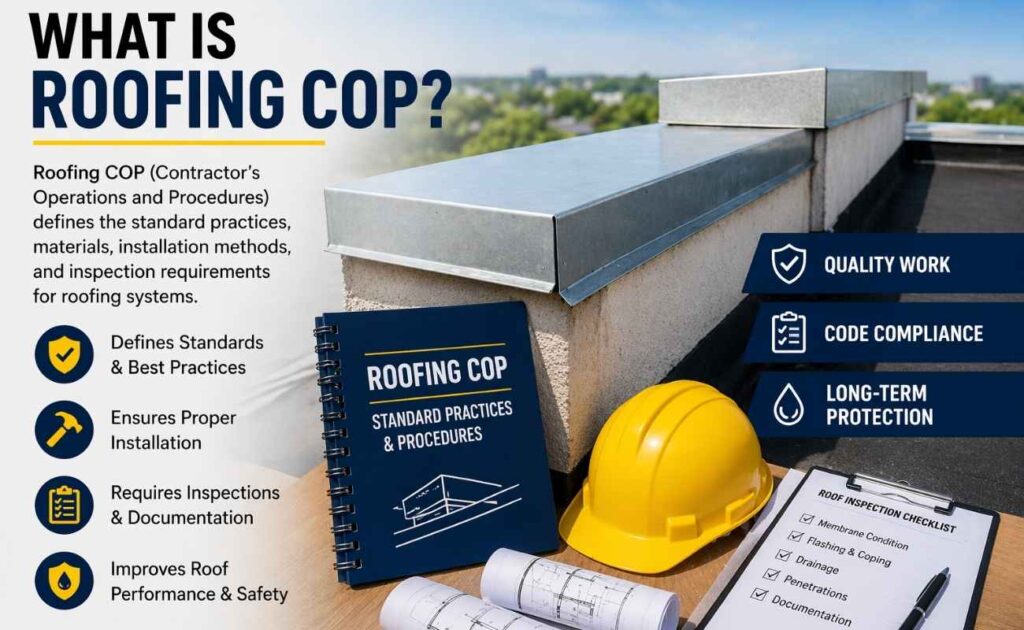
Roofing COP (Code of Practice) is a set of industry-recognized guidelines that define the best practices for roof design, installation, repair, inspection, and maintenance. Following Roofing COP helps improve roof safety, durability, waterproofing performance, and long-term reliability while reducing the risk of premature failure.
Unlike manufacturer instructions that focus on individual roofing products, Roofing COP provides best practices for the entire roofing system, including waterproofing, flashing, drainage, roof coping, and installation. It ensures every component works together to improve performance and durability.
Even the highest-quality roofing materials can fail if they are installed incorrectly. By emphasizing proper workmanship, quality control, and regular inspections, Roofing COP helps reduce leaks, extend roof lifespan, and improve long-term protection—especially in New York City’s demanding weather conditions.
Roofing COP Covers:
- Roof planning and design
- Material selection
- Waterproofing systems
- Flashing installation
- Roof drainage
- Roof coping and parapet protection
- Safety procedures
- Roof inspections
- Preventive maintenance
Why Roofing COP Matters
Following Roofing COP reduces the likelihood of roof leaks, structural damage, and premature roof replacement by ensuring every stage of the roofing process follows recognized industry best practices.
Roofing systems are constantly exposed to weather, UV rays, moisture, and temperature fluctuations. Without proper planning and installation, even minor defects can develop into significant structural problems over time.
One of the greatest advantages of Roofing COP is its focus on prevention rather than repair. Instead of waiting for leaks or visible damage to appear, the guidelines encourage proper installation, effective drainage, routine inspections, and scheduled maintenance to identify issues before they become costly.
Benefits of Following Roofing COP
- Improves overall roof lifespan
- Reduces water infiltration and leaks
- Enhances waterproofing performance
- Supports proper roof drainage
- Minimizes maintenance costs
- Improves worker and occupant safety
- Helps meet building and construction standards
- Protects property value
- Reduces the risk of emergency roof repairs
For homeowners, this means fewer unexpected repair bills. For commercial buildings, it helps reduce operational disruptions and extends the service life of expensive roofing systems.
Key Principles of Roofing COP
Roofing COP is built on several core principles that work together to create a safe, durable, and weather-resistant roofing system. Ignoring even one of these principles can significantly reduce roof performance and lifespan.
1. Proper Roof Design
Every roofing project should begin with a design that considers roof slope, structural capacity, drainage, ventilation, and local climate. A well-designed roof is less likely to develop standing water, structural movement, or drainage issues.
2. High-Quality Materials
Roofing COP recommends using durable, compatible materials that are suitable for the building type and environmental conditions. Quality roofing membranes, flashing, sealants, fasteners, and coping systems all contribute to long-term performance.
3. Professional Installation
Even the best roofing materials cannot compensate for poor workmanship. Proper installation techniques ensure every roofing component functions together as a complete weatherproof system.
4. Effective Waterproofing and Drainage
Water is one of the biggest threats to any roof. Roofing COP emphasizes proper slopes, drainage outlets, flashing details, waterproof membranes, and roof coping to prevent water from penetrating the building envelope.
5. Routine Inspection and Maintenance
Regular roof inspections allow contractors to identify loose flashing, damaged sealants, blocked drains, deteriorated membranes, and other issues before they become expensive repairs.
6. Safety and Compliance
Roofing work should always follow established safety procedures, use appropriate fall protection, and comply with applicable building regulations. Safe roofing practices protect workers while ensuring higher-quality installations.
Roofing COP Requirements
Roofing COP requires every roofing system to be designed, installed, and maintained using proven industry best practices. It focuses on the entire roofing assembly—not just the roofing material—to improve durability, waterproofing, drainage, and long-term performance.
A professional roofing project involves much more than laying shingles or installing a membrane. Every layer and detail must work together to protect the building from water intrusion, weather damage, and structural stress.
Before work begins, experienced contractors evaluate the roof’s condition, structural support, drainage layout, and ventilation. During installation, they verify that each roofing component is installed correctly and compatible with the overall roofing system.
A Roofing COP Inspection Typically Includes:
- Roof deck condition and structural stability
- Roofing membrane or covering installation
- Flashing around chimneys, vents, and skylights
- Waterproofing and moisture barriers
- Drainage systems, gutters, and roof slope
- Roof coping and parapet wall protection
- Sealants, fasteners, and expansion joints
- Overall workmanship and safety compliance
Roof Coping and Its Role in Roofing COP
Roof coping is an essential component of Roofing COP because it protects exposed parapet walls from water intrusion, improves drainage, and helps extend the lifespan of both the roof and the building envelope.
One of the most misunderstood terms in roofing is roof coping. While many people confuse it with Roofing COP, they are not the same thing.
- Roofing COP refers to the Code of Practice—the professional standards used throughout a roofing project.
- Roof coping is a physical protective cap installed on top of parapet walls.
Roof coping is one element that helps contractors meet Roofing COP guidelines by protecting vulnerable roof edges from weather exposure.
Without properly installed coping, rainwater can collect on the top of parapet walls and gradually seep into the masonry or concrete. Over time, this moisture can lead to cracks, mold growth, corrosion, freeze-thaw damage, and expensive structural repairs.
Why Roof Coping Is Important
- Directs water away from exposed walls
- Protects parapet walls from moisture damage
- Reduces cracking caused by freeze-thaw cycles
- Improves waterproofing at roof edges
- Extends the life of masonry and roofing systems
- Creates a finished appearance for commercial and residential buildings
For flat roofs, where parapet walls are common, roof coping is considered an important part of long-term weather protection.
Roofing COP Types: Roof Coping Materials Explained
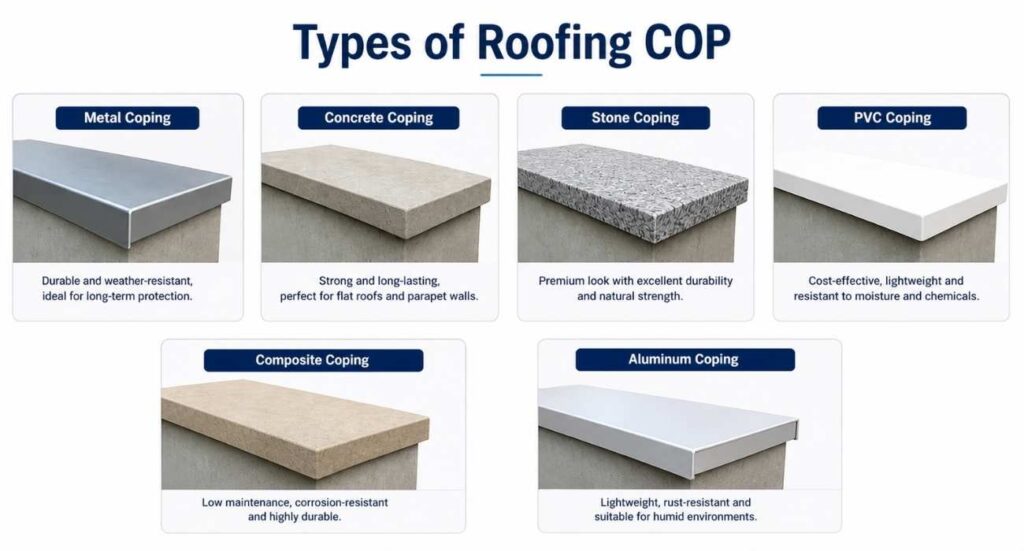
While Roofing COP (Code of Practice) doesn’t have different types, it includes guidelines for selecting and installing various roof coping materials. Choosing the right roof coping improves waterproofing, protects parapet walls, and enhances the durability of the overall roofing system.
Roof coping is available in several materials, each offering different levels of durability, maintenance, appearance, and weather resistance. The right choice depends on the building type, local climate, and project budget.
| Material | Best For | Advantages | Considerations |
|---|---|---|---|
| Metal Coping | Commercial and modern buildings | Lightweight, durable, weather-resistant | Higher initial cost depending on material |
| Aluminum Coping | Coastal and humid environments | Rust-resistant, low maintenance | Can dent under heavy impact |
| Steel Coping | High-traffic commercial roofs | Strong and durable | Requires protective coating to resist corrosion |
| Concrete Coping | Masonry and concrete structures | Excellent durability and stability | Heavier and requires proper structural support |
| Stone Coping | Premium architectural projects | Long lifespan and elegant appearance | Higher material and installation costs |
| PVC or Composite Coping | Budget-conscious projects | Lightweight, economical, easy to install | Shorter lifespan than metal or stone |
Choosing the Right Roof Coping
The best roof coping material depends on several factors, including:
- Building design
- Roof type
- Climate conditions
- Maintenance expectations
- Budget
- Desired appearance
An experienced contractor will recommend a coping system that complements the roofing system while meeting Roofing COP standards.
Roofing COP Installation Process
Following Roofing COP during installation ensures that every roofing component works together to provide long-term protection against water, weather, and structural damage. Proper installation is often more important than choosing premium materials.
Even high-quality roofing materials cannot compensate for poor workmanship. That’s why Roofing COP places significant emphasis on proper installation procedures and quality control.
Step 1: Roof Assessment
Before installation begins, the existing roof structure is evaluated for damage, moisture, drainage issues, and structural integrity. Contractors also identify any repairs that should be completed before installing new roofing materials.
Step 2: Surface Preparation
The roof surface is cleaned and prepared by removing debris, damaged materials, and loose components. A clean, stable surface ensures better adhesion and long-term performance.
Step 3: Waterproofing Installation
Waterproof membranes, underlayment, and moisture barriers are installed according to the roofing system requirements. These layers form the primary defense against water intrusion.
Step 4: Flashing and Drainage
Flashing is installed around chimneys, vents, skylights, roof penetrations, and wall intersections. At the same time, drainage systems are checked to ensure water flows efficiently toward drains or gutters.
Step 5: Roof Coping Installation
Where parapet walls are present, roof coping is installed securely with proper alignment, fastening, and sealing. Roofing COP recommends creating adequate overhangs and watertight joints to direct water away from the wall surface.
Step 6: Final Inspection
Once installation is complete, the entire roofing system is inspected to verify workmanship, drainage, flashing, waterproofing, and roof coping performance before the project is considered finished.
Common Roofing COP Mistakes
Many roofing problems develop gradually because basic Roofing COP principles are overlooked during installation or maintenance. Avoiding these common mistakes can help prevent leaks, structural damage, and costly repairs.
- Poor Drainage Design: Standing water accelerates membrane deterioration and increases the risk of leaks.
- Incorrect Flashing Installation: Improper flashing around chimneys, vents, skylights, and wall joints allows water to penetrate the roofing system.
- Inadequate Roof Coping: Loose, poorly sealed, or incorrectly sloped roof coping can lead to moisture intrusion, cracked parapet walls, and water damage.
- Low-Quality Sealants: Inferior or deteriorated sealants reduce waterproofing performance around joints, seams, and roof penetrations.
- Skipping Roof Inspections: Failing to inspect the roof after installation or repairs can leave workmanship issues undetected until they become major problems.
- Ignoring Preventive Maintenance: Blocked drains, damaged flashing, loose fasteners, and worn sealants can significantly shorten the lifespan of a roofing system if not addressed promptly.
Roofing COP Inspection Checklist
A Roofing COP inspection evaluates the entire roofing system—not just visible damage—to identify installation defects, drainage issues, waterproofing failures, and maintenance needs before they become costly repairs.
Whether you’re buying a property, planning a roof replacement, or scheduling annual maintenance, using a Roofing COP inspection checklist helps ensure nothing is overlooked.
Roofing COP Inspection Checklist
| Roofing Component | What Should Be Checked |
|---|---|
| Roof covering | Cracks, punctures, loose or damaged materials |
| Flashing | Secure installation around chimneys, vents, skylights, and wall intersections |
| Roof coping | Proper alignment, secure fastening, sealed joints, and adequate overhang |
| Drainage system | Standing water, blocked drains, gutters, and downspouts |
| Waterproofing | Membranes, underlayment, and moisture protection |
| Sealants | Cracks, gaps, or deteriorated sealant around roof penetrations |
| Fasteners | Loose, missing, or corroded fasteners |
| Expansion joints | Movement, damage, and proper sealing |
| Structural condition | Signs of sagging, moisture damage, or movement |
Roofing COP Cost Guide
The cost of following Roofing COP depends on the roof size, materials, project complexity, and repair requirements. While professional installation may cost more upfront, it often reduces long-term repair and maintenance expenses.
Many property owners focus only on installation costs, but Roofing COP emphasizes long-term value rather than the lowest initial price. Investing in quality workmanship can significantly reduce future repair costs.
Average Roofing Costs
| Service | Estimated Cost* |
|---|---|
| Roof inspection | $150–$500 |
| Minor roof repairs | $500–$2,000 |
| Roof coping repair | $500–$2,500 |
| Roof coping replacement | $15–$45 per linear foot |
| Flat roof replacement | $5,000–$20,000+ |
| Commercial roofing projects | Varies based on size and materials |
Costs vary depending on roof size, materials, accessibility, and project complexity.
Factors That Affect Roofing Costs
- Roof size and pitch
- Roofing material
- Roof accessibility
- Structural repairs
- Waterproofing requirements
- Roof coping installation or replacement
- Labor and local market rates
Roofing COP vs. Building Code
Roofing COP and building codes work together but serve different purposes. Building codes establish the minimum legal requirements for construction, while Roofing COP provides industry best practices that help achieve higher quality, better performance, and longer roof life.
| Roofing COP | Building Code |
|---|---|
| Industry best practices | Minimum legal requirements |
| Focuses on quality workmanship | Focuses on regulatory compliance |
| Encourages preventive maintenance | Primarily covers construction standards |
| Helps maximize roof lifespan | Ensures minimum safety standards |
| Often exceeds code requirements | Required for legal compliance |
Following both helps ensure your roofing project is safe, durable, and professionally installed.
Why Choose NuEra Contractors?
At NuEra Contractors, we provide residential and commercial roofing solutions that follow proven industry best practices for quality, safety, and long-term performance. Our services include shingle roof installation and repair, flat roofing, roof replacements, roof inspections, waterproofing, roof coping, and flashing repair. With expert workmanship and durable materials, we deliver roofing systems built to protect your property and maximize long-term performance.
Frequently Asked Questions
What does Roofing COP stand for?
Roofing COP stands for Roofing Code of Practice, a collection of industry-recognized guidelines that promote proper roof design, installation, inspection, repair, and maintenance.
Is Roofing COP mandatory?
Roofing COP itself is considered an industry best-practice framework. However, many of its principles support compliance with local building codes and manufacturer installation requirements.
Is Roofing COP the same as roof coping?
No. Roofing COP refers to the Code of Practice used for roofing projects, while roof coping is the protective cap installed on parapet walls to improve waterproofing and direct water away from the building.
Why is roof coping important?
Roof coping protects exposed parapet walls from rainwater, helps prevent moisture damage, reduces cracking, and improves drainage along roof edges.
How often should a roof be inspected?
Most roofing professionals recommend inspecting your roof at least once a year and after severe weather events to identify damage before it becomes a costly repair.
What is the biggest cause of roof failure?
Poor installation, inadequate drainage, damaged flashing, neglected maintenance, and improper waterproofing are among the most common causes of premature roof failure.
Does following Roofing COP increase roof lifespan?
Yes. Proper installation, routine inspections, effective drainage, and preventive maintenance can significantly extend the life of a roofing system while reducing repair costs.
Can Roofing COP be applied to residential and commercial roofs?
Yes. Roofing COP principles apply to residential homes, commercial buildings, industrial facilities, flat roofs, and pitched roofing systems.
Conclusion
Roofing COP provides the best practices needed to build safe, durable, and long-lasting roofing systems. By following proper installation, waterproofing, drainage, and maintenance standards, property owners can reduce leaks, extend roof lifespan, and protect their investment.
Whether you need a roof repair, replacement, or a new installation, choosing a contractor who follows Roofing COP ensures quality workmanship and reliable, long-term performance.
NuEra Contractors provides expert roof inspections, repairs, replacements, waterproofing, and roof coping solutions for residential and commercial properties across New York City.
Have Questions? Call NuEra Contracting Today!
📞 347-444-9028
We’re here to help with expert construction, brickwork, roofing, and waterproofing services. Get reliable solutions, friendly support, and professional results for your next project.

