
When homeowners think about windows, they usually focus on the glass, frame, or insulation—but one small detail that often gets overlooked is the window stool. Even though it may seem like a simple interior feature, it plays an important role in both the appearance and functionality of your window.
A window stool is the flat, horizontal ledge located at the bottom of a window on the inside of your home. It extends slightly into the room and helps create a finished look while covering the gap between the window frame and the wall. Many people confuse it with a window sill, but the two are completely different in both location and purpose.
Understanding how this component works can help you avoid common problems like water damage, poor installation, and unnecessary repair costs. Whether you’re upgrading your interior, dealing with damage, or planning a renovation, this guide will walk you through everything in a clear and practical way.
What Is a Window Stool in Construction?
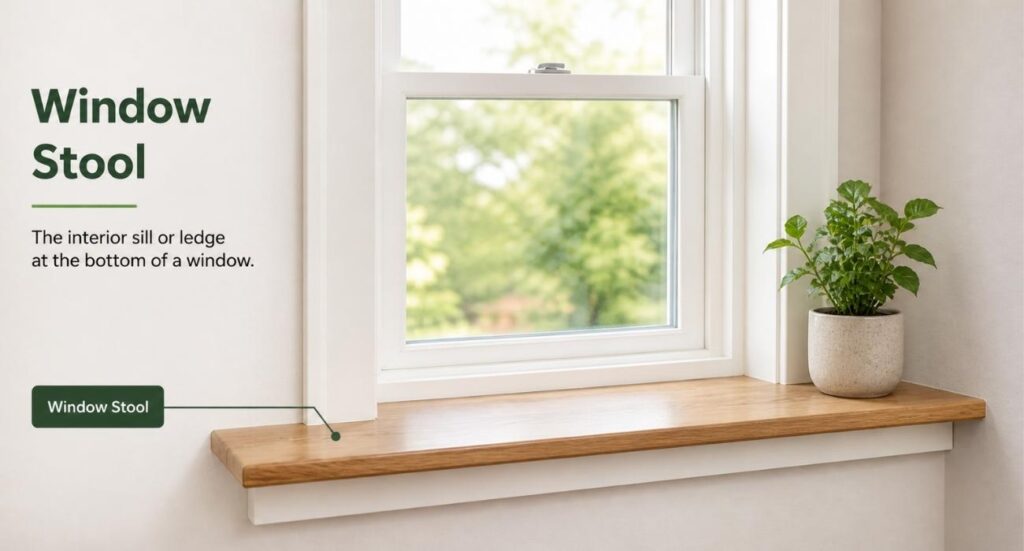
A window stool is the interior horizontal surface installed at the base of a window. It sits inside your home and extends slightly beyond the wall, creating a clean and finished edge.
In construction, this element is considered part of the window trim system and works together with other components to complete the overall structure.
Key Features
• Located inside the home
• Installed at the bottom of the window frame
• Extends outward into the room
• Covers gaps between wall and frame
• Supports the lower trim structure
If you touch the flat surface at the bottom of your window from inside your room, you are touching this interior ledge.
Understanding the Difference from a Window Sill
Many homeowners assume both terms mean the same thing, but they serve different roles.
The interior ledge is designed mainly for finishing and appearance, while the exterior sill is built to direct water away from the structure. This difference becomes important when diagnosing damage.
If water enters through the exterior side, the first visible signs often appear inside—usually affecting the lower interior trim.
Window Stool vs Window Sill (Key Differences)
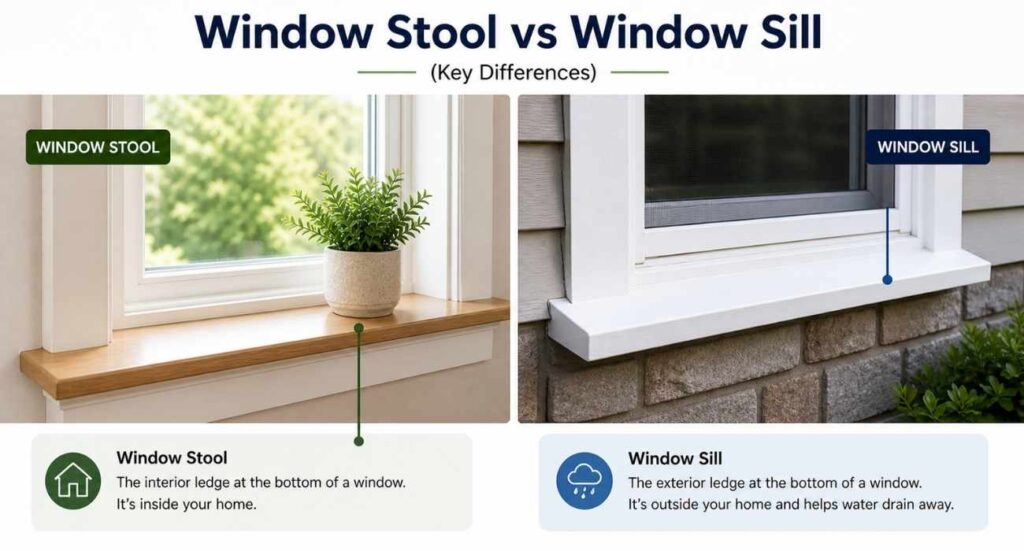
One of the most common questions homeowners ask is about the difference between a window stool and window sill. While they may sound similar, they serve completely different purposes.
Comparison Table
| Feature | Window Stool | Window Sill |
|---|---|---|
| Location | Interior (inside) | Exterior (outside) |
| Function | Finishing + support | Water drainage |
| Exposure | Protected from weather | Exposed to rain/snow |
| Purpose | Decorative + structural | Prevents water entry |
Simple Explanation
• The window stool is inside your home and used for finishing
• The window sill is outside and designed to direct water away
This distinction is important because damage to the exterior sill can often lead to problems with the interior window stool.
Parts of a Window (Interior Breakdown)
To fully understand how a window stool functions, it’s important to look at the key components that make up a complete window system. Each part works together to provide structural support, protection, and a finished interior appearance.
Main Components
• Window Stool – The flat horizontal ledge at the bottom of the window on the interior side. It extends slightly into the room and serves as the base of the window trim system.
• Apron – The trim piece installed directly below the window stool. It helps support the stool visually and creates a smooth transition between the window and the wall.
• Jamb – The vertical and horizontal sides that form the inner frame of the window. The jamb provides structural support and connects the window unit to the wall opening.
• Casing – The decorative trim that surrounds the window on the interior side. It covers the gaps between the wall and the window frame, giving the installation a clean and polished look.
How These Parts Work Together
All of these components are designed to work as a single system. The window stool acts as the foundation of the interior trim, providing both support and a functional surface. The apron sits beneath it, enhancing the appearance and adding balance to the overall design.
The jamb forms the structural frame that holds the window securely in place, while the casing wraps around the edges to conceal gaps and create a finished look.
When installed correctly, this entire system not only improves the visual appeal of the window but also helps prevent issues like air gaps, drafts, and minor moisture intrusion. In many NYC homes, especially older buildings, properly installed window trim components can make a noticeable difference in both durability and insulation.
Materials Used for Window Stools
The material of your window stool affects its durability, maintenance, and overall appearance.
1. Wood (Most Common Choice)
Wood is the most widely used material for a window stool because of its natural look and flexibility.
Pros:
• Easy to cut and install
• Can be painted or stained
• Matches most interiors
Cons:
• Sensitive to moisture
• Can rot if not sealed properly
2. MDF (Medium-Density Fiberboard)
MDF is a budget-friendly option often used for interior trim.
Pros:
• Smooth finish for painting
• Affordable
• Easy to work with
Cons:
• Not moisture-resistant
• Can swell when exposed to water
3. Stone (Marble or Granite)
Stone window stools are used in high-end designs.
Pros:
• Extremely durable
• Water-resistant
• Premium appearance
Cons:
• Expensive
• Heavy installation
4. PVC / Vinyl
PVC is a modern solution for moisture-prone areas.
Pros:
• Waterproof
• Low maintenance
• Long-lasting
Cons:
• Limited design options
Why a Window Stool Is Important
A window stool is more than just a decorative element—it plays several practical roles that improve both the functionality and finish of your window system.
Covers Installation Gaps
After a window is installed, there are often small gaps between the frame and the surrounding wall. The window stool neatly covers these gaps, creating a smooth transition and preventing the installation from looking incomplete or exposed.
Improves Interior Appearance
A properly installed window stool enhances the overall look of the window. It adds depth, structure, and a finished appearance that blends with the rest of your interior trim. In many homes, especially in NYC apartments, it contributes to a more polished and professional finish.
Provides Functional Space
Beyond its structural role, the window stool also serves as a usable surface. Homeowners commonly use it for:
• Placing indoor plants
• Displaying decorative items
• Holding small everyday essentials
Even a small ledge can add practical value to your living space.
Supports the Window Trim System
The window stool acts as the base of the interior trim setup. It helps anchor the surrounding components, such as the apron and casing, ensuring everything stays aligned and securely in place.
Helps Reduce Minor Air Leaks
When properly sealed during installation, the window stool can help close small gaps where air might pass through. While it’s not a primary insulation component, it does contribute to reducing drafts and improving indoor comfort.
Adds a Layer of Interior Protection
In some cases, the window stool also acts as a secondary barrier. If minor moisture enters from outside, it can help limit how far it spreads into the interior—making early signs of damage easier to detect and address.
Common Problems with Window Stools
Over time, a window stool can develop issues—especially in older homes or areas exposed to moisture.
Water Damage
Moisture entering from the exterior can affect the interior surface, leading to stains, swelling, or discoloration.
Rotting Wood
Wooden stools are vulnerable to rot when moisture is trapped for extended periods, weakening the structure.
Cracks and Warping
Changes in temperature or poor installation can cause the material to crack, bend, or lose its original shape.
Mold Growth
Excess moisture can lead to mold forming around the stool, which may affect both appearance and indoor air quality.
Loose or Unstable Installation
If not secured properly, the stool may shift, loosen, or detach over time, affecting both function and finish.
If you notice repeated damage to your window stool, the problem is often coming from outside—such as a leaking window sill, poor sealing, or facade cracks. Fixing the root cause early can prevent costly interior repairs later.
Window Stool Installation Process
Installing a window stool requires accurate measurement and proper sealing to ensure a clean fit and long-term durability.
Step-by-Step Process
• Measure the window opening carefully to ensure a precise fit
• Cut the stool material according to the required dimensions
• Place it in position and test the fit before securing
• Attach it firmly using nails or screws
• Seal all edges with caulk to prevent air and moisture entry
• Apply paint or finish for protection and appearance
A properly installed window stool not only improves the look of your window but also helps prevent issues like gaps, drafts, and moisture damage over time.
Window Stool Replacement Cost in NYC
The cost of replacing a window stool depends on material, labor, and condition.
Average Cost Range
• Basic replacement: $150 – $300
• Mid-range materials: $300 – $600
• Premium options: $600 – $1200+
Factors Affecting Cost
• Type of material used
• Size of the window
• Extent of damage
• NYC labor costs
Important Insight
Replacing a damaged window stool without fixing leaks or exterior issues can lead to repeated damage. Always identify the root cause first.
When Should You Replace a Window Stool?
You should consider replacing it if you notice:
• Water stains or discoloration
• Soft or rotting material
• Cracks or warping
• Mold presence
• Loose or unstable structure
Addressing these signs early can help prevent more expensive repairs later.
Window Waterproofing & Structural Concerns (NYC Insight)
In NYC, buildings face harsh conditions like rain, snow, and aging structures. These factors increase the risk of:
• Window leaks
• Water infiltration
• Interior damage to the window stool
Many times, the issue is not just the window stool, but the exterior waterproofing or masonry condition.
Professional Window Stool Services in NYC – NuEra Contracting
If your window stool is damaged or poorly installed, it’s important to fix the problem correctly—not just cosmetically.
Our Services Include
• Window stool installation and replacement
• Interior and exterior leak detection
• Waterproofing solutions
• Masonry and facade repair
• Sealing and structural fixes
Why Choose NuEra Contracting?
• Experienced NYC contractors
• Focus on long-term solutions
• Expertise in waterproofing and repair
• Clean, professional finish
Our Approach
We don’t just replace the window stool—we identify the root cause of the issue and fix it completely to prevent future damage.
FAQs
What is a window stool?
It is the flat interior ledge at the bottom of a window that helps create a clean, finished look and covers the gap between the frame and the wall.
Is a window stool the same as a window sill?
No, they are different. The stool is located inside the home, while the sill is on the exterior and is designed to direct water away from the structure.
Can a window stool get water damage?
Yes, it can be affected by moisture—especially if there are leaks, poor sealing, or issues with exterior waterproofing.
What is the best material for a window stool?
Wood is the most common choice, but PVC and stone options offer better resistance in areas exposed to moisture.
How much does window stool replacement cost in NYC?
Costs typically range from $150 to $1200, depending on the material used, the size of the window, and labor requirements.
Do I need a professional to replace a window stool?
While small repairs may be handled on your own, professional work ensures proper installation, sealing, and long-term durability.
Conclusion
A window stool may look like a small detail, but it plays a major role in the overall performance and appearance of your window. From covering gaps to improving design, it is an essential part of any window system.
More importantly, damage to a window stool often indicates deeper issues like leaks or waterproofing failure. Addressing these problems early can save you from costly repairs in the future.
If you’re in NYC and dealing with window damage, working with experienced contractors ensures the issue is fixed properly the first time.
Have Questions? Call NuEra Contracting Today!
📞 347-444-9028
We’re here to help with expert construction, brickwork, roofing, and waterproofing services. Get reliable solutions, friendly support, and professional results for your next project.

