
You walk into your basement after a heavy rainstorm and notice a damp smell, water stains on the wall, or even a small puddle in the corner. While these issues may seem minor at first, they often indicate a larger drainage problem that can worsen over time.
Many homeowners throughout Brooklyn, Queens, Manhattan, the Bronx, Staten Island, and Nassau County deal with basement moisture caused by poor drainage, heavy rainfall, and aging foundations. Left untreated, water intrusion can lead to mold growth, foundation damage, and costly repairs.
A properly installed basement drainage system can help control water before it causes serious damage. In this guide, you’ll learn why water enters basements, how to spot the warning signs, and how the right drainage solution can help keep your basement dry and protected.
Why Is Water Coming Into Your Basement?
If you’re seeing water in your basement, it’s natural to assume there’s a crack somewhere letting moisture inside. While cracks can be part of the problem, they’re rarely the entire story.
In most cases, water enters a basement because it has built up around the foundation. When the soil surrounding your home becomes saturated after rain or snowmelt, pressure develops against basement walls and floors. Eventually, water finds a way through cracks, joints, or porous concrete surfaces.
Some of the most common causes of basement water problems include:
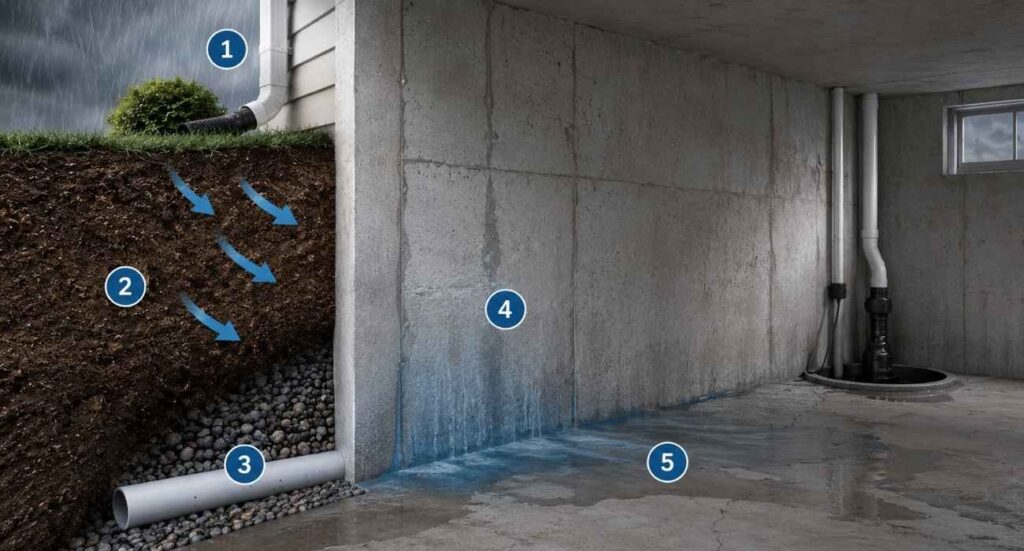
- Hydrostatic pressure around the foundation
- Poor yard grading
- Clogged gutters and downspouts
- Foundation cracks
- Aging waterproofing materials
- High groundwater levels
- Inadequate drainage systems
The key is identifying where the water is coming from before it causes significant damage.
Why Basement Water Problems Are Common in NYC Homes
New York City homes face unique challenges when it comes to moisture control.
Many Brooklyn brownstones, Queens homes, Bronx properties, and Manhattan townhouses were built decades ago. While these homes are structurally strong, many have aging waterproofing systems and drainage components that no longer perform as effectively as they once did.
The city’s freeze-thaw cycles can also contribute to foundation movement. During winter, moisture in the soil freezes and expands. When temperatures rise, the soil contracts again. Over time, this movement can create cracks and pathways for water intrusion.
Heavy rainstorms, dense urban construction, and limited exterior drainage areas make basement waterproofing and drainage especially important for homeowners throughout NYC.
7 Signs Your Basement Has a Drainage Problem
Most basements provide warning signs before major flooding occurs. Recognizing these symptoms early can save homeowners thousands of dollars in repairs.
1. Musty Odors
A persistent musty smell is often one of the first signs of hidden moisture. Even if you don’t see standing water, damp conditions may exist behind walls or beneath flooring materials.
2. Water Stains on Walls
Discoloration on basement walls usually indicates that water has entered before. These stains often become more noticeable after periods of heavy rain.
3. White Powder on Concrete Surfaces
This white residue is called efflorescence. It forms when water moves through concrete and leaves mineral deposits behind. It’s a strong sign that moisture is entering the foundation.
4. Mold and Mildew Growth
Mold thrives in damp environments. If mold appears on walls, wood, or stored belongings, excess moisture is likely present.
5. Foundation Cracks
Not all foundation cracks are serious, but cracks combined with moisture problems often indicate hydrostatic pressure around the foundation.
6. Standing Water After Rain
Even a small amount of standing water should never be ignored. Puddles often signal drainage issues that may worsen over time.
7. High Humidity Levels
If your basement feels noticeably more humid than the rest of the house, moisture may be entering through the walls or floor.
What Happens If You Ignore a Wet Basement?
A damp basement may not seem like a major concern today, especially if the water disappears after a storm. That’s why many homeowners wait months—or even years—before taking action.
Unfortunately, hidden moisture can continue damaging your home long after the floor looks dry. Water trapped around the foundation can contribute to mold growth, ruined storage items, wood rot, and foundation cracks. What begins as a minor nuisance can eventually become a costly repair project that affects both your home’s value and structural integrity.
Ignoring a wet basement may lead to:
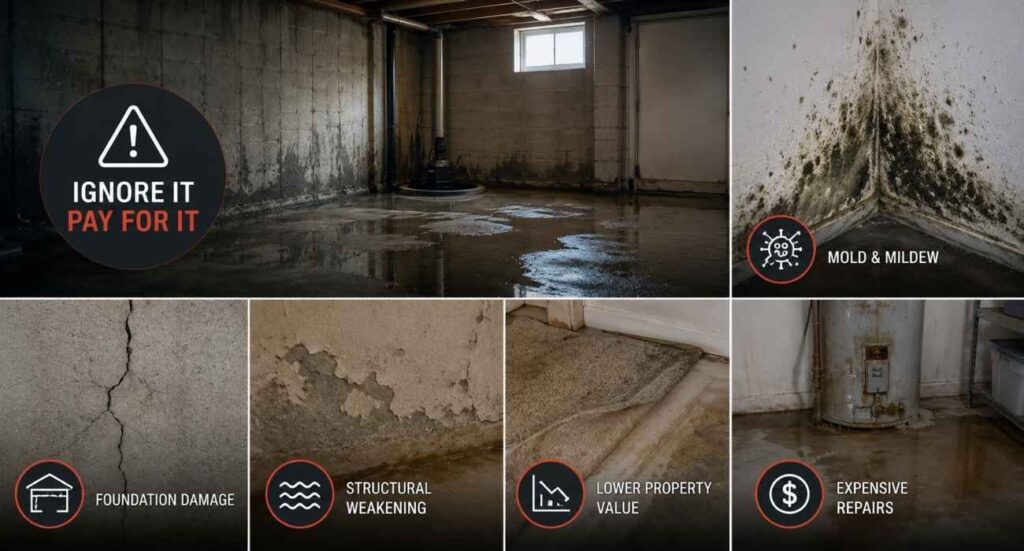
- Mold and mildew growth
- Foundation cracks
- Damaged drywall and flooring
- Wood rot
- Poor indoor air quality
- Increased repair costs
- Reduced property value
Addressing drainage problems early is almost always more affordable than repairing extensive water damage later.
What Is a Basement Drainage System?
If water keeps finding its way into your basement after heavy rain, a basement drainage system is often the solution that stops the problem at its source.
Rather than allowing groundwater to collect around your foundation, the system captures excess water and redirects it away from your home. This helps reduce the pressure that builds against basement walls and floors, which is one of the most common causes of leaks and water seepage.
A typical basement drainage system may include:
- Interior drainage channels
- Exterior drainage systems
- French drains
- Sump pumps
- Drainage pipes
- Collection basins
The right setup depends on your home’s foundation, the severity of the water problem, and where the moisture is coming from. In many cases, a combination of drainage and basement waterproofing provides the best long-term protection.
Types of Basement Drainage Systems
There is no one-size-fits-all solution when it comes to drainage.
Interior Drainage Systems
Installed along the inside perimeter of the basement, these systems collect water and direct it toward a sump pump. They are often used in existing homes experiencing recurring moisture problems.
Exterior Drainage Systems
Installed outside the foundation, exterior drainage systems stop water before it reaches basement walls. They are commonly used during major waterproofing projects.
French Drains
French drains use perforated pipes surrounded by gravel to collect groundwater and redirect it away from the foundation.
Sump Pump Systems
Sump pumps remove collected water from the basement and discharge it safely away from the home. Many drainage systems rely on a sump pump as part of the overall solution.
Interior Drainage vs Exterior Drainage
Both systems are effective, but they serve slightly different purposes.
| Feature | Interior Drainage | Exterior Drainage |
|---|---|---|
| Installation Cost | Lower | Higher |
| Excavation Required | No | Yes |
| Installation Time | Faster | Longer |
| Water Management | Excellent | Excellent |
| Foundation Protection | Good | Excellent |
| Best For | Existing Homes | Severe Water Issues |
For many homeowners, an interior basement drainage system provides a practical and cost-effective solution. However, homes with significant water intrusion may benefit from exterior drainage and foundation waterproofing.
Basement Drainage System Cost in NYC
One of the first questions homeowners ask is, “How much will a basement drainage system cost?”
The answer depends on several factors, including the size of the basement, the severity of the water problem, the type of drainage system needed, and whether additional waterproofing or foundation repairs are required.
While every project is different, the table below provides a general idea of what homeowners in NYC can expect.
| Service | Average Cost Range |
|---|---|
| Interior Drainage System | $3,000 – $10,000 |
| French Drain Installation | $2,500 – $12,000 |
| Sump Pump Installation | $1,500 – $5,000 |
| Exterior Drainage System | $8,000 – $25,000+ |
| Basement Waterproofing System | $5,000 – $20,000+ |
Several factors can increase or decrease the final cost:
- Basement size
- Severity of water intrusion
- Accessibility around the foundation
- Existing foundation condition
- Need for sump pump installation
- Drainage system design
- Waterproofing requirements
While the upfront investment may seem significant, it is often much less expensive than dealing with recurring water damage, mold remediation, or foundation repair.
Basement Drainage System vs Basement Waterproofing
Many homeowners think a basement drainage system and basement waterproofing do the same job. While both help protect your home from water damage, they solve different problems.
Basement Drainage System
A basement drainage system collects and redirects water away from the foundation before it can enter the basement. Its main purpose is to reduce hydrostatic pressure and manage groundwater around the home.
Basement Waterproofing
Basement waterproofing helps prevent moisture from passing through foundation walls and floors. It acts as a protective barrier against water intrusion.
Do You Need Both?
In many cases, yes.
If water is seeping into your basement after heavy rain, waterproofing alone may not solve the issue. A drainage system controls the water around the foundation, while waterproofing helps keep any remaining moisture from getting inside.
When used together, they provide stronger protection against basement flooding, water seepage, and long-term foundation damage.
Why Sump Pumps and Drainage Systems Work Best Together
A basement drainage system and a sump pump are often most effective when used together. While the drainage system collects and channels water away from the foundation, the sump pump removes that water from the basement area and discharges it safely away from the home.
Without a sump pump, collected water may have nowhere to go. Likewise, a sump pump cannot do much if water is not being directed toward it through a proper drainage system.
Benefits of Combining Both Systems
- Reduced risk of basement flooding
- Better moisture control
- Improved protection during heavy rain
- Lower hydrostatic pressure around the foundation
- Long-term protection against water damage
For homes that experience recurring water intrusion, combining a basement drainage system with a sump pump installation often provides the most reliable long-term solution.
Can a Basement Drainage System Prevent Foundation Damage?
Yes, in many cases. Excess water around the foundation creates hydrostatic pressure that pushes against basement walls. Over time, this pressure can lead to foundation cracks, water seepage, and structural movement.
A properly installed basement drainage system helps control groundwater and direct it away from the foundation before it can build up and cause damage. By reducing moisture and pressure around the home, the system plays an important role in protecting the foundation and keeping the basement dry.
When Additional Repairs May Be Needed
While a basement drainage system can help prevent future damage, it cannot fix structural problems that already exist. If your home has foundation cracks, bowing walls, or severe water intrusion, additional services such as foundation waterproofing, foundation crack repair, or structural reinforcement may be necessary.
Addressing both the drainage issue and any existing foundation damage is often the best way to protect your home long term.
Common Basement Drainage Mistakes Homeowners Make
Many basement water problems become far more expensive because homeowners focus on the symptoms rather than the cause. Avoiding these common mistakes can save you time, money, and frustration.
Waiting Too Long
A small leak or damp spot may not seem like a major concern today, but water problems rarely improve on their own. The longer moisture remains around the foundation, the greater the risk of mold growth, structural damage, and costly repairs.
Relying on Waterproof Paint
Waterproof paint can help improve the appearance of a basement wall, but it doesn’t stop groundwater from building up outside the foundation. If hydrostatic pressure remains, water will often find another way inside.
Ignoring Gutters and Downspouts
Many homeowners overlook their roof drainage system. Clogged gutters and short downspouts can direct large amounts of water toward the foundation, increasing the risk of basement moisture problems.
Choosing the Cheapest Solution
Quick fixes may seem appealing, but temporary repairs often lead to recurring issues. Investing in a properly designed basement drainage system typically provides better long-term protection and value.
Skipping Professional Inspections
Not all water problems are visible. A professional inspection can identify hidden drainage issues, foundation concerns, and moisture problems before they become major repairs.
Signs You Need More Than a Drainage System
A basement drainage system can solve many moisture and water intrusion problems, but it is not always the complete solution. If water has already caused structural damage, additional repairs may be necessary.
You may need more than a basement drainage system if you notice:
- Large foundation cracks
- Bowing basement walls
- Significant wall movement
- Persistent flooding despite drainage improvements
- Structural settlement
- Major water infiltration
These warning signs may indicate underlying foundation issues that require more than water management alone. In some cases, foundation repair, foundation waterproofing, or basement wall repair may be needed to fully protect the home.
A professional inspection can identify the source of the problem and recommend the most effective solution.
How to Know When You Need Professional Help
Some moisture problems can be improved by cleaning gutters or extending downspouts, but recurring water intrusion usually requires a more comprehensive solution.
You should schedule a professional inspection if you notice:
- Water entering the basement after rain
- Persistent dampness or humidity
- Mold or mildew growth
- Foundation cracks
- Standing water on the floor
- White powder (efflorescence) on walls
- Musty odors that won’t go away
- Repeated basement leaks
A professional can determine whether a basement drainage system, waterproofing solution, sump pump installation, or foundation repair is needed.
Frequently Asked Questions
What is the best basement drainage system?
The best basement drainage system depends on your home’s foundation, water intrusion level, and drainage needs. Many homeowners benefit from a combination of interior drainage channels and a sump pump system.
How much does a basement drainage system cost?
The cost of a basement drainage system varies based on basement size, installation method, and the severity of the water problem. Most projects range from a few thousand dollars to more extensive waterproofing investments.
Can a basement drainage system stop water from entering my basement?
A properly installed basement drainage system can significantly reduce or eliminate water intrusion by collecting and redirecting groundwater away from the foundation.
Do I need a sump pump with a basement drainage system?
In many cases, yes. A sump pump works with a basement drainage system to remove collected water and discharge it safely away from the home.
How long does a basement drainage system last?
Most professionally installed basement drainage systems can last for decades with proper maintenance and periodic inspections.
Can a basement drainage system increase home value?
Yes. A dry basement is attractive to buyers and can help protect your home’s value by reducing the risk of moisture damage and foundation problems.
Schedule a Basement Inspection
If you’re dealing with recurring basement moisture, standing water, or foundation concerns, don’t wait for the problem to get worse. A professional inspection can help identify the source of water intrusion and determine whether a basement drainage system is the right solution for your home.
Contact NuEra Contractors NYC today to schedule an inspection and learn how we can help protect your basement and foundation from future water damage.
Have Questions? Call NuEra Contracting Today!
📞 347-444-9028
We’re here to help with expert construction, brickwork, roofing, and waterproofing services. Get reliable solutions, friendly support, and professional results for your next project.

