A bowing basement wall occurs when a foundation wall bends, curves, or moves inward because of pressure from soil, water, frost, or other external forces. While slight movement does not always indicate an immediate structural emergency, continued bowing can lead to wider cracks, water intrusion, and more extensive foundation damage.
The sooner the cause is identified, the more repair options may be available. This guide explains the common causes, warning signs, inspection process, repair methods, costs, and prevention tips for a bowing basement wall.
What Is a Bowing Basement Wall?
A bowing basement wall bends, curves, or bulges inward instead of remaining straight. It can occur in concrete block, poured concrete, brick, or stone foundations when soil, water, or frost creates pressure against the wall.
Horizontal cracks, inward movement, and visible bulging are common warning signs. Unlike minor vertical cracks, these signs can indicate ongoing pressure or foundation movement and should be evaluated before selecting a repair method.
What Causes a Basement Wall to Bow?
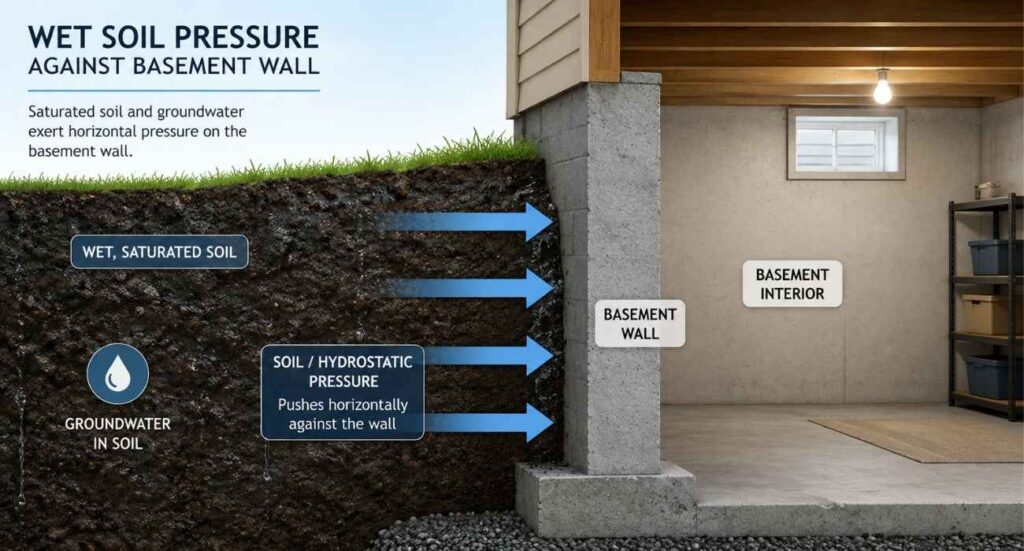
Several factors can cause a basement wall to bow inward. In many homes, the problem is not caused by just one thing. It is often a combination of water, soil pressure, poor drainage, and aging foundation materials.
The most common causes of basement wall bowing include hydrostatic pressure, poor drainage, expansive soil, frost pressure, heavy loads near the foundation, and aging or weakened foundation materials.
1. Hydrostatic Pressure
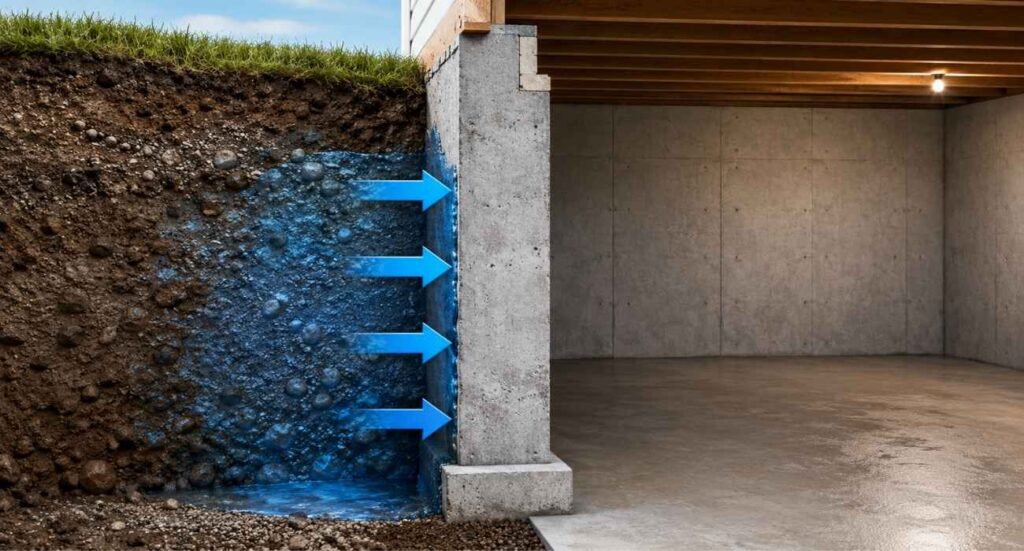
Hydrostatic pressure is one of the most common causes of a bowing basement wall. This happens when water builds up in the soil around the foundation. Wet soil becomes heavy, and that weight pushes against the basement wall.
Think of the basement wall like a barrier holding back soil and water. When the soil stays dry and drains properly, pressure is lower. But when water collects around the foundation, the pressure increases. Over time, that pressure can force the wall inward.
Hydrostatic pressure can also push water through cracks, mortar joints, and weak areas in the wall. This is why many homeowners notice both bowing and basement leaks together.
2. Poor Drainage Around the Foundation
Poor drainage is another major reason foundation walls begin to move. If rainwater is not directed away from the house, it can collect near the basement wall and increase soil pressure.
Common drainage problems include:
- Clogged gutters
- Broken downspouts
- Downspouts that discharge too close to the foundation
- Soil sloping toward the house
- Poor yard grading
- Failed exterior drainage systems
- A weak or non-working sump pump
When water stays close to the foundation, the wall is under constant stress. Even a strong foundation can weaken if drainage problems are ignored for years.
3. Expansive Soil
Some soils expand when they absorb water and shrink when they dry out. Clay soil is a common example. This repeated expansion and contraction can create pressure against basement walls.
During wet seasons, the soil swells and pushes against the foundation. During dry seasons, it shrinks and can leave gaps. This cycle can slowly damage the wall and create movement over time.
4. Frost Pressure
In colder climates, frost can also contribute to basement wall movement. When wet soil freezes, it expands. This expansion can push against the foundation wall. Repeated freezing and thawing can make the pressure worse year after year.
5. Heavy Loads Near the Foundation
Sometimes, extra weight near the foundation increases pressure on the basement wall. This may include driveways, parked vehicles, patios, large landscaping features, or heavy equipment placed too close to the house.
The wall is already holding back soil. When extra weight is added above that soil, the pressure against the wall can become stronger.
6. Weak or Aging Foundation Materials
Older homes may have weaker foundation materials, poor reinforcement, or walls that have already been affected by years of moisture. Concrete blocks, mortar joints, brick, and stone can all weaken over time if exposed to water and pressure.
If the wall was not built with enough reinforcement or proper drainage, it may be more likely to bow inward.
Warning Signs of a Bowing Basement Wall
A bowing basement wall usually gives warning signs before it becomes a major structural concern. Homeowners should pay attention to both visible wall damage and moisture-related signs. In many cases, professional masonry repair services can help address structural issues before they worsen.
Common warning signs include:
- Horizontal cracks in the basement wall
- Stair-step cracks in concrete block walls
- Blocks pushing inward
- A wall that looks curved or uneven
- Water stains or damp spots
- White powdery marks, also called efflorescence
- Musty basement smell
- Cracks that grow wider over time
- Gaps between the wall and floor joists
- Doors or windows above the basement sticking
- Uneven floors near the affected wall
Horizontal cracks and stair-step cracks can be important signs of foundation movement, particularly when they are widening or accompanied by moisture problems.
If you notice changes over time, photograph the affected area periodically. Increasing cracks, visible movement, or worsening water intrusion are good reasons to arrange a professional inspection.
Is a Bowing Basement Wall Dangerous?
A bowing basement wall can indicate that the foundation is under ongoing stress, but not every bowed wall means the structure is in immediate danger. The level of risk depends on the amount of movement, the condition of the wall, and whether the underlying pressure continues.
Key factors include:
- How far the wall has moved inward
- Whether the movement is getting worse
- The type of foundation wall
- The size and direction of the cracks
- How much water pressure exists outside
- Whether the wall is separating from other structural parts
- Whether the soil and drainage problems are still present
Minor wall movement may be manageable with less invasive stabilization methods, while severe bowing may require stronger reinforcement, straightening, or replacement. Early inspection can help identify the cause and determine the most appropriate repair option.
If the wall keeps moving inward, becomes badly cracked, bulges, or starts separating, it should be treated as a serious structural issue.
How a Bowed Basement Wall Is Inspected
A professional inspection helps determine the cause, severity, and extent of wall movement. Depending on the severity, a foundation contractor or structural engineer may evaluate the wall and surrounding foundation.
During inspection, they may check:
- The amount of inward wall movement
- Crack width and crack direction
- Whether the wall is still moving
- Water entry points
- Soil grading around the house
- Gutter and downspout performance
- Sump pump operation
- Drain tile condition
- Wall material and age
- Structural connections near the top of the wall
Professionals may use tools such as a level, laser, or plumb line to measure wall movement and may recommend monitoring cracks over time. Simply patching a crack will not address the underlying pressure if the wall is still moving.
Bowing Basement Wall Repair Options
There are several ways to repair a bowed basement wall. The best method depends on how much the wall has moved, what caused the movement, and whether the goal is stabilization or straightening.
1. Carbon Fiber Straps
Carbon fiber straps can stabilize minor to moderate wall movement by reinforcing the inside of the basement wall with epoxy-bonded strips. They are low-profile and take up little space, making them suitable when the goal is to prevent further movement rather than straighten a severely bowed wall.
2. Steel I-Beams
Steel I-beams provide vertical reinforcement for basement walls with moderate bowing or movement. They are secured against the wall and connected to the floor and framing above to provide strong support. Although effective, they are more visible and can take up more basement space than lower-profile repair options.
3. Wall Anchors
Wall anchors stabilize a bowing basement wall using steel rods connected to interior wall plates and anchors installed in stable soil outside the foundation. They can help resist soil pressure and, in some cases, gradually move the wall closer to its original position.
4. Helical Tiebacks
Helical tiebacks use steel shafts installed deep into stable soil outside the foundation and connected to the basement wall. They provide strong resistance against inward pressure and may be useful when deeper structural support is needed or traditional wall anchors are not practical.
5. Wall Straightening
Wall straightening involves relieving pressure outside the foundation and carefully moving the bowed wall closer to its original position before reinforcing it. This method may require exterior excavation, drainage improvements, waterproofing, and structural reinforcement, making it more involved than basic stabilization.
6. Wall Replacement
Severely damaged or displaced basement walls may require complete replacement when reinforcement or straightening is not practical. This is the most invasive repair option and may involve temporary structural support, removal of the damaged wall, excavation, and construction of a new foundation wall.
Bowing Basement Wall Repair Cost
The cost to repair a bowing basement wall varies depending on the wall’s size, severity of movement, repair method, and whether excavation or drainage work is required. A professional inspection is usually needed to determine the appropriate solution and project cost.
Main cost factors include:
- Length of the damaged wall
- Amount of inward movement
- Type of wall material
- Repair method used
- Labor costs in your area
- Whether excavation is needed
- Drainage or waterproofing work required
- Whether an engineer’s report is needed
Here is a simple comparison:
| Repair Method | Best For | Cost Level |
|---|---|---|
| Carbon fiber straps | Minor to moderate bowing | Medium |
| Steel beams | Moderate wall movement | Medium to high |
| Wall anchors | Stabilization and possible straightening | High |
| Helical tiebacks | Strong structural anchoring | High |
| Wall straightening | Significant movement | High |
| Wall replacement | Severe damage | Very high |
The most affordable option is not always the most suitable. If water pressure or drainage problems remain unresolved, the wall may continue to experience stress after reinforcement.
Can You Fix a Bowing Basement Wall Yourself?
A bowing basement wall is generally not a DIY repair because it can involve structural movement and soil or water pressure. Homeowners can handle basic maintenance such as cleaning gutters, extending downspouts, improving grading, and monitoring cracks.
However, structural repairs such as installing reinforcement, anchors, or attempting to straighten a wall should be evaluated and performed by qualified professionals. Covering or patching a crack without addressing the underlying cause may allow the problem to continue.
How to Prevent Basement Walls from Bowing
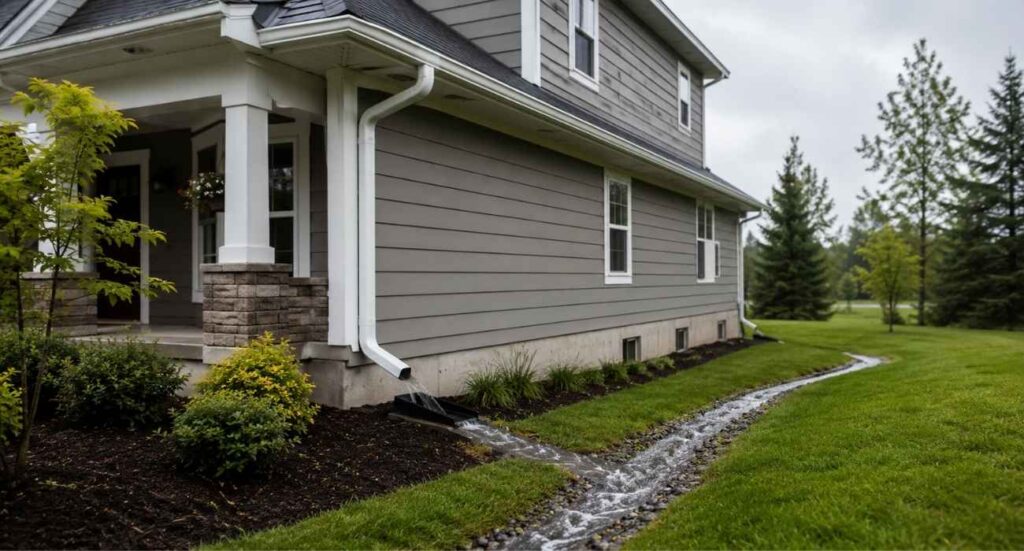
The best way to reduce the risk of basement wall bowing is to control water around the foundation and maintain proper drainage. Regular maintenance can help prevent excessive soil and hydrostatic pressure.
Here are practical prevention tips:
Keep Gutters Clean
Clean gutters regularly to prevent overflow and keep roof water from collecting near the foundation.
Extend Downspouts Away from the House
Direct downspouts several feet away from the foundation to reduce water accumulation around basement walls.
Improve Yard Grading
Make sure the soil slopes away from the house so rainwater drains away from the foundation instead of collecting beside it.
Maintain the Sump Pump
Test your sump pump regularly and address problems promptly to help prevent excess water around the foundation.
Fix Basement Leaks Early
Repeated seepage or dampness can indicate a drainage or waterproofing problem. Investigate the source rather than simply covering the affected area.
Avoid Heavy Loads Near Foundation Walls
Avoid placing heavy structures, vehicles, or landscaping features close to foundation walls unless the supporting conditions have been properly evaluated.
Watch for Changes After Heavy Rain
Check the basement and exterior foundation after heavy rainfall. New cracks, worsening leaks, or visible movement may indicate an active drainage or foundation problem.
How NuEra Contractors Can Help
If you notice a bowing basement wall, horizontal cracks, or recurring basement moisture, NuEra Contractors can help identify appropriate repair and waterproofing options.
NuEra Contractors can help with:
- Basement waterproofing
- Foundation leak repair
- Wall crack repair
- Drainage solutions
- Waterproofing membranes
- Sump pump system services
An early inspection can help identify the cause of the problem and determine the right approach before foundation movement becomes more extensive.
Frequently Asked Questions
Is a bowing basement wall serious?
A bowing basement wall can indicate ongoing foundation stress. The level of concern depends on the amount of movement, wall condition, and whether the underlying cause is still active. An inspection can help determine the severity.
Can a bowing basement wall collapse?
Severe wall movement can increase the risk of structural failure. However, not every bowed wall is at immediate risk of collapse. Significant cracks, bulging, displaced blocks, or increasing movement should be professionally evaluated.
What causes basement walls to bow inward?
Common causes include hydrostatic pressure, poor drainage, expansive soil, frost pressure, heavy loads near the foundation, and aging or weakened foundation materials.
Can carbon fiber straps fix a bowed basement wall?
Carbon fiber straps can stabilize minor to moderate wall movement, but they generally do not straighten a severely bowed wall. Their suitability depends on the wall’s condition and the extent of movement.
How much does bowing basement wall repair cost?
Costs vary based on the wall’s size, severity, repair method, labor, and whether excavation or drainage work is required. A professional inspection is needed for an accurate project estimate.
Should I ignore a small horizontal crack?
No. A small horizontal crack can be an early sign of pressure against the foundation. Monitor changes and consider a professional inspection if the crack widens, leaks, or is accompanied by visible wall movement.
Final Thoughts
A bowing basement wall should not be ignored, even when the movement appears minor. Soil pressure, water, drainage problems, and other factors can contribute to continued wall movement.
The right repair depends on the wall’s condition and the cause of the movement. If you notice horizontal cracks, bulging, water intrusion, or other signs of foundation movement, a professional inspection can help determine the appropriate next step.
If your basement wall is bowing inward or showing cracks, contact NuEra Contractors for a professional inspection and a reliable repair or waterproofing solution.
Have Questions? Call NuEra Contracting Today!
📞 347-444-9028
We’re here to help with expert construction, brickwork, roofing, and waterproofing services. Get reliable solutions, friendly support, and professional results for your next project.

