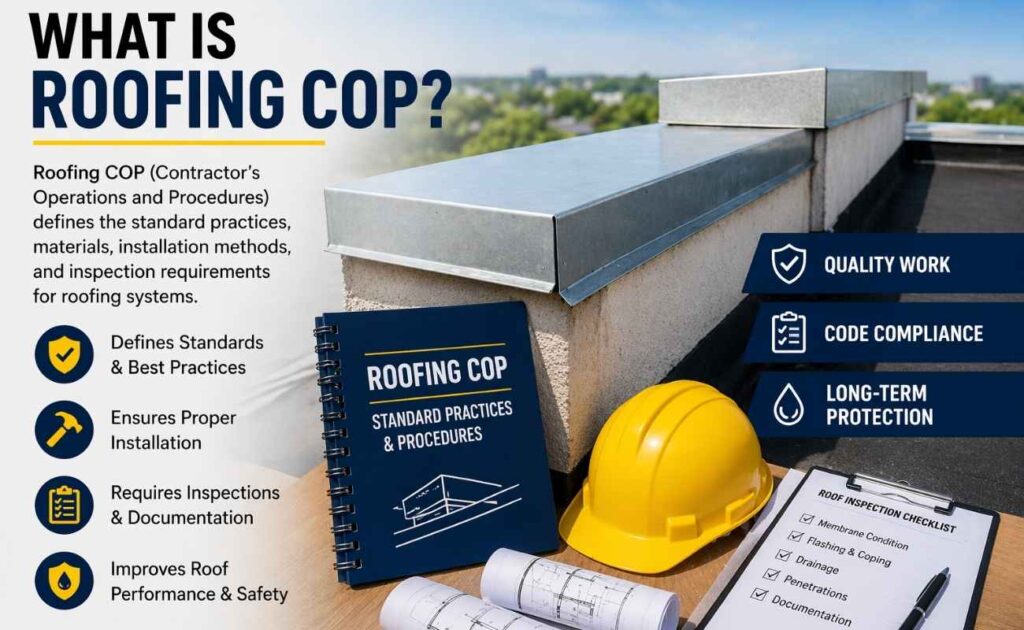
Roofing COP stands for Roofing Code of Practice. It provides guidelines and accepted practices for roofing design, material selection, installation, drainage, flashing, waterproofing, inspection, maintenance, and safety. The exact requirements depend on the roofing system, location, building type, and applicable regulations.
A Roofing Code of Practice can cover important areas such as roof design, materials, installation, flashing, drainage, waterproofing, roof penetrations, fasteners, maintenance, and safety. The exact requirements depend on the country, roofing system, building type, and applicable regulations.
For property owners in New York City, Roofing COP principles should be considered alongside the NYC Building Code, manufacturer requirements, project specifications, and other applicable regulations.
In this guide, we explain what Roofing COP means, what it covers, why it matters, how contractors use it, and what property owners should know before starting a roofing project.
What Is Roofing COP?
Roofing COP means Roofing Code of Practice. It is a structured set of technical guidelines and accepted practices for roofing work.
A Code of Practice can help roofing professionals understand how to approach different parts of a roofing project, including:
- Roof design and planning
- Material selection
- Installation methods
- Flashing and roof edges
- Roof drainage
- Waterproofing
- Roof penetrations
- Fasteners and connections
- Inspection and maintenance
- Safe roofing practices
A Roofing COP is intended to support good workmanship and consistent results. However, it should not automatically be treated as a replacement for local building codes.
For example, the New Zealand Metal Roofing Manufacturers’ Code of Practice provides requirements and guidance for the design, installation, performance, and transportation of metal roof and wall cladding in New Zealand. It also addresses flashings, drainage accessories, and fasteners.
Simple Definition of Roofing COP
Roofing COP is a guide for doing roofing work safely, correctly, and according to recognized industry practices and applicable requirements.
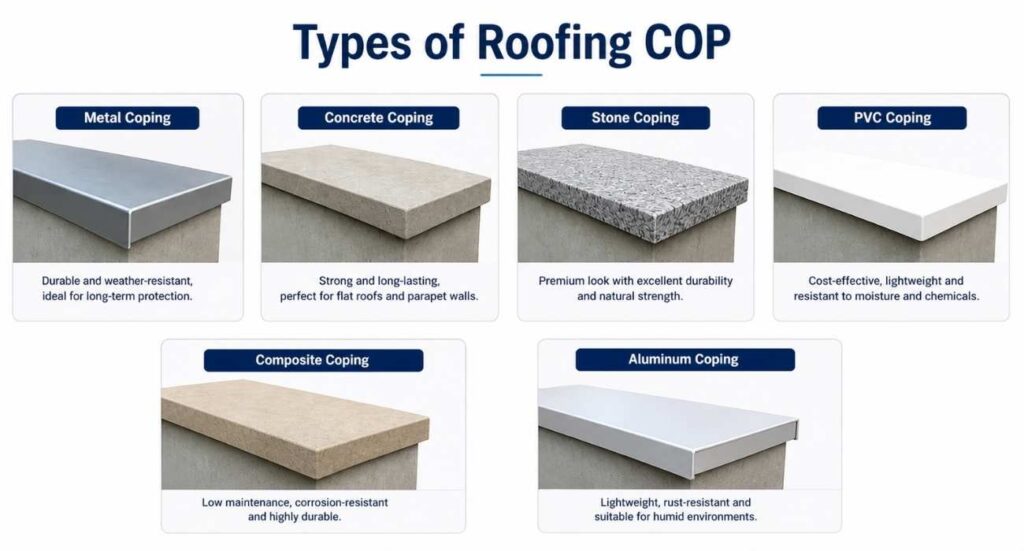
Types of Roofing COP
Different roofing systems and regions can have different Codes of Practice or industry standards. These guidelines may focus on specific roofing materials, installation methods, design requirements, or performance standards.
What Does a Roofing Code of Practice Cover?
A Roofing Code of Practice can cover many parts of a roofing project. The exact content depends on the specific code and roofing system.
1. Roof Design
Good roofing begins with proper design.
Design considerations can include:
- Roof slope or pitch
- Structural loads
- Weather exposure
- Roof materials
- Drainage requirements
- Roof penetrations
- Flashing details
- Building use
- Local environmental conditions
A roof should be designed for the conditions in which it will operate rather than using the same approach for every building.
2. Roofing Materials
Roofing COP guidance can help professionals select and use appropriate materials.
Depending on the roofing system, materials may include:
- Asphalt shingles
- Metal roofing
- Roofing membranes
- Tiles
- Underlayment
- Flashing
- Fasteners
- Sealants
- Insulation
- Waterproofing materials
Material selection should also follow the manufacturer’s installation instructions and applicable building requirements.
3. Roof Installation
Installation is one of the most important parts of roofing work.
Incorrect installation can lead to:
- Water leaks
- Loose roofing materials
- Flashing failure
- Premature deterioration
- Poor drainage
- Wind damage
- Reduced roof lifespan
A Roofing COP can provide accepted installation practices for specific roofing systems.
4. Roof Drainage
Water must have a reliable path away from the roof.
Depending on the building and roof type, drainage may involve:
- Roof slopes
- Drains
- Gutters
- Downspouts
- Scuppers
- Overflow drainage
- Drainage accessories
Poor drainage can cause standing water and increase the risk of leaks and roof deterioration.
5. Flashing
Flashing is used around areas where water could enter the roofing system.
Common locations include:
- Walls
- Chimneys
- Vents
- Skylights
- Roof edges
- Roof penetrations
- Joints and transitions
Correct flashing details are essential because many roof leaks occur around transitions and penetrations rather than in the main roof covering.
6. Roof Penetrations
Roof penetrations include openings for items such as:
- Pipes
- Vents
- HVAC equipment
- Chimneys
- Skylights
- Mechanical systems
These areas require careful detailing because cutting through a roof creates another potential path for water entry.
Recognized Codes of Practice can provide specific guidance for penetration design and installation. The NZMRM Roofing COP, for example, includes a dedicated section covering roof penetrations and explains that penetration details depend on factors such as roof pitch, roof type, opening size, catchment area, and location.
Why Is Roofing COP Important?
Following recognized roofing practices can improve the quality, safety, and long-term performance of a roofing system.
Better Installation Quality
A Code of Practice gives contractors a structured reference for important installation details.
Improved Water Protection
Correct drainage, flashing, joints, and penetrations can help reduce the risk of water entering the building.
Better Roof Performance
Proper installation and material selection can help roofing systems perform better under normal environmental conditions.
Improved Safety
Roof work involves fall hazards, equipment, weather exposure, and other risks. Appropriate safety procedures are an important part of professional roofing work.
Easier Inspection
Clear installation practices make it easier for contractors, inspectors, and property owners to identify problems.
Reduced Maintenance Problems
Proper installation can reduce avoidable defects that may otherwise lead to premature repairs.
Roofing COP vs. Building Code
Roofing COP and building codes are not necessarily the same thing.
A building code establishes legal requirements that apply to construction in a particular jurisdiction. A Code of Practice generally provides technical guidance or accepted industry practices for specific work.
| Roofing COP | Building Code |
|---|---|
| Provides industry guidance and accepted practices | Establishes legal construction requirements |
| Can explain recommended installation methods | Defines applicable minimum requirements |
| May focus on a particular roofing system | Covers broader building requirements |
| Supports quality workmanship | Supports regulatory compliance |
| Requirements vary by specific COP | Requirements depend on the jurisdiction |
The two can work together, but a Roofing COP should not be assumed to replace local building regulations.
Is Roofing COP Legally Required?
There is no single answer for every location.
Whether a specific Code of Practice is mandatory depends on:
- The country or state
- Local building regulations
- The type of roofing project
- The roofing material
- Project specifications
- Contract requirements
- Applicable safety regulations
Some Codes of Practice are industry guidance, while other documents may be incorporated into regulatory or contractual requirements.
For this reason, contractors and property owners should identify the specific Roofing COP and local requirements that apply to their project.
Roofing COP and NYC Roofing Requirements
For roofing projects in New York City, contractors must consider the requirements that apply to the specific building and project.
The NYC Department of Buildings publishes official code information and related guidance for construction professionals and property owners.
NYC roofing projects can involve requirements related to:
- Roof construction
- Roof drainage
- Parapets
- Roof alterations
- Waterproofing
- Structural conditions
- Safety
- Inspections
- Permits
- Special inspections where applicable
For example, NYC Building Code provisions address roof drainage and parapet construction. Requirements can vary depending on the project and building conditions, so the applicable code should always be reviewed before work begins.
NYC Parapet Requirements
Parapets are an important part of many NYC buildings, particularly buildings with flat roofs.
The NYC Building Code contains requirements for parapet walls, including provisions concerning coping materials and dimensions.
Property owners should also be aware that NYC has specific parapet observation requirements for certain buildings. The NYC Department of Buildings states that owners of buildings with parapets fronting a public right-of-way are required to have an annual parapet observation performed under the applicable NYC requirements.
Because building-code requirements can change and may depend on the building, a qualified professional should verify the requirements for a specific project.
How Contractors Apply Roofing COP
A professional roofing project generally starts with an evaluation rather than immediately installing new materials.
Step 1: Inspect the Existing Roof
The contractor evaluates:
- Roof covering
- Flashing
- Drainage
- Penetrations
- Roof edges
- Membrane or underlayment
- Visible water damage
- Structural concerns
Step 2: Identify the Roofing System
The appropriate installation method depends on the roofing system.
For example, the requirements for a metal roof may differ from those for asphalt shingles or a membrane roof.
Step 3: Select Appropriate Materials
Materials should be suitable for the project and installed according to applicable requirements and manufacturer instructions.
Step 4: Prepare the Roof
Damaged or unsuitable materials may need to be removed or repaired before new roofing work begins.
Step 5: Install the Roofing System
Roofing materials, fasteners, underlayment, flashing, and other components are installed according to the applicable specifications.
Step 6: Check Drainage and Flashing
The contractor should verify that water has a proper drainage path and that vulnerable areas are correctly detailed.
Step 7: Perform a Final Inspection
The finished roof should be reviewed for visible installation problems, drainage issues, loose components, exposed fasteners, flashing concerns, and other defects.
Roofing COP Inspection Checklist
A Roofing COP inspection should look beyond the visible roof covering.
Use this checklist as a general starting point:
| Roofing Component | What to Check |
|---|---|
| Roof covering | Cracks, punctures, damaged or loose materials |
| Flashing | Gaps, loose sections, corrosion, poor transitions |
| Roof penetrations | Proper sealing around pipes, vents, skylights, and equipment |
| Drainage | Blocked drains, standing water, damaged drainage components |
| Fasteners | Missing, loose, damaged, or corroded fasteners |
| Roof edges | Loose or damaged edge details |
| Membrane | Tears, punctures, open seams, or deterioration |
| Sealants | Cracks, gaps, or failed sealant |
| Roof structure | Signs of movement, sagging, or moisture damage |
| Safety | Safe roof access and appropriate protection |
This checklist is useful for general awareness, but it does not replace a professional inspection or the requirements of a specific roofing Code of Practice.
Common Roofing COP Mistakes
Even when good materials are used, poor installation can create serious roofing problems.
Poor Drainage
Water that cannot drain properly may remain on the roof and increase the risk of leaks and deterioration.
Incorrect Flashing
Poorly installed flashing around walls, vents, chimneys, and other transitions can allow water to enter.
Improper Fastening
Incorrect fasteners, spacing, or attachment methods can reduce the performance of the roofing system.
Poor Roof Penetration Details
Unsealed or incorrectly detailed penetrations are common areas of water entry.
Ignoring Manufacturer Instructions
A Code of Practice does not eliminate the need to follow the roofing manufacturer’s installation requirements.
Skipping Inspections
Small installation defects can become expensive problems when they are not identified early.
Ignoring Roof Maintenance
Even a properly installed roof needs inspection and maintenance over time.
Roofing COP and Roof Maintenance
A Code of Practice is not only useful during installation. Proper maintenance also helps protect the roof over its service life.
Property owners should periodically check for:
- Damaged roofing materials
- Blocked drains
- Standing water
- Failed sealants
- Damaged flashing
- Corrosion
- Loose components
- Roof membrane damage
- Signs of interior water intrusion
The inspection frequency depends on the roofing system, building, environment, and applicable requirements.
After severe weather, an additional roof inspection may also be appropriate.
Roofing COP for Residential vs. Commercial Roofs
Roofing requirements can vary significantly between residential and commercial projects.
Residential Roofing
Residential roofing commonly includes systems such as:
- Asphalt shingles
- Metal roofing
- Tile
- Low-slope membrane systems
The applicable requirements depend on the building and roofing system.
Commercial Roofing
Commercial buildings may use:
- Modified bitumen
- TPO
- PVC
- EPDM
- Built-up roofing
- Metal roofing
- Other specialized systems
Commercial roofs can have more complex drainage, equipment, penetrations, structural, and maintenance requirements.
The appropriate Roofing COP or industry standard should therefore be selected based on the actual roofing system rather than applying one generic checklist to every roof.
Roofing COP vs. Roof Coping: What Is the Difference?
These terms sound similar but refer to different things.
Roofing COP means Roofing Code of Practice.
Roof coping is the protective material installed along the top of a parapet wall or exposed wall edge.
They should not be used interchangeably.
If you are looking for information about roof coping, including its materials, repair, replacement, cost, or NYC parapet applications, that should be covered in a separate roof coping guide.
Why Choose NuEra Contractors for Roofing in NYC?
At NuEra Contractors, we provide roofing solutions for residential and commercial properties across New York City.
Our roofing services include:
- Roof inspections
- Roof repairs
- Roof replacement
- Roof installation
- Shingle roofing
- Flat roofing
- Roof coping
- Flashing repair
- Waterproofing
Our team focuses on proper installation, durable materials, careful attention to roof details, and solutions suited to the condition of each property.
If your roof has leaks, damaged flashing, drainage problems, or signs of deterioration, a professional inspection can help identify the cause before the problem becomes more expensive.
FAQs
What is Roofing COP?
Roofing COP stands for Roofing Code of Practice. It refers to guidelines or standards that help professionals perform roofing work correctly, safely, and consistently.
What does COP mean in roofing?
COP means Code of Practice. In roofing, it can refer to a document that provides technical or safety guidance for a particular roofing system, activity, or jurisdiction.
Is Roofing COP a law?
Not necessarily. A Code of Practice may provide industry guidance, while local building codes can establish legal requirements. The status of a specific COP depends on the jurisdiction and document.
Does Roofing COP apply to NYC?
NYC roofing projects are subject to applicable NYC construction and building requirements. A specific Roofing COP may also be relevant depending on the roofing system, project specifications, or standards being followed.
What does a Roofing COP inspection check?
A general inspection can look at roofing materials, flashing, drainage, penetrations, fasteners, roof edges, membranes, sealants, and visible structural or moisture-related problems.
Why is Roofing COP important?
Following recognized roofing practices can help improve installation quality, water management, safety, durability, and long-term roof performance.
Is Roofing COP the same as roof coping?
No. Roofing COP means Roofing Code of Practice, while roof coping is a physical protective component installed on top of a parapet or exposed wall.
Final Thoughts
Roofing COP, or Roofing Code of Practice, provides guidance for safe, consistent, and professional roofing work. Depending on the specific code, it can address roof design, materials, installation, flashing, drainage, penetrations, maintenance, and safety.
However, there is no single Roofing COP that automatically applies to every roof or every location. The applicable Code of Practice should be considered together with local building codes, manufacturer instructions, project specifications, and other requirements.
For NYC roofing projects, understanding the applicable city requirements is particularly important. A qualified roofing professional can evaluate the existing roof, identify potential problems, and recommend work that meets the requirements relevant to the project.
If you are planning a roof repair, inspection, replacement, or installation in NYC, contact NuEra Contractors for professional roofing assistance.
Have Questions? Call NuEra Contracting Today!
📞 347-444-9028
We’re here to help with expert construction, brickwork, roofing, and waterproofing services. Get reliable solutions, friendly support, and professional results for your next project.

