
Your driveway plays an important role in your property’s appearance, safety, and daily use. Over time, cracks, potholes, drainage problems, and surface wear can affect its condition and performance. Understanding how asphalt driveways are installed and maintained can help you prevent damage and make informed repair decisions.
Asphalt is a popular driveway material because it provides a smooth surface and allows relatively straightforward repairs when properly installed. However, its durability depends on proper base preparation, drainage, installation quality, and regular maintenance.
In this guide, you’ll learn about asphalt driveway types, the installation process, expected lifespan, maintenance requirements, common problems, and when to consider repairs or replacement.
What Is an Asphalt Driveway?
An asphalt driveway is a paved surface made from mineral aggregates, such as crushed stone and sand, mixed with bitumen. Bitumen binds the materials together to create a smooth, flexible surface for vehicles.
Asphalt can handle regular vehicle traffic and changing weather conditions when installed on a properly prepared base. Its flexibility also allows it to accommodate some ground movement, although poor drainage and weak base preparation can still cause cracking and surface damage.
Homeowners often choose asphalt driveways for their clean appearance, relatively quick installation, and straightforward repair options. However, long-term performance depends on proper installation, effective drainage, and regular maintenance.
Why Homeowners Choose Asphalt Driveways
Asphalt driveways are popular because they offer a practical surface for everyday vehicle use. When properly installed and maintained, they can provide reliable performance for many years.
Here are some key benefits of choosing an asphalt driveway:
- Smooth driving surface: Asphalt creates an even surface for vehicles and everyday access.
- Flexible pavement: Its flexibility helps it accommodate some ground movement and temperature changes.
- Straightforward repairs: Contractors can often repair localized cracks and potholes without replacing the entire driveway.
- Relatively quick installation: Installation can be completed efficiently when weather and site conditions are suitable.
- Simple routine maintenance: Regular cleaning, timely crack repairs, and appropriate sealcoating can help protect the surface.
However, asphalt performance depends on proper drainage, a stable base, and correct installation. Poor preparation or neglected maintenance can lead to premature cracking, potholes, and other surface problems.
Types of Asphalt Driveways
Different asphalt materials and pavement designs suit different property needs. The right option depends on traffic, drainage requirements, site conditions, and the intended use of the driveway.
1. Hot-Mix Asphalt
Hot-mix asphalt is commonly used for residential driveways. It combines heated aggregates with bitumen to create a durable pavement surface. Proper installation and compaction help it withstand regular vehicle traffic and weather exposure.
2. Recycled Asphalt
Recycled asphalt uses reclaimed asphalt pavement that has been processed for reuse. It can reduce the need for new materials, but its performance depends on material quality, preparation, and installation. Confirm that the selected recycled asphalt product is suitable for your driveway.
3. Porous Asphalt
Porous asphalt contains a specially designed aggregate structure that allows water to pass through the surface into a suitable drainage layer below. It may help manage surface runoff, but the underlying drainage system and site conditions must support its use.
Is Sealcoating a Type of Asphalt?
No. Sealcoating is a protective treatment applied to an existing asphalt surface. It can help protect the pavement from weather exposure and certain surface contaminants, but it does not replace damaged pavement or correct structural problems.
Asphalt Driveway Installation Process
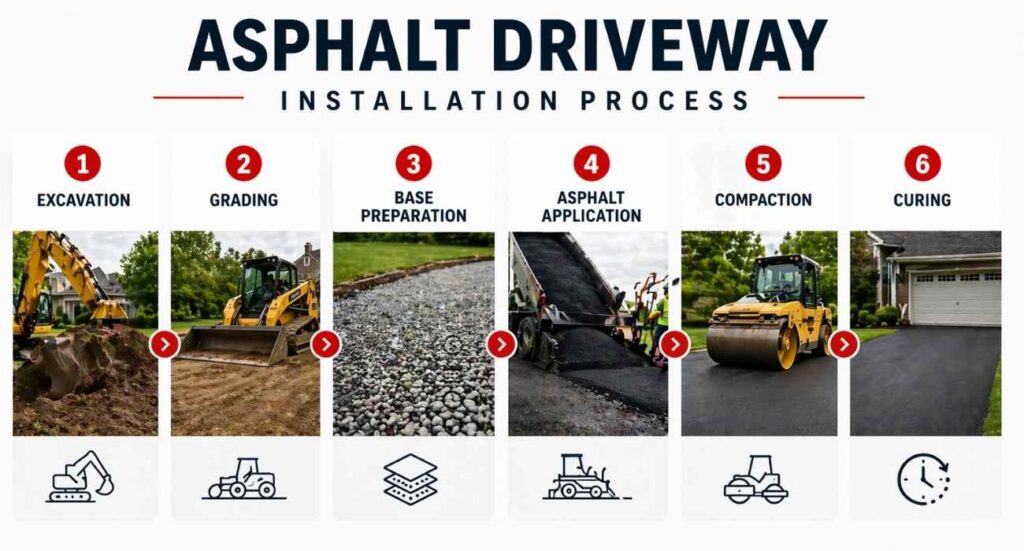
Proper asphalt driveway installation is essential for a durable, smooth, and stable surface. Proper site preparation, drainage, and compaction help prevent premature damage and extend the driveway’s lifespan.
Step-by-Step Installation Process
- Excavation: The existing surface is removed, and the ground is prepared for the new driveway.
- Grading: The ground is shaped to provide proper drainage and prevent water from pooling.
- Base Installation: A compacted aggregate base provides stable support for the asphalt pavement.
- Asphalt Application: Hot-mix asphalt is spread evenly over the prepared base.
- Compaction: The asphalt is compacted to create a smooth, dense, and durable surface.
- Curing and Cooling: The asphalt is allowed to cool and stabilize before regular vehicle use. Follow the contractor’s instructions for when the driveway is ready for traffic.
Each step contributes to the driveway’s long-term performance. Poor drainage, inadequate base preparation, or improper compaction can cause premature cracking and surface damage.Each step plays a critical role in determining the durability and performance of the driveway.
Asphalt Driveway Cost
The cost of installing an asphalt driveway depends on the driveway’s size, site preparation, pavement thickness, drainage requirements, and labor. Removing an existing surface or repairing an unstable base can also affect the final estimate.
Before starting a project, assess the property’s condition and compare itemized contractor estimates. Proper preparation is important because problems with the base or drainage can lead to premature cracking and additional repairs.
For detailed pricing, cost-per-square-foot estimates, and factors that affect your budget, read our complete Asphalt Driveway Cost Guide.
Asphalt Driveway vs Concrete Driveway
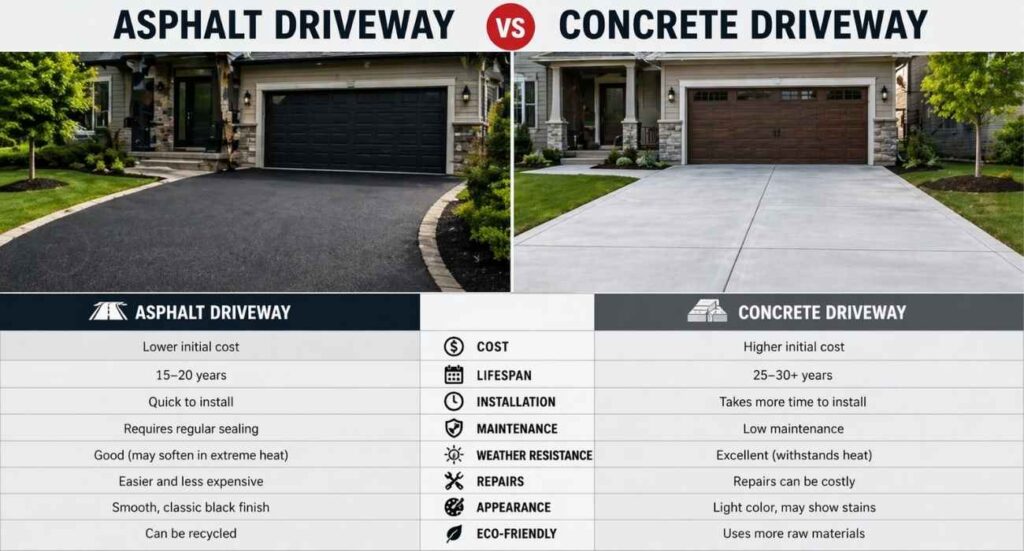
Asphalt and concrete are both common driveway materials, but they differ in installation, maintenance, appearance, and long-term performance. The right choice depends on your property’s conditions, budget, and maintenance preferences.
Cost and Performance Comparison
| Feature | Asphalt Driveway | Concrete Driveway |
|---|---|---|
| Initial cost | Generally lower | Generally higher |
| Installation | Often faster | Usually takes longer, including curing |
| Maintenance | Periodic maintenance is important | Maintenance depends on surface condition |
| Repairs | Localized repairs are often straightforward | Repairs may be more noticeable |
| Appearance | Typically a dark, uniform surface | Offers more colors and finish options |
| Cold weather | Flexible surface can handle some temperature movement | Freeze-thaw damage may occur if concrete is poorly installed or maintained |
Which Driveway Material Should You Choose?
An asphalt driveway may suit homeowners who prefer a dark surface, relatively quick installation, and straightforward repairs. However, it needs proper drainage and periodic maintenance to maintain its condition.
Concrete may be a better choice for homeowners who prefer different decorative finishes and are comfortable with a higher initial investment. Its performance depends on proper installation, joint design, drainage, and weather exposure.
Compare the site conditions, maintenance requirements, and expected lifespan before choosing either material. For detailed pricing, see our Asphalt Driveway Cost Guide. between performance and asphalt driveway cost makes asphalt a reliable and practical choice.
Lifespan of an Asphalt Driveway
A properly installed asphalt driveway can typically last 15–25 years, depending on the quality of installation, traffic levels, climate, and maintenance. Poor drainage, a weak base, and neglected surface damage can shorten its lifespan.
Several factors influence how long an asphalt driveway lasts:
- Installation quality: Proper excavation, base preparation, and compaction help prevent premature damage.
- Drainage: Water accumulation can weaken the pavement structure and contribute to potholes.
- Traffic and vehicle weight: Frequent use and heavy vehicles can increase surface stress.
- Weather exposure: Temperature changes, moisture, and freeze-thaw cycles can affect pavement condition.
- Regular maintenance: Prompt crack repairs and appropriate sealcoating help protect the surface.
Inspect your driveway regularly for cracks, potholes, standing water, and edge deterioration. Addressing these problems early can help preserve the pavement and delay major repairs or replacement.
Asphalt Driveway Maintenance
Regular maintenance helps protect an asphalt driveway from moisture, surface wear, and weather damage. Inspecting the pavement and addressing small problems early can prevent them from becoming more serious.
Essential Maintenance Tasks
- Fill cracks promptly: Seal suitable cracks before water enters the pavement and weakens the underlying base.
- Repair potholes: Fix potholes early to prevent further deterioration and improve driveway safety.
- Clean the surface: Remove leaves, dirt, and debris. Clean oil and chemical spills using suitable products.
- Apply sealcoating when appropriate: Sealcoating can help protect the asphalt surface, but it does not repair structural damage. Follow the pavement condition and product recommendations rather than applying it automatically every year.
- Maintain proper drainage: Keep drainage paths clear and address areas where water collects on or beside the driveway.
The right maintenance schedule depends on the driveway’s condition, traffic, climate, and previous treatments. Regular inspections and timely repairs help maintain a smooth surface and extend the pavement’s useful life.
Common Asphalt Driveway Problems
Even a properly installed asphalt driveway can develop problems over time. Weather exposure, vehicle traffic, drainage issues, and aging can affect the pavement’s condition.
1. Cracks
Cracks may develop because of temperature changes, aging, ground movement, or a weakened base. Small cracks should be inspected and repaired before water enters the pavement.
2. Potholes
Potholes form when pavement deteriorates and sections of the surface break away. Water infiltration, traffic, and underlying base problems can contribute to their development.
3. Fading and Surface Wear
Sunlight and weather gradually affect asphalt’s appearance. A faded surface does not always indicate structural failure, but widespread deterioration should be assessed.
4. Poor Drainage and Standing Water
Water that collects on the driveway may indicate incorrect grading, blocked drainage paths, or surface depressions. Persistent water can accelerate pavement deterioration and should be investigated.
5. Edge Crumbling
Driveway edges may break down when they lack adequate support or experience repeated vehicle loading. Damaged edges can worsen if the underlying material becomes unstable.
When Should You Call a Contractor?
Consider a professional inspection if cracks keep returning, potholes become widespread, water regularly collects on the surface, or sections of the driveway begin to settle. These symptoms may indicate problems beneath the asphalt that surface repairs alone cannot resolve.
Repair vs Replacement
Not every asphalt driveway problem requires a complete replacement. The right solution depends on the extent of the damage, the condition of the underlying base, and whether previous repairs have lasted.
When to Repair an Asphalt Driveway
Repairs may be suitable when the damage is limited and the pavement remains structurally sound. Examples include:
- Small cracks that have not spread extensively.
- Isolated potholes with a stable surrounding surface.
- Minor edge damage that can be repaired properly.
- Localized surface deterioration without widespread base failure.
A contractor should identify the cause of the damage before recommending a repair. Treating the visible surface without addressing drainage or base problems may lead to recurring issues.
When to Replace an Asphalt Driveway
Replacement may be necessary when the pavement has widespread deterioration or the underlying structure can no longer provide adequate support. Signs that replacement may be appropriate include:
- Extensive cracking across multiple sections.
- Repeated potholes and failed repairs.
- Significant settling or deformation.
- Severe drainage problems affecting the pavement structure.
- A deteriorated base that cannot be corrected with localized repairs.
Can an Asphalt Driveway Be Resurfaced?
Resurfacing involves installing a new asphalt layer over an existing pavement. It may be suitable when the existing base is stable and the surface damage is limited. However, resurfacing will not solve serious structural problems or correct every drainage issue.
A professional inspection can help determine whether repair, resurfacing, or complete replacement is the most suitable option for your driveway.
Best Time to Install an Asphalt Driveway
Timing plays a bigger role than most homeowners realize. Asphalt installation requires the right conditions for proper curing and long-term durability.
Ideal Installation Conditions
• Warm weather (spring and summer)
• Dry conditions with no rain
• Moderate temperatures for proper compaction
Installing asphalt in the wrong conditions can lead to premature damage and reduced lifespan.
How to Choose the Right Contractor
Choosing an experienced contractor helps ensure proper driveway installation and long-term performance. Before hiring, consider these factors:
- Experience: Look for experience with asphalt paving and driveway preparation.
- Licensing and insurance: Verify applicable requirements and insurance coverage.
- Written estimates: Compare the work scope, materials, preparation, and drainage provisions.
- References and reviews: Check previous customer feedback and completed projects.
- Installation quality: Ask how the contractor will prepare the base, manage drainage, and compact the asphalt.
A detailed estimate and clear project scope help you understand the work before installation begins.
Common Asphalt Driveway Installation Mistakes
Avoiding common installation mistakes helps improve driveway durability and reduce premature damage.
- Poor base preparation: An unstable base can cause settling and cracking.
- Inadequate drainage: Standing water can weaken the pavement and damage its structure.
- Incorrect compaction: Poor compaction can reduce pavement stability.
- Unsuitable weather: Rain or inappropriate temperatures can affect asphalt placement and compaction.
- Neglected maintenance: Delaying necessary repairs can allow minor damage to worsen.
Proper preparation, suitable materials, and experienced installation help prevent these problems and support long-term driveway performance.
Asphalt Driveway Durability and Weather Conditions
Asphalt driveways can perform well in different climates when properly installed and maintained. In NYC, temperature changes, freeze-thaw cycles, and water exposure can affect pavement condition.
Proper drainage, a stable base, and timely repairs help reduce premature damage. A well-maintained driveway can also improve curb appeal and functionality, making it a practical long-term investment for property owners.
Frequently Asked Questions
How long does an asphalt driveway last?
A properly installed asphalt driveway can last around 15–25 years, depending on drainage, traffic, weather exposure, and maintenance.
How often should an asphalt driveway be sealcoated?
Sealcoating frequency depends on the pavement’s condition, product recommendations, and exposure. It protects the surface but does not repair structural damage.
Can an asphalt driveway be repaired instead of replaced?
Yes. Localized cracks and potholes may be repairable when the surrounding pavement and underlying base remain stable.
Is asphalt suitable for NYC weather?
Asphalt can perform well in NYC when properly installed. Effective drainage and timely repairs help it withstand moisture and seasonal temperature changes.
What affects asphalt driveway installation cost?
Driveway dimensions, excavation, base preparation, asphalt thickness, drainage, and labor all affect the final estimate. See our Asphalt Driveway Cost Guide for more pricing details.
Conclusion
An asphalt driveway can provide a smooth, practical surface for everyday vehicle use. Its long-term performance depends on proper installation, effective drainage, and regular maintenance.
Inspect your driveway periodically and address damage before it becomes more extensive. When repairs are no longer sufficient, consult an experienced contractor to determine whether resurfacing or replacement is appropriate.
Need professional help with your driveway project? Contact NuEra Contracting to discuss your exterior construction needs.
Have Questions? Call NuEra Contracting Today!
📞 347-444-9028
We’re here to help with expert construction, brickwork, roofing, and waterproofing services. Get reliable solutions, friendly support, and professional results for your next project.

