
When building a retaining wall in New York City, most property owners focus on design, materials, and cost. But in reality, the most important factor that determines whether your wall lasts 5 years or 50 years is something you don’t see — retaining wall drainage.
In NYC, where heavy rainfall, freeze-thaw cycles, and dense urban soil conditions are common, proper retaining wall drainage systems are not optional — they are essential. Without proper drainage, even the strongest concrete or block wall can fail over time.
A well-designed drainage system controls water flow, reduces pressure, and protects your investment for the long term.
What Is Retaining Wall Drainage?
Retaining wall drainage is a system designed to safely manage and redirect water away from the wall. It prevents water from building up behind the structure and creating pressure that can weaken or collapse it.
In areas like NYC, where groundwater levels and rainfall can fluctuate, water drainage behind retaining wall systems becomes even more critical.
A complete drainage system typically includes:
• Gravel backfill for proper water movement
• Perforated drainage pipes (French drain system)
• Filter fabric (geotextile layer)
• Surface grading for landscape drainage
These elements work together to ensure that water does not accumulate behind the wall.
Why Retaining Wall Drainage Is Critical in NYC
New York City’s climate and infrastructure create unique challenges for retaining walls. Frequent rain, snow, and freezing temperatures increase the risk of water buildup.
When drainage is ignored, water doesn’t just sit behind the wall — it actively damages it.
Here’s what can happen without proper retaining wall drainage in NYC:
• Wall cracking due to pressure buildup
• Leaning or bulging retaining walls
• Soil erosion and slope instability
• Water seepage into basements or nearby foundations
• Expensive structural repairs
This is why professional retaining wall contractors in NYC always prioritize drainage as part of the construction process.
Understanding Hydrostatic Pressure (The Main Cause of Failure)
Hydrostatic pressure is the force exerted by water when it accumulates in the soil behind a retaining wall.
As soil becomes saturated:
• Water fills the gaps between soil particles
• Pressure increases and pushes against the wall
• The wall experiences constant stress over time
In NYC, this problem becomes worse during heavy rainstorms and winter freeze-thaw cycles. The repeated expansion and contraction can weaken even reinforced walls.
Without proper foundation drainage systems, hydrostatic pressure is one of the leading causes of retaining wall failure.
Key Components of a Retaining Wall Drainage System
A successful retaining wall drainage design in NYC includes multiple layers that work together to control water flow effectively.
1. Gravel Backfill (Drainage Layer)
Gravel is one of the most important elements in any drainage system. Unlike soil, it allows water to pass through easily.
Benefits of gravel backfill:
• Improves water flow behind the wall
• Reduces soil saturation and pressure
• Enhances overall wall stability
2. Retaining Wall Drainage Pipe (French Drain System)
A perforated drainage pipe is installed at the base of the wall to collect and redirect water away from the structure.
For proper installation:
• Place the pipe at the lowest point behind the wall
• Maintain a slope of 1–2% for smooth water flow
• Ensure water exits to a safe drainage outlet
This system is widely used in yard drainage solutions in NYC due to its effectiveness.
3. Filter Fabric (Geotextile Layer)
Filter fabric prevents soil particles from mixing with gravel and clogging the drainage system.
Without this layer:
• Drainage systems can fail over time
• Water flow becomes restricted
• Maintenance costs increase
This is a key component in modern landscape drainage systems.
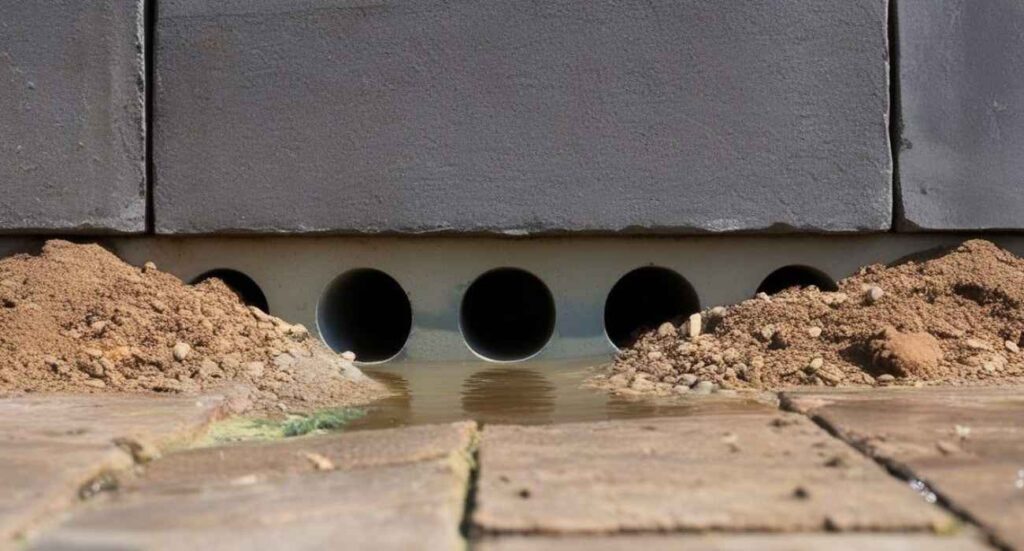
4. Weep Holes (Pressure Relief Openings)
Weep holes are small openings in retaining walls that allow trapped water to escape.
They are commonly used in:
• Concrete retaining wall drainage systems
• Block retaining walls in urban NYC settings
5. Surface Grading and Landscape Drainage
Proper grading ensures that water flows away from the wall instead of toward it.
Best practices include:
• Sloping soil away from the wall
• Preventing water pooling near the base
• Integrating with overall yard drainage design
In NYC properties, where space is limited, proper grading plays a major role in drainage control.
Step-by-Step Installation Process (NYC Standard)
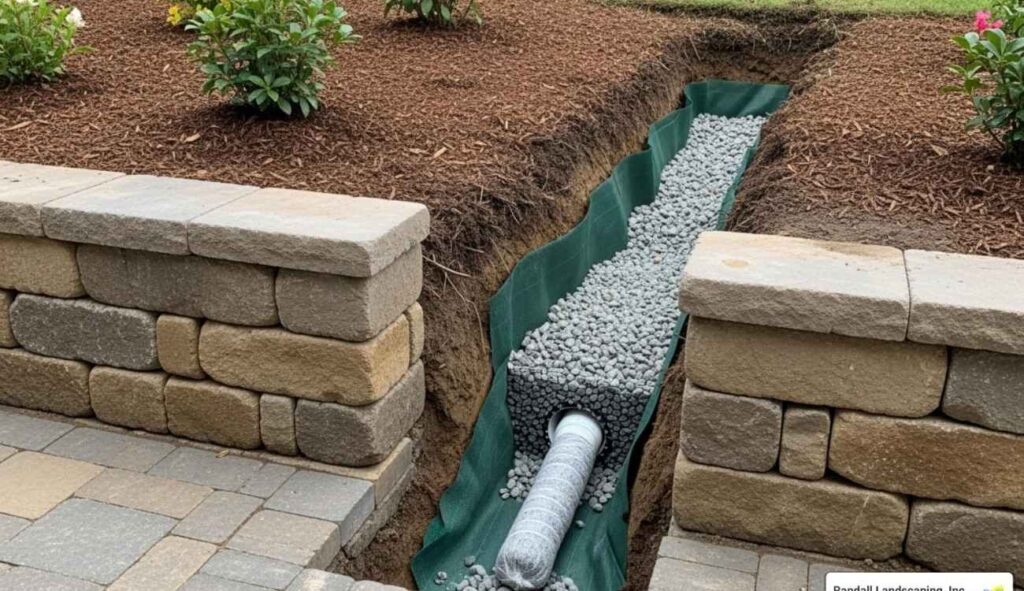
Installing a proper retaining wall drainage system in NYC requires careful planning, correct layering, and precise execution. Each step plays a critical role in ensuring long-term stability and effective water management behind the wall.
Here is the standard installation process:
• Excavation Behind the Wall
The process begins by excavating the area behind the retaining wall. This creates enough space to properly install drainage layers and ensures water can move freely instead of being trapped.
• Installation of Filter Fabric (Geotextile Layer)
A geotextile filter fabric is placed along the excavated area to separate soil from drainage materials. This prevents fine particles from clogging the system over time.
• Adding Gravel Drainage Layer
A layer of clean gravel or crushed stone is installed next. This layer helps water move quickly and reduces pressure buildup behind the wall.
• Placement of Perforated Drainage Pipe
A perforated pipe (often part of a French drain system) is placed at the base of the wall. It is slightly sloped to ensure proper water flow toward a designated outlet.
• Covering Pipe with Additional Gravel
More gravel is added over the pipe to protect it and improve water filtration, allowing water to easily enter the drainage system.
• Wrapping and Securing Filter Fabric
The filter fabric is then wrapped over the gravel layer to prevent soil intrusion and maintain long-term drainage efficiency.
• Final Backfilling and Surface Grading
Soil is added on top, and the surface is properly graded to ensure water flows away from the wall instead of collecting near it.
Drainage Solutions for Different Types of Retaining Walls
Different wall materials require slightly different drainage approaches, especially in NYC conditions.
Block Retaining Wall Drainage
• Uses gravel backfill and pipe systems
• Allows natural water flow through joints
• Common for residential properties
Wood Retaining Wall Drainage
Wood is more vulnerable to moisture, making drainage extremely important.
Without proper drainage:
• Wood can rot quickly
• Structural strength decreases
• Maintenance costs increase
To prevent this:
• Use gravel backfill
• Install a drainage pipe
• Apply waterproofing treatments
Concrete Retaining Wall Drainage
Concrete walls are strong but still affected by water pressure.
They require:
• Weep holes for pressure relief
• Strong drainage pipe systems
• Proper foundation drainage
Common Mistakes in Retaining Wall Drainage and How to Avoid Them
Even a properly built wall can fail if retaining wall drainage is not done correctly. Most problems don’t come from the wall itself, but from simple drainage mistakes during installation.
Below are the most common issues and how to avoid them.
1. Using the Wrong Backfill Material
One of the biggest mistakes in drainage for retaining wall systems is using soil or clay instead of gravel.
Soil holds water, which increases weight and creates pressure behind the wall. Over time, this leads to bulging, cracking, or failure due to hydrostatic pressure.
How to prevent it:
• Use clean gravel or crushed stone as backfill
• Maintain at least 12 inches of drainage layer
• Avoid mixing soil with drainage material
2. Skipping the Drain Pipe
Some builders skip the retaining wall drainage pipe, thinking it is unnecessary for small walls. This is a major mistake.
Without a pipe, water gets trapped behind the wall and builds pressure over time.
How to prevent it:
• Install a perforated drainage pipe at the base
• Run it along the full length of the wall
• Ensure proper slope for water flow
3. No Proper Outlet for Water
A drainage pipe is useless if water has nowhere to go. This is one of the most overlooked issues in retaining wall drainage systems.
If water cannot exit, it stays trapped behind the wall and increases pressure.
How to prevent it:
• Ensure the pipe drains to an open area or outlet
• Provide exit points at wall ends or drainage zones
• Always test water flow during installation
4. Skipping Filter Fabric
Without filter fabric, soil slowly mixes with gravel and blocks the drainage system. This reduces water flow and causes long-term failure.
How to prevent it:
• Install geotextile fabric between soil and gravel
• Fully cover the drainage zone
• Use quality fabric to prevent clogging
Signs Your Retaining Wall Has Poor Drainage
Early warning signs can help prevent major structural damage.
Watch for:
• Water pooling near the wall
• Cracks or bulging sections
• Leaning or shifting structure
• White stains (efflorescence) on the surface
If you notice these issues, it’s important to consult a retaining wall drainage contractor in NYC immediately.
Seasonal Considerations for Retaining Wall Drainage
Seasonal weather changes have a direct impact on how well a retaining wall drainage system performs. Whether it’s heavy rain in spring, falling leaves in autumn, or freezing temperatures in winter, each season creates different challenges for water movement behind the wall.
In areas with changing climates like NYC and similar regions, these seasonal effects can significantly influence the durability of a retaining wall. That’s why understanding how drainage for retaining wall systems reacts throughout the year is essential for long-term stability.
Spring and Summer: Heavy Rainfall and Soil Saturation
During spring and summer, frequent rain and storms can quickly saturate the soil behind a retaining wall. When soil absorbs too much water, it becomes heavier and starts to put extra pressure on the structure.
At this stage, a properly functioning retaining wall drainage system is critical. If the system is working correctly, water will flow through the gravel layer and exit through the drainage pipe without building pressure.
However, if there is any blockage or poor installation, you may notice issues such as water pooling near the base of the wall, slow drainage, or early signs of cracking. These are early warnings of hydrostatic pressure buildup.
To avoid problems during wet seasons, it is important to inspect the drainage pipe before heavy rainfall begins and ensure that all outlets are clear so water can flow freely.
Fall: Leaf Buildup and Drainage Blockages
In autumn, retaining walls face a different kind of challenge. Falling leaves, dirt, and organic debris can accumulate around drainage openings and slowly block water flow.
When this happens, even a properly designed retaining wall drainage system can become less effective because water is unable to exit as intended. Over time, this leads to moisture buildup behind the wall.
Homeowners often notice slower drainage after rain or water collecting near the base of the wall during this season. Regular cleaning around the structure becomes essential at this stage.
Keeping the area clear of leaves and ensuring that surface drains and outlets remain open helps maintain proper water flow and prevents long-term blockage issues.
Winter: Freeze–Thaw Cycles and Frost Pressure
Winter is often the most critical season for any retaining wall drainage system, especially in colder climates like NYC. When water becomes trapped in soil or drainage layers, it can freeze and expand. This expansion creates internal pressure that can shift or crack the wall.
The repeated freezing and thawing cycle gradually weakens both the soil structure and the wall itself. Even small amounts of trapped water can cause long-term damage if not properly managed.
Before winter begins, it is important to make sure that the drainage system is fully clear and functioning. A well-designed system using free-draining gravel and properly sloped drainage pipes helps reduce water retention and minimizes the risk of frost-related damage.
Troubleshooting Retaining Wall Drainage Issues
Even a properly built retaining wall drainage system can develop problems over time due to weather, soil movement, or blocked components. The key is to identify issues early and fix them before they lead to serious structural damage.
Warning Signs of Drainage Problems
Most drainage issues show clear early signs. One of the most common is leaning or bulging walls, which happens when water builds pressure behind the structure.
You may also notice water pooling near the base of the wall, which indicates poor water flow or blocked drainage outlets. In some cases, cracks, shifting blocks, or soil erosion can appear, showing that moisture is not being properly controlled.
How to Fix Drainage Issues
The first step is usually to inspect and clear the drainage pipe system. Blocked perforated pipes are a common cause of failure.
If needed, clean or unblock weep holes to release trapped water. In more serious cases, partial excavation may be required to repair or replace gravel backfill, filter fabric, or the drainage pipe.
Preventative Maintenance Tips
Regular maintenance is the best way to avoid problems. Keep drainage pipes and outlets clear of debris, and inspect the wall after heavy rainfall to catch early warning signs.
Routine checks ensure your retaining wall drainage system continues working efficiently and protects the wall long-term.
Frequently Asked Questions
1. Why is retaining wall drainage important?
Retaining wall drainage is essential to prevent water buildup behind the wall. Proper drainage reduces pressure on the structure and helps avoid cracking, bulging, or long-term damage.
2. What is the best retaining wall drainage system?
The best retaining wall drainage system includes gravel backfill, a perforated pipe (French drain), and filter fabric. This setup allows water to flow freely and safely away from the wall.
3. Do all retaining walls need drainage?
Yes, most retaining walls require proper retaining wall drainage, especially those over a few feet high. Without it, water pressure can weaken the wall over time.
4. How do you install retaining wall drainage?
Retaining wall drainage is installed by placing a perforated pipe at the base, adding a layer of gravel behind the wall, and using filter fabric to prevent clogging. This ensures efficient water flow.
5. What happens if retaining wall drainage is not installed?
Without retaining wall drainage, water can accumulate behind the wall, increasing pressure and leading to cracks, leaning, or even structural failure.
6. How can I tell if my retaining wall drainage is failing?
Signs of poor retaining wall drainage include water pooling, soil erosion, wall bulging, or visible cracks. These issues indicate that water is not being properly managed.
7. How long does retaining wall drainage last?
A properly installed retaining wall drainage system can last 20–30 years or more, especially when maintained regularly and kept free from debris.
Final Thoughts
In a city like New York, where weather conditions and soil movement constantly challenge structures, proper retaining wall drainage in NYC is not just important — it’s essential.
A retaining wall may look strong on the outside, but without a proper drainage system behind it, failure is only a matter of time.
Investing in the right drainage system, yard drainage solutions, and professional installation ensures your retaining wall remains stable, functional, and long-lasting for decades.
Have Questions? Call NuEra Contracting Today!
📞 347-444-9028
We’re here to help with expert construction, brickwork, roofing, and waterproofing services. Get reliable solutions, friendly support, and professional results for your next project.

