Flat roofs are widely used across residential and commercial buildings, especially in dense urban areas like New York. While they offer a clean design and efficient use of space, they also require proper maintenance to perform well over time.
Because water does not run off as quickly as it does on sloped roofs, even minor issues can lead to leaks, moisture buildup, and structural damage. This is why flat roof repair is not just about fixing visible damage—it’s about protecting the entire building system.
In this guide, you’ll learn how flat roof repair works, what problems to watch for, how much repairs cost, and how to choose the right solution for long-term protection.
What Is Flat Roof Repair?
Flat roof repair refers to the process of fixing damage on a low-slope roofing system to restore its waterproofing ability and structural integrity.
These repairs may involve:
• Sealing cracks and leaks
• Fixing damaged membranes
• Improving drainage systems
• Reinforcing weak areas
A proper flat roof repair focuses not only on stopping leaks but also on preventing the same issue from returning.
Common Flat Roof Problems
Flat roofs face consistent exposure to weather and environmental stress. Over time, this leads to several common issues that require attention.
• Flat Roof Leaks
Leaks are the most frequent problem and often develop due to worn-out materials, open seams, or punctures.
• Ponding Water
Standing water weakens roofing materials and increases the risk of long-term damage.
• Surface Cracks and Blisters
Heat and cold cycles cause expansion and contraction, leading to visible surface damage.
• Membrane Deterioration
The outer protective layer can degrade over time, reducing its ability to resist water.
• Drainage Failure
Clogged or poorly designed drainage systems cause water accumulation, which accelerates damage.
Even small issues in a flat roof can quickly turn into larger structural problems if not repaired early.
Signs You Need Flat Roof Repair
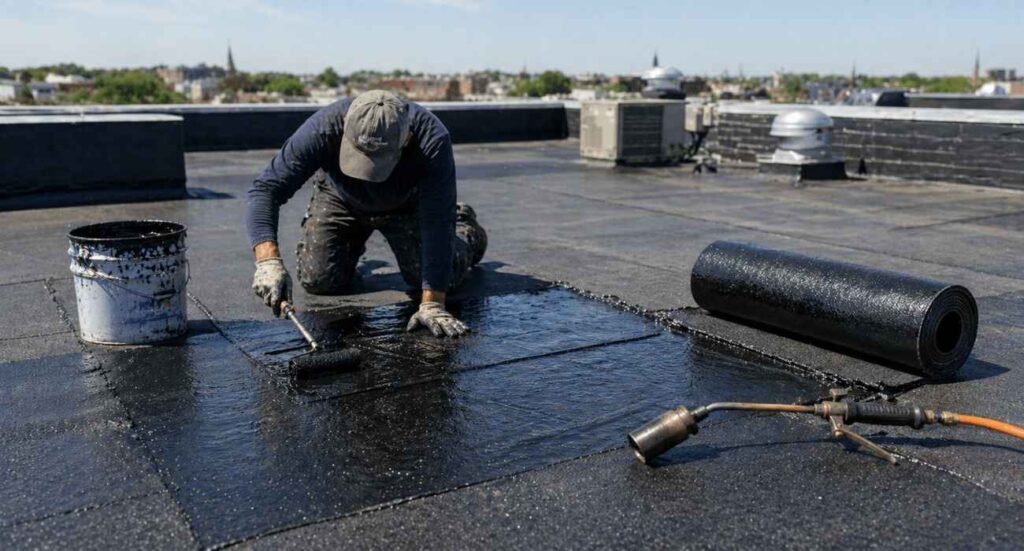
Recognizing early warning signs is key to preventing minor roof issues from turning into costly repairs. Flat roofs often show subtle indicators before serious damage develops, and identifying these signs early can save both time and money.
• Water Stains on Ceilings or Walls
Discoloration or damp spots inside the building usually indicate that moisture is already penetrating the roof system.
• Mold, Mildew, or Musty Odors
Persistent moisture creates the perfect environment for mold growth, which can affect both the structure and indoor air quality.
• Bubbling or Blistering on the Roof Surface
Air or moisture trapped beneath the roofing material can cause bubbles, signaling underlying damage.
• Visible Cracks, Seams, or Punctures
Even small openings can allow water to seep in, leading to more extensive deterioration over time.
• Increased Indoor Humidity
Excess moisture inside the building may be a sign that the roof is no longer properly sealed.
• Sudden Rise in Energy Bills
Damaged roofing can affect insulation performance, causing heating and cooling systems to work harder than usual.
If you notice any of these signs, it’s best to act quickly. A professional inspection can identify the exact cause of the problem and help prevent further damage before repairs become more extensive and expensive.
Emergency Flat Roof Repair: What to Do Immediately
A sudden leak or visible damage on a flat roof can quickly turn into a serious problem if not handled properly. Knowing what to do in an emergency can help minimize damage and protect your property until professional repairs are completed.
• Contain the Water Inside
If water is entering the building, use buckets, towels, or containers to prevent it from spreading to floors, walls, or furniture.
• Relieve Water Pressure (If Safe)
If you notice a bulge in the ceiling, it may be holding trapped water. Carefully releasing it can prevent the ceiling from collapsing—but only attempt this if it’s safe to do so.
• Protect Interior Areas
Move furniture, electronics, and valuables away from the affected area to avoid further damage.
• Apply a Temporary Fix
If accessible, you can use a tarp or temporary sealant to reduce water entry. This is only a short-term solution, not a permanent repair.
• Avoid Walking on the Roof
Wet or damaged flat roofs can be slippery and unsafe. Walking on them may worsen the damage or lead to injury.
• Call a Professional Immediately
Emergency situations require fast and proper handling. A professional contractor can identify the root cause and perform a reliable repair.
Taking quick action during a roofing emergency can significantly reduce repair costs and prevent structural damage. However, temporary fixes should never replace a proper inspection and long-term solution.
Flat Roof Inspection: What Professionals Actually Check
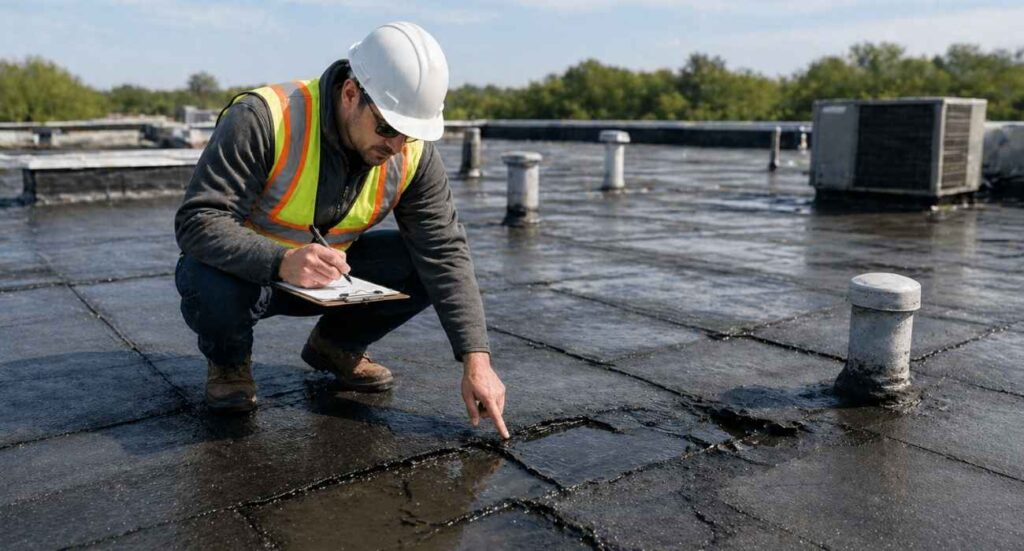
A professional inspection is one of the most important steps in maintaining a flat roof. It not only identifies visible damage but also uncovers hidden issues that could lead to costly repairs if ignored. In many cases, a timely flat roof inspection can prevent small problems from turning into major repair work.
During a detailed inspection, contractors evaluate multiple areas of the roofing system to ensure everything is functioning properly.
• Roof Surface Condition
The inspector checks for cracks, blisters, punctures, and signs of wear that may lead to leaks or deeper structural issues.
• Seams and Joints
Weak or open seams are a common source of water entry. These areas are carefully examined for separation, aging, or damage.
• Drainage System
Drains, gutters, and scuppers are inspected to ensure water is flowing properly and not collecting on the roof, which can lead to long-term deterioration.
• Flashing and Edges
Flashing around vents, skylights, and roof edges is checked for gaps, rust, or deterioration that could allow water infiltration.
• Signs of Moisture Intrusion
Inspectors look for trapped moisture beneath the surface, which may not be visible but can weaken the structure over time and lead to hidden damage.
• Structural Integrity
The overall condition of the roof deck is evaluated to ensure it can safely support the roofing system without risk of failure.
A thorough flat roof inspection provides a clear understanding of your roof’s condition and helps determine whether simple repairs are enough or if more extensive work is needed. Regular inspections also play a key role in extending the lifespan of your roof and avoiding unexpected damage.
Flat Roof Repair Methods
The right flat roof repair method depends on the condition of the roof and the extent of damage. Professional contractors typically choose from the following approaches:
Patch Repair
Used for localized damage, patching seals small cracks, holes, or punctures. It is a quick and cost-effective flat roof repair solution for minor issues.
Membrane Repair or Replacement
If the roofing membrane is damaged or worn out, sections may be repaired or replaced to restore full protection.
Liquid Coating or Sealant Application
Liquid waterproofing coatings are applied to create a seamless protective layer, especially useful for aging roofs.
Flashing and Joint Repair
Edges, joints, and transitions are sealed to prevent water from entering vulnerable areas.
Drainage Improvement
This includes clearing blockages or correcting slope issues to prevent ponding water.
Each of these flat roof repair methods is selected based on durability, cost-effectiveness, and long-term performance.
Flat Roof Materials and Repair Compatibility
Understanding the type of roofing system you have is essential before choosing any repair approach. Each material behaves differently under stress, weather exposure, and aging, which means the repair method must match the system to ensure durability.
• EPDM Rubber Roofing – Known for its flexibility and resistance to extreme temperatures, EPDM is widely used on flat roofs. Repairs usually involve specialized patches bonded with adhesive. When done correctly, these repairs can blend seamlessly with the existing surface and maintain long-term performance.
• TPO Roofing – This single-ply membrane is popular for its energy efficiency and reflective properties. Repairs are typically completed using heat-welded patches, which create a strong, watertight seal when applied by trained professionals.
• Modified Bitumen – A durable, asphalt-based system designed to handle heavy wear. Repairs may involve torch-applied techniques or cold-process materials, depending on the condition of the roof and safety requirements.
• Built-Up Roofing (BUR) – Made up of multiple layers of bitumen and reinforcing fabrics, BUR systems are thick and highly protective. Repairing these roofs often requires reinforcing damaged sections and applying additional layers to restore their strength.
Choosing the correct repair method is not just about fixing the visible issue—it’s about ensuring compatibility between materials and techniques. Using the wrong approach can lead to recurring problems, reduced lifespan, and higher long-term costs. That’s why a proper inspection and professional assessment are key to achieving a reliable and lasting result.
Flat Roof Repair Cost
Flat roof repair cost varies depending on the size of the damage, the material used, and the complexity of the repair.
| Repair Type | Estimated Cost Range |
|---|---|
| Minor Patch Repair | $300 – $800 |
| Leak Repair | $500 – $1,500 |
| Structural Repair | $2,000 – $7,000+ |
For a detailed breakdown of pricing, check our roof leak repair cost guide to better understand what impacts your total expenses.
What Affects Flat Roof Repair Cost?
Several factors influence the overall cost of Flat Roof Repair, and understanding them can help you plan your budget more effectively.
• Size of the Affected Area
Larger damaged sections require more materials and labor, which naturally increases the overall cost.
• Type of Roofing Material
Different systems—such as rubber, TPO, or bitumen—require specific repair techniques and materials, which can vary in price.
• Accessibility and Building Height
Roofs that are difficult to access or located on taller buildings may require additional equipment and safety measures, adding to labor costs.
• Labor and Location
Costs can vary depending on the region. In high-demand areas like major cities, labor rates are typically higher due to experience, regulations, and operating expenses.
• Extent of Water Damage
Surface-level issues are quicker and cheaper to fix, while deeper structural damage requires more extensive work and increases the total cost.
Addressing problems early is always the smarter investment. Small repairs completed on time are far more cost-effective than waiting until the damage spreads and requires a full roof replacement.
DIY vs Professional Flat Roof Repair
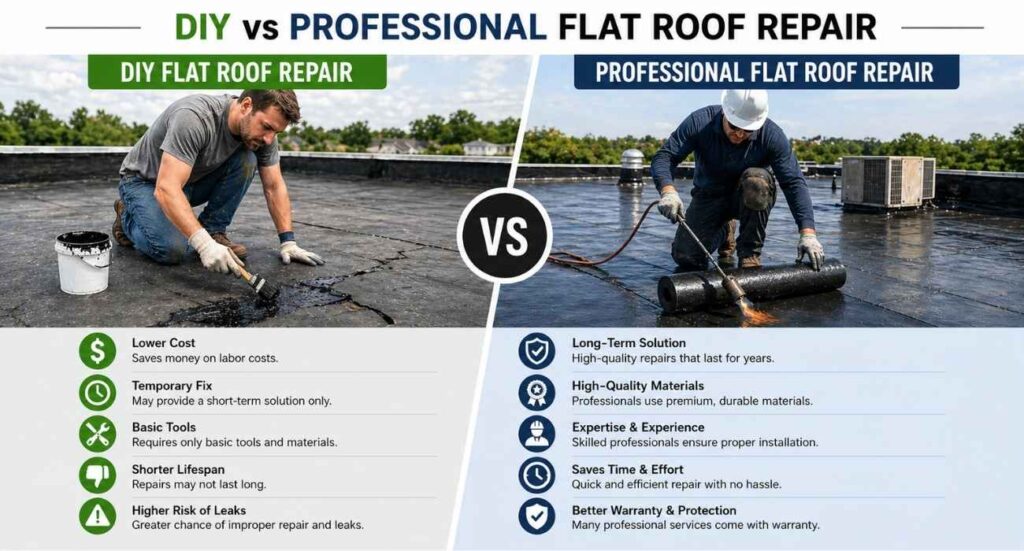
While DIY solutions may seem appealing, they often provide only temporary results.
| DIY Repair | Professional Flat Roof Repair |
|---|---|
| Lower upfront cost | Long-term durability |
| Limited effectiveness | Complete problem diagnosis |
| Higher risk of leaks | Proper waterproofing |
| Safety concerns | Code-compliant work |
Flat roof systems require proper tools, materials, and expertise. Professional repair ensures long-lasting results.
Why Flat Roof Repairs Fail
Many flat roof repairs fail not because the problem is too severe, but because critical steps are overlooked during the process. In most cases, these failures are preventable with the right approach and attention to detail.
• Incorrect Repair Methods for the Material
Each roofing system requires a specific repair technique. Using the wrong method—such as applying incompatible materials—can lead to poor bonding and recurring issues.
• Poor Surface Preparation
A repair area must be properly cleaned and dried before any work begins. Dirt, moisture, or debris can prevent materials from adhering correctly, reducing the effectiveness of the repair.
• Low-Quality Sealants or Patches
Using substandard materials may seem cost-effective initially, but they tend to break down quickly under weather exposure, leading to repeated repairs.
• Ignoring Drainage Problems
If water continues to collect on the roof, even the best repair will eventually fail. Proper drainage is essential for long-term performance.
• Delaying Minor Repairs
Small cracks or leaks may not seem urgent, but they often expand over time. Delayed action allows damage to spread, making repairs more complex and expensive.
A reliable repair goes beyond fixing what’s visible on the surface. It involves identifying the root cause of the issue and addressing it properly to ensure long-lasting results.
Flat Roof Repair vs Replacement
Deciding between repair and replacement depends on the roof’s overall condition.
Repair Is Best When:
• Damage is minor and localized
• Roof age is relatively low
• Structure is still strong
Replacement Is Better When:
• Damage is widespread
• Roof has reached its lifespan
• Repairs are becoming frequent
A professional inspection helps determine the most cost-effective solution.
How to Extend the Life of Your Flat Roof
Preventive maintenance plays a crucial role in extending the life of a flat roof and minimizing the need for major repairs. A proactive approach not only protects the structure but also helps avoid unexpected costs over time.
• Schedule Regular Inspections
Have your roof inspected at least twice a year, ideally before and after extreme weather seasons, to catch issues early.
• Keep Drains and Gutters Clear
Blocked drainage systems can lead to standing water, which is one of the leading causes of roof damage. Regular cleaning ensures proper water flow.
• Address Minor Issues Promptly
Small cracks, loose seams, or early signs of wear should be fixed immediately before they develop into larger problems.
• Apply Protective Coatings When Needed
Coatings can add an extra layer of protection against UV rays, moisture, and general wear, helping to extend the roof’s lifespan.
• Limit Unnecessary Foot Traffic
Excessive walking on the roof can weaken materials and cause surface damage, especially on older systems.
Consistent maintenance not only improves performance but also significantly reduces the likelihood of major repair work, helping you protect your investment in the long run.
Why Choose NuEra Contracting for Flat Roof Repair
Choosing the right contractor ensures your repair lasts.
NuEra Contracting provides reliable flat roof repair services tailored to both residential and commercial buildings.
• Experienced in waterproofing and roofing systems
• Familiar with NYC construction and compliance requirements
• Focused on long-term solutions, not temporary fixes
• Quick response for urgent repair needs
• Clear communication and honest pricing
We don’t just fix roofs—we protect your property investment.
Service Areas
We offer flat roof repair services across:
• Bronx
• Brooklyn
• Manhattan
• Queens
• Staten Island
FAQs
How much does flat roof repair cost in the USA?
The flat roof repair cost typically ranges from $300 to $7,000, depending on the size of the damage, roofing material, and labor. Small repairs like patching are more affordable, while structural or large-area repairs cost significantly more.
How long does a flat roof repair last?
A well-done repair can last 5 to 10 years or more, especially when high-quality materials are used and regular maintenance is performed. The lifespan also depends on weather conditions and roof usage.
Can a flat roof leak be fixed permanently?
Yes, but only if the root cause is properly identified. Temporary fixes may stop leaks for a short time, but a professional repair that addresses underlying issues can provide a long-term solution.
What is the best way to repair a leaking flat roof?
The best method depends on the roof type and damage level. Common solutions include:
• Patching small leaks
• Replacing damaged membrane sections
• Applying waterproof coatings
A professional inspection ensures the right method is used.
Is it better to repair or replace a flat roof?
Repair is usually the better option when the damage is minor and the roof is still in good condition. Replacement is recommended if the roof is old, has widespread damage, or requires frequent repairs.
How do I know if my flat roof needs repair?
Common signs include:
• Water stains on ceilings
• Standing water on the roof
• Cracks or bubbling surfaces
• Mold or damp smell inside
If you notice any of these, it’s best to schedule an inspection immediately.
Can I repair a flat roof myself?
While small fixes may seem manageable, DIY repairs often fail due to improper materials or techniques. Professional repair ensures durability, safety, and long-term results.
How urgent is a flat roof leak?
Very urgent. Even a small leak can quickly lead to structural damage, mold growth, and higher repair costs if left untreated.
What causes flat roofs to fail?
Flat roofs usually fail due to:
• Poor drainage
• Weather damage
• Aging materials
• Improper installation
Regular maintenance can prevent most of these issues.
How often should a flat roof be inspected?
It’s recommended to inspect a flat roof at least twice a year and after major storms to catch issues early and avoid costly repairs.
Conclusion
Flat roof repair is essential for maintaining the safety and durability of your property. Small issues can quickly turn into major problems if left untreated, especially in climates where roofs face constant exposure to moisture and temperature changes.
By understanding common problems, repair methods, and costs, you can make informed decisions and protect your investment.Don’t let minor roof issues turn into costly damage.
Schedule your professional flat roof inspection and repair today.
Have Questions? Call NuEra Contracting Today!
📞 347-444-9028
We’re here to help with expert construction, brickwork, roofing, and waterproofing services. Get reliable solutions, friendly support, and professional results for your next project.

