
Crawl space moisture is commonly caused by ground moisture, water intrusion, poor drainage, plumbing leaks, condensation, or humid air. Identifying the source is the first step toward choosing the right solution.
A damp crawl space may seem like a minor issue, but persistent moisture can affect insulation, wood components, indoor air quality, and foundation conditions. It can also create conditions that support mold growth and wood decay.
For homeowners and property owners, recognizing the causes and warning signs early can help prevent a moisture problem from developing into a larger repair project.
In this guide, we explain crawl space moisture, its common causes and warning signs, moisture control methods, waterproofing options, and prevention strategies. We also cover important considerations for properties in NYC and Nassau County.
What Is Crawl Space Moisture?
Crawl space moisture means excess water or humidity in the area beneath a building. It can enter from the soil, foundation walls, plumbing, rainwater, condensation, or humid outdoor air.
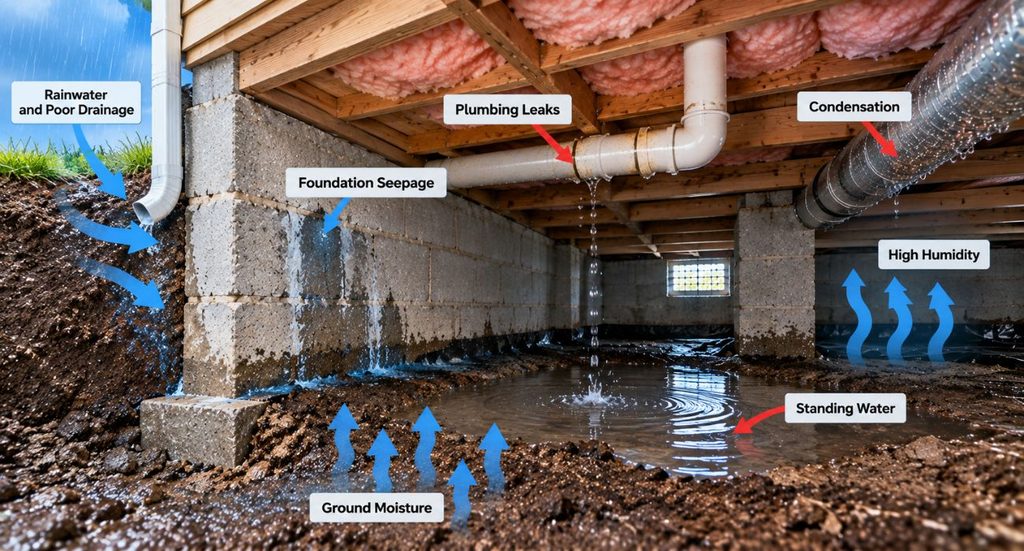
Moisture does not always appear as visible standing water. It can also exist as water vapor or humid air, making the problem harder to notice during a routine inspection.
Common forms of crawl space moisture include:
- Standing water on the crawl space floor
- Damp soil beneath the building
- Water stains on foundation walls
- Condensation on pipes or other surfaces
- High humidity inside the crawl space
- Wet insulation that no longer performs properly
- Damp or deteriorating wood
- Musty odors caused by persistent moisture
Even when the floor looks dry, high humidity can still affect wood, insulation, and other materials over time. Identifying the moisture source early can help prevent more serious crawl space moisture problems.
What Causes Crawl Space Moisture?
Crawl space moisture can develop for several reasons. Finding the source is important because simply removing visible water may not solve the underlying problem.
- Ground Moisture: Damp soil beneath the building can release moisture into the crawl space as water vapor. This can increase humidity even when there is no standing water.
- Poor Drainage: Water can collect around the foundation when the property has poor grading or inadequate drainage. It may then enter through foundation cracks, joints, or other openings.
- Foundation Water Intrusion: Cracks, porous masonry, and damaged waterproofing can allow water to enter the crawl space during or after rainfall.
- Plumbing Leaks: Leaking pipes, drains, or plumbing connections can introduce water directly into the crawl space. Even a small leak can create ongoing moisture problems if left unresolved.
- Condensation: Warm, humid air can come into contact with cooler pipes, walls, or other surfaces. This can create condensation and increase moisture levels.
- Humid Outdoor Air: Open crawl space vents can allow humid outdoor air to enter. Under certain conditions, this can raise humidity and contribute to condensation.
- Rain and Snowmelt: Heavy rain and melting snow can increase water around the foundation. Poor grading or drainage may direct this water toward the crawl space instead of away from the building.
What Are the Signs of Crawl Space Moisture?
Common signs of crawl space moisture include musty odors, damp insulation, condensation, water stains, mold growth, standing water, and deteriorating wood. Some signs are obvious, while others may develop slowly and go unnoticed.
Warning Signs to Look For
- Musty or damp odors
- Standing water or damp soil
- Water stains on foundation walls
- Wet or damaged insulation
- Condensation on pipes and other surfaces
- Visible mold or mildew
- Peeling or deteriorating materials
- Wood rot or other signs of wood deterioration
- Unusually high humidity
- Increased pest activity
A crawl space can have a moisture problem even when there is no standing water. Water vapor and high humidity can still affect insulation, wood, and other building materials.
If you notice persistent odors, condensation, mold, or damp materials, it is important to identify where the moisture is coming from. Addressing the source early can help prevent the problem from becoming more extensive.
Why Is Crawl Space Moisture a Problem?
Persistent crawl space moisture can affect the condition of materials beneath a building. Over time, ongoing moisture may contribute to mold growth, wood deterioration, damaged insulation, unpleasant odors, and other building concerns.
The impact depends on how much moisture is present, where it comes from, how long it remains, and which materials are exposed.
Mold Growth
Damp conditions can support mold growth when other necessary conditions are present. Mold may develop on wood, insulation, and other materials that remain damp.
Wood Deterioration
Long-term moisture exposure can contribute to the deterioration of wood components. Continued dampness may increase the risk of wood decay over time.
Damaged Insulation
Insulation that becomes wet may lose effectiveness and can be difficult to keep dry. Moisture can also affect the surrounding materials if the problem continues.
Unpleasant Odors
A damp crawl space can develop persistent musty odors. These odors may extend into nearby areas of the building, particularly when moisture remains uncontrolled.
Foundation Concerns
Water entering through foundation walls can indicate drainage, water intrusion, or waterproofing problems. These conditions may require further inspection to identify the source.
The seriousness of a crawl space moisture problem varies from property to property. Identifying the moisture source and addressing ongoing water or humidity can help protect the affected materials and prevent the problem from becoming more extensive.
How to Find the Source of Crawl Space Moisture
The best way to address crawl space moisture is to identify where the water or humidity is coming from before selecting a solution.
Start by looking for patterns.
| What You Notice | Possible Source |
|---|---|
| Standing water after rain | Drainage or surface water |
| Damp soil | Ground moisture |
| Water stains on foundation walls | Foundation seepage |
| Condensation on pipes | High humidity |
| Water near plumbing | Plumbing leak |
| Wet areas near crawl space openings | Rainwater or outdoor air |
| Persistent musty odor | Ongoing moisture |
| Damp insulation | Water intrusion or humidity |
These signs can help identify possible sources, but they do not replace a professional inspection when the cause is unclear.
How Do You Fix Crawl Space Moisture?
Fixing crawl space moisture starts with finding and correcting the source of the moisture. Once the source is addressed, the remaining moisture can be controlled with the right solution for the space.
The appropriate approach depends on whether the problem comes from groundwater, poor drainage, soil moisture, plumbing leaks, condensation, foundation seepage, or another source.
Common solutions include:
- Improve exterior drainage: Redirect water away from the foundation and crawl space.
- Repair plumbing leaks: Fix leaking pipes, drains, or connections that are adding moisture.
- Seal appropriate openings: Reduce unwanted air and moisture entry where sealing is suitable.
- Install a ground moisture barrier: Cover exposed soil with an appropriate barrier to help limit moisture vapor.
- Address foundation water intrusion: Repair or waterproof areas where water is entering through foundation walls.
- Improve moisture control: Take steps to reduce ongoing humidity and moisture levels.
- Use dehumidification: A dehumidifier may help control humidity when excess moisture remains after the source is addressed.
- Encapsulate the crawl space: Crawl space encapsulation may be appropriate when broader moisture and humidity control is needed.
A moisture barrier or encapsulation system should not replace repairs for active water intrusion. If water is entering through the foundation or collecting beneath the building, the underlying water problem should be addressed first.
Once the source is controlled, the crawl space can be evaluated for the most suitable combination of drainage, moisture barriers, waterproofing, ventilation, or dehumidification.
Crawl Space Moisture Control Methods
Effective crawl space moisture control usually requires more than one step. The right approach depends on the property’s drainage, foundation, soil moisture, and humidity levels.
Improve Drainage
Keep rainwater away from the foundation by checking gutters, downspouts, grading, and drainage systems. Proper drainage can reduce water reaching the crawl space.
Install a Ground Moisture Barrier
A ground moisture barrier can help reduce water vapor from exposed soil. It is especially useful when damp soil is contributing to high humidity.
Address Foundation Seepage
If water enters through foundation walls, identify the source before choosing a repair. Crawl space waterproofing may be appropriate depending on the condition.
Control Humidity
High humidity can contribute to condensation, odors, and material deterioration. Dehumidification may help when excess humidity remains after moisture sources are addressed.
Seal Appropriate Openings
Sealing suitable openings can help limit humid air and unwanted water entry. This should be part of an overall moisture-control strategy.
The goal is to control the source, entry points, and humidity rather than rely on one solution alone.
Crawl Space Waterproofing
Crawl space waterproofing helps prevent or manage water entering through foundation walls, surrounding soil, and other vulnerable areas. The right approach depends on the source of the water and the condition of the foundation.
Common waterproofing work may include:
- Foundation wall waterproofing
- Crack repair
- Drainage improvements
- Ground moisture control
- Water management around the foundation
- Sealing vulnerable areas
Waterproofing should address the source of the water, not simply cover visible moisture. If water intrusion keeps returning, a professional assessment can help identify where the water is entering and determine the appropriate waterproofing solution.
Vapor Barrier vs Crawl Space Encapsulation
A vapor barrier mainly helps limit moisture vapor from the ground, while crawl space encapsulation is a broader approach to controlling moisture and humidity throughout the crawl space.
Vapor Barrier
A vapor barrier is generally installed over exposed crawl space soil to reduce moisture vapor entering from the ground. It can help limit moisture from damp soil but is usually only one part of a larger moisture-control strategy.
Crawl Space Encapsulation
Crawl space encapsulation generally creates a more controlled environment by sealing appropriate surfaces and openings. Depending on the property’s conditions, an encapsulation system may include:
- Ground moisture barrier
- Foundation wall coverage
- Sealed seams and edges
- Air sealing
- Humidity control
The main difference is the scope of moisture control. A vapor barrier primarily addresses moisture coming from the ground, while encapsulation can address multiple moisture and humidity pathways within the crawl space.
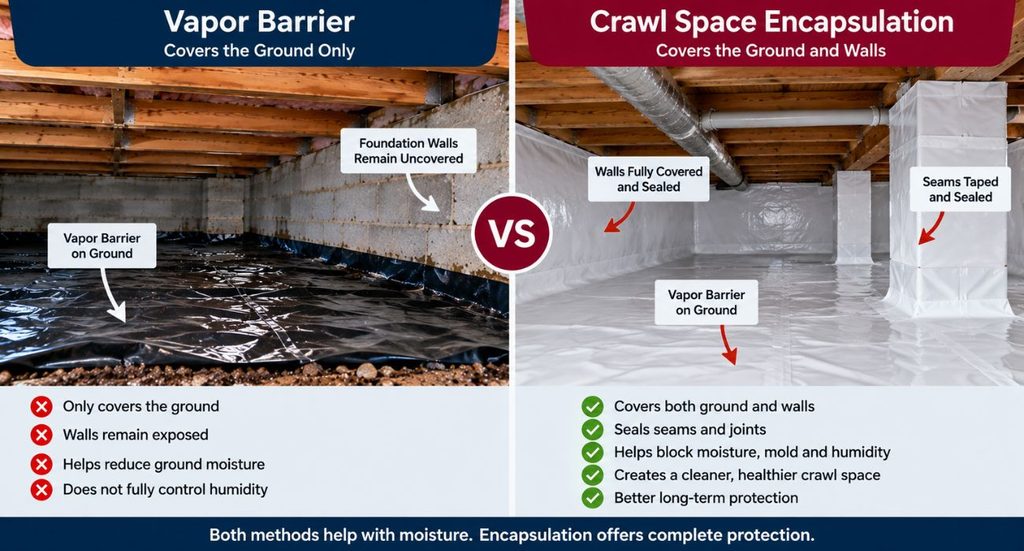
The right approach depends on the source and severity of the moisture problem, as well as the condition and construction of the crawl space.
Does a Crawl Space Need a Dehumidifier?
A crawl space dehumidifier may help control excessive humidity, but it is not a solution for every type of moisture problem. Its usefulness depends on why humidity is elevated and whether other sources of moisture have already been addressed.
A dehumidifier cannot fix an active foundation leak, plumbing leak, or major drainage problem. These sources should be identified and corrected before relying on humidity control.
If moisture remains after the primary water sources have been addressed, a professional may recommend dehumidification as part of an overall crawl space moisture control strategy.
The goal is not simply to lower humidity. It is to identify the moisture source first and then use the appropriate combination of drainage, waterproofing, moisture barriers, sealing, and humidity control for the property.
How to Prevent Crawl Space Moisture
Preventing crawl space moisture starts with keeping water away from the foundation and controlling moisture sources inside the crawl space. Regular maintenance can help identify potential problems before they become more difficult to address.
Useful maintenance steps include:
- Clean gutters regularly to prevent water from overflowing near the foundation.
- Keep downspouts directing water away from the foundation to reduce water accumulation around the building.
- Check for drainage problems that may direct water toward the crawl space.
- Inspect plumbing for leaks and address leaking pipes or connections promptly.
- Look for foundation cracks or water stains that may indicate moisture intrusion.
- Monitor crawl space humidity for signs of excessive moisture.
- Keep exposed soil properly covered where appropriate to help limit moisture vapor.
- Inspect insulation for dampness and signs of moisture exposure.
- Check the crawl space after heavy rain for standing water, damp areas, or new water stains.
- Address moisture problems early before continued exposure affects building materials.
Regular inspections can help identify problems before they become more extensive. If you notice recurring dampness, standing water, or high humidity, finding and correcting the moisture source should be the first step.
FAQs
What Causes Moisture in a Crawl Space?
Crawl space moisture can come from ground vapor, poor drainage, foundation seepage, plumbing leaks, condensation, rainwater, snowmelt, or humid air. Identifying the specific source is important before choosing a solution.
How Do I Get Rid of Crawl Space Moisture?
Start by identifying and correcting the moisture source. Depending on the problem, solutions may include drainage improvements, foundation waterproofing, a ground moisture barrier, sealing, or humidity control.
Is Crawl Space Moisture Normal?
Some moisture can occur naturally, but persistent dampness, standing water, condensation, or high humidity should be investigated. These conditions may indicate an ongoing moisture source that needs attention.
Does a Vapor Barrier Stop Crawl Space Moisture?
A vapor barrier can reduce moisture vapor coming from the ground, but it does not automatically solve active water intrusion, plumbing leaks, or drainage problems. The underlying source should be addressed separately.
Is Crawl Space Encapsulation the Same as Waterproofing?
No. Crawl space encapsulation is generally a broader moisture-control approach, while waterproofing focuses primarily on preventing or managing water intrusion. Depending on the property, both may be part of an overall moisture-control strategy.
Can Crawl Space Moisture Cause Mold?
Persistent moisture can create conditions that support mold growth. Controlling the moisture source is an important part of addressing the problem and limiting continued moisture exposure.
Why Choose NuEra Contracting?
NuEra Contracting provides professional waterproofing, masonry, roofing, restoration, and construction services for properties throughout NYC and Nassau County.
With 27+ years of experience and 999+ completed projects, our team works with property owners to identify construction and moisture-related problems. We assess the condition of the property and recommend an appropriate solution based on the specific issue.
If you are dealing with recurring moisture, water intrusion, damp conditions, or foundation seepage, NuEra Contracting can help assess the problem and determine the appropriate next steps. Contact our team at 347-444-9028 to discuss your property and schedule an inspection.
Conclusion
Crawl space moisture should not be ignored when it causes persistent dampness or visible damage. Common sources include ground moisture, drainage problems, foundation seepage, plumbing leaks, condensation, and high humidity.
The right solution depends on the moisture source. Options may include drainage improvements, waterproofing, moisture barriers, crawl space encapsulation, or humidity control.
If you need help with crawl space moisture or water intrusion, NuEra Contracting provides waterproofing and construction services throughout NYC and Nassau County. Contact our team to discuss your property and determine the next steps.
Have Questions? Call NuEra Contracting Today!
📞 347-444-9028
We’re here to help with expert construction, brickwork, roofing, and waterproofing services. Get reliable solutions, friendly support, and professional results for your next project.

