
Efflorescence is a common masonry issue that appears as white or powdery deposits on brick, concrete, stone, and other porous surfaces. It develops when moisture moves through masonry and carries dissolved salts toward the surface.
The deposits are often cosmetic, but recurring buildup can indicate an underlying moisture problem. Understanding the cause is important before choosing a cleaning, repair, or waterproofing solution.
This guide explains the common causes, warning signs, removal methods, prevention steps, and situations where professional masonry or waterproofing may be needed.
What Is Efflorescence?
Efflorescence occurs when water moves through porous masonry and transports soluble salts to the surface. As the moisture evaporates, the salts remain behind as a white or light-colored residue.
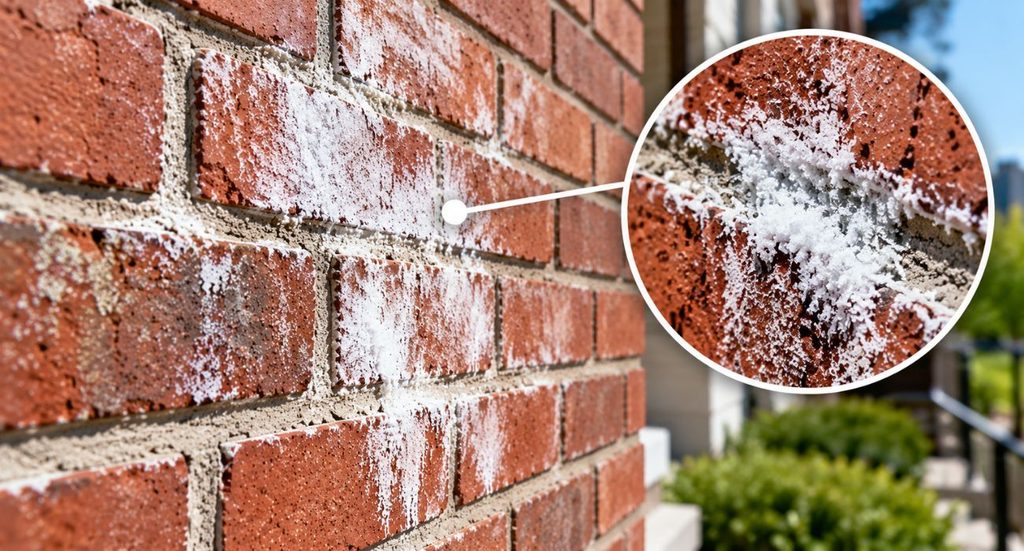
It can appear on:
- Brick walls
- Concrete
- Concrete blocks
- Stone masonry
- Mortar joints
- Foundation walls
- Exterior facades
The residue may look like white powder, stains, or a thin crystalline coating. It can sometimes be brushed away, but cleaning the surface does not necessarily eliminate the moisture source.
What Causes Efflorescence?
Moisture is the main factor behind these mineral deposits. Water must move through masonry and carry soluble salts toward the surface before they can form.
Common causes include:
Water Intrusion
Rainwater can enter brick and masonry through cracks, deteriorated joints, damaged surfaces, or other openings. As water travels through the material, it can carry dissolved salts toward the exterior.
Poor Drainage
Water that collects around a building can increase moisture exposure. Poor grading, blocked drainage systems, or improperly directed downspouts may allow water to remain near masonry and foundations.
Ground Moisture
Masonry located near soil can absorb moisture from the surrounding ground. This is especially relevant to foundation walls, basements, and other below-grade areas.
New Masonry Construction
New brick, mortar, and concrete can contain moisture and soluble salts. As these materials dry, temporary white deposits may appear during the curing process.
Plumbing or Drainage Leaks
A leaking pipe, drain, or other water source can introduce moisture into masonry. If the leak remains unresolved, the deposits may continue returning after cleaning.
What Does Efflorescence Look Like?
These deposits are usually white, grayish, or light-colored and may have a powdery or crystalline appearance.
Common signs include:
- White or chalky residue
- Irregular stains
- Crust-like buildup
- Deposits around mortar joints
- White marks near moisture-prone areas
Not every white mark on masonry is caused by mineral salts. Paint residue, dirt, mold, and other substances can sometimes look similar.
Where Does Efflorescence Commonly Occur?
Efflorescence can develop wherever porous masonry is exposed to moisture.
Exterior Brick Walls
Rain and moisture can penetrate brick and mortar joints, particularly where the facade has deteriorated or water is not being properly managed.
Foundation Walls
Below-grade masonry can be exposed to groundwater and soil moisture. Continued exposure can leave visible deposits on foundation surfaces.
Basement Walls
Basements may develop white mineral residue when moisture moves through concrete or masonry walls.
Concrete Surfaces
Concrete blocks, slabs, retaining walls, and other concrete structures can also develop salt deposits.
Chimneys and Masonry Features
Chimneys, parapets, steps, and other exposed masonry features can experience moisture-related buildup because they are exposed to rain and changing weather conditions.
Is Efflorescence a Serious Problem?
In many cases, the visible residue is primarily a cosmetic concern. However, recurring deposits can indicate that moisture is moving through the masonry.
Removing the surface buildup may improve the appearance, but it will not necessarily stop the problem if water continues entering the wall.
Persistent moisture may also contribute to:
- Mortar deterioration
- Brick damage
- Surface deterioration
- Freeze-thaw damage
- Water stains
- Corrosion of embedded metal components
The severity depends on the location, moisture source, frequency of recurrence, and condition of the masonry.
Efflorescence vs Mold: What Is the Difference?
Efflorescence and mold can sometimes look similar, but they are different problems.
Efflorescence consists of mineral salts left behind when moisture evaporates from masonry. It is generally white or light-colored and often has a powdery appearance.
Mold is biological growth that can develop where moisture and suitable organic materials are present. It may appear in several colors and usually has a different texture.
If you are unsure what is causing a particular stain, the moisture source and condition of the affected surface should be evaluated before choosing a treatment.
How to Remove Efflorescence
The appropriate efflorescence removal method depends on the masonry material and the amount of buildup.
For light deposits, a soft brush may sometimes remove loose residue. More extensive buildup may require careful cleaning with a method appropriate for the specific masonry.
Possible approaches include:
- Dry brushing
- Suitable masonry cleaning solutions
- Controlled water cleaning
- Professional surface treatment
Aggressive cleaning can damage brick, mortar, concrete, or stone. The material should therefore be evaluated before using chemicals, pressure washing, or other treatments.
If the deposits continue returning, cleaning alone may not solve the problem. The underlying moisture source should be investigated.
How to Prevent Efflorescence
Preventing recurring efflorescence starts with controlling moisture around and inside the masonry.
Useful maintenance steps include:
- Keep gutters and downspouts clear.
- Direct roof water away from foundations.
- Check for drainage problems around the property.
- Repair deteriorated mortar joints.
- Seal appropriate cracks and openings.
- Address foundation water intrusion.
- Inspect areas where moisture repeatedly appears.
- Maintain exterior masonry and waterproofing systems.
The right approach depends on where the moisture originates. A brick wall exposed to driving rain may require a different solution from a foundation wall affected by groundwater.
When Does Efflorescence Require Masonry Repair?
Occasional surface deposits do not always mean masonry repair is necessary. However, professional evaluation may be appropriate when the white residue keeps returning, especially after cleaning.
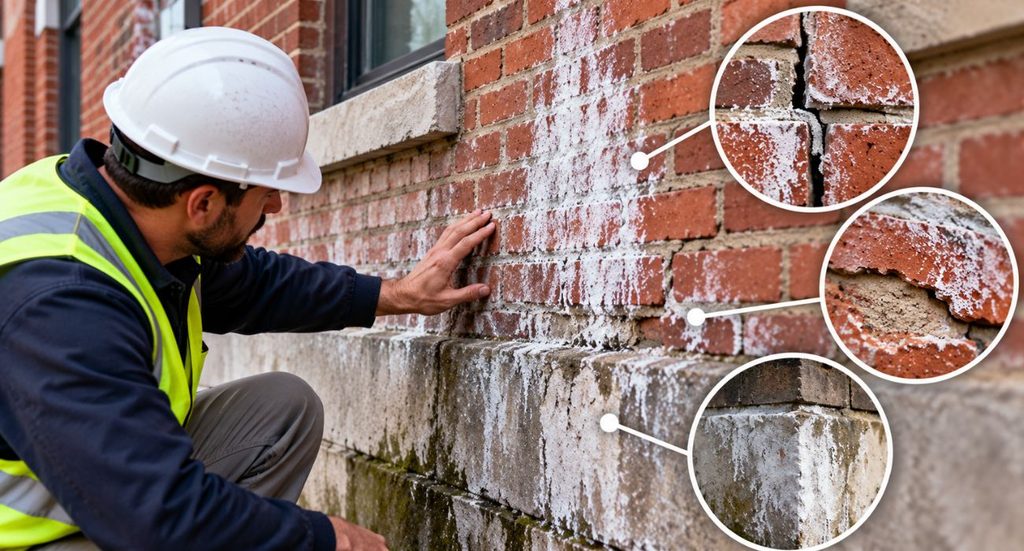
Look for additional signs such as:
- Cracked bricks
- Deteriorated mortar
- Spalling surfaces
- Water stains
- Loose masonry
- Recurring dampness
- Cracks around windows or doors
- Deterioration near the foundation
These conditions may indicate that moisture is affecting the masonry beyond the visible surface.
How Waterproofing Helps Prevent Efflorescence
Because moisture plays a major role in efflorescence, waterproofing and water management can help reduce recurring deposits.
Depending on the source, solutions may include foundation waterproofing, drainage improvements, crack repair, or other moisture-control measures.
For example, if water repeatedly enters through a foundation wall, cleaning the white residue will not stop it from returning. The water entry point needs to be identified and addressed.
NuEra Contracting provides waterproofing services for properties throughout NYC and Nassau County.
Efflorescence on NYC Buildings
NYC buildings are exposed to rain, snow, freezing temperatures, humidity, and changing weather conditions. These factors can increase moisture exposure on brick, concrete, stone, and other masonry surfaces.
Older buildings may also have aging mortar joints, deteriorated masonry, or drainage conditions that allow water to enter more easily.
White mineral deposits can therefore be a useful visual indication that moisture is moving through a masonry surface. However, the deposits alone cannot identify the exact source.
A professional assessment can help determine whether the moisture is related to surface exposure, drainage, foundation water intrusion, deteriorated masonry, or another condition.
Frequently Asked Questions
What is efflorescence?
Efflorescence is a white or light-colored deposit that forms when moisture moves through porous masonry and leaves dissolved salts behind as the water evaporates.
Is efflorescence harmful to brick?
It is often primarily cosmetic, but recurring deposits can indicate ongoing moisture movement. Continued moisture exposure may contribute to other masonry deterioration.
How do you remove efflorescence?
Light deposits may sometimes be removed with a soft brush. More extensive buildup may require careful masonry cleaning based on the surface material. If the deposits return, the moisture source should also be investigated.
Does efflorescence mean there is a leak?
Not necessarily. The moisture may come from rainwater, ground moisture, condensation, drainage problems, or another source. Further inspection may be needed to determine the cause.
Can efflorescence come back after cleaning?
Yes. If the underlying moisture source remains, new mineral deposits can develop after the surface has been cleaned.
Is efflorescence the same as mold?
No. Efflorescence consists of mineral salts, while mold is biological growth. Although they can sometimes look similar, they require different approaches.
Can waterproofing prevent efflorescence?
Controlling the moisture source can help reduce recurring deposits. Depending on the property, waterproofing, drainage improvements, or masonry repairs may be appropriate.
Why Choose NuEra Contracting?
NuEra Contracting provides professional masonry, waterproofing, roofing, restoration, and construction services throughout NYC and Nassau County.
Our team works with property owners to identify masonry and moisture-related problems and determine appropriate repair solutions based on the property’s condition.
If recurring white deposits are accompanied by water intrusion, deteriorated masonry, or other visible damage, addressing the underlying moisture problem is important.
Contact NuEra Contracting to discuss your property and determine the appropriate next steps.
Conclusion
Efflorescence is a common sign of moisture movement through brick, concrete, stone, and other porous masonry. While the deposits are often cosmetic, recurring buildup can point to an underlying moisture or water-management problem.
Cleaning may remove the visible residue, but controlling the moisture source is the key to reducing recurrence. If your masonry shows repeated deposits, water stains, cracks, or deterioration, a professional assessment can help determine the appropriate repair or waterproofing solution.
Have Questions? Call NuEra Contracting Today!
📞 347-444-9028
We’re here to help with expert construction, brickwork, roofing, and waterproofing services. Get reliable solutions, friendly support, and professional results for your next project.

