Water in the basement is something no property owner wants to deal with—but it’s more common than you might think. What starts as a small damp patch or musty smell can quickly turn into mold growth, damaged walls, and costly structural issues.
That’s why understanding basement waterproofing cost is so important before starting any repair or prevention work. Whether you’re dealing with an active leak or planning long-term protection, knowing what to expect helps you avoid unnecessary expenses and choose the right solution.
Signs You May Need Waterproofing
Before thinking about pricing, it’s important to recognize when your basement needs attention.
• Water stains on walls or floors
• Persistent damp or musty odor
• Mold or mildew growth
• Cracks in foundation walls
• Peeling paint or white residue
• Increased indoor humidity
Catching these early can significantly reduce your overall basement leak repair cost.
What Is Basement Waterproofing?
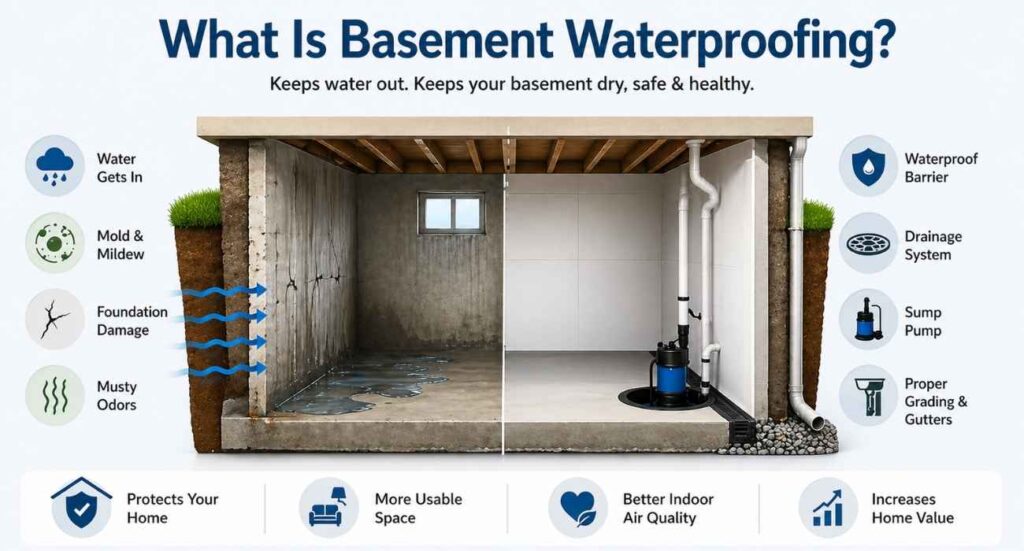
Basement waterproofing is the process of preventing water from entering your basement using a combination of sealing, drainage, and foundation waterproofing methods. It focuses on identifying entry points such as foundation cracks, joints, and porous surfaces, then applying the right basement waterproofing systems to stop water seepage and moisture intrusion.
This can include interior waterproofing systems that manage water already inside the basement and exterior waterproofing solutions that prevent water from reaching the foundation. The goal is not only to fix visible leaks but also to create long-term protection against water damage, mold growth, and structural issues.
The goal is simple:
- Keep your basement dry
- Prevent long-term water damage
- Improve indoor air quality
- Protect your home’s foundation
There are two main approaches:
- Interior waterproofing (managing water inside)
- Exterior waterproofing (blocking water before it enters)
Each waterproofing method affects your overall basement waterproofing cost based on the size of the basement, the extent of the damage, and the system required.
Average Basement Waterproofing Cost
The typical basement waterproofing cost in the U.S. ranges between:
| Waterproofing Type | Estimated Cost |
|---|---|
| Interior Solutions | $2,000 – $8,000 |
| Exterior Systems | $8,000 – $20,000+ |
| Crack Repairs | $500 – $2,500 |
| Sump Pump Installation | $1,500 – $5,000 |
NYC Pricing Insight
In cities like NYC, the basement waterproofing cost is typically 15–30% higher due to increased labor rates, permit requirements, and the complexity of working on older or tightly built structures. Limited access, building regulations, specialized equipment, and foundation repair needs can also increase the overall waterproofing cost.
The cost to waterproof a basement varies depending on the waterproofing method and your property’s condition. Factors such as basement size, the severity of water damage, foundation cracks, water seepage, and whether interior waterproofing or exterior waterproofing is needed all play a major role in determining the final price.
How Costs Vary by Waterproofing Method
Different methods come with different price ranges and purposes:
| Method | Cost Level | Purpose |
|---|---|---|
| Interior Waterproofing | Lower | Controls moisture inside |
| Exterior Waterproofing | Higher | Prevents water entry |
| Crack Sealing | Low | Fixes small issues |
| Drainage Systems | Medium | Improves water flow |
Choosing the right approach helps balance cost with long-term effectiveness.
Interior Waterproofing: Budget-Friendly Option
Interior solutions are commonly used for minor leaks or dampness.
Common methods include:
• Waterproof coatings and sealants
• Interior drainage systems
• Sump pumps
• Vapor barriers
These solutions typically cost between $2,000 and $8,000.
Best for:
• Small leaks
• Damp conditions
• Budget-conscious homeowners
Exterior Waterproofing: Long-Term Protection
Exterior systems prevent water from entering the structure.
This process includes:
• Excavation around the foundation
• Waterproof membrane installation
• Drainage systems like French drains
• Foundation sealing
Costs usually range from $8,000 to $20,000+, depending on complexity.
Best for:
• Ongoing water problems
• Structural concerns
• Long-term protection
5 Key Factors That Affect Pricing
Several elements influence the basement waterproofing cost, and understanding them can help you plan your budget more effectively. The final price is not based on a single factor but a combination of conditions specific to your property.
• Damage level – Minor issues such as small cracks or light dampness are relatively inexpensive to fix, while severe water intrusion or structural damage requires more extensive and costly repairs.
• Method used – Interior waterproofing solutions are generally more affordable, whereas exterior systems involve excavation, advanced materials, and higher labor costs, making them more expensive.
• Basement size – Larger basements require more materials, time, and labor, which naturally increases the overall cost of the project.
• Drainage conditions – Poor drainage around the property can lead to continuous water pressure against the foundation. Fixing drainage issues may require additional work, adding to the total cost.
• Location – Urban areas like NYC typically have higher labor rates, stricter regulations, and permit requirements, all of which can increase the overall expense.
All of these factors combined directly impact your total basement waterproofing cost, which is why a professional assessment is essential for an accurate estimate.
How to Estimate Your Basement Waterproofing Cost
While exact pricing always requires a professional inspection, you can still get a rough idea of the expected cost by evaluating a few key factors on your own.
• Identifying the problem severity
Start by understanding whether you’re dealing with minor dampness, small cracks, or active water leaks. The more serious the issue, the more extensive the repair work will be.
• Measuring the affected area
The size of the damaged or vulnerable area plays a major role in cost. Larger basements or widespread issues typically require more materials and labor.
• Choosing the method needed
Determine whether the situation calls for interior waterproofing, exterior protection, or a combination of both. Each method comes with different pricing and long-term benefits.
• Considering location and labor
Labor costs vary depending on your location. In cities like NYC, higher labor rates and building regulations can increase the overall expense.
Estimating basement waterproofing cost early gives you a clearer picture of your budget and helps you make better decisions before starting the project.
Understanding Waterproofing Expenses
Costs include more than just the repair itself. When evaluating basement waterproofing cost, it’s important to understand that several steps and components are involved in delivering a long-lasting solution—not just fixing the visible issue.
• Inspection and diagnosis
A detailed inspection helps identify the root cause of the problem, whether it’s cracks, poor drainage, or hidden moisture. This step ensures the right solution is applied from the start.
• Surface preparation
Before any waterproofing work begins, surfaces must be cleaned, repaired, and properly prepared. This improves adhesion and ensures the effectiveness of coatings or membranes.
• Materials and installation
The quality and type of materials used—such as sealants, membranes, or drainage systems—play a major role in both performance and cost. Professional installation ensures these materials work as intended.
• Labor costs
Labor is a significant part of the total cost, especially in areas like NYC where skilled work and compliance requirements are higher. Complex projects naturally require more time and expertise.
• Drainage improvements
In many cases, improving drainage around the property is essential. This may include installing drains or adjusting grading to prevent water buildup near the foundation.
In some situations, additional work such as mold removal, structural repairs, or replacing damaged materials may be required. These factors can increase the overall basement waterproofing cost but are necessary to ensure a complete and long-lasting solution.
Top 7 Smart Ways to Save Money
You can reduce your basement waterproofing cost by taking a proactive and well-planned approach. Understanding the factors involved helps you avoid unnecessary expenses and make smarter decisions.
• Fix issues early
Small cracks or damp spots can turn into major problems if ignored. Early repairs keep costs manageable.
• Maintain proper drainage
Ensure water flows away from your foundation. Poor drainage increases pressure on walls and leads to expensive damage.
• Clean gutters regularly
Clogged gutters cause water buildup around your home, which can impact your basement over time.
• Avoid temporary fixes
Quick solutions may fail and lead to repeated repairs. It’s better to invest in a proper fix from the start.
• Compare contractor quotes
Getting multiple estimates helps you understand pricing and choose a reliable professional.
• Invest in long-term solutions
Durable waterproofing methods may cost more upfront but reduce future repair needs.
• Schedule regular inspections
Routine checks help identify problems early and prevent costly repairs.
Following these steps can help control your basement waterproofing cost while ensuring long-term protection and performance.
DIY vs Professional Waterproofing
| DIY Approach | Professional Service |
|---|---|
| Lower upfront cost | Long-term reliability |
| Temporary fix | Permanent solution |
| Higher risk | Expert assessment |
DIY methods may help short term, but professional work ensures durability.
Common Basement Waterproofing Mistakes to Avoid
Many homeowners end up spending more than necessary due to avoidable mistakes. Understanding these can help you protect your investment and keep your basement waterproofing cost under control.
• Relying on temporary fixes
Surface sealants may work for a short time but don’t solve the root problem, leading to recurring issues and higher costs.
• Ignoring drainage issues
If water continues to collect around your foundation, even a good system can fail. Poor drainage is a major cause of waterproofing problems.
• Choosing the cheapest option only
Low-cost solutions often mean lower quality, which can result in repeated repairs and increased overall expense.
• Skipping professional inspection
Without proper assessment, the wrong method may be used. A professional inspection ensures the right solution for your situation.
• Delaying repairs
Small cracks or damp spots can quickly worsen. Early action helps avoid bigger, more expensive repairs.
Avoiding these mistakes helps ensure your waterproofing system is effective, long-lasting, and cost-efficient.
Basement vs Foundation Waterproofing
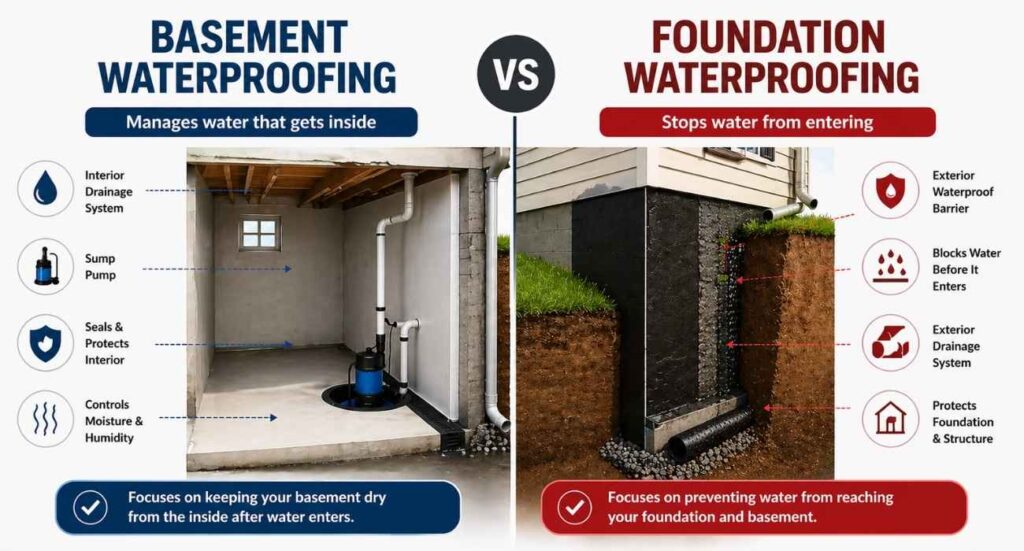
These are often confused but serve different purposes:
| Feature | Basement Work | Foundation Work |
|---|---|---|
| Focus | Interior | Exterior |
| Cost | Lower | Higher |
| Purpose | Manage water | Prevent entry |
Both may be required in more serious cases.
For exterior protection, check our foundation waterproofing cost guide to understand long-term solutions.
Affordable Waterproofing: What Matters Most
Affordable doesn’t mean choosing the cheapest option—it means selecting the right solution for your situation. Understanding basement waterproofing cost helps you avoid short-term fixes that can lead to higher expenses later.
• Interior methods for minor issues
Interior solutions are budget-friendly and work well for small leaks or dampness. They help manage water but may not fully stop it.
• Exterior systems for long-term protection
Exterior waterproofing has a higher upfront basement waterproofing cost, but it prevents water from entering and reduces future repairs.
• Professional evaluation matters
A proper inspection helps you choose the right method from the start, avoiding unnecessary work and keeping your basement waterproofing cost under control.
Choosing the right approach early is the best way to balance cost, performance, and long-term protection while managing your overall basement waterproofing cost effectively.
Hidden Factors That Affect Cost
Affordable doesn’t mean choosing the cheapest option—it means selecting the right solution for your situation. Understanding basement waterproofing cost helps you avoid short-term fixes that can lead to higher expenses later.
• Interior methods for minor issues
Interior solutions are budget-friendly and work well for small leaks or dampness. They help manage water but may not fully stop it.
• Exterior systems for long-term protection
Exterior waterproofing has a higher upfront cost, but it prevents water from entering and reduces the need for future repairs.
• Professional evaluation matters
A proper inspection helps you choose the right method from the start, avoiding unnecessary work and keeping your overall expenses under control.
Choosing the right approach early is the best way to balance cost, performance, and long-term protection—while keeping your basement waterproofing cost efficient and manageable.
How Long Do Waterproofing Solutions Last?
• Interior Waterproofing Methods (5–10 Years)
Interior solutions such as sealants, coatings, sump pumps, and drainage systems generally last between 5 to 10 years. Their lifespan depends on proper installation and regular maintenance. While these methods are effective at controlling moisture inside the basement, they do not stop water from entering the structure entirely. Over time, continued pressure from outside moisture can reduce their effectiveness, making periodic inspections and upkeep important.
• Exterior Waterproofing Systems (20+ Years)
Exterior waterproofing is a more permanent solution and can last 20 years or more when installed correctly. These systems involve sealing the foundation from the outside using protective membranes and improving drainage around the structure. Because they block water before it reaches the basement walls, they experience less internal stress and tend to require fewer repairs over time.
The overall lifespan of any waterproofing system depends on several key factors:
• Quality of materials used
• Professional installation
• Soil and drainage conditions around the property
• Regular maintenance and timely repairs
Choosing the right method and maintaining it properly can significantly extend its lifespan and help avoid repeated repair costs in the future.
FAQs
What is the average basement waterproofing cost?
The average basement waterproofing cost typically ranges from $2,000 to $20,000+, depending on the size of the basement, the severity of the water issue, and the method used. Interior solutions are more affordable, while exterior waterproofing systems cost more due to excavation and labor.
Is basement waterproofing worth it?
Yes, basement waterproofing is a smart investment. It helps prevent structural damage, mold growth, and costly repairs, while also improving indoor air quality and increasing overall property value.
What is the most affordable way to waterproof a basement?
Interior sealants and waterproof coatings are usually the most budget-friendly options. They are effective for minor moisture issues but may not provide a long-term solution for more serious water intrusion problems.
How long does basement waterproofing take?
Most waterproofing projects are completed within 1 to 7 days, depending on the size of the basement and the complexity of the work. Interior solutions are typically quicker, while exterior waterproofing may take longer due to excavation and preparation.
Does basement waterproofing increase home value?
Yes, investing in basement waterproofing can significantly increase your home’s value.
Why Choose NuEra Contracting
NuEra Contracting provides reliable waterproofing solutions across NYC.
• Experienced professionals
• Code-compliant work
• Honest pricing
• Fast response
Service Areas
• Bronx
• Brooklyn
• Manhattan
• Queens
• Staten Island
Conclusion
Understanding basement waterproofing cost helps you make informed decisions and avoid unnecessary expenses. Knowing what to expect allows you to choose the right waterproofing solution instead of relying on temporary fixes that often fail over time.
Even small basement leaks, water seepage, or moisture problems can quickly lead to mold growth, wall damage, and structural issues. Investing in professional basement waterproofing early helps reduce repair costs, protects your foundation, improves indoor air quality, and adds long-term value to your home.
Have Questions? Call NuEra Contracting Today!
📞 347-444-9028
We’re here to help with expert construction, brickwork, roofing, and waterproofing services. Get reliable solutions, friendly support, and professional results for your next project.

