
A parapet roof is one of the most reliable and widely used roofing systems in modern construction. Especially in urban environments, where buildings are closely spaced and rooftop access is common, parapet roofs provide a combination of safety, durability, and controlled drainage.
While many people see a parapet wall as just a design feature, it actually plays a critical role in protecting the building. It helps prevent water damage, reduces wind pressure at roof edges, and improves the overall structural performance.
However, like any construction element, a parapet roof must be properly designed, built, and maintained. Poor detailing—especially around coping, flashing, or drainage—can lead to recurring leakage and costly repairs.
This guide covers everything you need to know, including parapet wall types, roof coping details, waterproofing methods, and how parapet roofs compare to other roofing systems.
What Is a Parapet Roof?
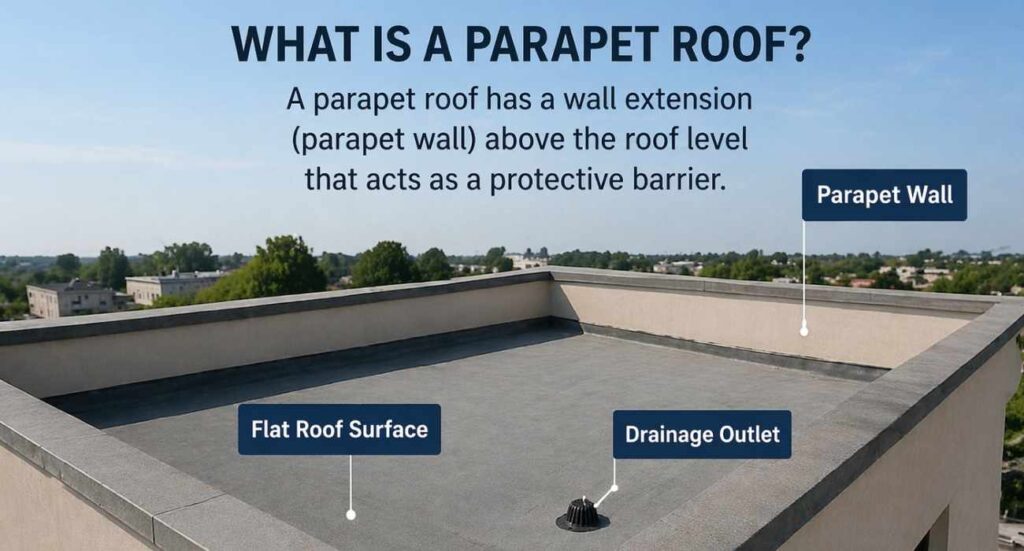
A parapet roof is a roof where the exterior wall extends above the roofline, forming a barrier around the edge. This vertical extension is known as a parapet wall.
Instead of leaving the roof exposed at the edges, the parapet creates a defined boundary that serves both protective and functional purposes.
You will commonly find parapet roofs in:
• Residential homes with flat roofs
• Commercial buildings and offices
• Urban and industrial structures
In simple terms, it is a flat roof enclosed by a protective wall, designed to improve safety and water management.
Parapet Wall Types (Design Variations Explained)
Understanding different parapet wall types is essential because each design affects performance, drainage, and maintenance.
Common Parapet Wall Types
| Type | Description | Typical Use |
|---|---|---|
| Plain Parapet | Simple vertical wall | Modern buildings |
| Perforated Parapet | Open decorative patterns | Aesthetic designs |
| Paneled Parapet | Structured panel look | Commercial properties |
| Sloped Parapet | Slight incline for water flow | Rain-prone areas |
| Stepped Parapet | Stair-like pattern | Traditional architecture |
Each type serves both structural and visual purposes, but all require proper detailing to prevent issues like leakage or cracking.
A parapet roof relies on a properly constructed parapet wall for safety, drainage, and weather protection. Learn more in our Parapet Wall Guide.
Key Features of a Parapet Roof
A parapet roof offers several built-in features that make it highly effective for modern construction.
The most important feature is safety. The parapet wall acts as a barrier that reduces the risk of falls, especially in buildings where rooftops are accessible.
Another key function is water control. Instead of allowing water to spill over the edges, the parapet helps direct it toward drainage outlets.
It also improves wind resistance, particularly in taller buildings, by reducing wind pressure at roof edges.
Key features include:
• Acts as a safety barrier
• Controls water runoff
• Improves wind resistance
• Enhances building appearance
• Conceals rooftop systems
Parapet Roof vs Flat Roof (Key Differences)
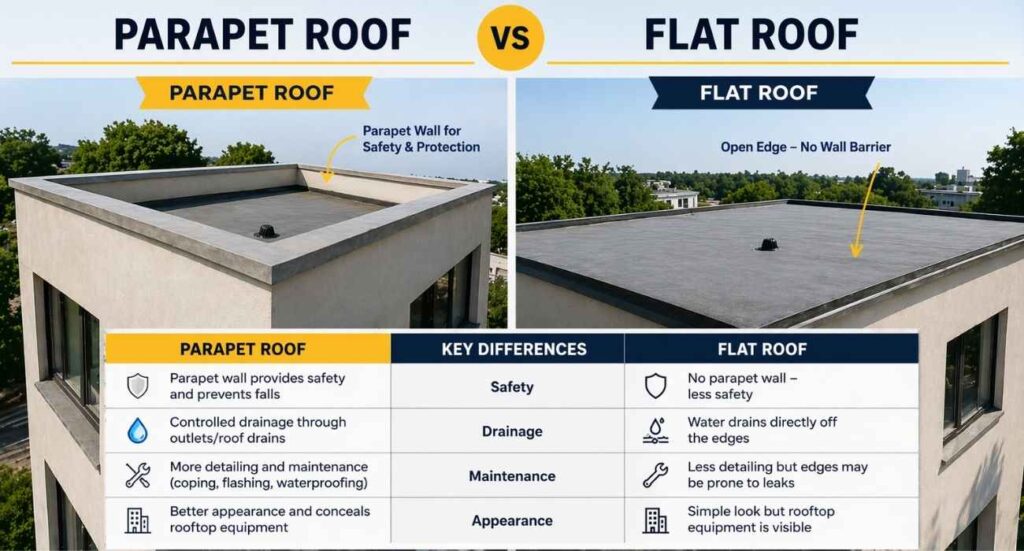
Many people confuse a parapet roof with a standard flat roof, but there are important differences.
A flat roof without a parapet ends at the edge, allowing water to drain directly off the sides. In contrast, a parapet roof includes a boundary wall that controls water flow and improves safety.
Key Differences:
• Safety: Parapet roofs provide edge protection; flat roofs do not
• Drainage: Parapet roofs use controlled drainage systems
• Maintenance: Parapet roofs require more detailing but offer better protection
• Appearance: Parapet roofs provide a cleaner, more finished look
For urban buildings, a parapet roof is generally the more practical and safer choice.
Roof Coping Details (Most Critical Element)
One of the most important aspects of a parapet roof is roof coping.
Coping is installed on top of the parapet wall and acts as a protective cover that prevents water from entering the structure.
Without proper coping, rainwater seeps into the wall, leading to cracks, dampness, and internal damage.
Important Coping Details:
• Should have a slight slope to shed water
• Must extend beyond the wall to prevent dripping
• Requires proper sealing at joints
• Should be made from durable materials
Common materials include concrete, metal, and stone.
A well-designed coping system is essential for long-term performance.
Flat Roof Construction and Its Connection to Parapet Roofs
A parapet roof is usually built on a flat roof system, so understanding flat roof construction is important.
Flat roofs are designed with a slight slope to allow water drainage, even though they appear level.
Basic Flat Roof Layers:
• Structural slab (concrete or steel)
• Insulation layer
• Waterproofing membrane
• Protective surface layer
The parapet wall is integrated into this system, and special attention is required at the junction where the roof meets the wall.
This area is one of the most common sources of leakage if not properly sealed.
Roof Flashing Materials (Critical for Leak Prevention)
Flashing is installed at joints and intersections to prevent water penetration. In parapet roofs, flashing is especially important where the roof meets the parapet wall.
Common Roof Flashing Materials:
• Aluminum (lightweight and corrosion-resistant)
• Galvanized steel (strong and durable)
• Copper (premium and long-lasting)
• Bituminous flashing (flexible and cost-effective)
Proper flashing installation is essential. Even small gaps can allow water to enter and cause damage over time.
Parapet Roof Waterproofing
Waterproofing is one of the most critical factors in maintaining a parapet roof. Since parapet walls are exposed to rain, sunlight, and temperature changes, they are highly vulnerable to water damage.
Water typically enters through:
• The top of the parapet wall
• Roof-to-wall junctions
• Cracks and damaged surfaces
Common Waterproofing Methods:
• Liquid membrane coating
• Bituminous waterproofing
• Cementitious coating
Waterproofing Comparison
| Method | Durability | Best For |
|---|---|---|
| Liquid Membrane | High | Residential roofs |
| Bitumen | Very High | Commercial buildings |
| Cementitious | Moderate | Small repairs |
Proper application is essential—missing key areas can result in recurring leakage.
Different Types of Roofs (Where Parapet Roof Fits)
To better understand parapet roofs, it helps to compare them with other roof types.
Common Roof Types:
• Flat roof (without parapet)
• Gable roof
• Hip roof
• Shed roof
• Mansard roof
Gable Roof Design vs Parapet Roof
A gable roof design features two sloping sides that form a peak, allowing natural water drainage. In contrast, a parapet roof is flat with a surrounding wall.
Gable roofs are more common in suburban homes, while parapet roofs are preferred in urban settings due to safety and space utilization.
Building Codes for Parapet Walls
In many regions, building codes for parapet walls are strictly defined to ensure safety and structural stability.
Typical code requirements include:
• Minimum height for safety (often around 3 feet)
• Proper anchoring to the roof structure
• Fire resistance in certain building types
• Adequate drainage design
These regulations are especially important in urban areas where buildings are closely spaced and safety risks are higher. Local authorities may also require periodic inspections to ensure that parapet walls remain in good condition over time. In some cases, additional reinforcement or retrofitting may be needed to meet updated code standards.
Following building codes is essential not only for safety but also for compliance and avoiding legal issues.
Common Problems in Parapet Roofs
Despite their advantages, parapet roofs can develop issues over time.
The most common problem is water leakage, usually caused by poor waterproofing or damaged coping.
Cracks may develop due to temperature changes, structural movement, or material aging.
Flashing failure is another major cause of leaks, especially at roof-to-wall joints.
Common issues include:
• Leakage from parapet joints
• Cracks in parapet walls
• Damaged coping
• Poor drainage
• Loose masonry
Warning Signs Your Parapet Roof Needs Repair
Parapet roof issues often start small but become serious if ignored. Recognizing early warning signs can help prevent costly damage and structural problems.
Look out for these common indicators:
• Water stains or damp patches on interior walls
• Cracks appearing along the parapet wall or joints
• Peeling paint or bubbling plaster near roof edges
• Visible damage or displacement in parapet coping
• Water pooling near the parapet instead of draining properly
• Mold growth or musty smell inside upper floors
If you notice any of these signs, it’s important to act quickly. Early repairs can prevent further deterioration and extend the life of your parapet roof.
Ignoring these warning signs can lead to serious structural damage. A professional inspection can help identify hidden issues before they become costly repairs.
Solutions and Preventive Measures
Most parapet roof problems can be avoided with proper care and timely repairs.
Effective solutions include:
• Applying high-quality waterproofing
• Sealing cracks early
• Repairing or replacing coping
• Installing proper flashing
• Ensuring efficient drainage
Preventive maintenance is always more cost-effective than major repairs.
Parapet Roof Repair: Before vs After
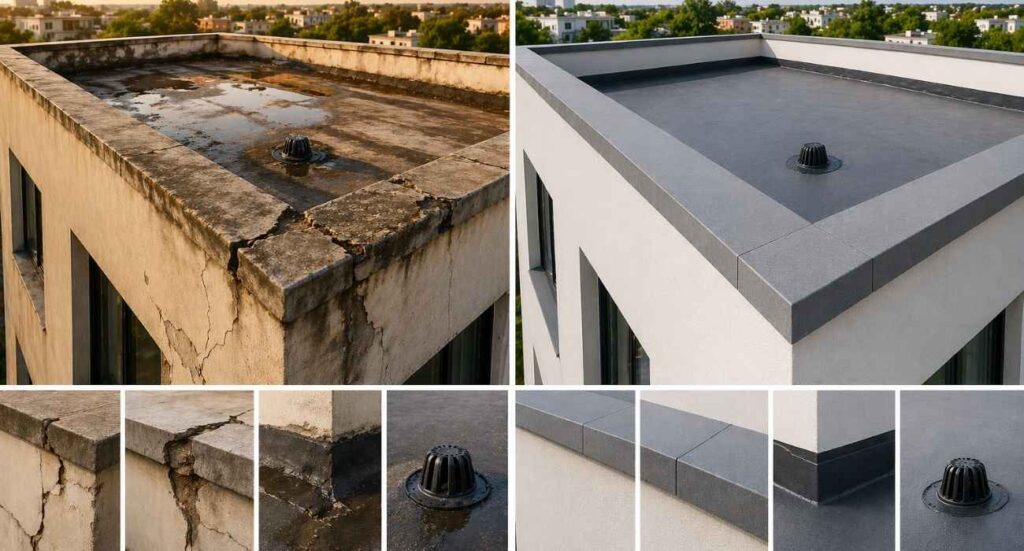
Understanding the difference between a damaged and a properly repaired parapet roof helps you see the real value of timely maintenance.
Before Repair
In many cases, parapet roofs show visible and hidden signs of damage that gradually worsen over time. Water leakage is usually the first sign, followed by cracks and surface deterioration.
Common conditions before repair:
• Water seepage near parapet joints
• Cracks in the parapet wall
• Damaged or missing coping
• Peeling paint and damp patches
• Poor drainage and water pooling
At this stage, the damage may still be manageable—but delaying repairs can lead to structural issues.
After Repair
Once proper repair and waterproofing are applied, the parapet roof regains its strength and protection.
A professionally repaired parapet roof includes sealed joints, restored coping, and a reliable waterproofing system.
Improvements after repair:
• Complete sealing of leakage points
• Smooth and crack-free wall surface
• Properly installed or replaced coping
• Improved drainage performance
• Clean and restored appearance
The result is a roof that is not only functional but also more durable and visually improved.
Timely parapet roof repair not only prevents water damage but also increases the lifespan of your entire roofing system. Investing in professional repair today can save significant costs in the future.
Maintenance and Care
Regular maintenance is essential for the long-term performance of a parapet roof.
Inspections should be carried out at least twice a year, especially after heavy rain.
Maintenance checklist:
• Inspect for cracks and damp spots
• Clean drainage outlets
• Check coping condition
• Reapply waterproofing when needed
• Repair minor damage immediately
When to Hire a Professional Contractor
Some issues require expert attention and should not be ignored.
You should contact a professional if you notice:
• Persistent leakage
• Large cracks
• Loose or falling masonry
• Severe interior dampness
Professional inspection ensures accurate diagnosis and long-term solutions.
FAQs
Why is my parapet roof leaking even after waterproofing?
A parapet roof can still leak if critical areas are not properly sealed. The most common reasons include failed parapet coping, weak roof-to-wall joints, or poor flashing installation. Even small gaps in these areas allow water to enter and spread داخل the structure.
What is the most important part of a parapet roof?
The most critical component is parapet coping. It sits on top of the wall and prevents water from entering. Without proper coping, even a well-built parapet roof can develop cracks and leakage over time.
How do you waterproof a parapet roof properly?
Proper waterproofing involves treating multiple areas, not just the surface. This includes the top of the parapet wall, the joint between the roof and parapet, and any visible cracks. Using a combination of membrane coating and proper sealing ensures long-term protection.
What causes cracks in a parapet wall?
Cracks usually develop due to temperature changes, material shrinkage, or structural movement. Over time, exposure to moisture and weather conditions can make these cracks worse if not repaired early.
How high should a parapet wall be for safety?
A parapet wall is typically built between 3 to 4 feet in height. This range provides adequate safety while maintaining structural stability and proper design proportions.
Is a parapet roof better than a normal flat roof?
A parapet roof offers better safety and improved water control compared to a flat roof without a parapet. However, it requires proper waterproofing and regular maintenance to avoid issues like leakage.
When should I repair or replace parapet coping?
You should repair or replace coping if you notice cracks, displacement, or water seepage near the top of the wall. Damaged coping is one of the leading causes of parapet roof failure.
Final Thoughts
A parapet roof is a smart and durable roofing solution that offers safety, better water management, and improved structural protection. However, its effectiveness depends on proper design, quality materials, and regular maintenance.
By understanding parapet wall types, coping details, waterproofing methods, and building code requirements, you can ensure long-term performance and avoid costly repairs.
If you’re dealing with leaks, cracks, or parapet wall damage, getting a professional inspection can save you from costly repairs. Expert contractors can identify hidden issues and provide long-term solutions for your parapet roof.
Have Questions? Call NuEra Contracting Today!
📞 347-444-9028
We’re here to help with expert construction, brickwork, roofing, and waterproofing services. Get reliable solutions, friendly support, and professional results for your next project.

