Water damage can become a serious problem for NYC homeowners and property owners. Rainwater, plumbing leaks, poor drainage, rising damp, and moisture can cause damp walls, peeling paint, mold growth, staining, and deterioration of building materials.
Because moisture can enter through cracks, masonry, foundations, or other vulnerable areas, identifying the source is an important part of effective wall waterproofing in NYC. Common causes include damaged masonry, poor drainage, plumbing leaks, rising damp, and excessive humidity.
In this 2026 guide, we explain what wall waterproofing is, common causes and signs of wall moisture, different waterproofing methods, the benefits of waterproofing, factors that affect cost, and ways to protect your walls from future water damage.
What Is Wall Waterproofing?
Wall waterproofing is the process of protecting walls from water penetration by using specialized materials and techniques. It creates a protective barrier that helps prevent moisture from entering and damaging the wall system.
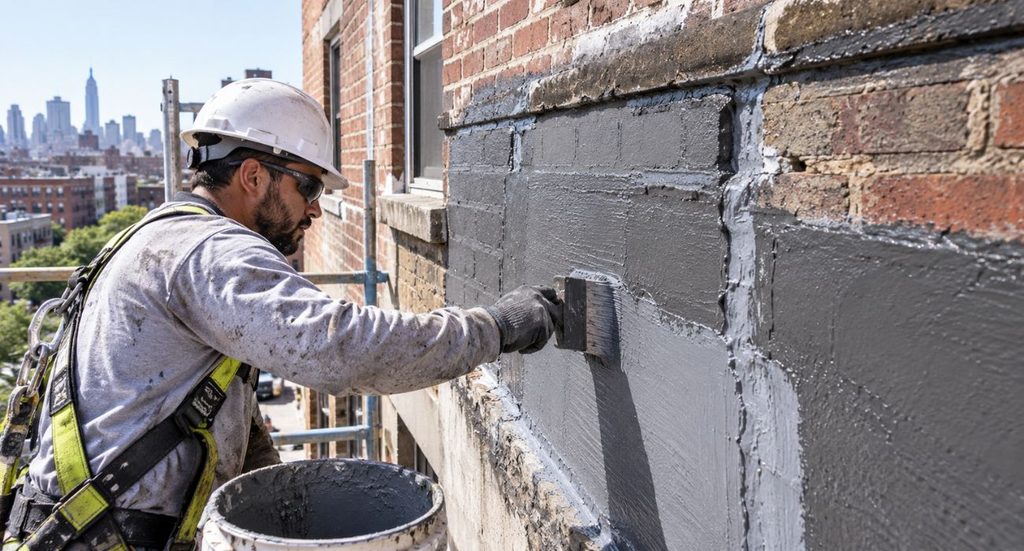
Wall waterproofing may be used for:
- Interior walls
- Exterior walls
- Basement walls
- Foundation walls
- Bathrooms and kitchens
- Masonry and brick walls
The appropriate waterproofing method depends on the source of moisture, wall construction, extent of damage, and whether the work is being performed from the interior or exterior.
Proper waterproofing walls can help protect the structure and appearance of a property while reducing recurring moisture problems.
Why Wall Waterproofing Is Important
Many homeowners ignore moisture problems until visible damage becomes difficult to overlook. However, prolonged water exposure can affect wall finishes and building materials and may contribute to mold and other moisture-related problems.
Professional wall waterproofing in NYC can help:
- Prevent dampness and water stains
- Reduce moisture penetration
- Protect paint and wall finishes
- Reduce the risk of mold and mildew
- Protect masonry and other wall materials
- Reduce recurring maintenance problems
- Help preserve the condition of your property
For NYC properties, addressing water intrusion early is especially important because older buildings may have aging masonry, deteriorated mortar, cracks, or other areas where moisture can enter.
Common Causes of Wall Dampness
Understanding the source of moisture is essential before choosing the right wall waterproofing solution.
1. Rainwater Seepage
Cracks, deteriorated mortar joints, damaged exterior finishes, and other openings can allow rainwater to penetrate exterior walls. Repeated exposure can cause damp patches, staining, and deterioration.
2. Poor Drainage
Water that collects near a building can increase moisture around exterior and foundation walls. Poor drainage, blocked gutters, or improperly directed water can contribute to recurring seepage.
3. Plumbing Leaks
Hidden plumbing leaks can introduce moisture into walls and may cause dampness, staining, peeling paint, or mold growth. Plumbing problems should be addressed at the source before waterproofing work is performed.
4. Rising Damp
Ground moisture can move upward through porous masonry and other wall materials. This can be a concern in older buildings and lower-level areas.
5. Humidity
High indoor humidity can cause condensation on cooler wall surfaces. Proper ventilation and humidity control may be necessary when condensation is the primary cause.
Signs You Need Wall Waterproofing
Early detection can help prevent a moisture problem from becoming more extensive. Watch for signs such as:
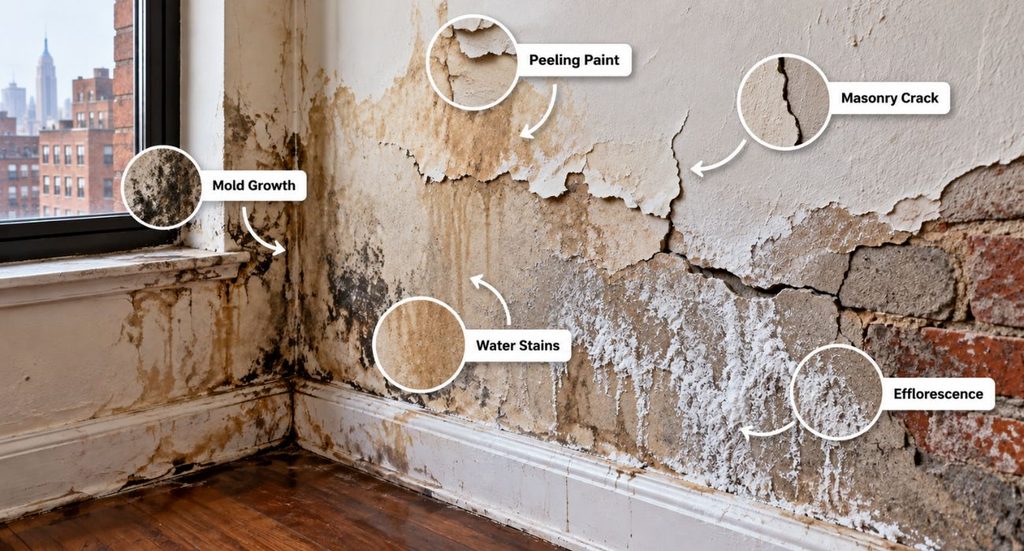
- Damp patches on walls
- Peeling, bubbling, or blistering paint
- White powder or salt deposits known as efflorescence
- Musty odors
- Mold or mildew growth
- Water stains
- Cracks in exterior walls
- Deteriorated mortar
- Recurring moisture after rainfall
- Dampness in basements or lower-level rooms
If these problems keep returning after cleaning, painting, or minor repairs, the underlying source of moisture should be investigated.
A professional wall waterproofing inspection can help determine whether the problem is caused by exterior water penetration, drainage, plumbing, condensation, or another source.
Types of Wall Waterproofing
Different waterproofing methods are available depending on the wall, location, and source of moisture.
Cementitious waterproofing uses a cement-based coating to create a water-resistant barrier. It is commonly used in areas such as basements, bathrooms, kitchens, and other locations where a durable coating is appropriate.
Liquid waterproofing membrane is applied as a coating that forms a continuous protective layer after curing. Depending on the product and application, it can be used on different wall surfaces and may provide flexibility around certain areas.
Bituminous waterproofing uses asphalt-based materials to create a protective barrier against moisture. It is commonly used for exterior and below-grade waterproofing applications where the substrate and conditions are suitable.
Polyurethane waterproofing can provide a flexible protective layer and may be suitable for certain wall and crack-sealing applications.
Crack filling and sealants can help close small openings that allow water to enter. However, the correct repair depends on the cause, size, movement, and location of the crack.
For exterior masonry, masonry waterproofing may need to be combined with masonry repair, mortar joint repair, or other building-envelope work rather than relying on a coating alone.
Interior vs Exterior Wall Waterproofing
Both interior and exterior waterproofing can help address moisture problems, but they serve different purposes.
Interior wall waterproofing focuses on protecting indoor wall surfaces from moisture and may be used in basements, bathrooms, kitchens, and other areas where water or humidity is a concern.
Exterior wall waterproofing protects the outside of a building from rain and other sources of water penetration. Depending on the wall condition, the work may involve crack repair, masonry repairs, sealants, coatings, or other waterproofing systems.
When practical, addressing the source of exterior water penetration can provide a more effective long-term solution.
Step-by-Step Wall Waterproofing Process
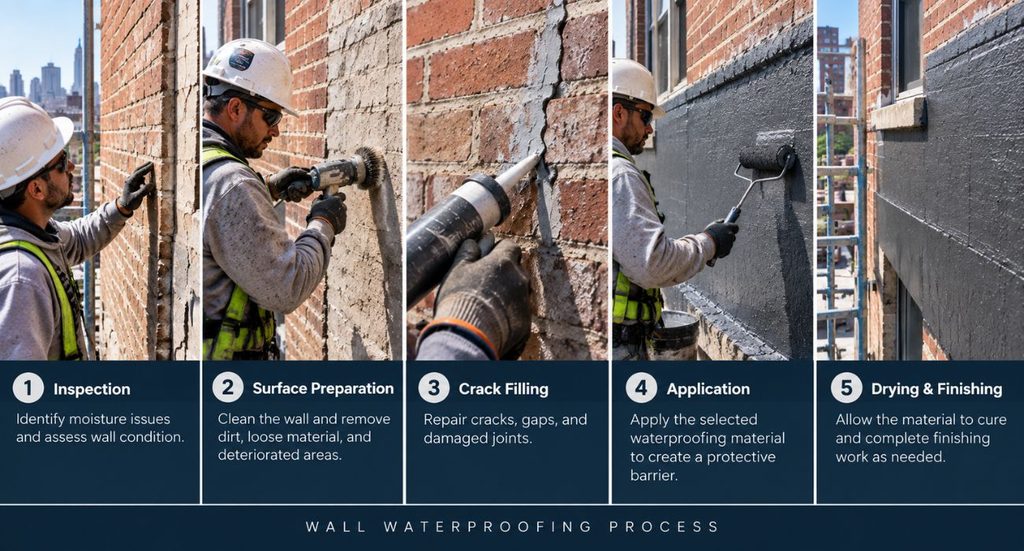
Professional wall waterproofing follows a proper process to help ensure long-lasting results.
Inspection
The first step is to identify visible signs of moisture and investigate the likely source. The surrounding wall, masonry, drainage, and other relevant areas may need to be evaluated.
Surface Preparation
Walls are cleaned and prepared before waterproofing materials are applied. Damaged or deteriorated areas may need to be repaired first.
Crack Filling
Cracks, gaps, deteriorated joints, or other openings are repaired or sealed as appropriate.
Application of Waterproofing Material
The selected waterproofing system is applied according to the wall condition, location, and material requirements.
Drying and Finishing
The waterproofing material is allowed to cure or dry as required. Appropriate finishing work can then be completed.
The exact process varies depending on whether the project involves interior walls, exterior walls, basements, masonry, foundations, or another application.
Benefits of Wall Waterproofing
Investing in wall waterproofing provides several long-term benefits.
- Protects walls from water penetration
- Helps reduce moisture-related damage
- Reduces the risk of mold and mildew
- Protects paint and wall finishes
- Helps preserve masonry and other wall materials
- Can reduce recurring maintenance needs
- Helps protect the overall condition of the property
Effective waterproofing is not simply about covering visible water stains. The goal is to address the source of moisture and protect vulnerable areas from future water penetration.
DIY vs Professional Wall Waterproofing
Many people try DIY waterproofing solutions, but they are not always effective when moisture is coming from behind walls, foundations, masonry, or other inaccessible areas.
DIY Waterproofing
DIY waterproofing products may be suitable for certain small surface-level problems, but they may not address the underlying source of moisture.
Potential limitations include:
- Temporary results
- Incorrect diagnosis of the moisture source
- Improper material selection
- Failure to repair cracks or damaged masonry
- Moisture returning behind the coating
Professional Waterproofing
Professional waterproofing contractors in NYC can assess the source of moisture and determine whether waterproofing, crack repair, masonry work, drainage improvements, or another solution is appropriate.
Professional waterproofing can provide:
- Proper moisture assessment
- Appropriate material selection
- Professional surface preparation
- Experienced application
- A solution based on the actual condition of the wall
For recurring dampness, basement seepage, exterior wall leaks, or significant water intrusion, professional assessment is recommended.
Wall Waterproofing Cost in 2026
The cost of wall waterproofing in NYC varies depending on several factors. There is no single price that applies to every property or waterproofing project.
Important cost factors include:
- Size of the area
- Interior or exterior access
- Type of wall construction
- Waterproofing method
- Condition of the wall
- Number and severity of cracks
- Required masonry repairs
- Drainage or excavation requirements
- Materials used
- Labor and site accessibility
Small areas with limited surface preparation may require less work than large or severely damaged walls. Exterior waterproofing, basement waterproofing, masonry repairs, and difficult site access can also affect the overall project cost.
Because every property is different, a professional inspection and project assessment are the best way to determine the appropriate scope of work and expected cost.
Tips to Maintain Waterproofed Walls
To keep your walls in good condition, follow these simple tips:
- Check walls regularly for cracks or new damp areas
- Fix plumbing leaks quickly
- Ensure proper ventilation
- Keep gutters and drainage systems clear
- Make sure water is directed away from exterior walls
- Check exterior masonry for deterioration
- Reapply waterproofing when appropriate
Regular maintenance helps extend the effectiveness of wall waterproofing and identify problems before they develop into more extensive water damage.
Frequently Asked Questions
What is wall waterproofing?
Wall waterproofing is the process of protecting walls from water penetration using appropriate coatings, membranes, sealants, repairs, or other waterproofing systems.
How do I know if my wall needs waterproofing?
Recurring dampness, water stains, peeling paint, efflorescence, mold, mildew, cracks, or moisture after rainfall can indicate a waterproofing or water-intrusion problem. A professional inspection can help identify the cause.
What is the best method for wall waterproofing?
There is no single best method for every wall. The appropriate solution depends on the wall material, moisture source, location, existing damage, and whether the work is interior or exterior.
Is exterior wall waterproofing better than interior waterproofing?
Exterior and interior waterproofing serve different purposes. When exterior water penetration is the source of the problem and exterior access is practical, addressing the outside of the building may help prevent water from entering. The appropriate solution depends on the property.
How much does wall waterproofing cost in NYC?
The cost depends on the size of the area, waterproofing method, wall condition, accessibility, required repairs, and other project factors. A professional assessment is needed to provide a more accurate estimate.
Can waterproofing stop mold?
Waterproofing can help reduce moisture that contributes to mold growth, but existing mold and the underlying moisture source may require separate treatment. Proper ventilation and moisture control are also important.
Can I waterproof my walls myself?
Some minor surface-level applications may be suitable for DIY work, but recurring dampness, foundation seepage, exterior wall leaks, or significant cracks should be professionally assessed to identify the underlying cause.
How long does wall waterproofing last?
The lifespan of a waterproofing system depends on the materials used, surface preparation, installation quality, exposure conditions, and ongoing maintenance. Properly addressing the source of moisture is important for long-term performance.
Why Choose NuEra Contracting for Wall Waterproofing in NYC?
When moisture begins affecting your walls, identifying the source early can help prevent more extensive damage. NuEra Contracting provides professional waterproofing services for NYC homeowners and property owners.
Our team can help assess moisture-related problems and recommend an appropriate solution based on the condition of your walls and the source of water intrusion. Services may involve waterproofing, crack sealing, masonry-related repairs, and other solutions depending on the project.
Whether you are dealing with damp basement walls, exterior water seepage, cracked masonry, or recurring moisture, addressing the problem at its source can help protect your property.
Final Thoughts
Wall waterproofing in NYC can help protect your property from recurring moisture, water penetration, and related damage. From exterior wall seepage and cracked masonry to basement dampness and interior moisture, the right solution depends on identifying the cause and selecting the appropriate waterproofing method.
Regular inspections, proper drainage, timely repairs, and professional waterproofing can help maintain the condition of your walls and reduce the risk of costly water damage.
At NuEra Contracting, we provide professional waterproofing and construction services for NYC property owners. If you are experiencing damp walls, water seepage, or other moisture problems, contact NuEra Contracting to have your property assessed and determine the right solution.
Have Questions? Call NuEra Contracting Today!
📞 347-444-9028
We’re here to help with expert construction, brickwork, roofing, and waterproofing services. Get reliable solutions, friendly support, and professional results for your next project.

