A flat roof can develop leaks, open seams, blisters, and cracks as it ages. These problems may allow water to enter a building and damage the roof deck, insulation, ceilings, and interior spaces. Timely Modified Bitumen Roof Repair helps address localized damage before it becomes a more expensive roofing problem.
Modified bitumen roofing is common on commercial buildings, apartment buildings, and other properties with flat or low-slope roofs. Its layered construction provides protection against weather, but the membrane still needs regular inspection and maintenance.
In this guide, you will learn how modified bitumen roofing works, which problems require attention, how repairs are completed, what affects repair costs, and when replacement may be the better option. Property owners in New York City can also learn how local weather and drainage conditions affect flat roof performance.
What Is Modified Bitumen Roofing?
Modified bitumen roofing is an asphalt-based roofing system designed for flat and low-slope roofs. Manufacturers combine asphalt with polymers to improve flexibility, durability, and resistance to temperature changes.
The two common types are SBS and APP modified bitumen.
- SBS (Styrene-Butadiene-Styrene): This type uses a rubber-like modifier to improve flexibility. It can handle movement and temperature changes.
- APP (Atactic Polypropylene): This type uses a plastic-like modifier to improve heat resistance and performance under warm conditions.
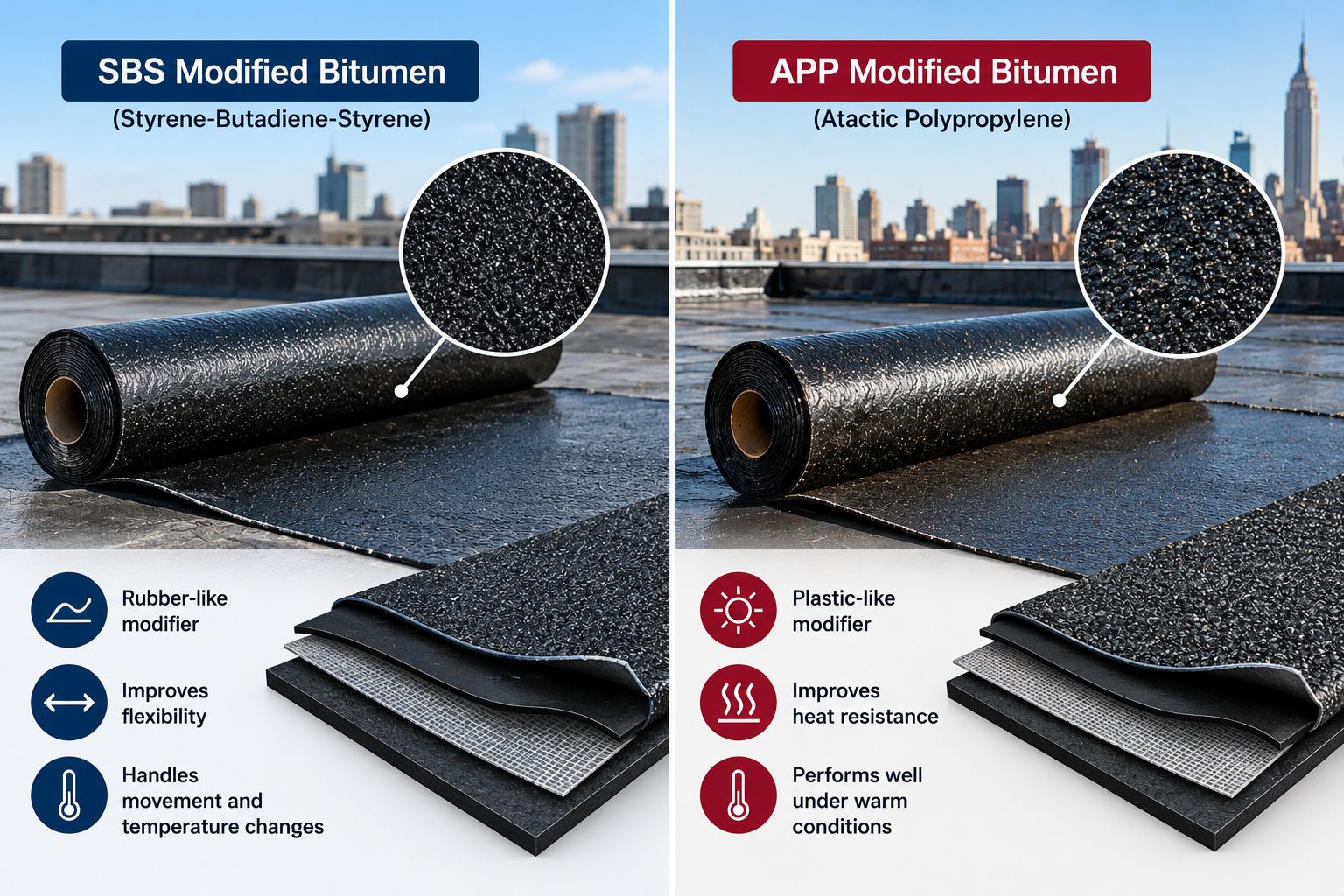
Modified bitumen roofs may use one or more membrane layers, insulation, a cover board, and a suitable roof deck. Depending on the product, installation may involve torch application, cold adhesive, hot asphalt, or self-adhering sheets.
The correct Modified Bitumen Roof Repair method depends on the membrane type, installation system, and location of the damage. A repair material suitable for one system may not be appropriate for another.
Signs Your Modified Bitumen Roof Needs Repair
Recognizing early warning signs can help property owners arrange an inspection before water damage spreads. Look for these common problems.
1. Open or Separated Seams
Seams connect individual membrane sheets. Over time, poor adhesion, roof movement, moisture, or installation problems can cause these joints to separate.
Open seams create pathways for water to enter the roofing system. A roofer should inspect the affected area, determine why the seam opened, and use a compatible repair method.
2. Blisters on the Roof Surface
Blisters appear as raised bubbles beneath the roofing membrane. They may develop when air or moisture becomes trapped between roofing layers.
Not every blister requires immediate removal. However, large, growing, or damaged blisters should be inspected. Cutting a blister without understanding its condition can expose the roof to more moisture.
3. Cracks and Surface Deterioration
Repeated temperature changes, aging, and prolonged exposure to sunlight can contribute to cracks or surface deterioration. Some roofs may also show an alligator-like pattern of small cracks.
These signs can indicate that the roofing material is losing its protective qualities. A professional should determine whether a localized repair is suitable or whether the membrane has deteriorated across a larger area.
4. Punctures and Tears
Foot traffic, dropped tools, maintenance work, and debris can puncture the membrane. Even a small opening can allow water to reach the underlying layers.
Inspect areas near rooftop equipment, access points, and frequently used walkways. These locations may need repairs or additional protection.
5. Damaged Flashing
Flashing protects vulnerable areas around roof edges, drains, walls, vents, and other penetrations. Loose flashing, failed sealant, and separated joints can cause leaks even when the main membrane appears intact.
A reliable repair should address the flashing detail and the source of the water entry rather than simply covering the visible stain.
6. Standing Water
Water that remains on a roof long after rainfall may indicate clogged drains, poor drainage, or low areas in the roof surface. Persistent ponding increases stress on the roofing system and may reveal problems with the roof’s slope.
Drainage issues should be corrected as part of the repair plan. Applying a patch alone will not solve a recurring ponding problem.
Common Modified Bitumen Roofing Problems and Their Solutions
Different types of damage require different repair methods. Before starting Modified Bitumen Roof Repair, a contractor should identify the membrane system, inspect the affected layers, and find the actual source of the leak. Professional Modified Bitumen Roof Repair addresses the underlying problem and helps prevent recurring leaks when the correct materials and repair methods are used.
Repairing Open Seams
The contractor examines the separated seam and checks whether the surrounding membrane remains firmly attached. Loose or contaminated material may need to be removed according to the roofing manufacturer’s instructions.
The repair may involve resealing the seam or installing a compatible membrane patch. The repaired area must provide a secure bond and maintain a watertight connection with the existing roofing system.
Fixing Blisters
The roofer assesses the size, location, and condition of the blister. If the membrane remains intact, monitoring or a manufacturer-approved treatment may be appropriate.
If the blister has split or allowed water inside, the affected section may require more extensive work. The contractor should check the underlying materials for trapped moisture before closing the area.
Sealing Cracks and Splits
Minor cracks may be repairable with compatible roofing products. Larger splits, widespread deterioration, or damaged underlying layers may require membrane replacement in the affected section.
The contractor should prepare the surface correctly and ensure that the repair material is compatible with the existing membrane. Simply spreading sealant over a deteriorated surface may provide only temporary protection.
Repairing Punctures and Tears
A puncture repair typically involves cleaning and preparing the damaged area before applying a compatible patch or membrane section. The patch must extend far enough beyond the damage to create a secure bond.
If insulation or the roof deck is wet or damaged, those materials may also need attention. A surface patch cannot correct structural or moisture problems beneath the membrane.
Correcting Flashing Problems
Flashing repairs depend on the affected detail. Work may involve securing loose components, replacing damaged flashing, restoring membrane connections, or applying compatible sealant where specified.
The contractor should inspect nearby walls, penetrations, and roof edges because water can travel away from its entry point before becoming visible inside the building.
How Does Modified Bitumen Roof Repair Work?
A proper repair involves more than covering a visible hole. The contractor needs to identify the source of the problem and determine whether the surrounding roofing materials remain serviceable.
The typical process includes the following steps.
Step 1: Inspect the Roof
The contractor examines the membrane, seams, flashing, drains, roof edges, and areas around rooftop equipment. Interior water stains and leak locations may also provide useful clues.
The inspection helps identify visible damage and potential underlying issues.
Step 2: Find the Source of the Leak
Water does not always appear directly below the roof opening. It can travel along the membrane, insulation, or roof deck before reaching the interior.
The contractor checks likely entry points and considers drainage conditions, seam separation, flashing defects, and other possible causes.
Step 3: Prepare the Damaged Area
The repair surface must be suitable for the selected material. Depending on the system, preparation may involve removing loose material, cleaning the surface, drying the area, or removing damaged membrane sections.
Wet insulation or deteriorated decking may require additional work before the roof can be closed.
Step 4: Apply Compatible Repair Materials
The contractor selects a repair product designed for the existing roofing system. Depending on the damage, the repair may use a membrane patch, seam treatment, flashing material, or another approved component.
The repair must follow the manufacturer’s requirements for surface preparation, application, and curing.
Step 5: Check the Finished Repair
After installation, the contractor checks the repaired section and surrounding details for visible gaps, poor adhesion, or incomplete connections. Any required testing should follow the roofing system’s specifications and safe work practices.
A final inspection helps confirm that the repair has been completed properly, although future performance also depends on weather, drainage, and ongoing maintenance.
When Is a Patch Enough, and When Is More Work Needed?
Not every roofing problem requires a full replacement. The right solution depends on the size of the damaged area, the roof’s overall condition, and whether moisture has reached the underlying materials.
| Roof condition | Possible solution |
|---|---|
| Small puncture in otherwise sound membrane | Localized patch |
| Limited seam separation | Compatible seam repair |
| Isolated flashing damage | Flashing repair or replacement |
| Blister with underlying moisture | Further investigation and localized reconstruction |
| Multiple leaks across different areas | Comprehensive roof inspection |
| Widespread membrane deterioration | Consider roof replacement |
| Wet insulation or damaged roof deck | Repair affected underlying layers |
A professional assessment helps determine whether localized Modified Bitumen Roof Repair can restore the roof’s performance or whether more extensive work is necessary.
Repeatedly patching different areas without addressing widespread deterioration may increase long-term costs. However, replacing an entire roof because of one isolated defect may also be unnecessary.
How Much Does Modified Bitumen Roof Repair Cost?
The cost of Modified Bitumen Roof Repair varies from one property to another. A small, accessible puncture generally requires less work than a leak involving several roofing layers, damaged insulation, or deteriorated decking.
Several factors influence the final price.
- Extent of damage: Larger damaged areas usually require more materials and labor.
- Roof accessibility: Difficult access, rooftop equipment, and safety requirements can affect labor costs.
- Membrane type: SBS, APP, and other roofing systems may require different repair products and procedures.
- Underlying damage: Wet insulation, damaged decking, or deteriorated flashing can increase the scope of work.
- Drainage conditions: Clogged drains or recurring ponding may require additional corrective work.
- Existing roof condition: Aging membranes and multiple damaged areas may require broader repairs.
- Building requirements: Commercial and multifamily properties may have additional access, scheduling, or safety considerations.
An accurate estimate should identify the damaged areas, proposed repair method, materials, and any additional work required. Ask the contractor whether the estimate includes underlying moisture damage and what conditions could change the price.
For NYC properties, access restrictions, building height, equipment requirements, and site conditions can also affect the cost. An on-site inspection is the best way to establish a realistic project scope.
Modified Bitumen Roof Repair vs Roof Replacement
Repair is often appropriate when damage is localized and most of the roofing system remains in good condition. Replacement may make more sense when the membrane has deteriorated across a large area or the roof has recurring problems.
Consider these factors before deciding.
| Factor | Repair | Replacement |
|---|---|---|
| Damage | Localized or isolated | Widespread or severe |
| Membrane condition | Mostly serviceable | Extensive deterioration |
| Leaks | Limited and identifiable | Frequent or recurring |
| Underlying layers | Generally sound | Extensive moisture or damage |
| Project scope | Targeted work | Installation of a new roofing system |
The decision should be based on inspection findings rather than roof age alone. Some older roofs can remain serviceable with appropriate maintenance, while a newer roof may need significant work if installation defects or water intrusion have caused damage.
A contractor can compare the cost of ongoing repairs with the condition and expected service life of the existing roof. This helps property owners make a more informed decision.
NYC Roofing Considerations
Flat roofs in New York City face changing temperatures, heavy rain, snow, ice, and seasonal debris. These conditions can affect seams, flashing, drainage, and the overall performance of modified bitumen membranes.
For NYC buildings, drainage deserves particular attention. Leaves and debris can block roof drains, while standing water may reveal low spots or drainage defects. During winter, snow and ice can make inspection and repair work more challenging.
Building owners should also pay attention to rooftop equipment, parapet walls, penetrations, and connections between the roof and adjoining surfaces. These areas can become sources of leaks if their protective details deteriorate.
When arranging Modified Bitumen Roof Repair in NYC, choose a contractor who can inspect the full affected area and explain the proposed repair method. Work should account for the specific membrane system, site conditions, and applicable safety requirements.
NuEra Contracting provides roofing services for properties across NYC and Nassau County. Visit our roofing services page to learn more about our roofing solutions.
How to Maintain a Modified Bitumen Roof
Regular maintenance can help property owners identify problems before they cause extensive damage. A maintenance plan should include the following tasks.
- Arrange periodic professional roof inspections.
- Keep drains and other drainage components clear of debris.
- Check seams and flashing for visible separation or deterioration.
- Look for punctures, cracks, blisters, and damaged membrane sections.
- Inspect areas around rooftop equipment and other penetrations.
- Arrange an assessment after severe weather when it is safe to do so.
- Address leaks promptly instead of relying on temporary interior fixes.
- Keep records of inspections, repairs, and recurring problem areas.
Avoid walking unnecessarily on the roof or attempting repairs without appropriate training and safety equipment. Improper repair products can damage the membrane or fail to create a lasting bond.
Preventive maintenance does not eliminate every roofing problem, but it can help identify developing defects and support better repair decisions.
Frequently Asked Questions
How long does modified bitumen roof repair take?
The duration depends on the size and location of the damage, weather conditions, roof access, and the repair method. A small localized repair may take less time than work involving wet insulation, damaged decking, or several membrane layers. The contractor can provide a more accurate timeline after inspection.
Can a modified bitumen roof be repaired instead of replaced?
Yes. A roof with localized damage and otherwise serviceable materials may be suitable for repair. Widespread deterioration, repeated leaks, or extensive underlying moisture damage may make replacement more practical. An inspection helps determine the appropriate option.
What causes modified bitumen roof leaks?
Common causes include open seams, punctures, cracked or deteriorated membrane surfaces, damaged flashing, and drainage problems. Poor installation and movement between roofing components can also contribute to leaks.
Can roof coating fix a damaged modified bitumen membrane?
A compatible roof coating may help protect a suitable roofing surface, depending on the product and the condition of the membrane. However, coating is not a universal solution for open seams, wet insulation, structural damage, or severe deterioration. The roof should be inspected before a coating system is selected.
Is modified bitumen roofing suitable for NYC buildings?
Modified bitumen is commonly used on flat and low-slope roofs. Its suitability depends on the building, roof design, installation system, drainage, and maintenance requirements. A qualified roofing contractor can assess whether the existing system meets the property’s needs.
When should I schedule Modified Bitumen Roof Repair?
Arrange an inspection when you notice interior water stains, open seams, blisters, punctures, damaged flashing, or recurring standing water. Prompt assessment can help identify the source of the problem and prevent additional damage.
Schedule a Professional Roof Inspection
Roof leaks and membrane damage should not be ignored. Small defects can allow water to reach insulation, decking, and interior spaces, potentially increasing repair costs over time.
Professional Modified Bitumen Roof Repair starts with identifying the cause of the damage and selecting a suitable repair method. Whether your roof has a localized leak, separated seams, damaged flashing, or recurring drainage problems, an inspection can help establish the next steps.
NuEra Contracting provides roofing services for residential, commercial, and industrial properties in NYC and Nassau County. Contact our team to discuss your roofing concerns and arrange an assessment.
Have Questions? Call NuEra Contracting Today!
📞 347-444-9028
We’re here to help with expert construction, brickwork, roofing, and waterproofing services. Get reliable solutions, friendly support, and professional results for your next project.

