A flat roof can protect homes, apartments, and commercial buildings for years when properly maintained. However, effective drainage, durable membranes, sealed seams, and reliable flashing are essential to prevent moisture problems.
Understanding proper flat roof repair can help NYC property owners address small issues before they become costly damage. Early attention to leaks, blocked drains, membrane damage, and failing flashing can protect insulation, decking, and interior areas.
From Brooklyn and Queens to Manhattan, the Bronx, and Staten Island, flat roofs are common on residential and commercial properties. The following 10 practical tips explain how to prevent common problems, maintain your roofing system, and know when professional flat roof repair in NYC may be necessary.
1. Schedule Regular Flat Roof Inspections
Regular inspections help identify roofing problems before they become expensive. Check for damaged membranes, separated seams, loose flashing, punctures, deteriorated sealants, and standing water. Pay close attention to areas around vents, pipes, skylights, and HVAC equipment, where leaks commonly develop.
A professional inspection is especially important after heavy rain, strong winds, snow, or ice. Early detection makes flat roof repair easier and can help prevent moisture from reaching insulation, decking, and interior areas.
For NYC properties, regular inspections can also help identify weather-related deterioration before it develops into a larger roofing problem.
2. Keep Drains and Scuppers Clear
Proper drainage is essential for a flat roof. Leaves, dirt, branches, and other debris can block drains and scuppers, allowing water to collect on the surface. Persistent ponding can increase stress on the membrane and contribute to leaks and deterioration.
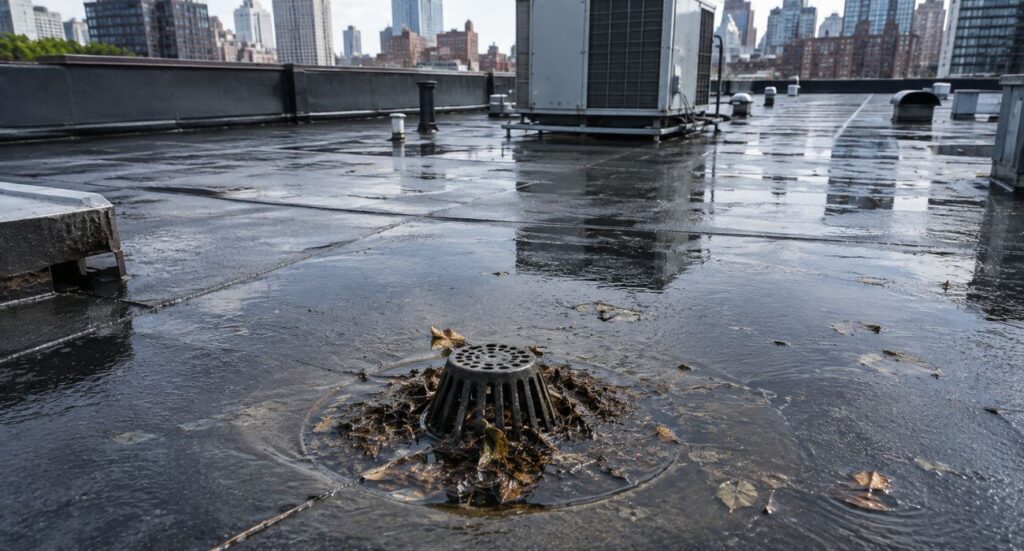
Keep drainage points clear and check them after major storms. If water continues to collect despite clean drains, the issue may involve roof slope, settlement, or drainage design.
For property owners in Brooklyn, Queens, and other NYC neighborhoods, professional flat roof repair may be needed when drainage problems contribute to membrane damage or recurring leaks.
3. Respond to Leaks Quickly
Never ignore a flat roof leak, even if it appears minor. Water can travel beneath the roofing system before showing up as ceiling stains, damp insulation, peeling paint, or other signs of moisture.
When you notice water, note where and when it appears. This information can help a contractor investigate the source more efficiently.
Temporary fixes may provide short-term protection, but professional flat roof repair in NYC should address the underlying cause rather than simply covering the visible damage.
If a leak continues after a previous repair, have the entire affected area inspected. The visible location of water damage is not always where water enters the roofing system.
4. Protect the Roofing Membrane
The roofing membrane provides an important barrier against moisture and weather exposure. Common flat roofing systems include EPDM, TPO, PVC, and modified bitumen, and each requires appropriate repair methods.
Punctures, cracks, tears, blisters, and damaged seams should be addressed before they allow water into the layers below. Avoid placing sharp tools or heavy equipment directly on the membrane, and use protective walkways where regular roof access is necessary.
The correct flat roof repair method depends on the membrane type and extent of damage. A professional can determine whether patching, seam repair, coating, or membrane replacement is appropriate.
5. Inspect Flashing and Roof Penetrations
Flashing protects areas where the roof meets walls, vents, pipes, skylights, chimneys, and other structures. These transition points can develop cracks, gaps, corrosion, loose sections, or deteriorated sealant.
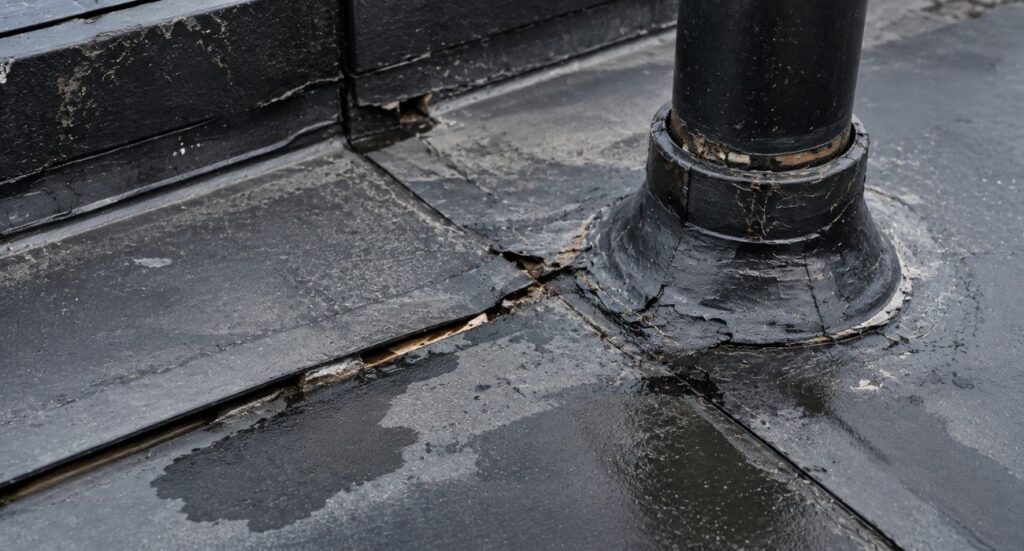
Inspect these areas carefully because damaged flashing can cause leaks even when the main membrane remains in good condition. Professional flat roof repair may include resealing, securing, or replacing damaged flashing to prevent moisture from reaching the building structure.
For older NYC buildings, checking flashing is particularly important because years of weather exposure can affect both metal components and surrounding sealants.
6. Take Ponding Water Seriously
Ponding water occurs when water remains on a flat roof after normal drainage should have occurred. Repeated ponding can keep roofing materials wet for extended periods and accelerate deterioration.
Blocked drains, inadequate drainage, roof settlement, structural movement, or changes in the roof surface can contribute to the problem. Removing the water alone does not fix the underlying cause.
If ponding continues, have the drainage system and roof condition professionally evaluated. Depending on the findings, flat roof repair may include drainage improvements, membrane repairs, or localized corrective work.
Addressing recurring ponding early can help protect the roof from continued moisture exposure.
7. Control Foot Traffic on the Roof
Regular foot traffic can cause unnecessary wear, especially around sensitive seams and membrane areas. Tools, equipment, and repeated walking can create punctures, abrasions, or loose materials.
Limit roof access to necessary maintenance and repair work. If frequent access is required for HVAC equipment or other systems, properly designed walkways can help protect the roofing surface.
Controlling unnecessary traffic is a simple maintenance step that can reduce physical damage and help extend the roof’s service life.
If heavy foot traffic has already damaged the membrane, professional flat roof repair can help determine whether individual areas can be restored or whether more extensive work is required.
8. Remove Debris Before It Causes Problems
Leaves, branches, dirt, and other debris can damage the membrane, block drainage, and trap moisture against the roof surface. Storms can make the problem worse by leaving branches and loose materials across the roof.
Inspect the roof after severe weather and remove debris carefully without dragging sharp or heavy objects across the membrane. Overhanging trees should also be maintained to reduce falling branches and excessive debris.
For difficult or heavily affected roofs, professional maintenance can provide a safer and more effective solution.
Regular debris removal is especially useful for NYC properties surrounded by mature trees or buildings where wind can carry debris onto rooftop surfaces.
9. Avoid Relying on Quick DIY Fixes
Quick fixes using roofing cement, tape, or sealant may temporarily reduce water entry, but they often fail to address the actual source of a leak. Water can travel beneath membranes and insulation, making the visible leak location different from the damaged area.
Using incompatible materials or applying products without proper surface preparation can also cause repairs to fail.
A qualified contractor can identify the source and recommend the appropriate solution. Professional flat roof repair is particularly important when leaks continue after previous repair attempts.
DIY repairs can also create safety risks. Flat roofs may contain fragile surfaces, equipment, edges, and other hazards that require proper precautions.
10. Know When Repair Is No Longer Enough
Not every damaged flat roof requires complete replacement. Localized leaks, minor membrane damage, flashing problems, and isolated seam failures can often be addressed when the overall roof remains in good condition.
Replacement may be more practical when damage is widespread, leaks continue to return, insulation is saturated, or the membrane is nearing the end of its service life.
Repeated repairs on an aging roof may eventually cost more than a long-term replacement solution. A professional inspection can help determine whether flat roof repair can extend the roof’s useful life or whether replacement offers better long-term value.
What Causes Flat Roof Damage?
Flat roof damage can develop from several factors. Understanding the common causes can help property owners prevent problems and recognize when flat roof repair in NYC may be needed.
- Severe Weather: Rain, snow, ice, strong winds, and prolonged sun exposure can gradually weaken roofing materials. Freeze-thaw cycles can also expand small cracks and worsen existing damage.
- Poor Drainage: Blocked drains or inadequate drainage can leave water standing on the roof. Repeated ponding can accelerate membrane deterioration and increase the risk of leaks.
- Physical Damage: Foot traffic, maintenance work, falling branches, and rooftop equipment can cause punctures, abrasions, and other surface damage.
- Aging Materials: Even properly installed roofing systems eventually experience wear. As materials age, repairs may become more frequent, making regular inspections important.
- Improper Previous Repairs: Incompatible materials, poor surface preparation, or temporary patches can leave underlying problems unresolved.
Identifying these issues early can help property owners reduce damage, extend roof life, and determine the right time for professional flat roof repair.
How Much Does Flat Roof Repair Cost?
The cost of flat roof repair depends on the type and extent of damage rather than simply the size of the building. A small membrane repair and a major drainage correction are very different projects and require different amounts of labor and materials.
Several factors can influence the final price, including:
- Roofing material
- Size and location of the damaged area
- Number of leaks
- Roof accessibility
- Flashing condition
- Drainage problems
- Labor requirements
- Condition of insulation and decking
- Emergency service requirements
Emergency work may also cost more because it requires faster scheduling and additional preparation. If a leak has caused interior damage, the total project can become more extensive than the roofing work alone.
For an accurate estimate, NYC property owners should have the roof professionally inspected. A reliable estimate should explain the cause of the problem, recommended repair method, materials involved, and any additional work required.
When Should You Hire a Professional?
While basic maintenance can be part of routine property care, roofing repairs often require specialized materials, experience, and safety equipment. Walking on a wet or damaged roof can also be hazardous.
Professional help is recommended if you notice:
- Recurring leaks
- Damaged roofing membranes
- Persistent ponding water
- Damaged flashing
- Sagging areas
- Storm damage
- Repeated interior moisture
- Repairs that continue to fail
A qualified contractor can inspect both visible and hidden areas to identify the actual source of the problem.
For recurring issues, professional flat roof repair in NYC can provide a more lasting solution than repeated temporary fixes. The goal is to correct the underlying problem and protect the entire roofing system.
Flat Roof Repair or Replacement: Which Is Better?
The right choice depends on the roof’s age, condition, and repair history. A relatively new roof with isolated damage may be a good candidate for targeted repairs. Replacing an otherwise healthy roofing system because of one localized leak may not be necessary.
On the other hand, an older roof with widespread deterioration may continue developing problems even after individual areas are repaired.
When deciding between repair and replacement, consider:
- Number of previous repairs
- Condition of the membrane
- State of insulation and decking
- Drainage performance
- Extent of water damage
- Age of the roofing system
- Remaining service life
These factors provide a more useful basis for decision-making than the appearance of one damaged area.
An experienced NYC roofing contractor can explain whether flat roof repair can reasonably extend the roof’s life or whether replacement should be considered.
Professional Flat Roof Repair in NYC
Flat roof problems can become more serious when they are ignored or repeatedly covered with temporary fixes. Professional evaluation helps identify whether the issue involves the membrane, flashing, drainage, roof penetrations, or another part of the system.
NuEra Contracting provides roofing services for property owners throughout New York City, including Brooklyn, Queens, Manhattan, the Bronx, Nassau County and Staten Island.
Whether you need leak investigation, membrane work, flashing repairs, drainage solutions, or other roofing services, the right approach depends on the condition of your existing roof.
For property owners looking for flat roof repair in NYC, professional inspection can help identify the problem and determine the most practical solution.
Frequently Asked Questions
How often should a flat roof be inspected?
A flat roof should be checked regularly as part of a property’s maintenance program and inspected after significant storms. Professional inspections can identify developing membrane, flashing, drainage, and structural concerns before they become major problems.
What is the most common cause of flat roof leaks?
Common causes include damaged membranes, failed seams, deteriorated flashing, blocked drainage systems, roof penetrations, and persistent ponding water. The visible location of a leak may not be the actual point where water enters the roof.
Can a small flat roof leak be repaired?
Yes. Many localized leaks can be repaired when the surrounding roofing system remains in good condition. The appropriate method depends on the roofing material, location, and extent of the damage.
How can ponding water be prevented on a flat roof?
Keeping drains and scuppers clear is an important first step. If water repeatedly collects in the same location, the roof should be inspected for drainage, slope, settlement, or structural issues that may require professional correction.
How much does flat roof repair cost in NYC?
The cost varies based on the roofing material, extent of damage, roof accessibility, labor, drainage conditions, and whether insulation or decking has been affected. A professional inspection is needed for an accurate estimate.
When should a flat roof be replaced?
Replacement may be appropriate when a roof has widespread deterioration, repeated leaks, saturated insulation, significant structural damage, or limited remaining service life. A professional assessment can determine whether continued repairs remain practical.
Is flat roof repair a DIY project?
Basic cleaning and visual checks may be suitable for property owners, but roofing repairs can involve fall hazards, specialized materials, and hidden damage. Professional repair is generally recommended when a leak, membrane failure, or structural concern is present.
What are the most common flat roofing materials?
Common flat roofing systems include EPDM, TPO, PVC, and modified bitumen. Each material has different installation and repair requirements, so the appropriate repair method depends on the existing roofing system.
How long does a flat roof last?
The service life of a flat roof varies depending on the roofing material, installation quality, weather exposure, maintenance, drainage, and overall building conditions. Regular inspections can help identify when repairs or replacement may be needed.
Can flashing cause a flat roof leak?
Yes. Damaged or deteriorated flashing around walls, chimneys, vents, pipes, and other roof penetrations can allow water to enter the roofing system. Flashing should be inspected when a leak develops near these areas.
Conclusion
A well-maintained flat roof can provide dependable protection for years, but leaks, drainage problems, membrane damage, and deteriorated flashing should not be ignored. Regular inspections and timely flat roof repair can help prevent minor issues from becoming more expensive damage.
For property owners across NYC, including Brooklyn, Queens, Manhattan, the Bronx, Nassau County and Staten Island, NuEra Contracting provides professional roofing solutions for residential and commercial properties. Contact NuEra Contracting for help evaluating your flat roof and determining the right repair or maintenance solution.your property. Timely repairs can help protect your building and extend the life of your roofing system.
Have Questions? Call NuEra Contracting Today!
📞 347-444-9028
We’re here to help with expert construction, brickwork, roofing, and waterproofing services. Get reliable solutions, friendly support, and professional results for your next project.

