
A composition roof is a popular roofing system made from materials such as fiberglass, asphalt, and protective mineral granules. It offers homeowners a practical combination of durability, affordability, and design flexibility.
Composition shingles come in different styles, colors, and price ranges. Their performance and lifespan depend on the shingle type, installation quality, roof ventilation, and regular maintenance.
This guide covers composition roof types, materials, installation costs, lifespan, repairs, and maintenance. It also explains how composition shingles compare with metal roofing and how they perform in NYC weather.
What Is a Composition Roof?
A composition roof is a roofing system that uses shingles made from a combination of materials. Most modern composition shingles contain a fiberglass mat, asphalt coating, and protective mineral granules. These layers work together to provide weather resistance and protect the roof from everyday exposure.
The fiberglass mat adds strength, the asphalt helps resist moisture, and the mineral granules protect against sunlight while giving the shingles their color and texture. Composition shingles are available in several styles, making them suitable for many residential roof designs.
For homeowners planning a new roof or replacement, composition roofing offers a range of options for different budgets and appearance preferences.
What Is a Composition Roof Made Of?
Every roofing system relies on carefully engineered components working together to protect your home. Understanding these layers helps homeowners appreciate why modern roofing materials perform far better than older generations of shingles.
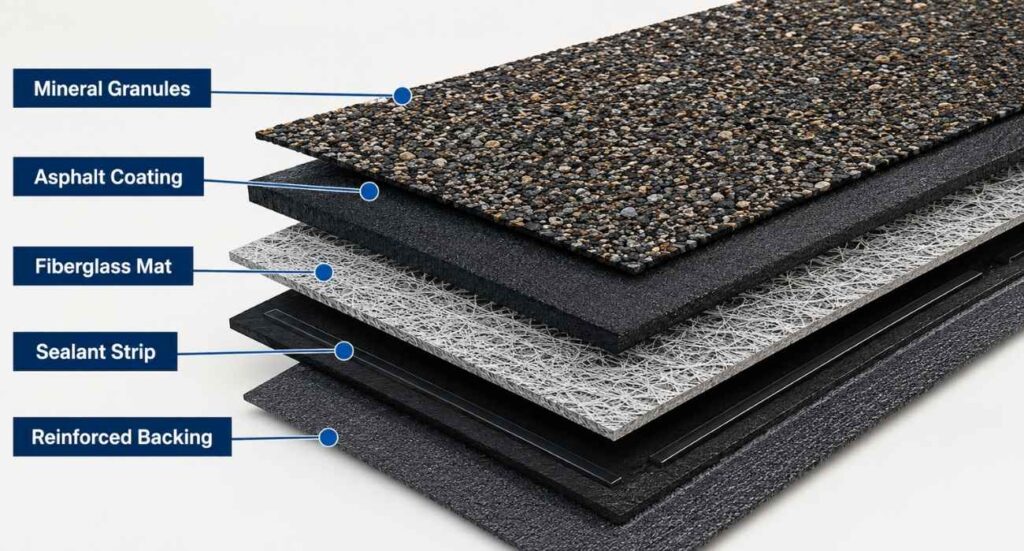
Fiberglass Core
The foundation of each shingle is a woven fiberglass mat that provides structural stability without adding excessive weight. This layer improves tear resistance while allowing the shingle to remain flexible during seasonal temperature changes.
Asphalt Coating
Refined asphalt coats the fiberglass core to create a waterproof barrier. It keeps moisture out and helps the shingles resist rain, snow, and harsh weather for many years.
Mineral Granules
The top layer of the shingles is covered with ceramic-coated mineral granules. These granules protect the roof from UV rays, improve fire resistance, and give the shingles their color and texture.
Sealant Strips
Factory-applied sealant strips bond the shingles together after they warm in the sun. This creates a stronger roof that helps resist strong winds and storm damage.
Reinforced Backing
The backing layer adds additional stability, allowing the shingles to expand and contract naturally without losing their shape or performance.
Together, these composition roofing materials create a durable roofing system capable of protecting a home through decades of changing weather.
Types of Composition Roof Shingles
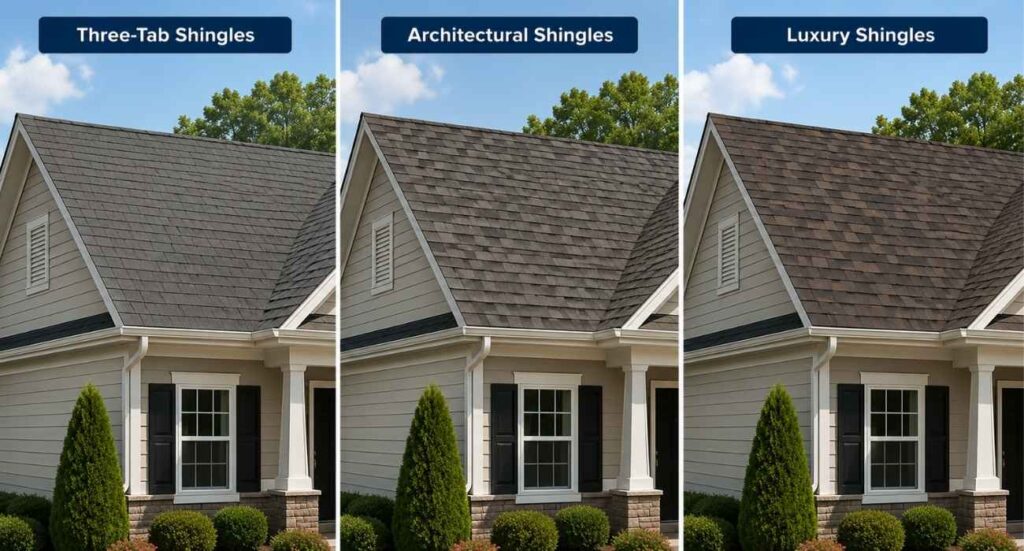
Composition roof shingles are available in several styles to suit different budgets, architectural designs, and durability needs. The three common options are three-tab, architectural, and luxury shingles.
Three-Tab Composition Shingles
Three-tab shingles are a traditional type of composition shingle. They have a flat, uniform appearance with evenly spaced tabs. Their relatively low upfront cost makes them suitable for budget-conscious homeowners.
However, three-tab shingles generally have a shorter lifespan and lower wind resistance than many architectural shingles. They may be a practical option when affordability is the main priority.
Architectural Composition Shingles
Architectural shingles, also called dimensional shingles, have multiple layers that create a textured roof appearance. They can resemble natural wood shakes and offer a more dimensional look than three-tab shingles.
Common advantages include:
- A thicker, dimensional appearance
- Greater wind resistance in many product lines
- A longer expected lifespan than basic three-tab shingles
- A wide selection of colors and designs
Architectural composition shingles are a popular choice for homeowners seeking a balance between cost, appearance, and durability. Actual performance depends on the product specifications and installation quality.
Luxury Composition Shingles
Luxury composition shingles are designed to imitate premium materials such as natural slate or cedar shakes. Their heavier construction and detailed appearance can enhance a home’s exterior.
These shingles generally cost more than standard options. They may offer enhanced durability, but performance and lifespan vary by manufacturer and product. Review the product specifications and warranty before choosing a luxury composition roof.
Composition Shingle Types Compared
| Shingle Type | Appearance | Typical Lifespan | Best For |
|---|---|---|---|
| Three-tab | Flat and uniform | 15–20 years | Budget-conscious projects |
| Architectural | Textured and dimensional | 25–30 years | Most residential homes |
| Luxury | Slate or cedar-like appearance | 30–40 years | Premium roof designs |
Lifespans are estimates, not guarantees. Actual service life depends on product quality, climate, installation, and maintenance.
If your composition shingles need professional installation, repair, or replacement, explore our asphalt shingle roofing services for residential roofing solutions in NYC.
Benefits of a Composition Roof
A composition roof offers several advantages for homeowners who want practical roofing materials with flexible design options. The main benefits include:
1. Wide Range of Styles and Colors
Composition shingles come in different colors, textures, and designs. Architectural and luxury shingles can also imitate the appearance of natural wood shakes or slate, helping homeowners match their roof to their property’s exterior.
2. Options for Different Budgets
Three-tab, architectural, and luxury shingles offer different price points. This range allows homeowners to choose roofing materials based on their budget, appearance preferences, and expected service life.
3. Reliable Weather Protection
When properly installed, composition shingles help protect a home against rain, wind, and everyday weather exposure. Actual resistance depends on the selected product, its installation, and local weather conditions.
4. Straightforward Repairs
If damage is limited to a small area, individual shingles can often be replaced without removing the entire roof. The repair method depends on the extent of the damage and the condition of the surrounding shingles.
5. Familiar Installation and Maintenance
Composition shingles are widely used in residential roofing. Qualified roofing contractors can inspect them for missing shingles, granule loss, damaged flashing, and other common problems.
6. Attractive Exterior Appearance
A well-maintained composition roof can complement a home’s architectural style and improve its overall appearance. Choosing suitable shingle colors and textures can help create a consistent exterior design.
Composition Roof Lifespan
A composition roof can last 15 to 40 years or longer, depending on the shingle type, product quality, installation, and maintenance. Basic three-tab shingles generally have a shorter service life than architectural and luxury shingles.
However, the expected lifespan is not a guarantee. Local weather, roof ventilation, and the condition of the roof structure can affect how long the shingles remain effective.
Factors That Affect Composition Roof Lifespan
Several factors influence how long composition shingles protect your home.
- Installation quality: Proper shingle placement, flashing, and sealing help prevent premature leaks and wind damage.
- Roof ventilation: Good attic ventilation helps control heat and moisture buildup beneath the roof.
- Weather exposure: Strong winds, heavy rain, snow, sunlight, and freeze-thaw cycles can accelerate wear.
- Regular maintenance: Routine inspections and prompt repairs help identify problems before they become more serious.
- Roof drainage: Clear gutters and proper drainage help prevent water from collecting around vulnerable roof areas.
- Material quality: Shingle construction, product specifications, and manufacturer recommendations influence expected service life.
How to Extend the Life of Your Composition Roof
Schedule regular roof inspections, clean gutters, and replace damaged or missing shingles promptly. Check flashing around chimneys, vents, and other roof openings for signs of wear.
In NYC, seasonal weather changes make roof drainage, flashing, and ventilation especially important. If you notice curling shingles, granule loss, or interior water stains, arrange a professional inspection to determine whether repairs are needed.
Composition Roof Cost
The cost of a composition roof depends on the roof’s size, shingle type, installation requirements, and existing roof condition. Basic three-tab shingles generally cost less upfront, while architectural and luxury shingles typically require a larger investment.
When planning a roof replacement, include labor, old roofing removal, underlayment, flashing, and any necessary roof deck repairs in your budget.
What Affects Composition Roof Cost?
Several factors influence the total cost of installing composition shingles.
- Roof size: Larger roofs require more materials and labor.
- Shingle type: Three-tab shingles usually cost less than architectural and luxury options.
- Roof complexity: Steep slopes, multiple roof sections, and difficult access can increase labor costs.
- Old roof removal: Removing existing shingles may add to the project cost.
- Roof deck repairs: Damaged decking may need repairs before new shingles are installed.
- Flashing and ventilation: Replacing flashing or improving ventilation can affect the final estimate.
- Local labor rates: Installation costs vary by location and project requirements.
Average Composition Roof Installation Costs
| Roofing Type | Estimated Installed Cost |
|---|---|
| Three-tab shingles | $4–$7 per sq. ft. |
| Architectural shingles | $5–$9 per sq. ft. |
| Luxury shingles | $8–$15+ per sq. ft. |
These are general estimates, not guaranteed NYC prices. Actual costs vary by location, roof condition, material selection, labor, and project complexity. Request a detailed estimate for accurate pricing.
How to Get an Accurate Roofing Estimate
A professional roof inspection can help determine the required materials, labor, and repairs. Before choosing a contractor, compare written estimates, product specifications, warranty details, and the scope of work.
If you’re planning a roof replacement or need help assessing your existing roof, explore our professional roofing services in NYC to learn about available solutions.
Composition Roof vs Asphalt Roof
A composition roof and an asphalt shingle roof usually refer to the same type of roofing system. Modern composition shingles commonly contain a fiberglass mat, asphalt coating, and protective mineral granules.
The term composition shingles describes shingles made from multiple materials, while asphalt shingles refers to the asphalt-based roofing product. Both terms are commonly used for residential shingle roofs.
Composition Roof vs Metal Roof
Both materials provide reliable protection, but each offers different advantages depending on budget, appearance, and expected lifespan.
| Feature | Composition Roofing | Metal Roofing |
|---|---|---|
| Average Lifespan | 20–40 Years | 40–70+ Years |
| Initial Cost | Lower | Higher |
| Repair Cost | Lower | Higher |
| Maintenance | Low | Very Low |
| Style Options | Extensive | Moderate |
| Installation Cost | More Affordable | Premium |
For homeowners looking for affordability, attractive design options, and dependable performance, composition shingles remain one of the most practical roofing choices.
Signs Your Roof May Need Repairs
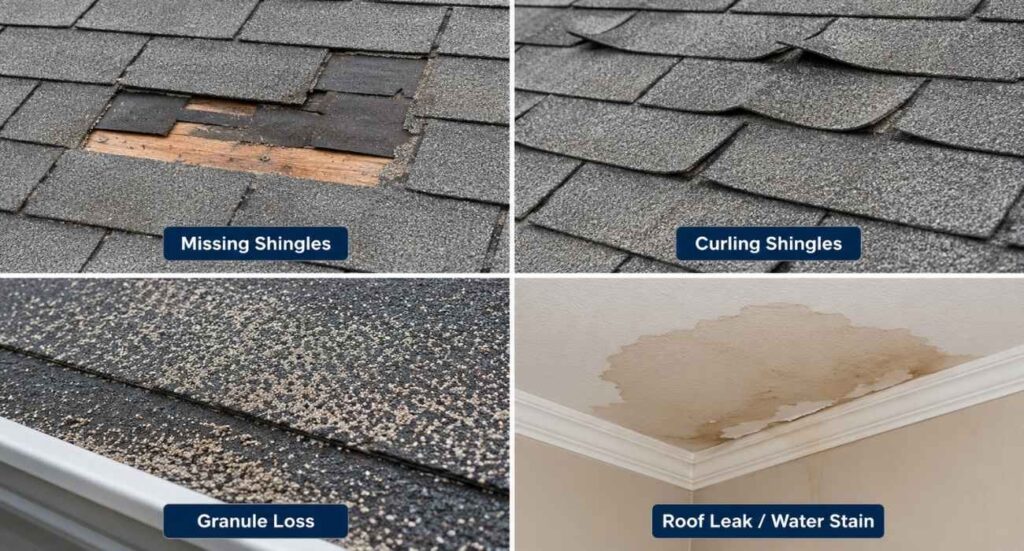
No roofing material lasts forever. Recognizing early warning signs allows homeowners to address small issues before they develop into expensive structural problems.
Missing Shingles
High winds and storm damage can remove shingles, exposing the underlayment to moisture.
Curling or Buckling
Shingles that curl along the edges or buckle across the roof often indicate aging materials or poor attic ventilation.
Granule Loss
Excessive granules collecting inside gutters usually signal that shingles are nearing the end of their useful life.
Interior Water Stains
Water stains on ceilings or walls may indicate a roof leak requiring immediate inspection.
Moss or Algae Growth
Persistent moisture encourages biological growth that can shorten the life of roofing materials if left untreated.
Roof Installation Process
Professional composition roof installation follows a systematic process designed to maximize durability and weather protection.
The process generally includes:
- Inspecting the existing roof structure.
- Removing old roofing materials when necessary.
- Repairing damaged roof decking.
- Installing underlayment and drip edge.
- Positioning starter shingles.
- Installing new shingles according to manufacturer specifications.
- Sealing flashing around roof penetrations.
- Installing ridge caps and ventilation components.
- Completing a final quality inspection.
Proper installation is just as important as selecting quality materials.
Frequently Asked Questions
What Is a Composition Roof?
A composition roof is a roofing system made from shingles that combine materials such as fiberglass, asphalt, and protective mineral granules. It is a popular option for residential properties.
How Long Does a Composition Roof Last?
A composition roof may last 15–40 years, depending on the shingle type, material quality, installation, weather exposure, and maintenance.
Is a Composition Roof the Same as an Asphalt Roof?
Yes, the terms usually refer to the same roofing category. Modern asphalt shingles combine several materials, which is why they are also called composition shingles.
How Much Does a Composition Roof Cost?
Composition roof installation costs vary based on roof size, shingle type, labor, and roof condition. Removal of old shingles and repairs to the roof deck can increase the total cost.
Which Composition Shingles Are Best?
Architectural shingles are a popular choice because they offer a dimensional appearance and often provide better wind resistance and longevity than basic three-tab shingles. The best option depends on your budget and roofing needs.
Can a Composition Roof Be Repaired?
Yes. Missing or damaged shingles and some flashing problems can often be repaired without replacing the entire roof. A professional inspection can determine whether repairs or replacement are more appropriate.
Conclusion
A composition roof offers homeowners a practical balance of durability, affordability, and design flexibility. Choosing the right shingles, ensuring proper installation, and maintaining the roof can help protect your home for years. Before making a decision, consider your budget, local weather conditions, and the expected lifespan of your chosen materials.
NuEra Contracting provides professional roof inspections, repairs, replacements, and installation services throughout NYC. Contact our team for guidance on your roofing project and solutions suited to your property’s needs.
Have Questions? Call NuEra Contracting Today!
📞 347-444-9028
We’re here to help with expert construction, brickwork, roofing, and waterproofing services. Get reliable solutions, friendly support, and professional results for your next project.

