
You walk into your basement after a heavy rainstorm and notice a damp spot on the wall, a musty odor, or even a small puddle on the floor. It may not seem like a major issue, but basement leaks rarely stay small for long.
What starts as minor water intrusion can lead to mold growth, damaged drywall, foundation problems, and costly repairs. For homeowners across New York City, basement leaks are a common problem caused by aging foundations, heavy rainfall, and drainage issues.
The good news is that early Basement Leak Repair can prevent serious damage and save thousands of dollars in future repair costs. In this guide, you’ll learn the warning signs, common causes, repair options, costs, and the best solutions for protecting your home.
Quick Answer: What Is Basement Leak Repair?
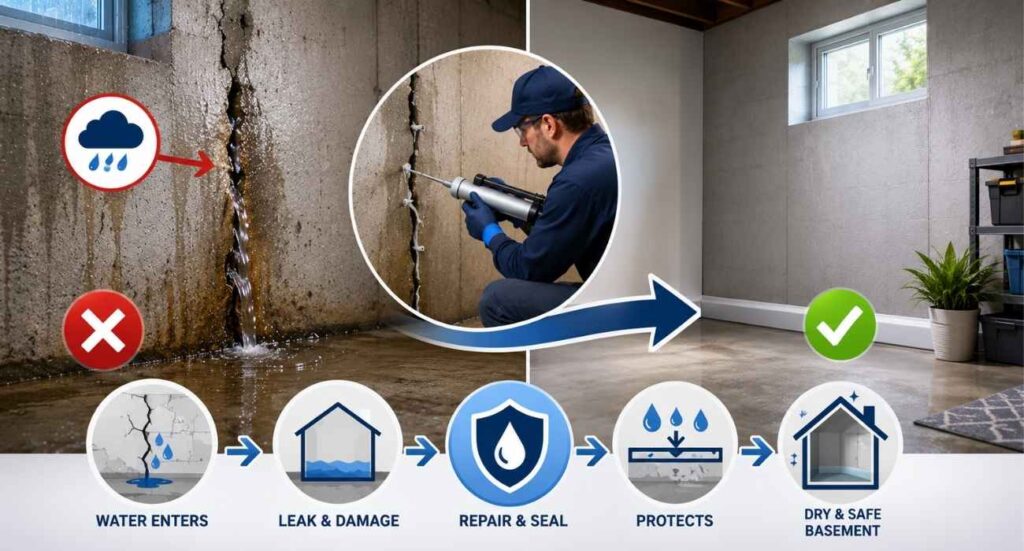
Basement Leak Repair is the process of identifying and stopping water intrusion in a basement. Depending on the source of the leak, repairs may include foundation crack repair, waterproofing solutions, drainage improvements, sump pump installation, or foundation waterproofing to prevent future water damage.
Common Signs You Need Basement Leak Repair
Most homeowners don’t discover a leak when water is pouring into the basement. In many cases, the warning signs appear long before major damage occurs.
Recognizing these signs early can help prevent costly repairs and protect your home’s foundation.
Musty Odors
A persistent musty odor is often an early sign that Basement Leak Repair may be needed. Even without visible water, hidden moisture behind walls, beneath flooring, or around stored items can indicate an underlying leak.
Water Stains on Walls
Brown or yellow discoloration on basement walls is often a clear sign of water intrusion. These stains typically become more noticeable after heavy rainfall and may indicate an underlying moisture problem that should be addressed promptly.
Foundation Cracks
Small foundation cracks may appear minor, but any crack that allows water to enter should not be ignored. Over time, water intrusion can cause cracks to expand, increasing the risk of structural damage and costly repairs.
Mold and Mildew Growth
Mold thrives in damp conditions and is often a sign of hidden moisture problems. If mold appears on walls, ceilings, furniture, or stored items, it may indicate ongoing water intrusion in the basement.
Damp Floors
A damp basement floor after rainfall may indicate water intrusion through the foundation slab or wall-floor joints. This issue is particularly common in older NYC homes with aging foundations.
Efflorescence
Efflorescence is a white, chalky residue that often appears on concrete or masonry walls when moisture moves through the foundation and leaves mineral deposits behind. While the substance itself is not harmful, it is a common warning sign that Basement Leak Repair or moisture control may be needed to address an underlying water intrusion problem.
Key Warning Signs
If you notice any of these warning signs, it may be time to consider a professional Basement Leak Repair inspection:
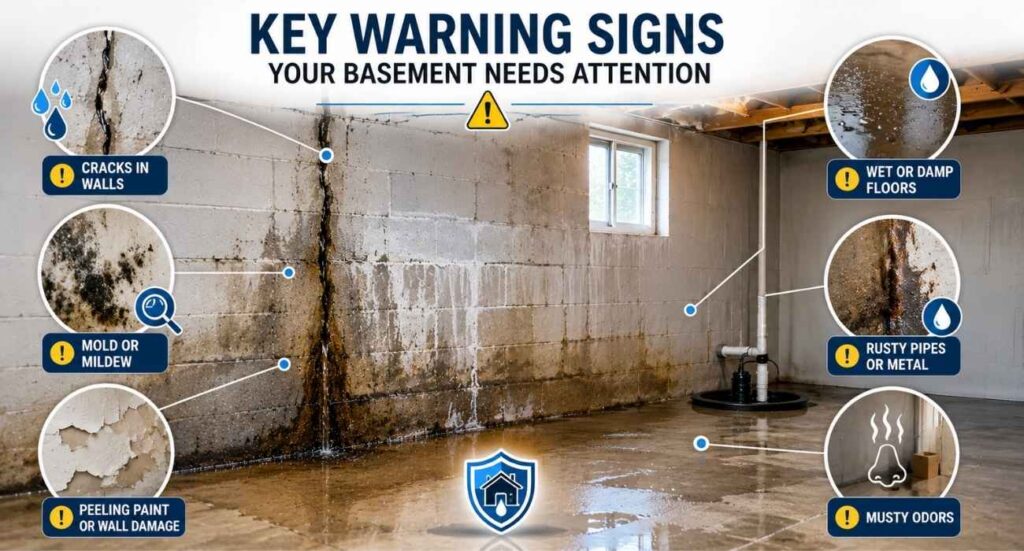
- Persistent musty odors
- Water stains on walls
- Foundation cracks
- Mold growth
- Damp basement floors
- Peeling paint
- Increased humidity
- White mineral deposits on walls
What Causes Basement Leaks?
A basement leak is rarely just about the water you can see. The real problem often starts outside the foundation, where drainage issues, soil pressure, or foundation damage allow moisture to enter your home. That’s why simply covering stains or sealing visible cracks may provide only a temporary fix if the underlying cause isn’t addressed.
Several factors can contribute to basement leaks, and understanding the cause is the first step toward choosing the right repair solution.
Hydrostatic Pressure
Hydrostatic pressure is one of the leading causes of basement water intrusion.
After heavy rain, the soil around your home becomes saturated. As water builds up around the foundation, pressure increases and forces moisture through cracks, joints, and porous concrete surfaces.
This problem is particularly common in New York City during periods of heavy rainfall.
Poor Drainage Around the Foundation
Water should be directed away from your foundation, not allowed to accumulate around it. When grading is poor, rainwater can collect near the home, increasing hydrostatic pressure and the risk of basement leaks.
Improper drainage is one of the most common and overlooked causes of recurring water intrusion problems, often leading to ongoing moisture issues and the need for Basement Leak Repair.
Clogged Gutters and Downspouts
Your gutter system does more than protect your roof—it also helps keep water away from your foundation. When gutters overflow or downspouts discharge water too close to the home, moisture can build up around the foundation and increase the risk of basement leaks.
Over time, this excess water may seep into the basement, leading to ongoing moisture problems and the need for Basement Leak Repair.
Foundation Cracks
Concrete foundations naturally shift over time due to temperature changes and soil movement. As cracks develop, water can enter the basement during heavy rainfall and storms.
Failed Waterproofing Systems
Many homes in Brooklyn, Queens, and the Bronx have aging foundations and waterproofing systems. As these materials deteriorate over time, they become less effective at blocking moisture, increasing the risk of basement leaks and water intrusion.
Basement Window Leaks
Basement windows can be a common source of water intrusion. Damaged seals, clogged window wells, and poor drainage often allow water to enter during heavy rain, increasing the risk of basement leaks.
What Happens If You Ignore a Basement Leak?
Many homeowners assume a small leak is nothing to worry about, but water intrusion rarely resolves itself. What starts as a minor issue can gradually lead to structural damage, mold growth, and costly repairs, making early intervention essential to protect your property.
Mold Growth
A damp basement provides ideal conditions for mold and mildew growth. Once mold starts to spread, it can affect indoor air quality, damage building materials, and lead to costly cleanup and restoration work.
Structural Damage
Continuous exposure to moisture can gradually weaken concrete, masonry, and wood framing, reducing the structural integrity of your property. As water penetrates deeper into the building materials, small cracks can expand over time, allowing even more moisture to enter and increasing the risk of costly damage and repairs.
Damage to Finished Basements
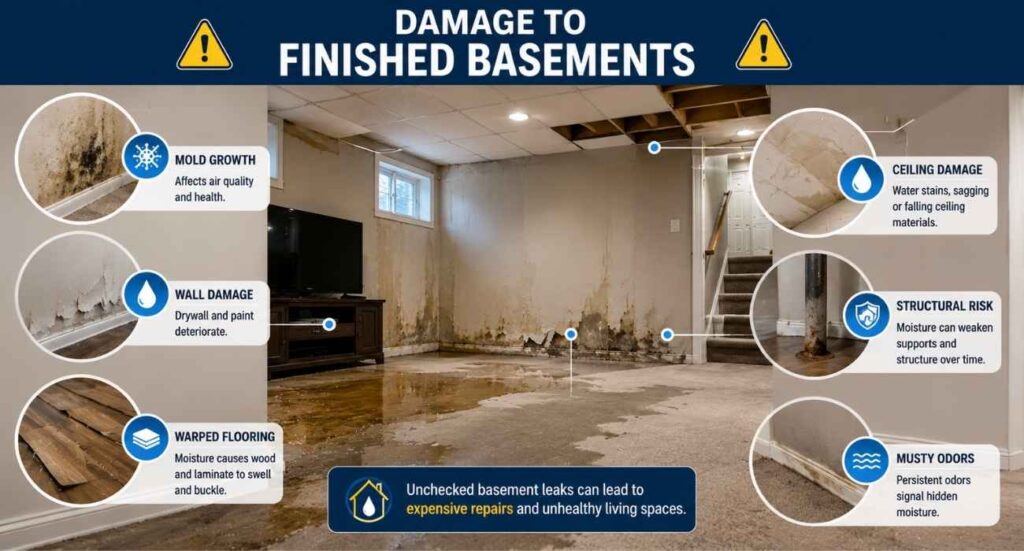
Finished basements are particularly vulnerable.
Water can damage:
- Drywall
- Flooring
- Insulation
- Furniture
- Electrical systems
- Stored belongings
Higher Repair Costs
The longer a leak goes untreated, the greater the potential for damage throughout the property. Addressing a minor water issue early can help prevent costly structural repairs, extensive waterproofing work, and major restoration projects in the future.
Reduced Property Value
Visible water damage and foundation concerns can significantly reduce a property’s appeal and market value. Many potential buyers see basement moisture problems as a warning sign of underlying structural issues, which can make selling a home more difficult and costly.
Small Problems vs Future Consequences
| Problem Today | Potential Future Damage |
|---|---|
| Small wall crack | Significant water intrusion |
| Musty odor | Mold infestation |
| Damp flooring | Flooring replacement |
| Minor leak | Structural damage |
| Water stains | Finished basement repairs |
| High humidity | Indoor air quality issues |
Basement Leak Repair Cost in NYC
One of the first questions homeowners ask after discovering water in their basement is:
“How much does Basement Leak Repair cost?”
The answer depends on the source of the leak, the extent of the damage, and the repair method required. A small foundation crack may cost a few hundred dollars to repair, while extensive waterproofing or foundation work can cost several thousand dollars.
The good news is that addressing leaks early is usually far less expensive than repairing water damage later.
Average Basement Leak Repair Costs
| Repair Type | Typical NYC Cost Range |
|---|---|
| Foundation Crack Repair | $500 – $2,500 |
| Waterproof Coating Application | $1,000 – $4,000 |
| Interior Waterproofing System | $2,000 – $8,000 |
| French Drain Installation | $4,000 – $15,000 |
| Sump Pump Installation | $1,500 – $5,000 |
| Exterior Waterproofing | $5,000 – $20,000+ |
| Foundation Repair | $5,000 – $30,000+ |
These are general estimates. Every property is different, which is why a professional inspection is often the best way to determine the actual repair cost.
Factors That Affect Repair Costs
Several factors influence the final price of a Basement Leak Repair project:
- Size and location of the leak
- Foundation condition
- Age of the property
- Accessibility of the repair area
- Waterproofing requirements
- Drainage issues around the home
- Severity of existing water damage
- Whether mold remediation is required
A small leak caught early may require a simple repair, while recurring leaks often indicate a larger waterproofing problem.
Common Basement Leak Repair Mistakes Homeowners Make
Many expensive repairs happen because homeowners make the wrong decision early.
The following mistakes are some of the most common issues waterproofing professionals encounter.
Waiting Too Long
Many homeowners delay repairs because the problem appears minor. Unfortunately, water intrusion tends to worsen over time, leading to larger repair bills and more extensive damage.
Using Waterproof Paint as a Solution
Waterproof paint can help improve the appearance of basement walls, but it does not address the underlying cause of water intrusion. When leaks are caused by hydrostatic pressure pushing water through the foundation, paint typically provides only a temporary solution and may fail over time.
Ignoring Drainage Problems
In many cases, the leak itself is only a symptom of a larger problem. Poor yard grading, clogged gutters, and inadequate drainage can cause water to collect around the foundation, increasing the risk of basement leaks. If these underlying issues are not corrected, water intrusion may continue even after repairs have been made.
Attempting DIY Structural Repairs
While some minor maintenance tasks can be handled by homeowners, foundation crack repairs are often more complex than they appear. Without identifying the root cause of the problem, repairs may fail or allow further damage to develop. Waterproofing and foundation issues typically require a professional assessment to ensure a long-term solution.
Choosing the Cheapest Contractor
Choosing the lowest estimate may seem cost-effective at first, but it does not always provide the best long-term value. Repairs that focus only on the visible symptoms rather than the underlying cause can result in recurring leaks, ongoing damage, and higher repair costs in the future.
Basement Leak Repair vs Basement Waterproofing
Many homeowners assume basement leak repair and basement waterproofing are the same service, but they serve different purposes. Understanding the difference can help you choose the most effective solution for protecting your home.
Basement Leak Repair is designed to stop active water intrusion and address existing leaks, while Basement Waterproofing focuses on preventing future moisture problems and protecting the foundation from water damage. In many cases, combining both services provides the most reliable long-term defense against basement water issues.
Basement Leak Repair vs Basement Waterproofing
| Basement Leak Repair | Basement Waterproofing |
|---|---|
| Addresses active leaks | Helps prevent future leaks |
| Focuses on specific problem areas | Protects the entire basement system |
| Often lower initial cost | Larger long-term investment |
| Repairs existing damage | Reduces future water risks |
| May involve crack repair | May involve drainage and waterproofing systems |
A homeowner experiencing recurring leaks may benefit from both basement leak repair and basement waterproofing services.
How Professionals Fix Basement Leaks
Successful Basement Leak Repair isn’t just about sealing a crack.
Professional contractors focus on identifying why water is entering the basement and preventing it from returning.
Step 1: Comprehensive Inspection
Every repair starts with a detailed inspection.
Contractors evaluate:
- Foundation walls
- Floor slabs
- Basement windows
- Drainage systems
- Exterior grading
- Existing waterproofing systems
The goal is to locate all possible entry points.
Step 2: Moisture Assessment
Water often travels before becoming visible.
A moisture assessment helps identify hidden problem areas behind walls, beneath flooring, and around structural components.
Step 3: Identify the Source of Water Intrusion
The next step is determining exactly why water is entering.
Common causes include:
- Hydrostatic pressure
- Foundation cracks
- Drainage failures
- Window leaks
- Waterproofing system deterioration
Identifying the root cause is critical for long-term success.
Step 4: Repair Foundation Cracks
If cracks are allowing water intrusion, they are repaired using methods designed to restore the integrity of the foundation and reduce future leaks.
The repair method depends on the size, location, and condition of the crack.
Step 5: Improve Waterproofing Protection
In some situations, stopping the leak requires more than crack repair.
Additional waterproofing measures may include:
- Waterproof coatings
- Foundation waterproofing
- Moisture barriers
- Drainage improvements
These solutions help reduce future water intrusion.
Step 6: Address Drainage Problems
Many basement leaks originate outside the home.
Professionals often recommend drainage improvements such as:
- Grading corrections
- Downspout extensions
- French drain installation
- Surface water management
Proper drainage reduces pressure on the foundation and helps prevent recurring leaks.
Step 7: Long-Term Prevention
The best repair solution doesn’t just stop today’s leak.
It helps protect the home from future water damage as well.
This may include maintenance recommendations, waterproofing upgrades, and periodic inspections.
Why NYC Homeowners Trust NuEra Contractors NYC
Basement leaks can be difficult to diagnose because water often appears far from the actual entry point. That’s why identifying the source of the problem is just as important as repairing the damage.
At NuEra Contractors NYC, we focus on finding and fixing the root cause of water intrusion, not just the symptoms. Our services include Basement Leak Repair, Basement Waterproofing, Foundation Crack Repair, Foundation Waterproofing, French Drain Installation, Sump Pump Installation, Above Grade Waterproofing, and Below Grade Waterproofing.
Serving Brooklyn, Queens, Manhattan, the Bronx, Staten Island, and Nassau County, our goal is to provide long-term solutions that protect your foundation, prevent recurring leaks, and keep your basement dry year-round.
Frequently Asked Questions
How much does Basement Leak Repair cost in NYC?
The cost of Basement Leak Repair depends on the cause and extent of the damage. Minor repairs may be relatively inexpensive, while more extensive waterproofing or foundation work can cost significantly more. A professional inspection is the most accurate way to assess the problem and estimate repair costs.
Can a small basement leak become a serious problem?
Yes. Small basement leaks often worsen over time, leading to mold growth, structural damage, and costly repairs. Addressing the problem early is usually the most cost-effective solution.
What causes basement leaks after heavy rain?
Heavy rainfall increases soil moisture around the foundation, creating hydrostatic pressure that can force water through cracks and porous concrete. Poor drainage and clogged gutters can further increase the risk of basement leaks.
How long does Basement Leak Repair last?
When the underlying cause is properly addressed, Basement Leak Repair can provide long-term protection. The durability of the repair depends on the condition of the foundation, drainage effectiveness, and the repair solution used.
Can foundation cracks cause basement leaks?
Yes. Foundation cracks are one of the most common entry points for water. Even small cracks can allow moisture to enter during rainstorms or periods of high groundwater pressure.
Do all basement leaks require waterproofing?
Not always. Some leaks can be fixed with localized repairs, but recurring water issues may require waterproofing or drainage improvements to prevent future problems.
Conclusion
A basement leak may seem minor at first, but it can quickly lead to mold growth, structural damage, and costly repairs if left untreated. Timely Basement Leak Repair helps protect your home, preserve property value, and prevent small issues from becoming major problems.
The most effective solution is to identify and address the root cause of the water intrusion, whether it involves foundation cracks, drainage issues, hydrostatic pressure, or waterproofing failures. Taking action early can save homeowners significant time, money, and stress in the long run.
If you’re noticing signs of water intrusion, schedule a professional inspection with NuEra Contractors NYC. Our team can identify the source of the problem and recommend the right Basement Leak Repair solution to keep your basement dry and protected.
Have Questions? Call NuEra Contracting Today!
📞 347-444-9028
We’re here to help with expert construction, brickwork, roofing, and waterproofing services. Get reliable solutions, friendly support, and professional results for your next project.

