
Understanding crawl space encapsulation cost helps homeowners compare estimates and plan their budgets. A basic vapor barrier may cost less than a complete encapsulation system with sealed foundation walls, drainage improvements, and a dehumidifier. The final price depends on the crawl space size, existing moisture problems, materials, and labor required.
This guide explains average costs, pricing by square footage, key cost factors, and the differences between a basic vapor barrier and full encapsulation. It also covers cost considerations for properties in NYC and Nassau County.
How Much Does Crawl Space Encapsulation Cost?
Crawl space encapsulation cost varies based on the project’s size and complexity. As a general U.S. budgeting estimate, many projects may cost between $3,000 and $15,000. Simpler projects may cost less, while extensive projects requiring drainage improvements or repairs can cost more.
A basic vapor barrier installation is different from full encapsulation. A complete system may include a ground liner, sealed foundation walls, closed vents, air sealing, and humidity-control equipment.
The following table provides approximate planning ranges. These are general estimates, not confirmed prices for NYC or Nassau County.
| Project type | Estimated cost |
|---|---|
| Basic vapor barrier installation | $1,200–$4,000 |
| Standard crawl space encapsulation | $3,000–$10,000 |
| Encapsulation with drainage improvements | $5,500–$15,000+ |
| Projects requiring extensive mold or structural repairs | Varies by condition |
Actual costs depend on the size and accessibility of the crawl space, labor rates, materials, and the work required. A property inspection is necessary to establish a project-specific estimate.
Crawl Space Encapsulation Cost Per Square Foot
The final crawl space encapsulation cost depends on the space’s condition and the work required. Crawl space size is a major cost factor. Larger spaces generally need more vapor barrier material, additional sealing, and more installation time, which increases the total price.
For general budgeting, full encapsulation may range from approximately $3 to $10 per square foot. Projects that require drainage systems, insulation, extensive preparation, or repairs may exceed this range.
| Crawl space size | Estimated cost at $3–$10 per sq. ft. |
|---|---|
| 500 sq. ft. | $1,500–$5,000 |
| 1,000 sq. ft. | $3,000–$10,000 |
| 1,500 sq. ft. | $4,500–$15,000 |
| 2,000 sq. ft. | $6,000–$20,000 |
These figures are rough budgeting examples, not contractor quotes. Smaller spaces may have a higher per-square-foot cost because preparation, equipment setup, and labor create minimum project expenses.
When comparing estimates, check whether the price includes floor and wall coverage, vent sealing, a dehumidifier, insulation, and necessary drainage work.
What Factors Affect Crawl Space Encapsulation Cost?
Several factors determine the final crawl space encapsulation cost. Understanding them can help you compare estimates and identify which services your property needs.
1. Crawl Space Size
Larger crawl spaces require more barrier material and more installation time. This usually increases the total project cost.
However, the cost per square foot may decrease as the project gets larger. Some expenses, such as equipment setup, do not increase at the same rate as the floor area.
2. Existing Moisture Problems
A relatively dry crawl space may require less preparation than one with persistent dampness or standing water.
Common moisture problems include:
- Ground moisture entering through exposed soil
- Water seeping through foundation walls
- Poor drainage around the property
- Condensation caused by high humidity
- Plumbing leaks beneath the home
Identifying the moisture source is important before installing an encapsulation system. Sealing a wet crawl space without addressing water intrusion can leave the underlying problem unresolved.
3. Vapor Barrier Material
A vapor barrier is a moisture-resistant sheet installed over the crawl space floor. Depending on the system, it may also extend up the foundation walls.
Material thickness, durability, and coverage affect the price. Reinforced liners may cost more but can offer greater resistance to punctures during installation and maintenance.
Ask your contractor about liner thickness, seam sealing, wall attachment, and expected service life.
4. Crawl Space Dehumidifier
A crawl space encapsulation cost estimate may include a dehumidifier to control humidity inside the enclosed space. The price depends on the unit’s capacity, features, installation needs, and drainage setup.
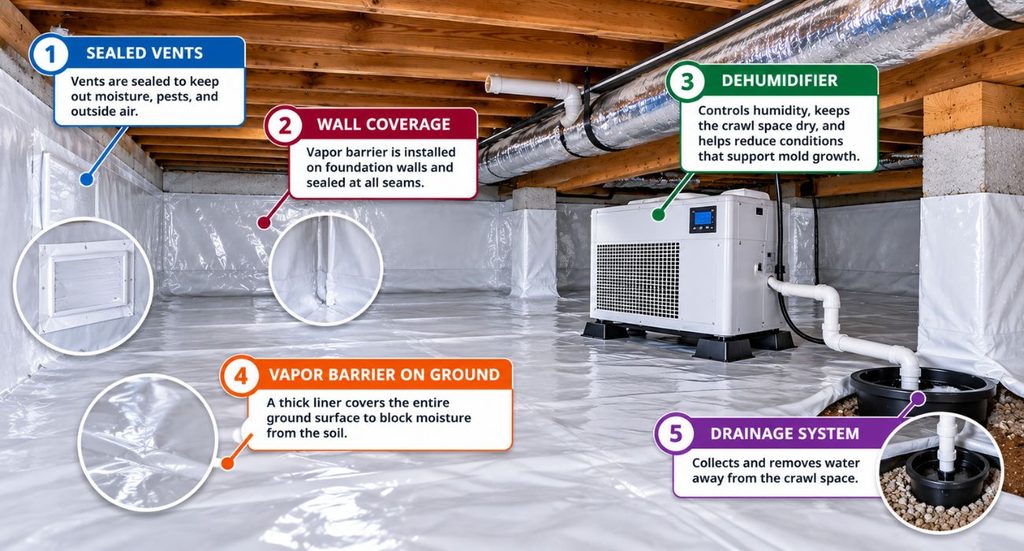
Choose a dehumidifier based on the crawl space size and moisture levels. An undersized unit may not control humidity effectively, while an oversized system can increase upfront costs unnecessarily.
5. Drainage and Sump Pump Installation
If water collects beneath your home, additional drainage work may be necessary before encapsulation.
Depending on the site, this may involve drainage channels, a sump basin, a sump pump, or improvements to exterior water management. These additions can significantly increase the overall price.
Encapsulation alone does not remove standing water or correct active water intrusion.
6. Insulation and Air Sealing
Some encapsulation projects include insulation on foundation walls or other suitable areas. Air sealing may also help limit uncontrolled outside air entering the enclosed space.
The right approach depends on the building’s design, local requirements, moisture conditions, and existing insulation. Ask for these items to be listed separately in your estimate.
7. Labor and Accessibility
A crawl space with limited headroom, narrow access, debris, or damaged materials can require additional preparation and labor.
Contractors may need to remove old insulation, clear debris, repair damaged areas, or improve access before installation. These tasks can affect both the price and project timeline.
What Is Included in Crawl Space Encapsulation?
A complete encapsulation system combines several components. The exact scope depends on the home’s condition and the proposed solution.
Heavy-Duty Vapor Barrier
The liner covers exposed soil and may extend over foundation walls and support piers. Seams and edges must be secured to help limit moisture movement.
Sealed Vents and Openings
Appropriate crawl space vents, gaps, and penetrations may be sealed as part of the system. The ventilation strategy should suit the building and applicable requirements.
Humidity Control
A properly sized dehumidifier may be installed to manage humidity in the enclosed area. Condensate drainage and access for maintenance should also be considered.
Insulation
Insulation may be added where appropriate to improve thermal performance. The material and installation location should suit the crawl space design and local building requirements.
Drainage Improvements
Drainage work may be needed if water enters or collects beneath the home. This work should address the source and movement of water before the area is sealed.
Crawl Space Encapsulation vs Vapor Barrier: Which Do You Need?
A vapor barrier and full crawl space encapsulation are related, but they are not the same.
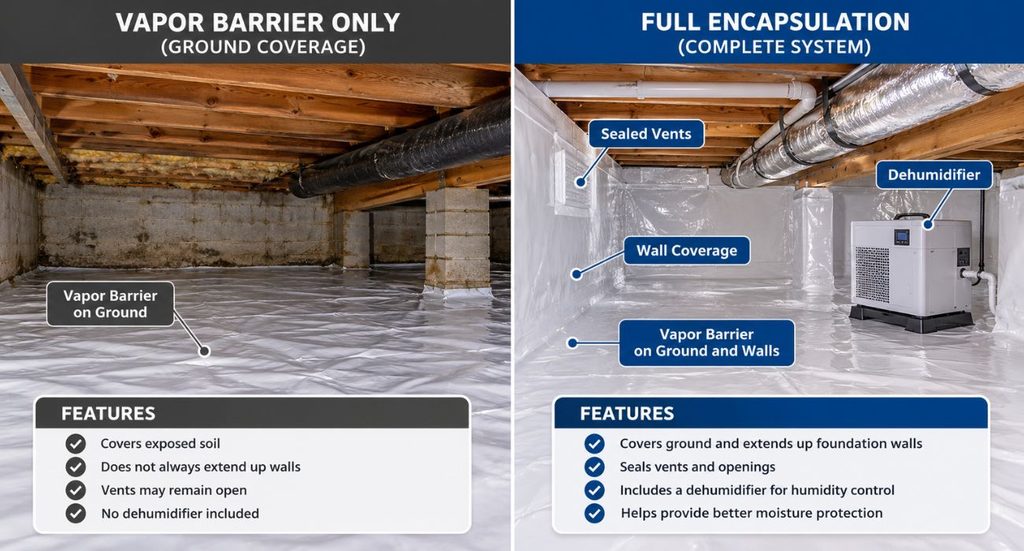
A basic vapor barrier covers the exposed ground to reduce moisture rising from the soil. Full encapsulation generally involves more extensive coverage, sealed openings, and humidity control.
| Feature | Vapor barrier | Full encapsulation |
|---|---|---|
| Covers exposed soil | Yes | Yes |
| Extends up foundation walls | Depends on installation | Typically |
| Seals vents and openings | Not always | Usually |
| Includes a dehumidifier | Not usually | Often |
| Controls ground moisture | Yes | Yes |
| Controls enclosed-space humidity | Limited | Better when properly designed |
A vapor barrier may be suitable when ground moisture is the main concern and there is no significant water intrusion. Full encapsulation may be more appropriate when persistent humidity or condensation requires a broader moisture-control system.
The correct choice depends on the crawl space condition. Neither option should replace repairs for active leaks or standing water.
What Are the Benefits of Crawl Space Encapsulation?
The value of encapsulation depends on whether the system addresses the moisture problems affecting your home.
Helps Control Moisture
A properly installed liner reduces water vapor entering from exposed soil. Sealing and humidity control can further help manage damp conditions.
Reduces Conditions That Support Mold
Mold can grow when moisture and suitable surfaces are present. Encapsulation may help reduce excessive humidity, but existing mold and its moisture source must be addressed separately.
Helps Protect Building Materials
Persistent moisture can contribute to wood deterioration, corrosion, and damage to materials stored beneath the home. Better moisture management can help protect vulnerable components.
May Improve Indoor Comfort
Reducing moisture and uncontrolled air movement may improve comfort in some homes. Actual results depend on the building’s construction and the overall moisture-control system.
Supports Long-Term Moisture Management
When correctly designed and maintained, encapsulation can form part of a broader strategy for protecting the foundation area. Periodic inspections and maintenance remain important.
Is Crawl Space Encapsulation Worth the Cost?
Crawl space encapsulation may be worth considering when a home has recurring ground moisture, high humidity, condensation, or damp conditions that have not been resolved by simpler measures.
However, encapsulation is not necessary for every crawl space. A dry, well-maintained area may need only a suitable vapor barrier or routine monitoring.
Before investing in a complete system, determine whether the problem comes from ground moisture, exterior drainage, foundation seepage, plumbing leaks, or humid air. Correcting the source can help prevent unnecessary work.
Consider the potential cost of continued moisture damage, the system’s maintenance needs, and the condition of the foundation and framing. A professional assessment can help establish the appropriate scope.
Crawl Space Encapsulation Cost in NYC and Nassau County
Crawl space encapsulation cost in NYC and Nassau County may differ from general U.S. estimates because labor, access, material delivery, and property conditions vary by location.
Older homes may require additional assessment of foundation walls, drainage, existing insulation, and wood framing. Some properties may have limited crawl space access or moisture problems that require repairs before encapsulation.
For an accurate estimate, a contractor should assess the crawl space size, current moisture conditions, access, and necessary work. A national cost-per-square-foot figure alone cannot determine the price of a specific NYC-area property.
NuEra Contracting provides waterproofing and construction services in NYC and Nassau County. If you are dealing with persistent moisture or water intrusion, our team can help you explore appropriate next steps. Learn more about our waterproofing services.
How to Save Money on Crawl Space Encapsulation
You can make a more informed investment by comparing estimates and addressing the underlying problem before work begins.
- Fix water intrusion first: Resolve active leaks and drainage problems before sealing the space.
- Compare detailed estimates: Check barrier thickness, wall coverage, vent sealing, insulation, and humidity-control equipment.
- Choose the right scope: Avoid paying for components your crawl space does not need.
- Consider long-term maintenance: Ask about filter replacement, drainage checks, and dehumidifier servicing.
- Address moisture early: Persistent dampness can lead to additional repairs if left unresolved.
- Get a professional assessment: Confirm the source of moisture before choosing a system.
The lowest quote may not include the same work as a more comprehensive estimate. Compare the materials, preparation, installation, and exclusions before making a decision.
Frequently Asked Questions
How much does crawl space encapsulation cost on average?
As a general U.S. budgeting estimate, many projects cost between $3,000 and $15,000. The final price depends on the crawl space size, condition, location, and scope of work. This is not a confirmed price range for every NYC or Nassau County property.
How much does crawl space encapsulation cost per square foot?
For general budgeting, full encapsulation may cost approximately $3–$10 per square foot. Extensive drainage, insulation, or remediation work can increase the price.
Is a vapor barrier cheaper than full encapsulation?
Yes. A basic vapor barrier generally costs less because it provides less coverage and does not normally include all the components of a full encapsulation system.
Does crawl space encapsulation stop standing water?
No. Encapsulation alone does not remove standing water or correct active water intrusion. Drainage improvements, leak repairs, or other measures may be required first.
Does crawl space encapsulation prevent mold?
It can help reduce moisture conditions that support mold growth. However, existing mold must be assessed and addressed, and the source of moisture must be corrected.
How long does crawl space encapsulation take?
Many straightforward projects take a few days or less. The schedule depends on the size of the space, accessibility, and whether drainage, cleanup, or repairs are required.
Is crawl space encapsulation worth it in NYC?
It may be worthwhile for properties with persistent ground moisture or high humidity. A site-specific assessment is important because the building’s design, local conditions, and existing water problems determine the appropriate solution.
Conclusion
Crawl space encapsulation cost depends on the size of the space, materials, labor, moisture conditions, and additional work such as drainage, insulation, or remediation. Comparing detailed estimates can help you understand what is included and select a solution suited to your property.
If you are experiencing persistent crawl space moisture or water intrusion in NYC or Nassau County, contact NuEra Contracting to discuss your property’s needs. Our team provides waterproofing and construction services to help property owners identify appropriate solutions for moisture-related concerns.
Have Questions? Call NuEra Contracting Today!
📞 347-444-9028
We’re here to help with expert construction, brickwork, roofing, and waterproofing services. Get reliable solutions, friendly support, and professional results for your next project.

