Most roof problems don’t begin with a missing shingle or a water stain on the ceiling. In many cases, the damage starts long before homeowners notice anything is wrong. A loose piece of flashing, clogged gutters, damaged sealant, or hidden moisture beneath the roofing materials can quietly weaken your roof for months, eventually leading to leaks, mold growth, or costly structural repairs.
That’s why professional roof inspection services are one of the most valuable investments you can make as a homeowner. A timely inspection helps identify small roofing issues before they become expensive repairs, extends the life of your roof, and provides confidence that your home is protected against changing weather and everyday wear.
Whether your roof is a few years old or has protected your home for decades, regular inspections are essential for maintaining its performance. In this guide, you’ll learn what roof inspection services include, when you should schedule an inspection, what roofing professionals evaluate, and the common problems they often discover before they become major concerns.
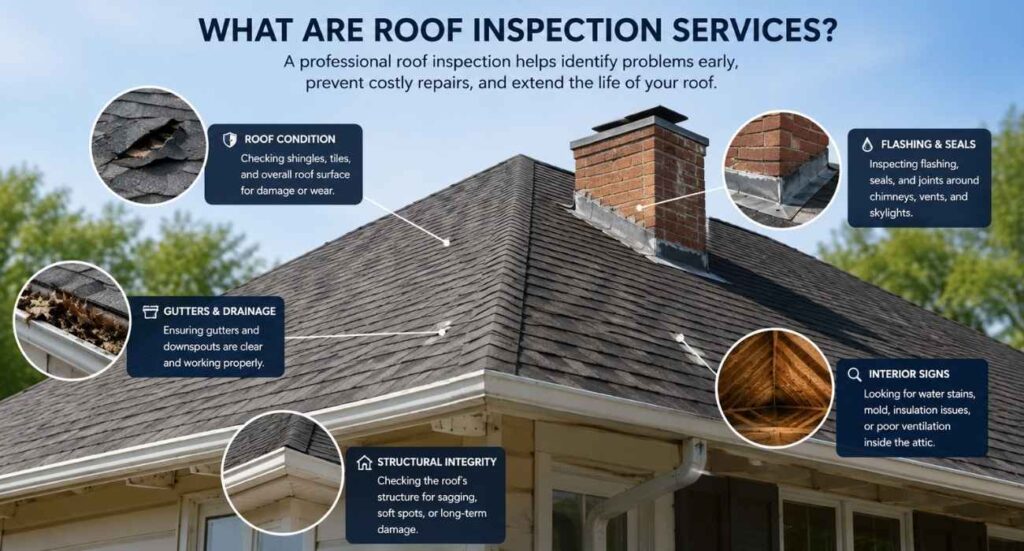
What Are Roof Inspection Services?
Roof inspection services are professional evaluations designed to assess the overall condition of your roofing system. Rather than focusing only on visible damage, a complete inspection examines every major roofing component to determine whether your roof is protecting your home as intended and to identify potential problems before they worsen.
A professional roof inspection goes far beyond checking for missing shingles. Experienced inspectors evaluate roofing materials, flashing, chimneys, skylights, gutters, roof penetrations, attic ventilation, and structural components. They also look for signs of water intrusion, aging materials, poor drainage, and hidden damage that may not be visible from the ground.
Homeowners commonly schedule roof inspection services in situations such as:
- Annual roof maintenance.
- After heavy storms or high winds.
- Before purchasing a home.
- Before listing a property for sale.
- After roof repairs or partial replacements.
- When leaks or water stains appear indoors.
Unlike a quick visual inspection, a professional assessment provides a complete picture of your roof’s condition, helping homeowners make informed maintenance and repair decisions before small issues become costly problems.
Why Regular Roof Inspections Matter
Your roof is constantly exposed to sunlight, rain, snow, wind, and temperature changes. Over time, these conditions naturally wear down roofing materials, even when the roof appears to be in good condition. Because much of this deterioration happens gradually, homeowners often don’t realize there’s a problem until water begins entering the home or visible damage appears.
Scheduling roof inspection services regularly allows potential issues to be identified before they affect the structure of your home. Small repairs completed at the right time are often far less expensive than replacing damaged roof decking, insulation, or interior finishes caused by an undetected leak.
Regular roof inspections can help you:
- Detect hidden roof damage early.
- Prevent costly roof repairs.
- Extend the lifespan of your roofing system.
- Improve drainage performance.
- Protect manufacturer warranties.
- Support insurance claims after severe weather.
- Maintain your home’s value.
One thing professional contractors frequently notice is that the location of an interior leak is rarely where the roof actually failed. Water often travels beneath roofing materials before becoming visible inside the home, making professional inspections much more valuable than simply waiting for obvious warning signs.
When Should You Schedule Roof Inspection Services?
Many homeowners assume roof inspections are only necessary after a leak develops. In reality, waiting until water enters your home usually means the damage has already progressed beyond a simple repair. Scheduling roof inspection services at the right time allows roofing problems to be addressed before they become larger structural or moisture-related issues.
Although every roof ages differently, certain situations almost always justify a professional inspection.
After Severe Weather
Strong winds, hail, heavy rain, and falling tree branches can damage roofing materials without leaving obvious signs from the ground. Even if your roof appears undamaged, hidden issues such as lifted shingles or damaged flashing may allow water to enter over time.
Before Buying a Home
A standard home inspection provides a general overview of the property, but it may not uncover every roofing concern. A dedicated roof inspection gives buyers a clearer understanding of the roof’s condition, remaining lifespan, and any repairs that may be needed in the near future.
Before Selling Your Property
Having your roof professionally inspected before listing your home helps identify potential issues that could delay a sale or become negotiation points during the buying process. It also provides buyers with greater confidence in the property’s overall condition.
After Major Roof Repairs
Even after repairs have been completed, a follow-up inspection helps verify that flashing, sealants, drainage systems, and repaired sections are performing properly. This additional step can prevent recurring issues and confirm the repair was completed correctly.
As Part of Annual Roof Maintenance
Annual roof inspection services help identify gradual wear caused by weather exposure, aging materials, and seasonal changes. Routine inspections are one of the most effective ways to maximize the lifespan of your roof while reducing the likelihood of unexpected repair costs.
What Does a Professional Roof Inspection Include?
One of the biggest misconceptions homeowners have is that roof inspections only involve checking shingles for visible damage. In reality, a professional inspection evaluates the entire roofing system because every component plays an important role in protecting your home from water intrusion and structural damage.
Professional roof inspection services combine visual observations with a systematic evaluation of roofing materials, drainage, structural components, and attic conditions. By examining how each part of the roof works together, contractors can identify developing problems long before they become visible inside the home.
During a professional inspection, contractors typically evaluate:
| Inspection Area | What Is Checked |
|---|---|
| Roofing Materials | Missing, cracked, curling, or deteriorating shingles or membranes |
| Flashing | Damage around chimneys, skylights, vents, and roof edges |
| Gutters & Downspouts | Blockages, drainage performance, and overflow signs |
| Roof Valleys | Debris buildup and proper water flow |
| Roof Penetrations | Sealants around vents, pipes, and exhaust systems |
| Attic | Moisture, insulation, ventilation, and signs of roof leaks |
| Roof Structure | Sagging, soft decking, and structural movement |
After completing the inspection, homeowners receive recommendations based on the condition of the roof. Some roofs may only require routine maintenance, while others may need repairs to prevent future water damage or extend their service life.
Common Roofing Problems Found During Roof Inspections
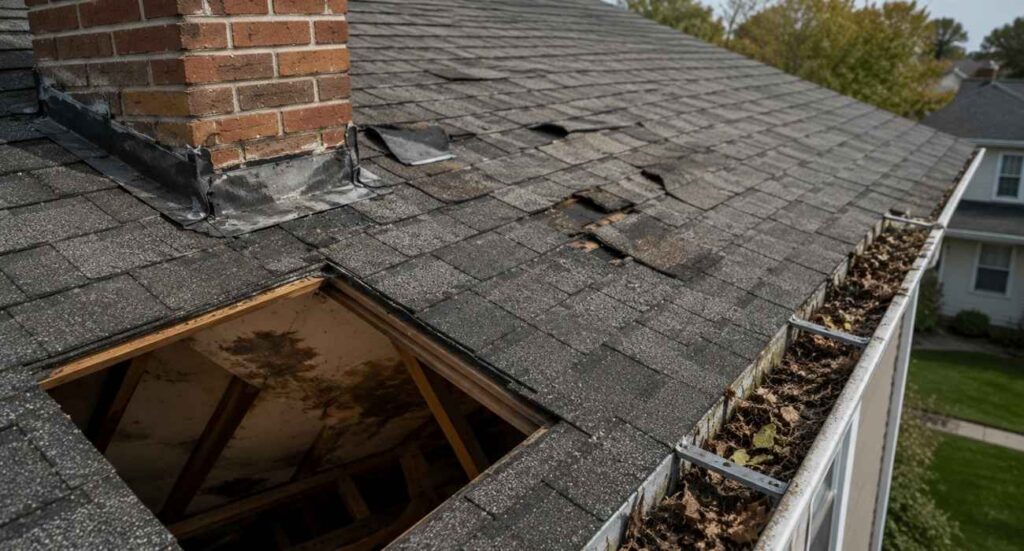
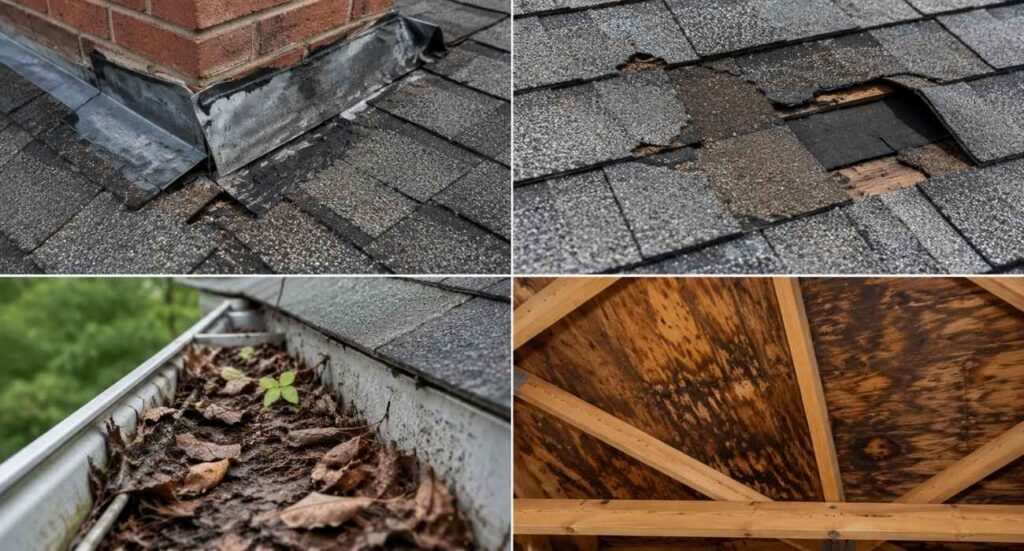
One of the greatest benefits of professional roof inspection services is identifying problems before they become expensive emergencies. Many roofing issues begin as minor defects that are difficult to see from the ground but gradually worsen with every storm and changing season.
During inspections throughout NYC, contractors frequently discover roofing problems that homeowners had no idea existed because there were no visible leaks or obvious signs of damage.
Damaged Flashing
Flashing protects vulnerable areas around chimneys, skylights, vents, and roof joints. As roofing materials expand and contract throughout the year, flashing can loosen or sealants can deteriorate, creating pathways for water intrusion.
Even a small gap around flashing may allow water to enter beneath the roofing system long before a leak appears inside the home.
Hidden Roof Leaks
Not every roof leak immediately causes ceiling stains. Water often travels along roof decking, insulation, or framing before becoming visible indoors. During inspections, contractors regularly find moisture damage that homeowners would never have noticed during a visual inspection from the ground.
Poor Attic Ventilation
Attic ventilation plays a major role in roof performance. Inadequate airflow traps heat and moisture beneath the roof, accelerating the aging of roofing materials while increasing heating and cooling costs. Many ventilation issues remain hidden for years without a professional inspection.
Clogged Gutters and Drainage Problems
Blocked gutters prevent rainwater from draining properly, allowing water to back up beneath roofing materials or overflow near the foundation. Although gutter maintenance is often overlooked, proper drainage is essential for protecting both the roof and the rest of the home.
Early Signs of Structural Wear
Professional inspections may also reveal subtle structural concerns such as soft roof decking, minor sagging, or localized movement caused by long-term moisture exposure. Identifying these issues early often prevents more extensive repairs later.
Many of these problems can be corrected quickly when discovered during routine roof inspection services. Left untreated, however, they frequently develop into larger roofing repairs that are significantly more expensive and disruptive.
Types of Roof Inspection Services
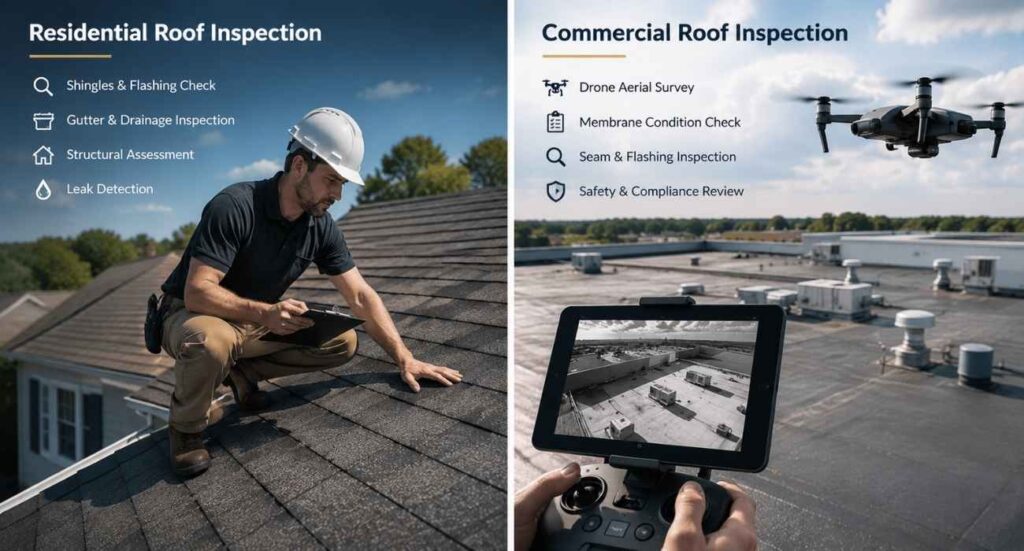
Not every roof requires the same inspection approach. The method contractors use depends on the roof’s design, age, accessibility, and the reason for the inspection. While most residential properties only require a visual inspection, advanced technology is often used when hidden moisture or storm damage is suspected.
Visual Roof Inspection
A visual inspection is the most common type of roof inspection services. Contractors examine shingles, flashing, gutters, chimneys, roof penetrations, and other visible components for signs of wear, damage, or water intrusion. It’s the recommended choice for routine maintenance and annual inspections.
Drone Roof Inspection
Drone inspections allow contractors to safely inspect steep, high, or difficult-to-access roofs without walking directly on the surface. High-resolution images help identify damaged shingles, flashing issues, and drainage problems while reducing safety risks.
Infrared Roof Inspection
Infrared technology detects temperature differences beneath roofing materials, helping locate trapped moisture and hidden leaks that may not be visible during a standard inspection. This method is commonly used for commercial buildings and low-slope roofing systems.
Storm Damage Inspection
After severe weather, contractors perform targeted inspections to identify damage caused by hail, wind, falling branches, or flying debris. These inspections also provide valuable documentation for insurance claims when roof damage is discovered.
Can You Inspect Your Own Roof?
Regular visual checks are a good habit, but they should never replace professional roof inspection services. Many roofing problems begin beneath shingles, around flashing, or inside the attic where they can’t be identified without the proper training and equipment.
Homeowners can safely check for:
- Missing or damaged shingles.
- Sagging rooflines.
- Overflowing gutters.
- Ceiling water stains.
- Debris after storms.
- Visible flashing damage from the ground.
A professional inspection goes much further.
| Homeowner Check | Professional Inspection |
|---|---|
| Ground-level observations | Complete roof system evaluation |
| Visible damage only | Hidden moisture and structural issues |
| No specialized equipment | Professional tools and detailed reporting |
| Basic maintenance awareness | Accurate repair recommendations |
How Much Do Roof Inspection Services Cost?
The cost of roof inspection services varies because every roof presents different challenges. Factors such as the roof’s size, material, accessibility, and the inspection method all influence the final cost. If storm damage documentation or roof certification is required, additional time and reporting may also affect the estimate.
Instead of focusing only on inspection costs, homeowners should consider the long-term value. Identifying a minor flashing issue or early roof leak during an inspection is often far less expensive than repairing extensive water damage months later.
How to Choose the Right Roof Inspection Company
Choosing the right contractor is about more than comparing prices. A quality inspection should help you understand the condition of your roof, not pressure you into unnecessary repairs.
When comparing roofing companies, look for:
- Proper licensing and insurance.
- Experience with your roofing material.
- Familiarity with NYC roofing systems.
- Detailed written inspection reports.
- Honest repair recommendations.
- Positive customer reviews.
- Clear communication throughout the inspection.
The best contractors explain why a repair is needed, show supporting evidence, and give homeowners the information they need to make confident decisions.
Why Homeowners Trust NuEra Contractors NYC
At NuEra Contractors NYC, our roof inspection services are built around accuracy, transparency, and long-term roof performance. Every inspection is performed with the goal of identifying existing concerns, uncovering hidden issues, and helping homeowners understand the true condition of their roofing system.
From aging asphalt shingles to flat roofing systems common throughout NYC, our team understands the challenges local roofs face every season. Instead of recommending unnecessary work, we provide honest assessments and practical solutions that help homeowners protect their investment with confidence.
Frequently Asked Questions
1. How often should roof inspection services be scheduled?
Most homeowners should schedule roof inspection services at least once a year. It’s also recommended after severe storms, before buying or selling a home, and after major roof repairs to identify potential issues before they become costly.
2. What do professional roof inspection services include?
Professional roof inspection services evaluate the condition of roofing materials, flashing, gutters, chimneys, skylights, roof penetrations, attic ventilation, drainage systems, and structural components. Inspectors also look for hidden leaks, moisture damage, and signs of wear that may not be visible from the ground.
3. Are roof inspection services worth it?
Yes. Regular roof inspections help detect small problems early, prevent expensive repairs, extend the lifespan of your roof, and provide peace of mind that your roofing system is protecting your home properly.
4. Can roof inspection services detect hidden roof leaks?
Absolutely. Professional inspectors can identify hidden moisture, damaged flashing, deteriorated sealants, and other roofing issues that often develop before visible water stains or interior leaks appear.
5. Should I schedule a roof inspection after a storm?
Yes. High winds, hail, heavy rain, and falling debris can damage your roof without leaving obvious signs. A post-storm inspection helps identify hidden damage and provides documentation if you need to file an insurance claim.
6. How long does a professional roof inspection take?
A typical residential roof inspection usually takes 1 to 2 hours, depending on the size, complexity, accessibility, and condition of the roof.
7. Can I inspect my own roof instead of hiring a professional?
You can perform basic visual checks from the ground, but professional roof inspection services are recommended because trained inspectors can identify hidden damage, structural concerns, and moisture problems that homeowners often miss.
8. What happens if a roof inspection finds damage?
If damage is discovered, the contractor will explain the issue, recommend the appropriate repairs, and prioritize them based on urgency. Not every problem requires immediate replacement—many can be resolved with timely maintenance or targeted repairs.
Conclusion
Many roofing problems remain hidden until they cause leaks or visible interior damage. Regular roof inspection services help identify these issues early, allowing homeowners to protect their roof, extend its lifespan, and avoid unnecessary repair costs.
Whether your roof has recently experienced severe weather or you’re simply planning routine maintenance, a professional inspection provides valuable insight into its overall condition. If you’re looking for experienced, honest, and thorough roof inspection services in NYC, NuEra Contractors NYC is ready to help you make informed decisions and keep your roof performing at its best.
Have Questions? Call NuEra Contracting Today!
📞 347-444-9028
We’re here to help with expert construction, brickwork, roofing, and waterproofing services. Get reliable solutions, friendly support, and professional results for your next project.

