
TPO roofing is a popular single-ply roofing system for commercial and low-slope buildings because it combines durability, energy efficiency, and relatively low maintenance. In 2026, TPO roofing typically costs about $5.50 to $10.50 per square foot installed for many commercial projects, although actual costs vary based on roof size, insulation, existing roof conditions, access, and installation requirements.
TPO, or thermoplastic polyolefin, uses a flexible membrane with heat-welded seams to create a watertight roofing system. It is commonly used on offices, warehouses, retail buildings, schools, healthcare facilities, and other commercial properties.
In this guide, we’ll explain TPO roofing costs, cost per square foot, lifespan, benefits, installation, maintenance, repairs, replacement, and how TPO compares with EPDM and PVC roofing systems.
What Is TPO Roofing?
TPO roofing is a single-ply roofing membrane designed primarily for commercial and industrial buildings. It is made from a blend of polypropylene and ethylene-propylene rubber compounds, creating a flexible yet durable roofing material.
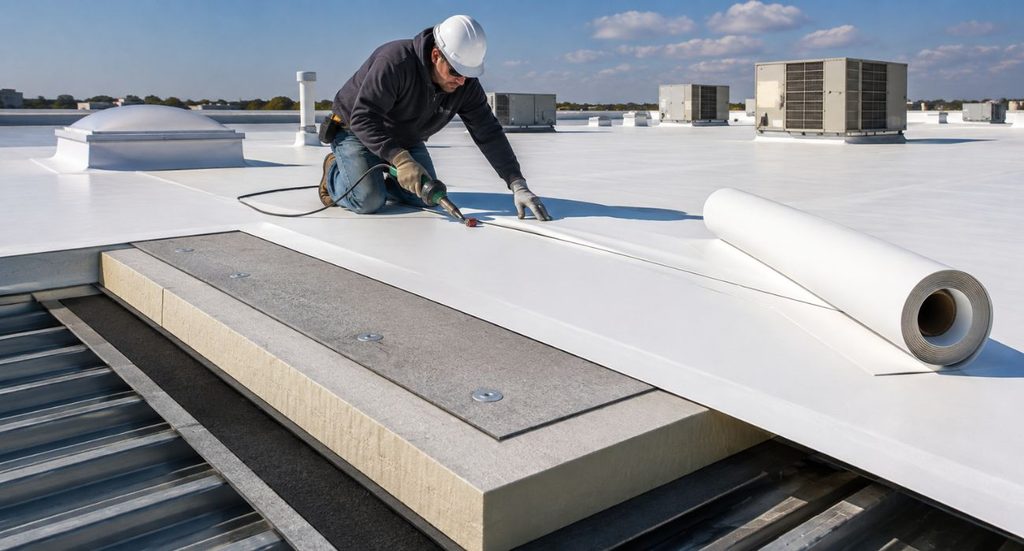
The membrane is typically available in white, gray, or tan colors and is installed in large sheets that are heat-welded together to create a watertight roofing surface.
Key Characteristics of TPO Roofing
| Feature | Description |
|---|---|
| Material Type | Single-ply roofing membrane |
| Roof Type | Flat and low-slope roofs |
| Installation | Mechanically attached, adhered, or ballasted |
| Energy Efficiency | Highly reflective surface |
| Lifespan | Typically 20–30 years |
| Maintenance | Low maintenance requirements |
Because of its reflective surface and strong seam technology, commercial TPO roofing has become a leading choice for offices, warehouses, retail centers, schools, and healthcare facilities.
How a TPO Roofing System Works
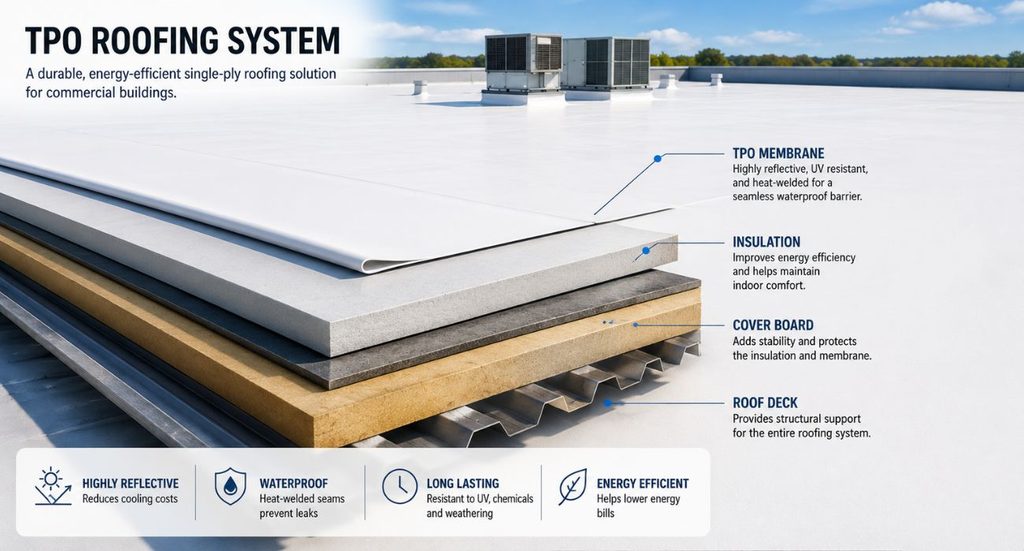
A complete TPO roofing system consists of several layers working together to protect the building from moisture intrusion, temperature fluctuations, and weather-related damage.
Components of a TPO Roofing Assembly
| Roofing Layer | Purpose |
|---|---|
| Roof Deck | Structural base of the roof |
| Vapor Barrier | Helps control moisture migration |
| Insulation Board | Improves thermal performance |
| Cover Board | Provides additional protection |
| TPO Roofing Membrane | Primary waterproofing layer |
| Flashings & Accessories | Protects roof penetrations and edges |
The TPO roofing membrane serves as the outer protective layer. Seams are heat-welded together, creating a stronger bond than traditional adhesive-based roofing systems.
This welded seam technology significantly reduces the risk of leaks and water infiltration.
Key Benefits of TPO Roofing
Property owners often choose TPO because it offers a balance of affordability, durability, and performance.
Energy Efficiency
One of the biggest TPO roofing benefits is its energy-saving potential.
The white reflective surface reflects sunlight rather than absorbing it. This helps maintain lower roof temperatures during hot weather and reduces the workload on HVAC systems.
Benefits include:
- Reduced cooling costs
- Improved indoor comfort
- Better building energy performance
- Potential compliance with energy-efficiency standards
For many commercial buildings, TPO is considered one of the most effective energy-efficient roofing solutions available today.
UV Resistance
Constant exposure to ultraviolet radiation can cause many roofing materials to deteriorate over time.
TPO membranes are specifically engineered to resist UV degradation. This helps preserve the roof’s integrity and appearance while extending its service life.
Durability
A properly installed TPO flat roof can withstand many common roofing challenges.
The membrane is resistant to:
- Impact damage
- Punctures
- Tears
- Dirt accumulation
- Mold growth
- Chemical exposure
Its flexibility also allows it to adapt to seasonal expansion and contraction.
Weather Resistance
Commercial roofs face harsh environmental conditions throughout the year.
TPO performs well against:
- Heavy rain
- Snow accumulation
- High winds
- Freeze-thaw cycles
- Extreme temperatures
These characteristics make TPO a dependable roofing system for commercial properties in regions with changing weather conditions.
Environmentally Friendly Roofing
Many building owners prioritize sustainable construction practices.
TPO contributes to environmentally responsible building management because:
- It improves energy efficiency.
- It can be recycled in certain applications.
- It helps reduce urban heat island effects.
- It supports green building initiatives.
As sustainability becomes increasingly important, TPO continues to gain popularity among environmentally conscious property owners.
TPO Roofing Cost in 2026
TPO roofing typically costs about $5.50 to $10.50 per square foot installed for many commercial projects in 2026. The final price depends on roof size, membrane thickness, insulation, installation method, roof access, existing roof conditions, and whether the old roofing system needs to be removed.
For example, a 10,000-square-foot commercial roof may cost approximately $55,000 to $105,000 for a standard installation based on this general planning range. Projects requiring extensive tear-off, insulation upgrades, roof deck repairs, difficult access, or other additional work may cost more.
These figures are general planning estimates, not fixed NYC prices. Actual TPO roofing costs vary according to the building, roof condition, materials, labor, and project requirements.
TPO Roofing Cost Per Square Foot
| TPO Roofing Scope | Typical Planning Cost |
|---|---|
| Standard TPO installation | $5.50–$8.50 per sq. ft. |
| TPO with tear-off and additional work | $6.25–$10.50 per sq. ft. |
| Complex or premium projects | $10+ per sq. ft. |
The final price may increase when a project requires extensive tear-off, insulation upgrades, roof deck repairs, difficult roof access, additional flashing, complex rooftop equipment, or premium warranty requirements.
TPO Roofing Cost by Roof Size
The size of a commercial roof is one of the biggest factors affecting the total cost of a TPO roofing project. Larger roofs require more membrane, insulation, labor, and installation materials.
Using the general $5.50 to $10.50 per square foot planning range, estimated TPO roofing costs may look like this:
| Roof Size | Estimated TPO Roofing Cost |
|---|---|
| 5,000 sq. ft. | $27,500–$52,500 |
| 10,000 sq. ft. | $55,000–$105,000 |
| 20,000 sq. ft. | $110,000–$210,000 |
| 30,000 sq. ft. | $165,000–$315,000 |
| 50,000 sq. ft. | $275,000–$525,000 |
These figures are general planning estimates based on the estimated cost per square foot. Actual project costs can vary based on roof condition, insulation, tear-off requirements, roof access, drainage, rooftop equipment, and other project-specific requirements.
Factors That Affect TPO Roofing Cost
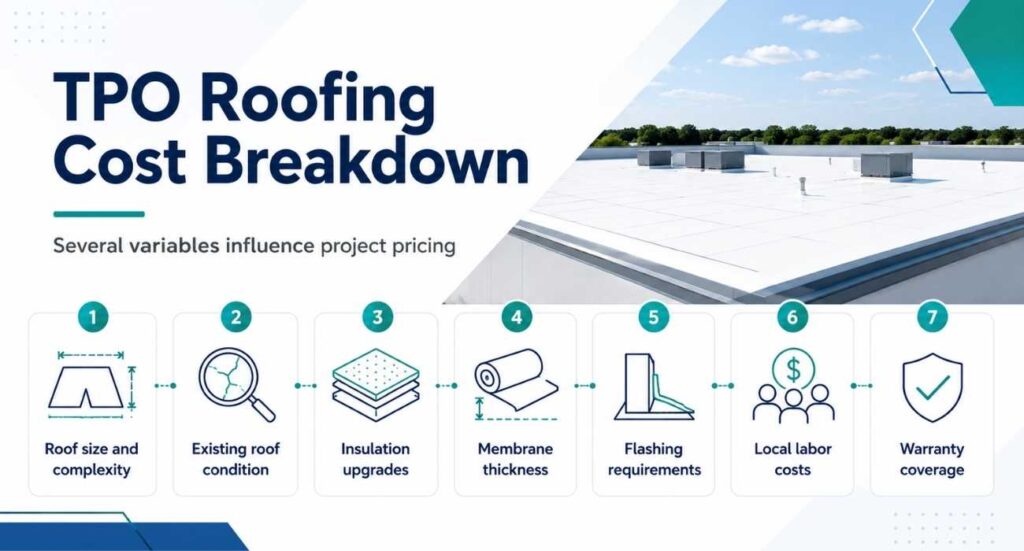
Several variables influence project pricing:
- Roof size and complexity
- Existing roof condition
- Insulation upgrades
- Membrane thickness
- Flashing requirements
- Local labor costs
- Warranty coverage
TPO Roofing Cost in NYC
TPO roofing costs in NYC vary depending on roof size, existing roof conditions, labor, accessibility, insulation, tear-off requirements, and installation complexity. The $5.50 to $10.50 per square foot range is a general planning estimate and should not be treated as a fixed NYC price.
Commercial buildings with difficult roof access, extensive rooftop equipment, damaged insulation, or additional roof preparation may require a higher budget. A professional roof inspection can identify the existing conditions and provide a more accurate project estimate.
TPO Roof Replacement
TPO roof replacement may be necessary when the existing membrane has extensive damage, recurring leaks, widespread deterioration, or has reached the end of its service life. Replacement typically involves removing the existing roofing system when required, preparing the roof deck, installing insulation and a new TPO membrane, and sealing seams and flashing.
The total replacement cost depends on the roof size, existing roof condition, tear-off requirements, insulation, roof access, and any necessary deck repairs. A professional inspection can determine whether complete replacement is needed or whether repairs may extend the life of the existing TPO system.
TPO Roofing Lifespan and Durability
One of the most common questions property owners ask is: How long does a TPO roof last?
The average TPO roofing lifespan ranges from 20 to 30 years when professionally installed and properly maintained.
Some systems may exceed this range when supported by routine inspections and preventative maintenance programs.
Factors That Affect Roof Longevity
Several factors influence the lifespan of a TPO roof:
- Quality of installation
- Membrane thickness
- Climate conditions
- Foot traffic levels
- Drainage performance
- Maintenance frequency
- Roof design
Regular professional inspections can identify minor issues before they develop into costly repairs.
For this reason, experienced roofing contractors recommend annual evaluations and inspections after severe weather events.
TPO Roof Installation Process
Professional TPO roof installation requires specialized equipment and expertise to ensure long-term performance.
The process generally follows these steps:
- Inspect the existing roof structure.
- Remove damaged roofing materials if necessary.
- Repair or prepare the roof deck.
- Install vapor barriers when required.
- Place insulation boards.
- Install cover boards.
- Roll out the TPO membrane.
- Secure the membrane mechanically or with adhesive.
- Heat-weld all seams.
- Install flashing around penetrations and roof edges.
- Perform quality control inspections.
- Conduct final leak testing.
Proper seam welding is one of the most critical aspects of installation because it directly impacts waterproofing performance.
A professionally installed TPO roof can provide decades of dependable protection for commercial buildings.
TPO Roof Maintenance Tips
Routine TPO roof maintenance helps maximize performance and extend roof lifespan.
Preventative Maintenance Checklist
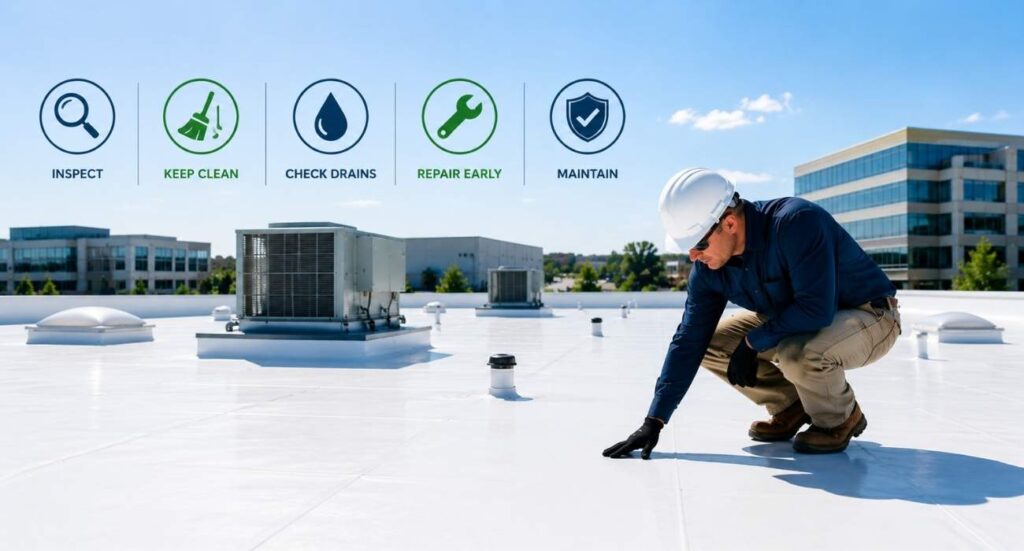
- Schedule professional inspections twice annually.
- Remove debris from the roof surface.
- Keep drains and scuppers clear.
- Inspect flashing around rooftop equipment.
- Address punctures promptly.
- Monitor seam conditions.
- Check for standing water.
- Document roof conditions after storms.
- Limit unnecessary foot traffic.
- Repair minor issues before they worsen.
Preventative maintenance is often the most cost-effective way to protect your roofing investment and avoid premature replacement.
TPO Roof Repair: Common Problems and Solutions
Even though TPO is known for its durability, no roofing system is completely maintenance-free. Over time, environmental exposure, foot traffic, and aging materials can lead to issues that require professional TPO roof repair.
Seam Issues
Heat-welded seams are one of TPO roofing’s strongest features. However, poor installation or years of weather exposure can occasionally cause seam separation.
Common Signs:
- Water infiltration
- Visible seam gaps
- Moisture beneath the membrane
Solution:
Professional roofers can re-weld compromised seams or replace affected membrane sections to restore waterproofing performance.
Ponding Water
Flat roofs are susceptible to water accumulation when drainage systems become blocked or roof slopes are inadequate.
Common Signs:
- Standing water after rainfall
- Membrane discoloration
- Increased roof stress
Solution:
Improving drainage, repairing low spots, and clearing drains can help eliminate ponding water and extend roof life.
Punctures and Tears
Heavy rooftop equipment, dropped tools, and excessive foot traffic can cause punctures in the membrane.
Common Signs:
- Visible holes or tears
- Interior leaks
- Damaged membrane surface
Solution:
Small punctures can often be repaired using compatible TPO patches and heat-welded repairs performed by trained roofing professionals.
Flashing Damage
Flashings around HVAC units, vents, skylights, and roof edges are critical components of a watertight roofing system.
Common Signs:
- Cracked flashing
- Loose termination bars
- Water intrusion near penetrations
Solution:
Damaged flashing should be repaired or replaced promptly to prevent leaks and structural damage.
TPO vs EPDM Roofing
Property owners frequently compare TPO vs EPDM roofing when considering a commercial roof replacement.
Both are popular single-ply roofing systems, but they offer different advantages.
| Feature | TPO Roofing | EPDM Roofing |
|---|---|---|
| Material | Thermoplastic Polyolefin | Synthetic Rubber |
| Color Options | White, Gray, Tan | Primarily Black |
| Energy Efficiency | Excellent | Moderate |
| UV Reflection | High | Lower |
| Seam Strength | Heat-Welded | Adhesive Seams |
| Maintenance | Low | Moderate |
| Lifespan | 20–30 Years | 20–30 Years |
| Initial Cost | Moderate | Lower |
| Leak Resistance | Excellent | Good |
Which Is Better?
TPO is often preferred by property owners seeking improved energy efficiency and reflective roofing performance. EPDM may be attractive for projects prioritizing lower upfront costs.
For many commercial facilities, TPO provides a stronger balance of durability, energy savings, and long-term value.
TPO vs PVC Roofing
Another common comparison involves TPO vs PVC roofing. Both roofing systems use heat-welded seams and provide excellent waterproofing performance.
However, there are important differences.
| Feature | TPO Roofing | PVC Roofing |
|---|---|---|
| Cost | Lower | Higher |
| Chemical Resistance | Good | Excellent |
| Energy Efficiency | Excellent | Excellent |
| Flexibility | High | High |
| Seam Strength | Excellent | Excellent |
| Durability | Very Good | Excellent |
| Maintenance | Low | Low |
| Commercial Applications | General Commercial | Restaurants, Manufacturing |
Which Roofing System Should You Choose?
PVC may be the better option for buildings exposed to grease, oils, or harsh chemicals, such as restaurants and manufacturing facilities.
TPO is often selected for standard commercial buildings because it offers many of the same benefits at a more affordable price point.
Is TPO Roofing Right for Your Building?
TPO roofing is an excellent solution for many commercial and industrial properties.
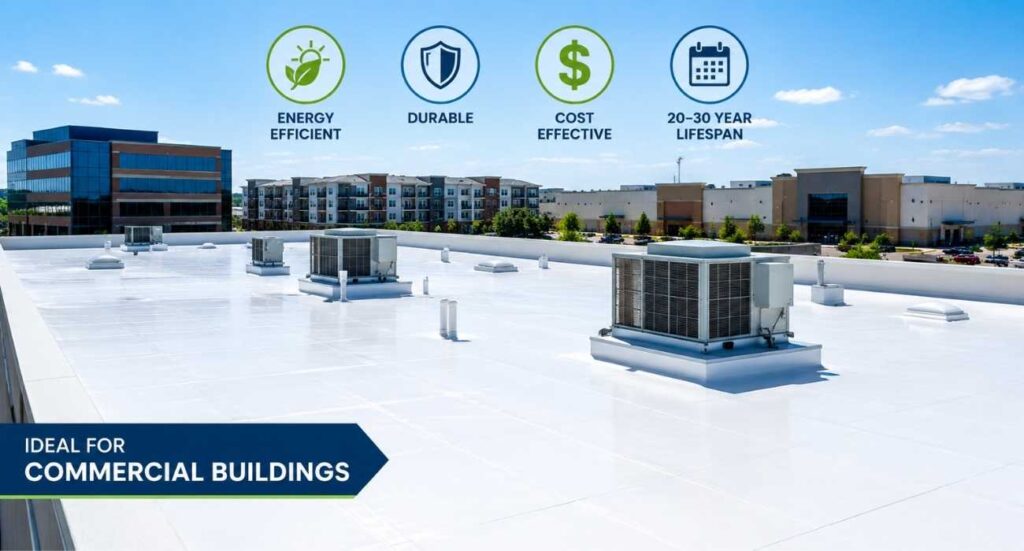
Ideal Applications Include:
- Office buildings
- Warehouses
- Shopping centers
- Educational facilities
- Healthcare buildings
- Apartment complexes
- Industrial facilities
- Municipal buildings
A TPO flat roof works particularly well for buildings with large roof surfaces where energy efficiency and long-term durability are priorities.
If your existing roof is nearing the end of its service life, TPO can be a smart option for both flat roof replacement and commercial roof replacement projects.
The best roofing system ultimately depends on your building’s design, budget, operational requirements, and long-term goals.
Why Commercial Property Owners Choose TPO Roofing in NYC
New York City buildings face unique roofing challenges.
Property owners must deal with:
- Hot summers
- Heavy rain
- Snow accumulation
- Freeze-thaw cycles
- High winds
- Dense urban environments
TPO roofing performs exceptionally well under these conditions.
Energy Savings
The highly reflective membrane helps reduce rooftop heat absorption, lowering cooling costs during NYC’s hottest months.
Strong Weather Protection
Heat-welded seams provide reliable protection against water intrusion, even during severe weather events.
Long-Term Value
Many building owners choose TPO because it offers:
- Competitive installation costs
- Lower maintenance requirements
- Excellent durability
- Strong warranty options
- Reduced energy expenses
These advantages make TPO one of the most popular roofing solutions for commercial properties throughout New York City.
Frequently Asked Questions
What does TPO stand for in roofing?
TPO stands for Thermoplastic Polyolefin, a single-ply roofing membrane commonly used on commercial flat roofs.
How long does a TPO roof last?
The average TPO roofing lifespan is between 20 and 30 years when professionally installed and properly maintained.
Is TPO roofing energy efficient?
Yes. TPO is considered one of the most energy-efficient roofing systems because its reflective surface helps reduce heat absorption and cooling costs.
How much does TPO roofing cost?
TPO roofing typically costs about $5.50 to $10.50 per square foot installed for many commercial projects in 2026. The final cost depends on roof size, membrane thickness, insulation, roof access, existing roof conditions, and whether tear-off is required.
Can a TPO roof be repaired?
Yes. Professional contractors can repair seam failures, punctures, flashing damage, and other common roofing issues.
Is TPO better than EPDM?
TPO generally offers better energy efficiency and stronger seam technology, while EPDM may provide a lower upfront cost.
Is TPO better than PVC roofing?
TPO is typically more affordable, while PVC offers superior chemical resistance. The right choice depends on your building’s specific needs.
How often should a TPO roof be inspected?
Most roofing professionals recommend inspections at least twice per year and after major weather events.
Conclusion
TPO Roofing is a popular choice for commercial buildings because it offers durability, energy efficiency, weather resistance, and long-term value. Its reflective surface and strong welded seams help protect buildings while reducing cooling costs.
Whether you need a new roof installation or a commercial roof replacement, TPO provides reliable performance and lasting protection. With proper installation and routine maintenance, it can serve your building for decades.
At NuEra Contracting, we provide expert TPO roof installation, repair, and replacement services throughout NYC. Contact us today for a free roof inspection and estimate to find out if TPO roofing is the right solution for your property.
Have Questions? Call NuEra Contracting Today!
📞 347-444-9028
We’re here to help with expert construction, brickwork, roofing, and waterproofing services. Get reliable solutions, friendly support, and professional results for your next project.

