
A stucco house is known for its durability, attractive appearance, and long-lasting exterior protection. Many homeowners choose stucco because it provides strong weather resistance, energy efficiency, and a clean architectural finish that suits both traditional and modern properties.
Although stucco is considered one of the most reliable exterior materials, it can still develop cracks, moisture issues, and surface deterioration over time. When damage is ignored, even small problems can eventually lead to water intrusion, mold growth, structural weakening, and expensive repairs.
Understanding how stucco systems work, what causes damage, and when professional repair becomes necessary can help homeowners protect their investment and avoid major restoration costs.
What Is a Stucco House?
A stucco house is a property finished with a cement-based exterior coating applied over masonry, concrete, or framed wall systems. Traditional stucco is typically made from cement, sand, lime, and water, creating a strong and weather-resistant surface.
One reason stucco remains popular is its ability to provide both durability and visual appeal. It can also be customized into different textures and finishes, including smooth, lace, sand, and dash finishes, allowing homeowners to achieve different architectural styles.
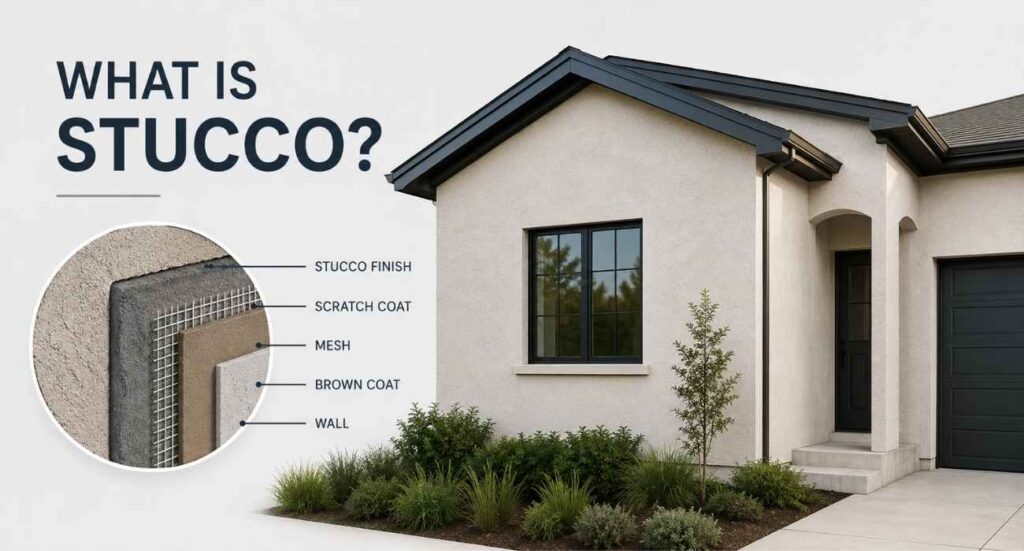
In addition to its appearance, stucco offers several practical benefits:
• Long-lasting durability
• Fire resistance
• Energy efficiency
• Low maintenance requirements
• Strong weather protection
When properly installed and maintained, stucco can last for decades while maintaining its clean and attractive appearance.
Why Stucco Is Popular for Homes
Stucco has remained one of the most widely used exterior finishes because it combines strength, insulation, and curb appeal in a single system.
Unlike some siding materials that may warp or rot over time, properly maintained stucco performs well in different climate conditions and provides reliable protection against outdoor exposure. Its seamless appearance also gives homes a modern and elegant finish that many property owners prefer.
Another major advantage is energy efficiency. The thick exterior coating helps reduce heat transfer, making interior spaces more comfortable throughout the year.
Common Problems in Stucco Surfaces
Even durable exterior finishes can begin showing signs of wear over time. One of the most common issues is cracking. Small hairline cracks may develop because of natural building movement, weather changes, or aging materials. While these cracks may initially seem minor, they can allow moisture to enter behind the surface.
Water intrusion is another serious concern. Moisture entering through cracks, failed sealants, or poor drainage systems can weaken the underlying structure and eventually lead to mold growth, wood rot, and interior wall damage.
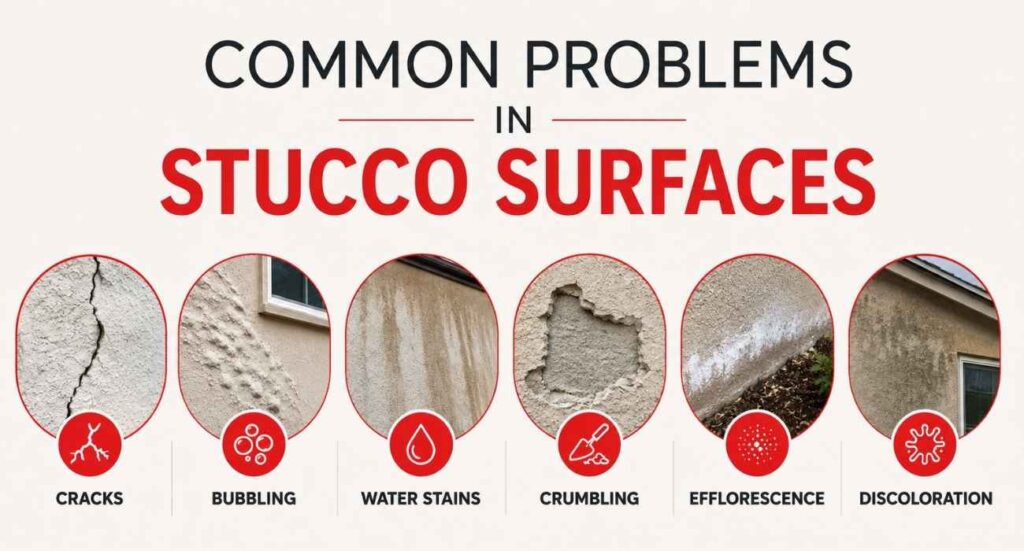
Other common problems include:
• Bubbling or bulging surfaces
• Chipping and flaking areas
• Discoloration and staining
• Mold or mildew growth
• Loose exterior sections
These warning signs should never be ignored because damage often spreads deeper into the wall system over time.
Signs Your Stucco Needs Repair
Many stucco house owners overlook early warning signs until serious damage becomes visible. Regular inspections are important because they help detect problems early and reduce the risk of costly repairs.
- Visible Cracks:
Cracks are one of the first signs that a stucco house may be developing surface or structural issues. - Stains & Discoloration:
Dark spots or discoloration on a stucco house exterior can indicate trapped moisture beneath the surface. - Interior Warning Signs:
Sometimes damage inside a stucco house appears before exterior problems become obvious. Peeling paint, damp drywall, or musty odors near exterior walls may signal hidden moisture intrusion. - Bulging or Swollen Areas:
Bulging sections should be addressed immediately because they often indicate serious moisture buildup beneath the stucco finish.
Main Causes of Stucco Damage
Several factors can cause deterioration in a stucco house over time, and moisture intrusion remains one of the most common issues. Water can enter through cracks, roof leaks, damaged sealants, or improperly installed flashing around windows and doors, leading to hidden structural damage inside the stucco house.
- Moisture Intrusion:
Excess moisture is a major reason many stucco house exteriors begin to crack, stain, or weaken over time. - Poor Installation:
If a stucco house is not installed correctly or lacks proper moisture barriers, the exterior system may fail prematurely and require costly repairs. - Weather Exposure:
Constant exposure to rain, humidity, heat, snow, and freeze-thaw cycles gradually weakens the surface of a stucco house and increases the risk of cracking. - Foundation Movement:
Natural settling of the foundation can place stress on rigid wall systems, causing cracks, separation, and structural strain in a stucco house exterior.
Why Timely Repair Matters
Many homeowners delay repairs because the damage initially appears cosmetic. Unfortunately, small cracks rarely remain small for long. Once moisture enters behind the surface, the underlying structure may begin deteriorating without visible signs.
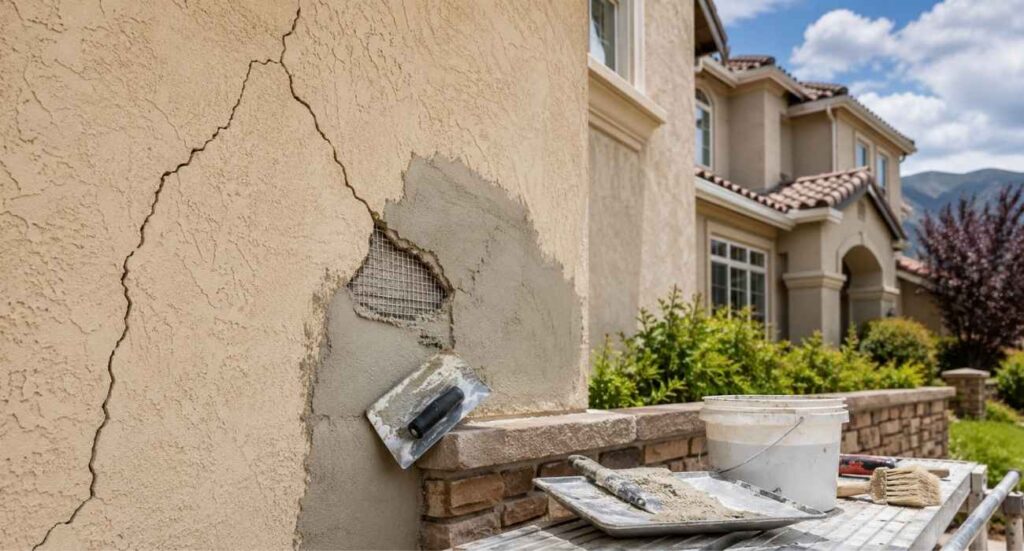
Ignoring repairs can eventually lead to:
• Mold growth
• Interior leaks
• Structural wall damage
• Rotting wood framing
• Increased repair costs
Addressing issues early helps protect both the appearance and structural integrity of the property.
Types of Stucco Repair
The repair process for a stucco house depends on the severity of the damage and the condition of the wall system underneath. Different problems require different repair methods to restore durability and prevent future moisture issues.
- Minor Cracks & Surface Damage:
Small cracks in a stucco house are usually repaired with specialized patching compounds that seal the surface and help prevent water intrusion. Chipped or damaged areas can also be patched to restore a smooth and clean appearance. - Water Intrusion Repairs:
If moisture has penetrated the stucco house exterior, contractors may need to remove damaged sections, repair underlying materials, and reinstall new stucco layers to ensure long-term protection. - EIFS Stucco System Repairs:
Synthetic EIFS systems require specialized repair techniques because they contain insulation boards and moisture barrier components that must be properly restored. - Severe Structural Damage:
In advanced cases, a stucco house may require full remediation if hidden structural components have deteriorated due to prolonged moisture exposure.
Stucco House Repair Process
Professional repair for a stucco house usually begins with a detailed inspection to identify cracks, moisture issues, and hidden damage.
1. Inspection
Contractors inspect the surface for cracks, water damage, drainage issues, and sealant failure.
2. Removal of Damaged Areas
Loose or damaged sections are carefully removed to access the affected area underneath.
3. Structural Repairs
If moisture has damaged the structure, contractors repair wood framing, insulation, or other weakened materials.
4. Applying New Layers
Fresh stucco is applied to restore strength, durability, and exterior appearance.
5. Texture Matching
Professionals blend the repaired section with the surrounding surface for a seamless finish.
6. Final Sealing
Protective coatings and sealants are added to improve weather resistance and long-term protection.
Repair vs Full Replacement
Not every stucco house requires a complete exterior replacement when damage appears. In many situations, localized repairs are enough to restore both protection and curb appeal.
- When Repairs Are Enough:
Repairs are typically recommended when damage on a stucco house is limited to small cracks, surface chips, or isolated moisture issues while the underlying structure remains in good condition. - When Replacement May Be Needed:
Extensive moisture intrusion, recurring cracks, or repeated repair failures in a stucco house may indicate deeper structural problems that require full replacement. - Professional Inspection Matters:
A professional inspection can help determine whether repairing or replacing the stucco house exterior is the most cost-effective and long-term solution.
Average Stucco Repair Costs
Repair costs vary depending on the severity of the damage, moisture involvement, labor requirements, and the size of the affected area. Minor repairs are usually affordable, while extensive structural restoration can become significantly more expensive.
| Stucco Repair Type | Estimated Cost Range |
|---|---|
| Small Crack Repair | $200 – $800 |
| Surface Patching | $800 – $2,500 |
| Water Damage Repair | $1,500 – $6,000 |
| EIFS Repair | $2,000 – $8,000 |
| Full Stucco Remediation | $8,000 – $30,000+ |
| Exterior Repainting & Sealing | $1,500 – $5,000 |
Costs may vary depending on property size, wall accessibility, texture matching, and the extent of hidden moisture damage.
Factors That Affect Repair Costs
Several factors influence the final repair price. Larger damaged areas naturally require more labor and materials, while hidden structural damage can increase restoration complexity.
The most common cost factors include:
• Severity of moisture intrusion
• Size of the damaged section
• Texture matching difficulty
• Accessibility of exterior walls
• Structural repairs beneath the surface
• Local labor and material costs
Early repairs are usually far less expensive than full remediation projects caused by long-term water damage.
How Long Does Stucco Last?
When installed correctly and maintained properly, stucco can remain durable for decades. Traditional systems often last between 50 and 80 years, while synthetic EIFS systems typically last 20 to 40 years depending on maintenance and climate conditions.
Routine inspections, sealing cracks early, and preventing moisture buildup all help extend the lifespan of exterior surfaces.
Maintenance Tips for Long-Term Protection
Regular maintenance plays a major role in preventing expensive repairs. Homeowners should inspect exterior walls at least once a year and after severe weather conditions.
Basic maintenance steps include:
• Cleaning surfaces regularly
• Sealing small cracks quickly
• Maintaining proper drainage systems
• Checking caulking around windows and doors
• Repainting when protective coatings wear down
Preventive maintenance helps reduce moisture intrusion and keeps exterior surfaces in strong condition for years.
Benefits of Professional Stucco Repair
Hiring experienced professionals for a stucco house offers benefits that go far beyond simple cosmetic improvements. Skilled contractors can identify hidden moisture issues, repair underlying structural damage properly, and apply durable waterproofing solutions that help protect the exterior for years.
- Accurate Damage Detection:
Professional contractors can uncover hidden problems inside a stucco house before they become more serious and costly. - Seamless Texture Matching:
Experts ensure repaired areas blend naturally with the existing stucco house finish for a clean and consistent appearance. - Long-Term Protection:
High-quality workmanship improves durability, prevents recurring moisture problems, and extends the lifespan of the stucco house exterior. - Preserved Property Value:
Proper repairs help maintain curb appeal and protect the long-term value of the property.
NuEra Contractors Stucco Repair Services
NuEra Contractors provides professional exterior repair and restoration services for residential and commercial properties. The team focuses on identifying the actual source of damage instead of simply covering visible cracks.
Services include crack repair, moisture damage restoration, waterproofing, EIFS repair, and exterior inspections. Every project is completed with attention to durability, clean finish matching, and long-term structural protection.
Whether the property requires minor cosmetic repairs or larger restoration work, professional services help restore both appearance and reliability.
Frequently Asked Questions
What is the most common stucco problem?
Cracking caused by weather exposure, structural movement, or poor installation is one of the most common issues.
Can cracks lead to water damage?
Yes. Even small openings can allow moisture to enter behind the surface and weaken underlying materials.
How often should exterior walls be inspected?
Professional inspections are recommended at least once a year, especially after severe weather conditions.
Can damaged areas be repaired instead of replaced?
Yes. Many issues can be repaired successfully if they are addressed early.
How long does stucco last?
Traditional stucco can last 50–80 years with proper maintenance, while EIFS systems typically last 20–40 years.
What causes stucco to crack?
Common causes include foundation settling, weather changes, moisture intrusion, poor installation, and structural movement.
Final Thoughts
A stucco house offers long-term durability, energy efficiency, and attractive curb appeal when maintained properly. However, even durable exterior systems require regular inspections and timely repairs to remain effective.
Ignoring small cracks or moisture problems can eventually lead to major structural damage and expensive restoration work. Understanding the warning signs and addressing issues early helps homeowners protect both the appearance and value of their property.
With proper maintenance and professional repair services, exterior surfaces can continue providing strong protection and lasting beauty for decades.
Have Questions? Call NuEra Contracting Today!
📞 347-444-9028
We’re here to help with expert construction, brickwork, roofing, and waterproofing services. Get reliable solutions, friendly support, and professional results for your next project.

