
Vinyl windows have become one of the most popular window solutions for modern homes due to their durability, affordability, and energy efficiency. Whether you are replacing old windows or installing new ones, vinyl windows provide a reliable and long-lasting option that balances performance and cost.
Homeowners today are not just looking for aesthetics—they want windows that improve insulation, reduce energy bills, and require minimal maintenance. Traditional materials like wood and aluminum often fall short in one or more of these areas. Vinyl windows, on the other hand, are designed to overcome these limitations.
Another key reason behind their growing demand is their ability to perform well in different weather conditions. From extreme heat to cold climates, vinyl windows maintain their structure and efficiency over time.
This complete guide will walk you through everything you need to know about vinyl windows, including their benefits, cost, installation process, and how to choose the best option for your property.
What Are Vinyl Windows?
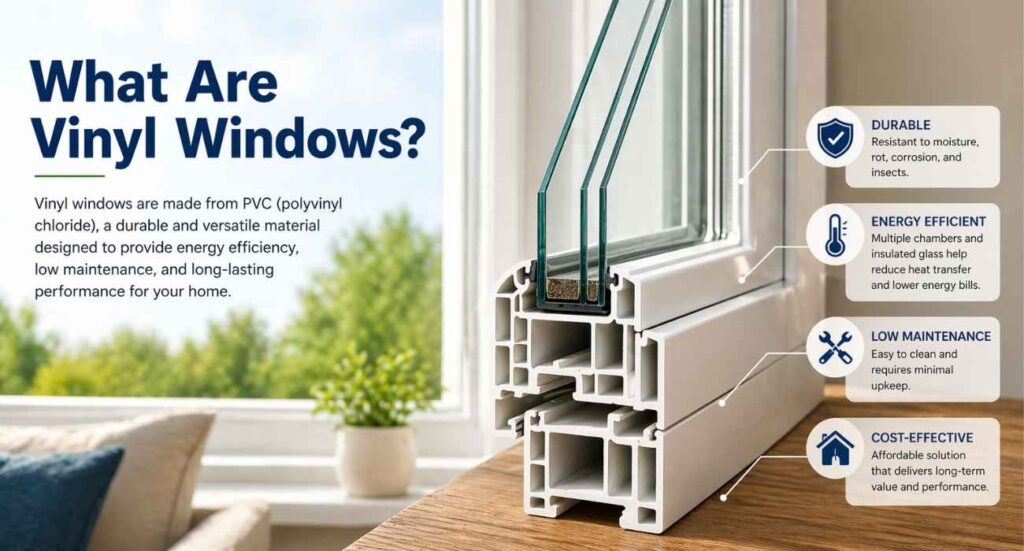
Vinyl windows are made from polyvinyl chloride (PVC), a strong and moisture-resistant material widely used in construction. Unlike wood, which can rot, or aluminum, which can conduct heat, vinyl provides excellent insulation and long-term durability.
These windows are manufactured with precision to ensure consistent quality. The frames often include multiple chambers that trap air, improving thermal efficiency and reducing heat transfer.
Vinyl windows are commonly used in:
• Residential homes
• Apartment buildings
• Commercial properties
• Renovation projects
Their versatility makes them suitable for both new construction and replacement projects.
Benefits of Vinyl Windows
Vinyl windows offer a wide range of advantages that make them one of the best choices available today.
Energy Efficiency
Vinyl windows are designed to reduce heat transfer, which helps maintain indoor temperature throughout the year. Many models include double or triple-pane glass that enhances insulation.
• Keeps homes warm in winter
• Reduces heat entry in summer
• Lowers energy bills
Low Maintenance
Unlike wood windows, vinyl windows do not require regular painting or sealing. They are resistant to moisture and environmental damage.
• No peeling or cracking
• Easy to clean
• Long-lasting finish
Cost-Effective Solution
Vinyl windows are more affordable compared to other materials.
• Lower upfront cost
• Minimal maintenance expenses
• Strong return on investment
Durability and Weather Resistance
Vinyl windows are built to withstand harsh weather conditions.
• Resistant to moisture and corrosion
• Do not warp easily
• Long lifespan (20–40 years)
Design Flexibility
Vinyl windows are available in multiple styles and configurations.
• Suitable for modern and traditional homes
• Available in various sizes
• Custom design options
Types of Vinyl Windows
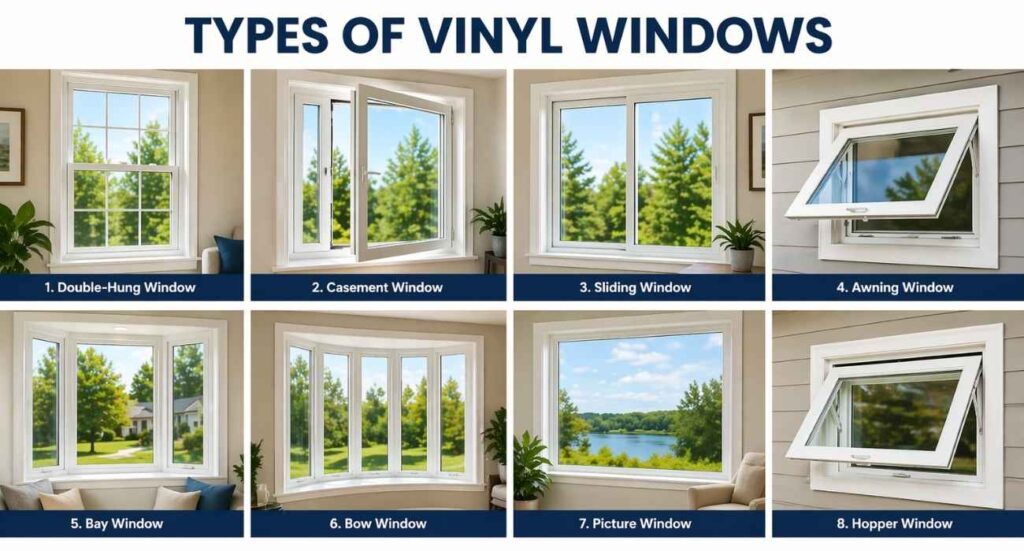
Choosing the right window style depends on how the space is used, the amount of ventilation needed, and the overall layout of your home. Each design functions differently, so selecting the appropriate option can improve both comfort and practicality.
• Double-hung windows – These feature two movable sashes that slide vertically, allowing airflow from both the top and bottom. They are especially convenient for cleaning since many models tilt inward, making them a practical choice for multi-story homes.
• Casement windows – Hinged on one side and opening outward, these provide excellent ventilation and a tight seal when closed. They are ideal for areas where maximum airflow and energy efficiency are important, such as living rooms or kitchens.
• Sliding windows – Designed to move horizontally along a track, these work well in wider wall openings. They are easy to operate and require minimal effort, making them suitable for spaces where vertical opening might be restricted.
• Awning windows – Hinged at the top and opening outward, these allow fresh air to enter even during light rain. They are commonly installed in bathrooms or basements where ventilation is needed without exposing the interior to weather.
• Bay and bow windows – These extend outward from the exterior wall, creating additional interior space while bringing in more natural light. They are often used as a design feature in living areas to enhance both aesthetics and openness.
Each option serves a specific purpose, so understanding how they function can help you choose the most suitable style for different areas of your home.
Vinyl Windows Cost Breakdown
Understanding vinyl windows cost is essential for planning your project.
Average Cost Table
| Type of Vinyl Window | Average Cost (Per Window) |
|---|---|
| Basic Vinyl Window | $150 – $400 |
| Mid-Range Vinyl | $400 – $800 |
| High-End Vinyl | $800 – $1,500+ |
Installation Cost
• Standard installation: $150 – $300 per window
• Complex installation: $300 – $700+
Factors That Affect Cost
The overall price can vary based on several important factors, and understanding these can help you plan your budget more accurately.
• Window size and style – Larger units or more complex designs generally cost more due to additional material and manufacturing requirements. Standard sizes are usually more affordable, while custom shapes or styles can increase the price.
• Glass type – Options like double-pane or triple-pane glass affect both cost and performance. Multi-pane glass provides better insulation and noise reduction, but it also adds to the overall expense.
• Labor costs – Installation charges depend on the complexity of the project. Simple replacements are typically less expensive, while structural adjustments or difficult access areas can increase labor costs.
• Custom features – Additional upgrades such as special finishes, enhanced hardware, or energy-efficient coatings can raise the total cost but may offer better performance and long-term value.
Vinyl Windows vs Other Materials
| Feature | Vinyl Windows | Wood Windows | Aluminum Windows |
|---|---|---|---|
| Cost | Affordable | Expensive | Moderate |
| Maintenance | Low | High | Low |
| Durability | High | Medium | High |
| Energy Efficiency | High | Medium | Low |
Vinyl windows provide the best balance between cost and performance.
Vinyl Windows vs Replacement Windows – What’s the Difference?
Many homeowners assume vinyl windows and replacement windows are the same, but they refer to different things.
Vinyl windows describe the material, while replacement windows describe the installation method.
• Vinyl = frame material
• Replacement = installation technique
Vinyl windows are often used for replacement projects because they are easy to install and cost-effective.
Energy Efficiency Ratings Explained for Vinyl Windows
Understanding energy performance ratings can make a big difference when selecting the right option for your home. These values indicate how well a window controls heat, sunlight, and overall comfort inside the space.
• U-Factor – This measures how much heat escapes through the window. A lower U-Factor means better insulation, helping keep indoor spaces warmer during colder months.
• Solar Heat Gain Coefficient (SHGC) – This rating shows how much solar heat passes through the glass. Lower SHGC values are ideal for warmer climates because they reduce unwanted heat from sunlight.
• Visible Transmittance (VT) – This indicates how much natural light enters through the glass. Higher VT values allow more daylight inside, improving brightness without affecting energy performance too much.
In general, selecting options with balanced ratings based on your climate will help improve comfort, reduce energy use, and enhance overall efficiency.
Double Pane vs Triple Pane Vinyl Windows
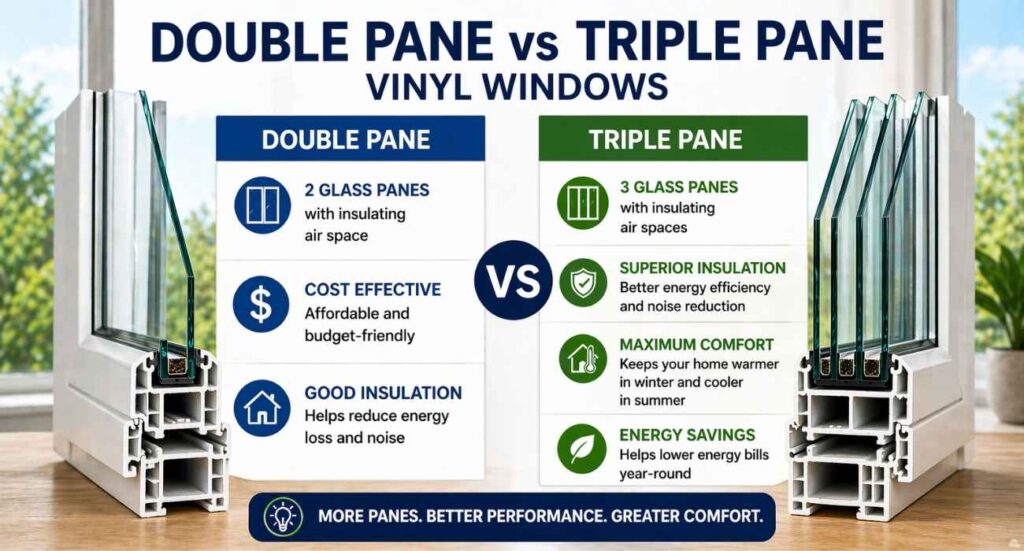
When choosing between these two options, it’s important to understand how each performs in terms of insulation, cost, and overall comfort.
Double Pane
This option consists of two layers of glass with an insulating space in between. It provides a solid balance between performance and affordability, making it a common choice for many homes.
• More budget-friendly compared to advanced options
• Provides reliable insulation for everyday use
• Suitable for moderate climates and standard residential needs
Triple Pane
This design includes an additional layer of glass, which enhances insulation and overall performance. It is typically chosen for environments where higher efficiency is required.
• Superior insulation for better temperature control
• Reduces outside noise more effectively
• Ideal for areas with extreme weather conditions
The right choice depends on your priorities—if you’re looking for a cost-effective solution, the first option works well. If maximum efficiency and comfort are the goal, the second offers better long-term benefits.
Vinyl Window Installation Process
Installing vinyl windows correctly ensures long-term performance.
Step-by-Step
• Carefully remove the existing unit without damaging the surrounding structure
• Inspect the opening for any damage, debris, or uneven surfaces
• Clean and prepare the area to ensure a proper and secure fit
• Position the new frame correctly and align it within the opening
• Fasten it securely to maintain stability and proper function
• Apply insulation and sealing materials around the edges to prevent air leaks and moisture entry
• Test operation by opening and closing to ensure smooth movement and proper alignment
Why Professional Installation Matters
Poor installation can lead to several long-term issues that affect both performance and durability.
• Air leaks – Gaps around the frame allow outside air to enter, reducing insulation and increasing energy costs
• Water damage – Improper sealing can let moisture seep in, which may lead to mold, rot, or structural damage over time
• Reduced lifespan – Incorrect fitting and lack of proper support can put stress on the unit, causing it to wear out much faster than expected
Best Places to Install Vinyl Windows in a Home
Vinyl windows work well in various areas:
• Living rooms for natural light
• Bedrooms for ventilation
• Kitchens for convenience
• Basements due to moisture resistance
Vinyl Windows for Different Climates
Poor installation can lead to several long-term issues that affect both performance and durability.
• Air leaks – Gaps around the frame allow outside air to enter, reducing insulation and increasing energy costs
• Water damage – Improper sealing can let moisture seep in, which may lead to mold, rot, or structural damage over time
• Reduced lifespan – Incorrect fitting and lack of proper support can put stress on the unit, causing it to wear out much faster than expected
Environmental Impact of Vinyl Windows
Improving insulation and reducing energy loss can have a direct impact on overall efficiency and environmental performance. Over time, this leads to lower energy usage and more sustainable living.
• Lower carbon footprint – Reduced energy consumption means fewer greenhouse gas emissions from heating and cooling systems
• Long lifespan reduces waste – Durable construction minimizes the need for frequent replacements, helping cut down on material waste
• Improved energy savings – Better insulation supports consistent indoor temperatures, leading to lower utility bills and reduced energy demand
Common Problems with Vinyl Windows
Over time, even well-installed units can develop minor issues due to regular use and environmental exposure. Identifying these problems early can help prevent costly repairs.
• Seal failure – When seals break down, moisture can enter between the panes, leading to fogging and reduced insulation
• Warping in extreme heat – High temperatures can slightly distort the frame, affecting alignment and overall performance
• Hardware wear – Locks, hinges, and tracks may wear out with frequent use, making operation less smooth
Regular maintenance and timely inspections can help catch these issues early and keep everything functioning efficiently.
Maintenance Tips for Vinyl Windows
Maintaining them is simple and helps ensure long-term performance and efficiency.
• Clean frames regularly – Remove dirt and buildup using mild soap and water to keep the surface in good condition
• Inspect seals – Check for cracks or gaps around the edges to prevent air leaks and moisture intrusion
• Lubricate moving parts – Apply light lubrication to hinges, tracks, and locks to ensure smooth operation
• Check for drafts – Feel for air leaks around the frame, especially during seasonal changes, to maintain proper insulation
How Long Do Vinyl Windows Last?
Vinyl windows typically last between 20 to 40 years, depending on their quality, installation, and how well they are maintained over time.
Higher-quality materials and proper installation can extend their lifespan significantly, while regular maintenance—such as cleaning, checking seals, and ensuring smooth operation—helps preserve performance and durability. Factors like climate conditions and daily usage also play an important role in how long they continue to function effectively.
Common Mistakes to Avoid When Buying Vinyl Windows
Avoiding common mistakes during selection and installation can save you from unnecessary costs and performance issues later on.
• Choosing low-quality products – Lower-priced options may seem attractive, but they often lack durability and proper insulation, leading to higher long-term expenses
• Ignoring energy ratings – Overlooking performance metrics can result in poor insulation and increased heating or cooling costs
• Hiring inexperienced installers – Improper installation can cause air leaks, water intrusion, and reduced lifespan
• Incorrect measurements – Even small measurement errors can lead to poor fitting, affecting both efficiency and overall functionality
How Vinyl Windows Improve Home Value
Vinyl windows enhance both functionality and aesthetics.
• Increase resale value
• Improve energy efficiency
• Enhance curb appeal
When to Repair vs Replace Vinyl Windows
Understanding when to repair and when to replace can help you avoid unnecessary expenses and maintain proper performance.
Repair
In many cases, smaller issues can be fixed without a full replacement.
• Minor damage – Small cracks, seal issues, or slight alignment problems can often be repaired
• Hardware issues – Faulty locks, hinges, or tracks can usually be replaced to restore smooth operation
Replace
Replacement is the better option when problems are more serious or widespread.
• Severe damage – Structural issues or heavily damaged frames affect stability and performance
• High energy loss – Ongoing drafts or poor insulation indicate reduced efficiency
• Aging units – Older installations nearing the end of their lifespan may no longer perform effectively
Choosing the right approach ensures better efficiency, safety, and long-term value.
Cost Saving Tips for Vinyl Window Installation
Planning your project carefully can help reduce overall costs without compromising on quality or performance.
• Replace multiple windows at once – Bundling the work often reduces labor costs per unit and can lead to better pricing from contractors
• Choose standard sizes – Standard dimensions are more affordable since they don’t require custom manufacturing
• Compare contractor quotes – Getting multiple estimates helps you find the best balance between cost and quality
• Install during off-season – Scheduling work during slower periods may result in lower labor rates and faster project completion
Are Vinyl Windows Worth It?
They are considered a smart long-term choice because they combine cost-effectiveness with reliable performance. Their durable construction helps withstand everyday wear and changing weather conditions, while efficient insulation supports consistent indoor comfort.
With minimal upkeep required over the years, they reduce ongoing maintenance costs and effort. This balance of durability, efficiency, and low maintenance makes them a practical option for homeowners looking for lasting value.
How to Choose the Best Vinyl Windows
Making the right choice involves focusing on key features that impact performance, efficiency, and long-term value.
• Check frame quality – Look for strong, well-constructed frames that provide stability and resist wear over time
• Choose double or triple-pane glass – Multi-pane options improve insulation, helping maintain indoor temperature and reduce noise
• Review energy ratings – Understanding performance values helps ensure better efficiency and lower energy costs
• Look for warranty – A reliable warranty provides added confidence in durability and protects your investment over time
Signs You Need Vinyl Window Replacement
These signs often indicate that your windows are no longer performing efficiently and may need attention or replacement.
• Drafts – Noticeable air coming through the edges can reduce indoor comfort and increase energy usage
• High energy bills – Rising heating or cooling costs may point to poor insulation and heat loss
• Condensation – Moisture buildup between glass panes usually signals seal failure
• Visible damage – Cracks, warping, or worn-out frames can affect both appearance and performance
FAQs
Are vinyl windows energy efficient?
Yes, they are designed to reduce heat transfer and improve insulation. Their multi-chambered frames and double or triple-pane glass help maintain indoor temperatures, which can lower heating and cooling costs throughout the year.
How much do vinyl windows cost?
The cost typically ranges from $150 to $1,500+ per unit, depending on size, style, glass type, and installation complexity. Standard options are more affordable, while larger or custom designs increase the overall price.
Are vinyl windows better than wood?
They are generally more affordable and require significantly less maintenance than wood. While wood offers a traditional look, vinyl provides better resistance to moisture, does not require painting, and performs well in different weather conditions.
Do vinyl windows increase home value?
Yes, they can improve both energy efficiency and curb appeal, which are important factors for potential buyers. Upgraded windows often make a property more attractive and can contribute to a higher resale value.
How long do vinyl windows last?
Most units last between 20 to 40 years, depending on quality, installation, and maintenance. Proper care and regular inspections can help extend their lifespan.
Do vinyl windows save energy?
Yes, they help reduce heating and cooling costs by improving insulation. By minimizing air leakage and heat transfer, they make indoor spaces more comfortable while lowering overall energy consumption.
Conclusion
Vinyl windows provide a reliable and cost-effective solution for modern homes, combining durability, energy efficiency, and minimal maintenance. Their ability to perform consistently in different conditions makes them a dependable choice for both new installations and replacements.
For homeowners planning an upgrade, they offer long-term value by improving indoor comfort, reducing energy costs, and requiring very little upkeep. This combination of performance and affordability makes them a smart and practical investment for the future.
Choosing high-quality windows is important—but working with the right contractor is what truly ensures lasting performance and durability.
Have Questions? Call NuEra Contracting Today!
📞 347-444-9028
We’re here to help with expert construction, brickwork, roofing, and waterproofing services. Get reliable solutions, friendly support, and professional results for your next project.

