A commercial roof protects one of your property’s biggest investments. Whether you own an office building, warehouse, retail center, apartment complex, or industrial facility, keeping your roof in good condition helps prevent expensive damage and business disruptions. Even a small leak can lead to water damage, mold growth, insulation problems, and higher energy costs if left untreated.
Commercial roof repair is the most cost-effective way to extend the life of your roofing system when problems are addressed early. From fixing roof leaks and damaged flashing to repairing roof membranes and improving drainage, timely repairs protect your building and reduce the risk of major structural issues.
In this guide, you’ll learn how commercial roof repair works, the most common roofing problems, repair methods, pricing factors, and practical maintenance tips. Whether your property is in Brooklyn, Queens, Manhattan, the Bronx, or Staten Island, this article will help you make informed decisions about protecting your commercial roof.
What Is Commercial Roof Repair?
Commercial roof repair is the process of fixing damage that affects the performance, safety, and lifespan of a commercial roofing system. Instead of replacing the entire roof, repairs target specific problem areas to restore waterproofing, structural integrity, and energy efficiency.
Unlike residential roofs, commercial roofs often cover much larger areas and commonly feature flat or low-slope designs. These roofs use specialized materials such as TPO, EPDM, modified bitumen, BUR, and metal roofing systems. Each material requires different repair methods and maintenance practices.
A professional commercial roofing contractor begins with a thorough roof inspection to identify visible and hidden issues. After locating the source of the damage, the contractor recommends the most effective commercial roofing repair solution based on the roof’s age, condition, and material.
Typical roof repair services include:
- Repairing roof leaks
- Replacing damaged roof membrane sections
- Roof flashing repair
- Roof membrane repair
- Sealing seams and penetrations
- Repairing drainage systems
- Applying protective roof coating
- Roof waterproofing improvements
When completed by experienced professionals, these repairs can significantly extend the life of a commercial roof while avoiding the higher cost of premature replacement.
Why Commercial Roof Repair Is Important
Ignoring roofing issues rarely saves money. Minor damage often spreads quickly because commercial roofs are constantly exposed to changing weather, UV rays, temperature fluctuations, and standing water.
Prompt commercial roof repair helps prevent small problems from becoming major structural repairs. It also improves building performance and protects occupants, inventory, and equipment.
Key benefits include:
- Prevents expensive interior water damage
- Extends the roof’s service life
- Improves energy efficiency
- Protects insulation from moisture
- Reduces emergency repair costs
- Preserves manufacturer warranties
- Improves occupant comfort
- Supports long-term building maintenance
For commercial properties throughout New York City, regular inspections and timely repairs are especially important. Snow, heavy rainfall, strong winds, and seasonal freeze-thaw cycles can accelerate roof deterioration if maintenance is delayed.
Common Types of Commercial Roofing Systems
Different commercial roofing systems require different repair techniques. Understanding your roofing material helps property owners make informed maintenance decisions and choose the right repair solution.
TPO Roofing
Thermoplastic Polyolefin (TPO) roofing is one of today’s most popular commercial roofing systems. It features a white reflective membrane that helps reduce cooling costs while providing strong resistance against UV rays and chemicals.
Common repair needs include:
- Open seams
- Membrane punctures
- Flashing failures
- Drainage issues
- Surface shrinkage
Professional flat commercial roof repair often involves heat-welding damaged seams and replacing affected membrane sections.
If you’re considering a TPO roofing system, read our in-depth TPO Roofing guide to learn about its advantages, installation process, maintenance requirements, repair options, and expected lifespan before making a decision.
EPDM Roofing
EPDM roofing is a durable synthetic rubber membrane commonly installed on commercial buildings throughout NYC. It performs well in extreme temperatures and offers excellent flexibility.
Typical repair issues include:
- Seam separation
- Membrane tears
- Punctures
- Aging adhesive
- Flashing deterioration
Proper roof membrane repair helps restore waterproof protection and extends the system’s lifespan.
Modified Bitumen Roofing
Modified bitumen combines asphalt with polymer materials to create a strong, flexible roofing membrane designed for heavy-duty commercial use.
Common repair concerns include:
- Surface cracking
- Blistering
- Splits
- Seam damage
- UV deterioration
These roofs can often be restored through localized repairs, reinforcement, and protective coatings.
Built-Up Roofing (BUR)
Built-Up Roofing (BUR) consists of multiple layers of asphalt and reinforcing fabrics finished with gravel or mineral surfacing. This traditional system remains common on older commercial buildings.
Typical maintenance includes:
- Repairing cracks
- Replacing damaged surfacing
- Sealing exposed areas
- Repairing flashing
- Correcting drainage issues
Routine inspections help identify hidden moisture before it causes extensive damage.
Metal Roofing
Metal roofing offers exceptional durability and can last several decades with proper care. It is frequently used on warehouses, industrial buildings, schools, and commercial facilities.
Common repair issues include:
- Loose fasteners
- Rust formation
- Panel movement
- Damaged sealants
- Flashing failures
Timely repairs prevent water intrusion while maintaining the roof’s structural performance.
Signs You Need Commercial Roof Repair
Many commercial roofing problems start small but become expensive if left untreated. Recognizing the early warning signs allows you to schedule commercial roof repair before serious damage affects your building.
Water Stains
Brown or yellow stains on ceilings or walls often indicate moisture entering through the roofing system. Early repairs help prevent interior damage and mold growth.
Roof Leaks
A commercial roof leak usually results from damaged membranes, flashing, or roof penetrations. Prompt commercial roof leak repair prevents further water damage and costly repairs.
Ponding Water
Standing water that remains on the roof for more than 48 hours can weaken roofing materials, damage the membrane, and increase the risk of leaks. Improving the roof drainage system helps prevent recurring issues.
Damaged Flashing
Loose, cracked, or rusted flashing allows water to enter vulnerable areas around vents, skylights, and rooftop equipment. Timely roof flashing repair restores a watertight seal.
Membrane Damage
Tears, punctures, blisters, or open seams in the roof membrane reduce waterproof protection. Professional roof membrane repair helps prevent moisture from spreading beneath the roof.
Mold Growth
Ongoing roof leaks can lead to mold growth inside walls and insulation, affecting both the building and indoor air quality. Fixing the leak early eliminates the source of moisture.
Higher Energy Bills
Rising energy costs may indicate damaged insulation or roofing materials. Regular roof inspection and maintenance improve energy efficiency and help detect hidden roofing problems before they worsen.
What Causes Commercial Roof Damage?
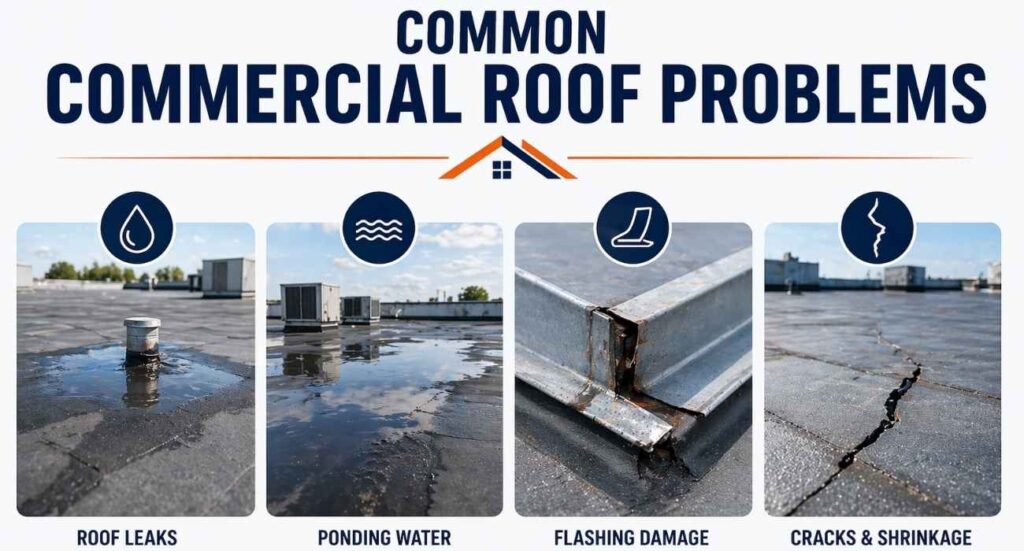
Commercial roofs face constant exposure to weather, building movement, and daily wear. Understanding the most common causes of damage allows property owners to take preventive action before repairs become more extensive.
Weather Exposure
New York City’s climate can be challenging for commercial roofs. Heavy rain, snow, hail, high winds, and prolonged UV exposure gradually weaken roofing materials.
Repeated weather events may cause:
- Cracked membranes
- Loose flashing
- Water intrusion
- Surface deterioration
- Premature aging
Routine inspections after severe storms help detect damage before it worsens.
Ponding Water
Flat roofs are especially vulnerable to standing water caused by clogged drains, poor roof slope, or blocked scuppers.
Over time, ponding water can:
- Increase structural stress
- Damage the roof membrane
- Cause insulation saturation
- Accelerate roof leaks
- Shorten roof lifespan
Proper drainage design and regular maintenance reduce these risks.
Thermal Expansion
Commercial roofing materials expand during hot weather and contract when temperatures drop. These repeated cycles place stress on seams, flashing, and fasteners.
Without timely maintenance, thermal movement may lead to cracks, separation, and leaks that require professional commercial roofing repair.
Aging Materials
Even the highest-quality commercial roofing systems eventually experience wear. Years of exposure to sunlight, moisture, and temperature changes gradually reduce flexibility and waterproof performance.
Older roofs often require more frequent repairs to maintain reliability and delay the need for commercial roof replacement.
Poor Installation
Improper installation is one of the leading causes of premature roof failure.
Common installation mistakes include:
- Incorrect seam welding
- Poor flashing installation
- Inadequate drainage design
- Improper fastening
- Low-quality workmanship
Working with an experienced commercial roofing company helps ensure repairs and installations meet industry standards.
Heavy Foot Traffic
Commercial roofs frequently support maintenance crews servicing HVAC equipment, electrical systems, and other rooftop installations.
Repeated foot traffic can:
- Puncture roofing membranes
- Loosen flashing
- Damage protective coatings
- Wear down surface materials
Installing designated walk pads and following preventive maintenance practices helps minimize unnecessary wear while protecting the roof from future damage.
Commercial Roof Repair Methods
The right repair method depends on the roofing material, the extent of the damage, and the overall condition of the roof. A professional commercial roofing contractor will perform a detailed roof inspection before recommending the best solution. In many cases, timely commercial roof repair can restore performance and add years to the roof’s lifespan without the cost of a full replacement.
Roof Leak Repair
A leaking roof should never be ignored. Water can travel beneath the roofing system before becoming visible inside the building, making it difficult to locate the true source without a professional inspection.
Commercial roof leak repair typically includes:
- Identifying the source of the leak
- Replacing damaged roofing materials
- Sealing roof penetrations
- Repairing flashing and seams
- Testing the repaired area for leaks
Fast repairs help prevent structural damage, mold growth, and costly interior repairs.
Membrane Repair
The roof membrane is the primary waterproof barrier on many flat commercial roofs. Over time, it may develop punctures, tears, blistering, or open seams due to weather, aging, or foot traffic.
Professional roof membrane repair may involve:
- Patching damaged sections
- Heat-welding TPO seams
- Re-adhering EPDM membranes
- Reinforcing weak areas
- Replacing severely damaged sections
Repairing membrane damage early helps preserve the roof’s waterproof integrity.
Flashing Repair
Roof flashing protects vulnerable areas around skylights, HVAC units, vents, walls, and roof edges. Damaged flashing is one of the leading causes of commercial roof leaks.
Roof flashing repair may include:
- Replacing rusted flashing
- Installing new sealants
- Securing loose flashing
- Repairing expansion joints
- Waterproofing roof penetrations
Properly installed flashing keeps water from entering areas where different roofing components meet.
Roof Coating
A roof coating is a protective layer applied over an existing roof to improve waterproofing, reflect sunlight, and extend the roof’s service life.
Common roof coating systems include:
- Silicone coatings
- Acrylic coatings
- Polyurethane coatings
A roof coating can help:
- Reduce UV damage
- Improve energy efficiency
- Seal small cracks
- Extend roof lifespan
- Delay roof replacement
Not every roof is a good candidate for coatings, so a professional evaluation is important before application.
Seam Repair
Many commercial roofing systems rely on sealed seams to keep water out. Over time, these seams may separate because of weather exposure or thermal movement.
Repair methods include:
- Heat welding
- Adhesive bonding
- Reinforcing seam tape
- Replacing damaged sections
Maintaining strong seams reduces the risk of future leaks.
Drainage Improvements
Poor roof drainage is one of the biggest causes of roof deterioration on flat commercial buildings.
Drainage improvements may include:
- Cleaning roof drains
- Installing additional drains
- Repairing scuppers
- Adjusting roof slope where possible
- Removing debris regularly
Improving drainage reduces ponding water and protects the roofing system from premature failure.
Commercial Roof Repair Cost
One of the most common questions property owners ask is how much commercial roof repair costs. The answer depends on the roofing material, the size of the damaged area, accessibility, labor requirements, and the extent of the repairs.
In New York City, labor costs are generally higher than the national average because of licensing requirements, building access challenges, and local regulations. Buildings in Brooklyn, Queens, Manhattan, the Bronx, and Staten Island may also require additional safety measures that affect project pricing.
Estimated Commercial Roof Repair Costs in NYC
| Repair Service | Average Cost |
|---|---|
| Roof inspection | $300–$800 |
| Minor commercial roof leak repair | $500–$1,500 |
| Roof flashing repair | $600–$2,000 |
| Roof membrane repair | $800–$3,500 |
| Seam repair | $700–$2,500 |
| Roof coating | $2–$6 per sq. ft. |
| Drainage improvements | $1,000–$5,000+ |
| Emergency commercial roof repair | $1,000–$5,000+ |
These are estimated NYC pricing ranges. Actual costs vary depending on roof size, roofing material, accessibility, and the extent of the damage.
Factors That Affect Commercial Roof Repair Cost
Several factors determine the final roof repair cost, including:
- Type of commercial roofing system
- Roof size and accessibility
- Extent of water damage
- Roofing material
- Labor requirements
- Building height
- Emergency repair needs
- Permit and safety requirements in NYC
Scheduling repairs early often reduces costs by preventing extensive water damage and structural deterioration.
Commercial Roof Repair vs Roof Replacement
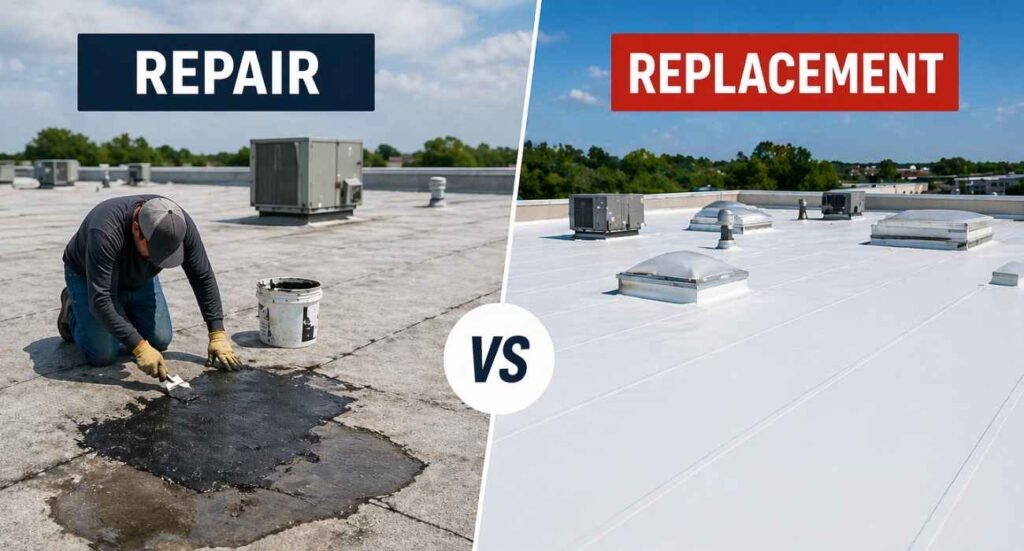
Choosing between commercial roof repair and commercial roof replacement depends on the roof’s condition, age, and long-term value. A professional inspection provides the information needed to make the right decision.
Comparison
| Commercial Roof Repair | Commercial Roof Replacement |
|---|---|
| Lower upfront cost | Higher initial investment |
| Faster completion | Longer project timeline |
| Ideal for localized damage | Best for widespread deterioration |
| Extends existing roof lifespan | Installs an entirely new roofing system |
| Minimal disruption to business | More extensive construction work |
| Preserves existing roof when possible | Provides a new manufacturer warranty |
When Roof Repair Is the Better Option
Repair is typically recommended when:
- Damage is limited to a small area.
- The roof is still structurally sound.
- Leaks are isolated.
- The insulation remains dry.
- The roofing system has years of service life remaining.
When Roof Replacement Is the Better Option
Replacement may be necessary when:
- The roof has reached the end of its lifespan.
- Water damage is widespread.
- Repairs have become frequent.
- Structural components are compromised.
- Repair costs approach replacement costs.
An experienced commercial roofing company can evaluate your roof and recommend the most cost-effective solution.
How to Prevent Commercial Roof Damage
Preventive maintenance is the best way to reduce repair expenses and maximize the life of your commercial roof. Small maintenance tasks can prevent major roofing problems in the future.
Follow these best practices:
- Schedule a professional roof inspection twice a year.
- Inspect the roof after severe storms.
- Keep roof drains and gutters clean.
- Remove ponding water whenever possible.
- Repair damaged flashing immediately.
- Limit unnecessary rooftop foot traffic.
- Install walk pads around HVAC equipment.
- Fix minor roof leaks before they spread.
- Maintain rooftop mechanical equipment properly.
- Keep maintenance records to protect your roof warranty.
A proactive maintenance plan helps reduce emergency repairs while extending the lifespan of your commercial roofing system.
Why Choose NuEra Contractors NYC
NuEra Contractors NYC provides trusted commercial roof repair services for office buildings, warehouses, apartment complexes, retail centers, schools, and industrial properties throughout Brooklyn, Queens, Manhattan, the Bronx, and Staten Island.
Property owners choose our team because we offer:
- Licensed and experienced roofing professionals
- Specialized commercial roofing expertise
- Comprehensive roof inspections
- Honest pricing with detailed estimates
- Premium-quality roofing materials
- Fast response for emergency commercial roof repair
- Long-term roof restoration solutions
- Reliable workmanship backed by years of industry experience
Whether you need commercial roof leak repair, roof membrane repair, or complete roof restoration, our team delivers durable solutions designed for New York City’s demanding weather conditions.
Frequently Asked Questions
How much does commercial roof repair cost?
Commercial roof repair costs vary based on the roofing material, damage severity, and project size. Minor repairs may cost a few hundred dollars, while larger repairs involving membranes or drainage systems can cost several thousand dollars.
Can commercial roof leaks be repaired?
Yes. Most commercial roof leaks can be repaired when they are identified early. A professional inspection helps locate the source of the leak and recommends the most effective repair method.
How long does commercial roof repair take?
Minor repairs are often completed within one day. Larger projects involving membrane replacement or drainage improvements may require several days, depending on weather conditions.
When should I replace a commercial roof instead of repairing it?
Replacement is usually recommended when the roof has reached the end of its lifespan, has widespread water damage, or requires frequent repairs that are no longer cost-effective.
What causes commercial roof leaks?
The most common causes include damaged flashing, membrane punctures, open seams, ponding water, clogged drains, aging roofing materials, and poor installation.
How often should commercial roofs be inspected?
Commercial roofs should be professionally inspected at least twice a year and after major storms to identify problems before they become expensive repairs.
Can roof coatings stop leaks?
Roof coatings can improve waterproofing and seal small surface cracks, but existing leaks and damaged roofing components should always be repaired before a coating is applied.
Is emergency commercial roof repair available?
Yes. Emergency commercial roof repair is available for severe leaks, storm damage, fallen debris, and other urgent roofing issues that require immediate attention.
Which commercial roofing system lasts the longest?
Metal roofing generally has the longest lifespan, often lasting 40 to 70 years. TPO, EPDM, BUR, and modified bitumen roofing systems also provide decades of reliable performance with regular maintenance.
How can I extend my commercial roof’s lifespan?
Routine inspections, preventive maintenance, prompt repairs, proper roof drainage, and regular cleaning are the best ways to maximize the lifespan of a commercial roofing system.
Conclusion
Investing in timely commercial roof repair helps protect your property, extend your roof’s lifespan, and reduce long-term maintenance costs. If your commercial building in Brooklyn, Queens, Manhattan, the Bronx, or Staten Island needs expert roofing services, NuEra Contractors NYC is here to help. Contact us today to schedule a professional roof inspection and receive a free estimate for reliable, long-lasting commercial roofing solutions.
Have Questions? Call NuEra Contracting Today!
📞 347-444-9028
We’re here to help with expert construction, brickwork, roofing, and waterproofing services. Get reliable solutions, friendly support, and professional results for your next project.

