Concrete sidewalks provide safe walking surfaces for pedestrians and help maintain the appearance of residential and commercial properties. However, exposure to weather, heavy foot traffic, tree roots, and ground movement can cause concrete sidewalks to crack, sink, or become uneven.
Damaged sidewalks can create trip hazards and affect pedestrian safety. Timely concrete sidewalk repair helps restore walking surfaces, address deterioration, and prevent further damage.
Understanding the type of damage is important when choosing the right repair method. This guide explains common sidewalk problems, concrete repair methods, materials, and when sidewalk replacement may be necessary.
What Causes Concrete Sidewalk Damage?
Concrete sidewalks can deteriorate due to several environmental and structural factors. Identifying the underlying cause helps determine the most suitable repair.
1. Weather and Temperature Changes
Concrete expands and contracts as temperatures change. Repeated freezing and thawing can cause water inside small cracks to expand, leading to further cracking and surface deterioration.
2. Tree Root Growth
Tree roots growing beneath sidewalks can push concrete slabs upward. This movement may create raised edges, uneven surfaces, and dangerous trip hazards.
3. Soil Settlement and Ground Movement
Poor soil compaction, erosion, and shifting ground can cause concrete slabs to sink or become unstable. These conditions may lead to uneven sidewalks and gaps between sections.
4. Heavy Loads and Frequent Traffic
Heavy equipment, vehicles crossing sidewalk areas, and constant pedestrian traffic can place stress on concrete. Over time, this may cause cracks, broken edges, and structural deterioration.
5. Poor Drainage and Water Exposure
Water collecting beneath or around sidewalk slabs can weaken the supporting soil. Poor drainage may contribute to erosion, settlement, cracking, and uneven concrete surfaces.
Common Types of Concrete Sidewalk Damage
Recognizing the type of damage helps determine whether concrete sidewalk repair or replacement is necessary.
Cracked Concrete Sidewalks
Cracks may develop due to temperature changes, soil settlement, tree roots, or structural stress. Small, stable cracks may require localized repairs, while deep or spreading cracks may indicate more serious damage.
Uneven Sidewalk Slabs
Sidewalk slabs may become uneven when the supporting ground shifts or settles. Raised and sunken sections can create trip hazards and interfere with pedestrian access.
Spalling and Surface Deterioration
Spalling occurs when the concrete surface flakes, chips, or breaks apart. Moisture exposure, weather conditions, and deterioration can contribute to this problem.
Sunken Concrete Sidewalks
Concrete slabs can sink due to soil erosion, poor compaction, or water movement beneath the surface. Sunken areas may collect water and create uneven walking surfaces.
Broken or Missing Concrete Sections
Severely damaged sidewalks may have crumbling edges, missing pieces, or deep structural cracks. These conditions may require partial or complete concrete sidewalk replacement.
Concrete Sidewalk Repair Methods and Materials
The right repair method depends on the severity of the damage, concrete condition, crack movement, and stability of the supporting ground.
| Damage | Common repair approach |
|---|---|
| Small, stable cracks | Concrete crack filler or suitable sealant |
| Minor chips and shallow spalling | Concrete patching compound or repair mortar |
| Deeper localized damage | Partial-depth concrete repair |
| Severely damaged slabs | Full-depth repair or replacement |
| Sunken but sound slabs | Concrete lifting or slab leveling |
| Raised edges and trip hazards | Grinding, leveling, or slab replacement, depending on conditions |
Concrete Crack Fillers and Sealants
Concrete crack fillers and sealants are commonly used for small cracks and joints. Flexible sealants may be appropriate for joints or cracks that experience movement, while rigid repair materials are used for suitable stable cracks.
The material must match the crack’s width, depth, movement, and surrounding concrete condition.
Concrete Patching Compounds
Concrete patching compounds and repair mortars are used to address localized chips, shallow spalling, and damaged surface areas.
Proper surface preparation and removal of deteriorated concrete are important for achieving a durable repair.
Partial-Depth Concrete Repair
Partial-depth repair involves removing damaged concrete near the surface and replacing it with a suitable repair material.
This method may work when deterioration is limited to the upper portion of the concrete and the remaining slab is structurally sound.
Full-Depth Concrete Repair
Full-depth repair involves removing and replacing concrete through the full thickness of a damaged section.
It may be necessary when cracks extend deeply through the slab, damage affects the full concrete depth, or the sidewalk section is unstable.
How to Repair Small Concrete Sidewalk Cracks
Minor, stable cracks and localized surface damage may be suitable for patching. However, large cracks, moving slabs, and structural damage require professional assessment.
Step 1: Inspect the Damage
Determine whether the crack is stable, whether the concrete is loose, and whether the surrounding slab is uneven. Check for water intrusion and underlying movement.
Step 2: Prepare the Surface
Remove loose debris, deteriorated concrete, dirt, and existing failed repair material. Proper preparation helps the new repair material bond with the existing concrete.
Step 3: Select the Appropriate Repair Material
Choose a suitable crack filler, sealant, or concrete patching compound based on the damage and manufacturer recommendations.
Step 4: Apply the Repair Material
Apply the selected material according to its product instructions. Proper application helps create a stable repair and reduces the risk of premature failure.
Step 5: Finish and Cure the Repair
Finish the repaired surface to maintain a suitable texture and level transition. Allow the material to cure according to the manufacturer’s instructions before reopening the area to foot traffic.
Important: DIY patching is not appropriate for every sidewalk problem. Deep cracks, unstable concrete, recurring settlement, and trip hazards may require professional concrete sidewalk repair.
How Contractors Repair Sunken and Uneven Sidewalks
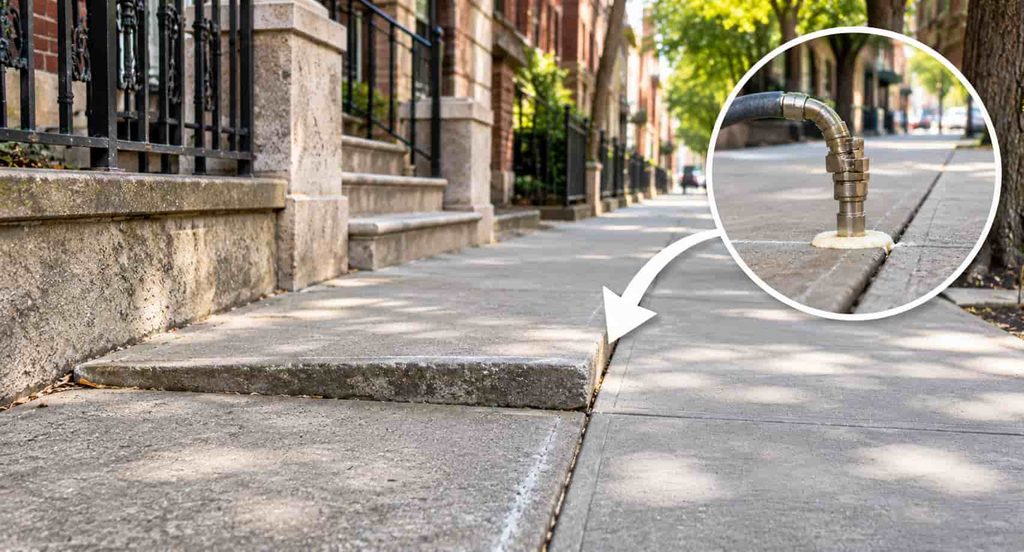
Sunken and uneven concrete sidewalks require different solutions from ordinary crack patching. The underlying problem may involve soil settlement, erosion, tree roots, or a damaged concrete slab.
Concrete Slab Lifting
Slab lifting involves injecting a suitable material beneath an existing concrete slab to raise it toward a more level position.
This method may be appropriate when the slab remains structurally sound but has settled due to voids or changes in the supporting ground.
Mudjacking or Slabjacking
Mudjacking involves pumping a grout mixture beneath a concrete slab to lift and support it. It may be used to address certain sunken sidewalk sections.
The suitability of this method depends on slab condition, soil stability, and the extent of settlement.
Polyurethane Foam Injection
Polyurethane foam injection uses expanding foam beneath concrete slabs to fill voids and lift selected sunken sections.
It may be an option for suitable concrete slabs when the underlying conditions allow effective lifting and stabilization.
Concrete Grinding
Concrete grinding removes a limited amount of concrete from raised edges to create a smoother transition between adjacent sidewalk sections.
It may help address certain minor trip hazards but is not appropriate for every uneven sidewalk. The extent of elevation, slab condition, and local requirements must be considered.
Sidewalk Slab Replacement
When concrete slabs are severely cracked, unstable, or damaged by significant root growth, replacement may be more appropriate than lifting or grinding.
The underlying ground conditions should also be addressed to help reduce recurring problems.
Concrete Sidewalk Repair vs Replacement
Not every damaged sidewalk needs complete replacement. The decision depends on the severity of the damage and the condition of the existing concrete.
When Concrete Sidewalk Repair May Be Suitable
Repair may be appropriate when:
- Cracks are relatively small and stable.
- Damage is limited to a small surface area.
- Concrete remains structurally sound.
- Minor chips or shallow spalling can be repaired.
- The supporting ground is stable.
When Concrete Sidewalk Replacement May Be Necessary
Replacement may be recommended when:
- Large cracks extend through the concrete slab.
- Multiple sections are broken or severely deteriorated.
- Sidewalk slabs have significant settlement or movement.
- Tree roots have extensively damaged the concrete.
- Uneven surfaces create persistent trip hazards.
- Previous repairs have repeatedly failed.
A professional inspection can help determine whether localized repair or full concrete sidewalk replacement is the better long-term solution.
Common Concrete Sidewalk Repair Mistakes
Some repairs fail because the underlying cause of damage was not addressed.
Using the Wrong Repair Material
Not all concrete fillers and patching compounds are suitable for every crack. Material selection should consider crack movement, depth, moisture exposure, and surface condition.
Patching Over Damaged Concrete
Loose, crumbling, or deteriorated concrete can prevent proper bonding. The damaged area should be appropriately prepared before repairs are applied.
Ignoring Drainage Problems
Water collecting around sidewalks can weaken supporting soil and contribute to recurring settlement. Drainage conditions should be assessed when investigating sidewalk damage.
Repairing Without Addressing Ground Movement
Filling a crack does not correct soil settlement, tree root growth, or unstable slabs. The underlying cause must be considered to prevent recurring problems.
Overlooking Trip Hazards
A sidewalk may remain unsafe even after cracks are filled. Uneven edges, raised slabs, and unstable concrete require appropriate corrective measures.
How to Prevent Concrete Sidewalk Damage
Regular maintenance can help reduce concrete deterioration and extend the useful life of sidewalks.
- Maintain proper drainage: Prevent water from collecting around or beneath sidewalk slabs.
- Address cracks early: Have suitable cracks assessed before they allow additional moisture penetration.
- Monitor tree roots: Check for root growth that may lift or damage concrete.
- Avoid excessive loading: Prevent heavy vehicles and equipment from placing unnecessary stress on sidewalks.
- Inspect sidewalks regularly: Look for uneven slabs, surface deterioration, and potential hazards.
- Repair damaged sections promptly: Address deteriorating concrete before the damage spreads.
Preventive maintenance can help reduce future repair needs and support safer pedestrian access.
Concrete Sidewalk Repair in NYC
Concrete sidewalks in New York City experience constant pedestrian traffic, changing weather, moisture exposure, and other environmental stresses. These conditions can contribute to cracked slabs, uneven surfaces, and deteriorating concrete.
Property owners may also need to address sidewalk conditions to maintain safe pedestrian access and comply with applicable NYC requirements.
NuEra Contracting provides professional sidewalk repair services in NYC for residential and commercial properties. Our team evaluates damaged concrete and recommends suitable solutions for cracked, broken, or uneven sidewalk surfaces.
Learn more about our sidewalk repair services in NYC and request an estimate for your property.
Frequently Asked Questions
How much does concrete sidewalk repair cost?
The cost depends on the damaged area, concrete condition, repair method, accessibility, and whether replacement is required. A professional estimate can help determine the scope and cost of your project.
Can cracked concrete sidewalks be repaired without replacement?
Yes. Minor cracks and localized damage may be repaired using suitable materials. However, extensive cracking, unstable slabs, and severe deterioration may require replacement.
How do contractors repair uneven sidewalks?
The repair method depends on why the sidewalk is uneven. Contractors may use concrete lifting, slab leveling, grinding, or replacement, depending on slab condition and the underlying cause.
What is the best material for concrete sidewalk repair?
The best material depends on the type and severity of damage. Crack fillers, flexible sealants, concrete patching compounds, and repair mortars are used for different conditions.
When is concrete sidewalk replacement necessary?
Replacement may be necessary when slabs are severely cracked, unstable, extensively damaged, or repeatedly failing after previous repairs.
How long does concrete sidewalk repair take?
Small repairs may take less time than replacing multiple sidewalk sections. Project duration depends on preparation, repair scope, weather, and curing requirements.
Who should I contact for sidewalk repair in NYC?
Property owners can contact an experienced sidewalk contractor to assess damage, recommend suitable repairs, and provide an estimate. NuEra Contracting offers sidewalk repair services for NYC properties.
Conclusion
Maintaining a safe and durable sidewalk starts with identifying damage and choosing the right repair method. Whether your property has cracked concrete, uneven slabs, or deteriorating surfaces, timely repairs can help prevent further damage and improve pedestrian safety.
NuEra Contracting provides professional concrete sidewalk repair in NYC, helping property owners address sidewalk damage with reliable, project-specific solutions. Contact our team to discuss your sidewalk repair needs and request an estimate.
Have Questions? Call NuEra Contracting Today!
📞 347-444-9028
We’re here to help with expert construction, brickwork, roofing, and waterproofing services. Get reliable solutions, friendly support, and professional results for your next project.

