Your roof protects your building from rain, snow, wind, sunlight, and changing temperatures throughout the year. Over time, these conditions can affect roofing materials, flashing, drainage, and other parts of the roofing system.
An aging roof does not always need complete replacement. In some cases, roof restoration can address existing problems and improve protection while keeping the existing roofing system in place.
The right solution depends on the roof’s age, material, condition, drainage, and extent of damage. This guide explains when restoration may make sense, what the process involves, how it differs from repair and replacement, and what NYC property owners should consider.
What Is Roof Restoration?
Roof restoration is the process of repairing and improving an existing roofing system so it can continue protecting the building. Instead of removing the entire roof, restoration focuses on correcting problems and improving the condition of the existing system.
Depending on the roof, restoration may include repairs, flashing work, drainage improvements, waterproofing, surface preparation, or a suitable roof coating. The exact work depends on the roofing system and the problems found during an inspection.
A professional roof inspection should come first. It helps determine whether the existing roof is suitable for restoration and identifies areas that need attention. If the roof has extensive deterioration or serious structural problems, replacement may be a better option.
Signs Your Roof May Need Restoration
Roof problems can develop gradually, and some damage may not be visible from inside the building. Leaks, surface deterioration, drainage problems, and damaged flashing can all indicate that the roof needs professional attention.
Aging Roofing Materials
Roofing materials are exposed to sunlight, rain, snow, wind, and temperature changes year after year. This exposure can gradually affect their condition and increase the need for maintenance.
An older roof with manageable deterioration may be a candidate for restoration if the underlying system remains suitable. However, age alone does not determine whether restoration is appropriate. The actual condition of the roofing system matters more.
Minor Leaks and Water Damage
A small roof leak should not be ignored. Water can move beneath roofing materials and eventually affect insulation, decking, walls, ceilings, or interior finishes.
If the problem is limited and the main roofing system remains sound, repairs may be combined with restoration work. Recurring leaks across multiple areas require a more detailed assessment to determine whether the roof can be restored or needs more extensive work.
Ponding Water
Ponding occurs when water remains on the roof instead of draining properly. It is especially important to address on flat and low-slope roofs, where water may not run off as quickly as it does from steeper roofs.
Blocked drains, low areas, poor drainage paths, and other conditions can contribute to standing water. Persistent ponding increases moisture exposure and can place additional stress on roofing materials.
Damaged Flashing
Flashing helps direct water away from vulnerable areas where the roof meets walls, edges, penetrations, and other transitions. When flashing becomes loose, cracked, corroded, or damaged, water may find a path into the building.
During restoration, these areas should be inspected and repaired when necessary. Properly addressing flashing can help improve the roof’s overall water protection.
Weather-Related Wear
NYC roofs experience changing weather throughout the year. Rain, snow, wind, heat, and freezing temperatures can gradually affect roofing surfaces and other components.
Visible deterioration, recurring leaks, or increasing maintenance needs are good reasons to schedule a roof inspection. Finding developing problems early can give property owners more options before damage becomes extensive.
Roof Repair vs Restoration vs Replacement
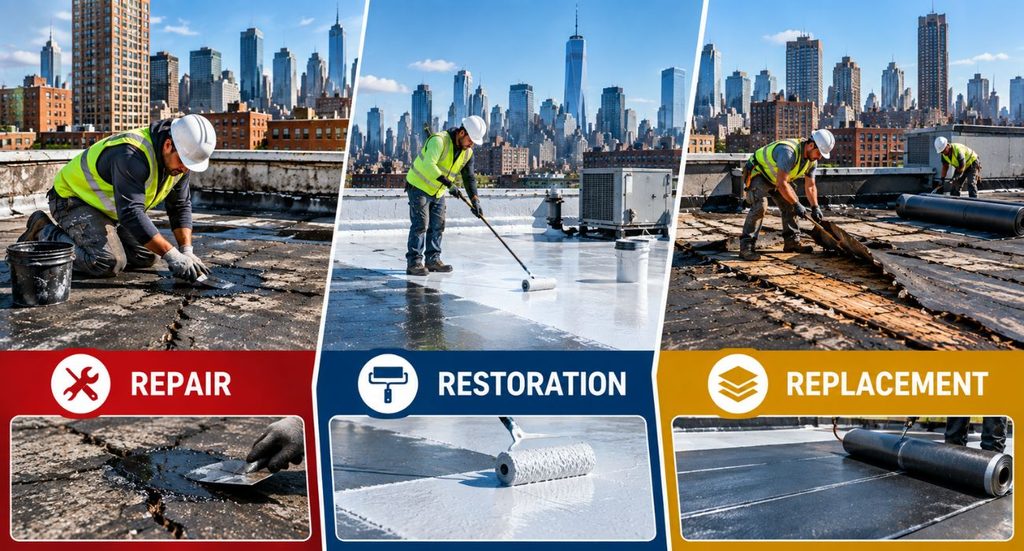
Roof repair, restoration, and replacement serve different purposes. The right approach depends on the condition of the existing roofing system and the extent of the problems.
| Option | Main Purpose | When It May Be Appropriate |
|---|---|---|
| Roof Repair | Fixes a specific damaged area or problem | Localized leaks, damaged flashing, small damaged sections, or isolated storm damage |
| Roof Restoration | Repairs and improves an existing usable roofing system | Aging roofs with manageable damage, drainage concerns, or suitable waterproofing and coating needs |
| Roof Replacement | Removes the existing system and installs a new roof | Widespread deterioration, major structural problems, extensive water damage, or repeated serious failures |
Roof Repair
Roof repair generally focuses on a specific problem or damaged area. It may be suitable when the issue is limited and most of the existing roof remains in good condition.
For example, a localized leak, damaged flashing, or isolated storm damage may only require targeted repairs. In these situations, replacing the entire roofing system may not be necessary.
Roof Restoration
Restoration takes a broader approach. It addresses existing problems while improving the protection and condition of an aging but still usable roofing system.
Restoration may be considered when the roof remains suitable for continued use but needs several repairs, better moisture protection, drainage improvements, surface preparation, or a suitable protective coating.
Roof Replacement
Roof replacement involves removing the existing roofing system and installing a new one. It may be more appropriate when the roof has widespread deterioration, extensive water damage, serious structural concerns, or repeated major failures.
The decision should be based on the actual roof condition rather than simply choosing the option with the lowest initial cost. A professional roof inspection can help determine whether repair, restoration, or replacement is the better solution.
What Does Roof Restoration Involve?
Every roof restoration project is different. The process depends on the existing roofing system, its condition, the source of any problems, and the improvements needed.
1. Roof Inspection
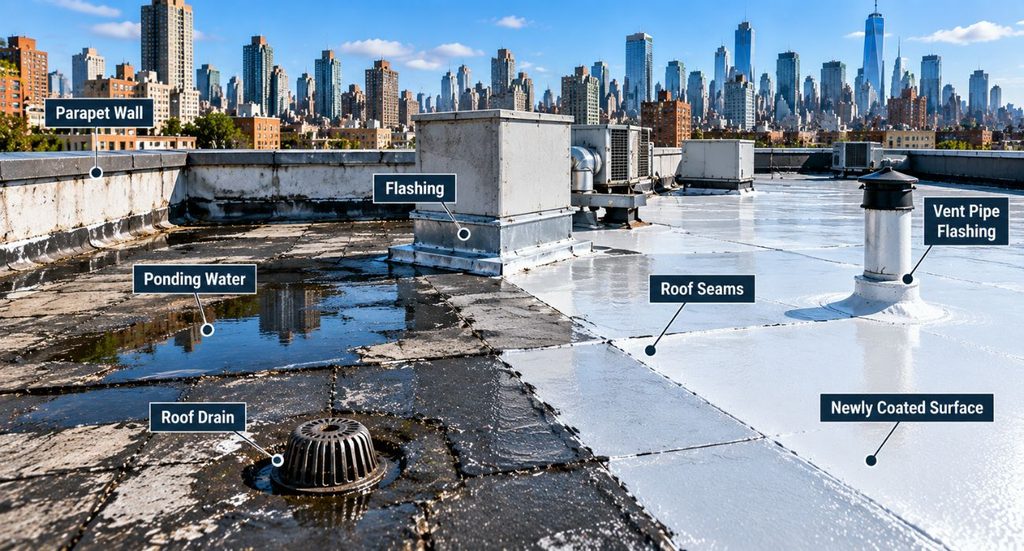
An inspection provides the starting point for the project. The roof should be evaluated for visible damage, leaks, drainage conditions, flashing, seams, penetrations, roof edges, and other vulnerable areas.
This assessment helps determine whether restoration is practical and what work should be completed before additional protective treatments are applied.
2. Roof Repairs
Existing problems should be addressed before further restoration work begins. Depending on the roof, repairs may involve damaged roofing materials, seams, flashing, penetrations, or other components.
Simply covering an existing problem without correcting its cause may not provide a suitable long-term solution. Repairs should therefore be part of the overall restoration plan when needed.
3. Surface Preparation
Surface preparation is particularly important when a roof coating or other protective treatment is being considered. Depending on the existing roofing system, the surface may need to be cleaned, repaired, and properly prepared.
The preparation method should match the existing roofing material and the restoration system being used.
4. Roof Waterproofing
Roof waterproofing may be included when moisture protection is an important part of the restoration plan. The appropriate approach depends on the roofing system, surface condition, and areas requiring protection.
Waterproofing should support the broader restoration strategy rather than being used to hide unresolved roof damage.
5. Roof Coating
A roof coating can add another protective layer to suitable roofing systems. Depending on the roof condition and selected coating, it may help protect the surface from moisture and weather exposure.
However, coating is not appropriate for every roof. Existing leaks, damaged materials, ponding water, and surface deterioration should be evaluated before a coating is selected.
6. Drainage and Flashing Improvements
Good drainage helps protect a roof from standing water. Restoration work may include addressing drainage concerns and repairing flashing around roof edges, walls, penetrations, and other vulnerable areas.
These improvements can help reduce conditions that contribute to recurring moisture problems and support the performance of the restored roof.
Roof Restoration for NYC Buildings
Roof restoration in NYC requires attention to more than the roof surface alone. Building type, roof design, drainage, surrounding exterior components, and seasonal weather can all affect the condition of a roofing system.
Flat and Low-Slope Roofs
Flat and low-slope roofs require effective drainage because water does not run off as quickly as it does from steeper roofs. During an assessment, roof drains, drainage paths, low areas, seams, flashing, penetrations, and ponding water should all be considered.
These conditions can influence whether restoration is appropriate and what work may be required.
Older NYC Buildings
Many older NYC buildings have roofing systems that have been repaired or modified over the years. The roof may also interact with other exterior components, including parapets, masonry, flashing, and drainage systems.
Considering these connections can help identify potential sources of moisture intrusion and provide a more complete understanding of the property’s condition.
Weather and Seasonal Exposure
NYC roofs experience different weather conditions throughout the year. Rain and snow can expose weak areas, while wind and temperature changes can place stress on roofing materials.
Regular maintenance and timely inspections can help identify developing problems before they become more difficult or expensive to address.
Roof Drainage and Ponding Water
Drainage should be an important part of any roof restoration assessment. Blocked drains, poor drainage paths, and low areas can allow water to remain on the roof.
Addressing these conditions may help protect the existing roofing system and reduce recurring moisture concerns. Drainage should be evaluated alongside the roof surface, flashing, and other components.
Can Roof Coating Be Part of Roof Restoration?
Yes, roof coating can be part of a restoration plan when the existing roofing system is suitable for it. A coating can provide an additional protective layer over an appropriate roof surface and may help reduce exposure to moisture and weather conditions.
However, applying a coating does not automatically solve existing roof problems. Before coating, the roof should be checked for active leaks, damaged roofing materials, ponding water, damaged flashing, and surface deterioration.
If significant problems exist, those issues should be addressed first. This is why a roof inspection is an important part of determining whether roof coating is appropriate.
When Roof Restoration May Not Be the Right Choice
Restoration is not the best solution for every roof. If the existing system has extensive deterioration or cannot provide a suitable base for restoration, replacement may be more practical.
Some conditions that may point toward replacement include:
- Extensive structural damage
- Widespread moisture damage
- Severe deterioration across large areas
- Major decking problems
- Repeated serious roof failures
- A roofing system that is no longer suitable for continued use
The goal should not be to restore a roof simply because restoration may cost less than replacement. The better approach is to choose a solution that fits the roof’s actual condition and the property’s long-term needs.
How Much Does Roof Restoration Cost in NYC?
There is no single price for roof restoration in NYC. The cost depends on the property, existing roofing system, condition of the roof, accessibility, and scope of work.
| Cost Factor | Why It Can Affect the Project |
|---|---|
| Roof size | Larger areas generally require more materials and labor |
| Existing roofing material | Different systems require different restoration approaches |
| Roof condition | More deterioration can increase repair requirements |
| Damage extent | Widespread problems require more extensive work |
| Drainage | Drain repairs or improvements can add to the scope |
| Flashing | Damaged transitions may require additional repairs |
| Surface preparation | Some systems require more preparation before treatment |
| Waterproofing or coating | Additional protective work affects the project scope |
| Accessibility | Difficult roof access can affect labor and logistics |
A roof requiring a few targeted repairs will have different costs from a large commercial roof that needs extensive preparation, drainage work, waterproofing, and protective treatment.
For this reason, an inspection and project assessment are important before establishing the scope and cost of restoration.
How Long Does Roof Restoration Take?
The time required for roof restoration depends on the size, condition, accessibility, and scope of the project. A smaller roof with limited repairs may require less time than a large commercial project involving extensive repairs, surface preparation, drainage work, or coating.
Weather can also affect outdoor roofing work. After inspecting the roof and identifying the required work, a roofing professional can provide a more realistic project timeline.
Why Choose NuEra Contracting?
When you need reliable roofing services in NYC, NuEra Contracting provides practical solutions based on your roof’s condition, building type, and specific needs.
- NYC Roofing Experience: Familiar with the weather and roofing conditions common across NYC.
- Thorough Roof Assessment: We evaluate leaks, drainage, flashing, ponding water, and overall roof condition.
- Practical Solutions: We help determine whether repair, restoration, or replacement is the right approach.
- NYC & Nassau County Service: Serving residential and commercial properties across NYC and Nassau County.
- Clear Communication: We explain the recommended work and next steps before the project begins.
Frequently Asked Questions
Is roof restoration the same as roof replacement?
No. Roof restoration works with the existing roofing system to repair and improve its condition. Roof replacement removes the existing system and installs a new one.
Can every roof be restored?
No. Restoration is appropriate only when the existing roofing system remains suitable for continued use. A severely deteriorated roof or one with significant structural problems may require replacement.
Can roof coating fix a leaking roof?
A coating should not simply be used to cover an unresolved leak. Existing leaks, damaged materials, drainage problems, and other conditions should be evaluated and addressed before a coating is considered.
Is roof restoration suitable for flat roofs?
It can be, depending on the type and condition of the existing roof. Drainage, ponding water, flashing, seams, penetrations, and overall surface condition should be considered before restoration begins.
When should I schedule a roof inspection?
Consider an inspection when you notice leaks, ponding water, damaged flashing, visible deterioration, or recurring roofing problems. An inspection can also help determine whether an aging roof is suitable for restoration.
Is roof restoration cheaper than replacement?
It can be, but the cost depends on the roof’s condition and the work required. Restoration should be selected based on the roof’s suitability and long-term needs rather than cost alone.
Conclusion
Roof restoration can be a practical option when an existing roofing system remains suitable for continued use but needs repairs, protection, or improvements. The first step is understanding the roof’s condition and identifying the work required.
A professional inspection can help identify leaks, drainage concerns, flashing problems, surface deterioration, and other issues that may affect the restoration plan. It can also help determine whether repair, restoration, or replacement is the appropriate next step.
If you are considering roof restoration in NYC, NuEra Contracting can assess your roof and help determine the right solution for your property.
Have Questions? Call NuEra Contracting Today!
📞 347-444-9028
We’re here to help with expert construction, brickwork, roofing, and waterproofing services. Get reliable solutions, friendly support, and professional results for your next project.

