
Brick veneer is a popular exterior wall system that gives homes and commercial buildings the timeless appearance of traditional brick without the added structural weight. It combines durability, visual appeal, and cost efficiency, making it a preferred choice for many modern construction and renovation projects.
Unlike solid brick construction, this system consists of a single layer of brick attached to a building’s structural wall. Rather than supporting the building’s weight, it serves as a protective exterior cladding that improves curb appeal, enhances weather resistance, and helps protect the building envelope from the elements.
In this guide, you’ll learn how this exterior wall system works, explore the different types available, compare it with solid brick construction, understand its benefits, installation process, maintenance requirements, common issues, lifespan, and the key factors that influence the overall cost. Whether you’re planning a new build or upgrading an existing property, this information will help you make a confident and informed decision.
What Is Brick Veneer?
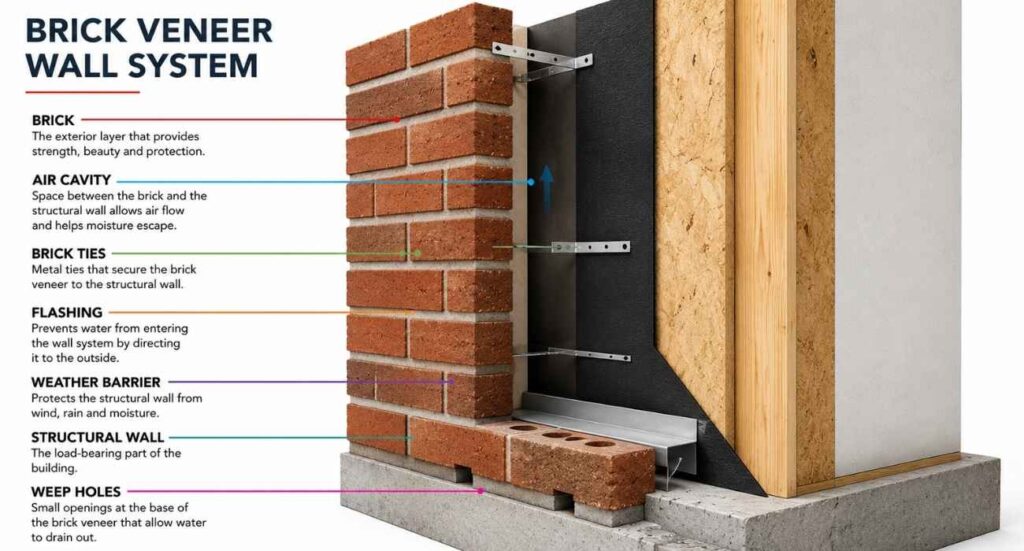
Brick veneer is a single layer of brick installed on the exterior of a building for appearance and weather protection. Unlike structural brick walls, it does not support the weight of the building. Instead, it is anchored to a wood frame, steel frame, or concrete backup wall using metal brick ties while maintaining a small air gap behind the brick.
This design allows moisture to drain away from the wall while helping protect the building from rain, wind, and changing weather conditions.
Because brick veneer is lighter than traditional solid brick construction, it has become a preferred option for modern homes, apartment buildings, schools, offices, retail spaces, and many commercial properties.
Key Characteristics of Brick Veneer
- Non-load-bearing exterior wall system
- Installed over wood, steel, or masonry framing
- Anchored using corrosion-resistant brick ties
- Includes an air cavity for moisture drainage
- Designed with flashing and weep holes to manage water
- Offers the appearance of traditional brick construction
When properly installed, a brick veneer wall provides durability, weather resistance, and long-lasting beauty while reducing the structural demands placed on the building.
How Does Brick Veneer Work?
Many people assume brick veneer is simply decorative. While appearance is one of its biggest advantages, the system is carefully engineered to protect the building from moisture.
A typical brick veneer system consists of several layers working together.
Structural Wall
The building’s structural support comes from wood framing, steel framing, concrete masonry units (CMU), or reinforced concrete walls.
Weather-Resistive Barrier
A moisture barrier is installed over the structural wall before the brick is laid. This layer helps prevent water from reaching the building’s interior.
Air Gap
A small cavity is left between the backup wall and the brick veneer.
This air space serves several important purposes:
- Allows water to drain downward
- Improves ventilation
- Reduces moisture accumulation
- Helps prevent mold growth
Brick Ties
Metal brick ties connect the brick veneer wall to the structural wall while allowing slight movement caused by temperature changes and building settlement.
Flashing
Flashing is installed above windows, doors, foundations, and roof intersections to direct water toward the exterior of the building.
Without properly installed flashing, moisture can enter the wall system and cause damage over time.
Weep Holes
Small openings near the bottom of the wall allow trapped water to escape from behind the brick.
Although they are easy to overlook, weep holes play an essential role in preventing water intrusion and extending the life of the wall system.
Types of Brick Veneer
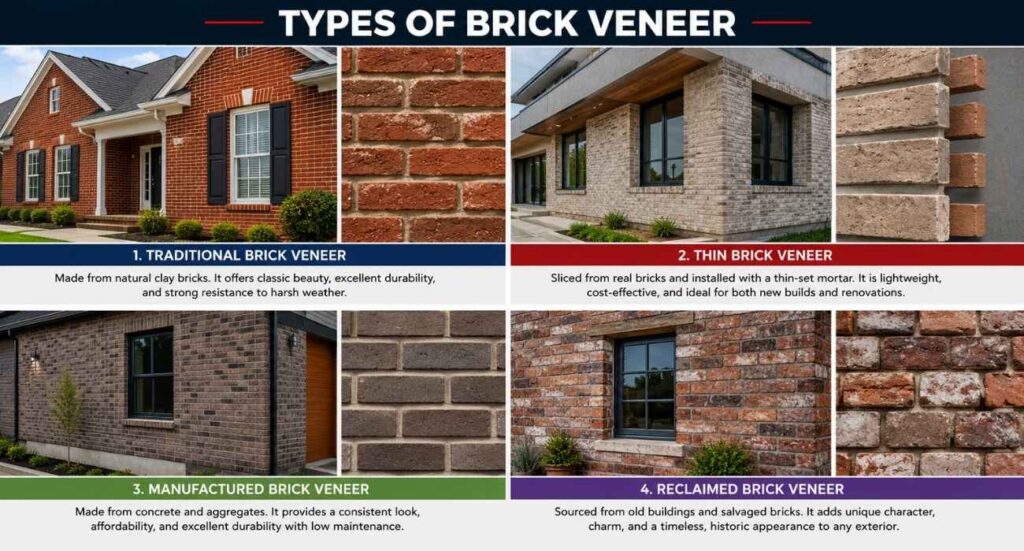
Not all brick veneer products are the same. The right choice depends on your budget, design goals, and construction requirements.
Traditional Brick Veneer
Traditional brick veneer uses full-size clay bricks attached to the exterior of the building.
This option closely resembles solid brick construction while remaining lighter and more cost-effective.
It is commonly used for:
- Custom homes
- Commercial buildings
- Apartment complexes
- Schools
- Churches
Thin Brick Veneer
Thin brick veneer is manufactured using much thinner bricks, typically around three-quarters of an inch to one inch thick.
Because it weighs significantly less than full-size brick, it can often be installed on existing walls during remodeling projects.
Thin brick veneer is frequently chosen for:
- Interior accent walls
- Fireplace surrounds
- Retail spaces
- Restaurants
- Exterior renovations
Manufactured Brick Veneer
Manufactured brick veneer is produced using concrete or other engineered materials designed to resemble natural clay brick.
Modern manufacturing techniques create realistic textures and colors while providing a lighter installation option.
Reclaimed Brick Veneer
Reclaimed brick veneer uses recycled bricks salvaged from older buildings.
This option offers:
- Historic character
- Unique color variation
- Sustainable construction
- Authentic aged appearance
Many architects select reclaimed materials for restoration projects or traditional architectural designs.
Brick Veneer vs. Solid Brick
One of the most common questions property owners ask is whether brick veneer performs as well as solid brick construction.
The answer depends on the application.
Solid brick walls provide structural support, while brick veneer serves as an exterior protective and decorative layer.
| Feature | Brick Veneer | Solid Brick |
|---|---|---|
| Structural Support | Non-load-bearing | Load-bearing |
| Weight | Lightweight | Much heavier |
| Construction Cost | Generally lower | Usually higher |
| Installation Speed | Faster | Slower |
| Foundation Requirements | Less demanding | Stronger foundation required |
| Appearance | Traditional brick look | Traditional brick look |
| Energy Performance | Depends on wall insulation | Depends on wall construction |
| Maintenance | Low with proper care | Moderate |
| Design Flexibility | High | Moderate |
For most modern residential and commercial projects, brick veneer provides an excellent balance of appearance, performance, and affordability.
Benefits of Brick Veneer
Brick veneer offers the timeless appearance of traditional brick while providing several practical advantages for both residential and commercial buildings.
Timeless Appearance
It enhances curb appeal and complements a wide range of architectural styles, from classic homes to modern commercial properties. With various colors, textures, and finishes available, it’s easy to achieve the desired look.
Cost-Effective Construction
Because it is a non-load-bearing exterior system, it requires less structural support than solid brick construction. This helps reduce material and labor costs without sacrificing appearance.
Lightweight Design
Its lighter weight places less stress on the building’s foundation and framing, making it suitable for both new construction and renovation projects.
Excellent Weather Protection
When installed correctly with flashing, drainage cavities, and weep holes, it helps manage moisture and protects the building envelope from rain and harsh weather.
Low Maintenance
Unlike some exterior materials, brick requires very little upkeep. Routine inspections and occasional mortar repairs are usually enough to keep it in excellent condition for years.
Increased Property Value
A professionally finished brick exterior improves curb appeal and can enhance the long-term value of a residential or commercial property.
Design Flexibility
Available in a variety of colors, sizes, textures, and patterns, it gives homeowners, builders, and architects the freedom to create distinctive exterior designs.
How Is Brick Veneer Installed?
Proper installation is essential for ensuring long-term durability and weather resistance. While the exact process may vary depending on the building, most projects follow these key steps.
1. Prepare the Structural Wall
The installation begins with a solid structural wall made from wood framing, steel framing, concrete block, or reinforced concrete. The surface must be level, stable, and ready to support the veneer system.
2. Install the Weather Barrier
A weather-resistive barrier is applied over the exterior sheathing to help prevent moisture from reaching the building’s interior.
3. Add Flashing and Brick Ties
Flashing is installed around windows, doors, and other openings to direct water away from the wall. At the same time, corrosion-resistant brick ties are attached to securely anchor the brick to the structural wall while allowing for natural movement.
4. Lay the Brick
The bricks are installed one course at a time using mortar. Contractors maintain consistent spacing and alignment to create a strong, uniform, and visually appealing finish.
5. Create an Air Cavity
A small gap is left between the brick and the structural wall. This cavity improves ventilation and allows moisture to drain instead of becoming trapped behind the masonry.
6. Install Weep Holes
Weep holes are added near the base of the wall to allow any trapped water to drain safely. These small openings are essential for reducing the risk of moisture-related damage.
Professional installation is key to the long-term performance of any brick veneer system. Proper detailing, drainage, and workmanship help ensure the exterior remains durable, attractive, and weather-resistant for many years.
Does Brick Veneer Need Maintenance?
Yes. Although brick veneer is durable and low maintenance, regular care helps preserve its appearance and extend its lifespan. Identifying small issues early can also prevent costly repairs in the future.
To keep your exterior in good condition, you should:
- Inspect exterior walls at least once a year.
- Check mortar joints for cracks or deterioration.
- Keep gutters and downspouts clean to prevent water buildup.
- Ensure weep holes remain clear for proper drainage.
- Remove vines or vegetation growing against the walls.
- Repair water leaks as soon as they are noticed.
- Schedule a professional inspection after severe storms or if visible damage appears.
- Inspect the brickwork regularly for cracks, loose mortar, or signs of water damage.
With routine maintenance and timely repairs, a brick exterior can remain strong, attractive, and weather-resistant for many decades.
How Much Does Brick Veneer Cost?
The cost of brick veneer varies from one project to another, as several factors influence the overall price. Instead of focusing on a fixed cost, it’s important to understand what affects your investment.
Some of the main factors include:
- Type and quality of brick
- Size of the project
- Labor costs
- Building height and accessibility
- Wall design and architectural details
- Geographic location
- Material availability
Although brick veneer is generally more affordable than solid brick construction, proper installation is essential. Hiring an experienced masonry contractor helps ensure long-term performance and reduces the risk of costly repairs caused by poor workmanship.
How Long Does Brick Veneer Last?
When installed correctly and maintained regularly, brick veneer can last 50 years or more. Its lifespan depends on factors such as the quality of installation, local climate, moisture management, and routine maintenance.
Regular inspections and timely repairs help prevent minor issues from becoming major problems, allowing the exterior to remain durable, attractive, and weather-resistant for decades.
Frequently Asked Questions
Is brick veneer as durable as solid brick?
While brick veneer is not load-bearing like solid brick, it is highly durable when properly installed and maintained. It provides excellent weather protection and can last for decades.
Can brick veneer crack?
Yes. Cracks may develop because of normal building settlement, aging mortar, moisture issues, or impact damage. Small cracks should be inspected before they become larger problems.
Is brick veneer waterproof?
No. Brick itself is not completely waterproof. Instead, the wall system is designed to manage moisture using flashing, drainage cavities, and weep holes that direct water back to the exterior.
Does brick veneer increase property value?
Many buyers appreciate the appearance and durability of brick exteriors. A professionally installed brick veneer system can improve curb appeal and contribute to long-term property value.
Can damaged brick veneer be repaired?
Yes. Individual bricks, mortar joints, flashing, and other components can often be repaired without replacing the entire wall.
How often should brick veneer be inspected?
A visual inspection every year is recommended. Buildings exposed to severe weather or older structures may benefit from more frequent professional evaluations.
Final Thoughts
Brick veneer is a durable and attractive exterior wall solution that combines the timeless look of brick with modern construction efficiency. When installed correctly and maintained regularly, it can protect your property and enhance its appearance for decades.
If you notice cracked mortar, loose bricks, or signs of moisture damage, it’s best to have your exterior inspected by an experienced masonry contractor. Addressing small issues early can help prevent costly repairs and extend the life of your building.
If you’re looking for professional masonry services in NYC, NuEra Contractors provides expert inspections, brick repair, repointing, and exterior restoration solutions to help keep your property safe, durable, and looking its best.
Have Questions? Call NuEra Contracting Today!
📞 347-444-9028
We’re here to help with expert construction, brickwork, roofing, and waterproofing services. Get reliable solutions, friendly support, and professional results for your next project.

