
Finding a crack in your home’s foundation can be concerning, but it doesn’t always indicate a serious structural problem. Some cracks develop naturally as concrete cures and settles, while others result from soil movement, hydrostatic pressure, or poor drainage. Understanding the cause is the first step in choosing the right foundation crack repair services.
Your foundation supports your entire home, so even a small crack should not be ignored. Left untreated, it can allow water intrusion, contribute to mold growth, and lead to more costly structural or moisture-related damage over time. A professional inspection helps determine whether the crack is cosmetic or requires repair.
Professional foundation crack repair services focus on more than sealing visible cracks. They identify the underlying cause and recommend the most effective repair method to restore your foundation’s stability. In this guide, you’ll learn what causes foundation cracks, the different crack types, how professionals inspect them, and the best repair solutions to protect your home.
What Are Foundation Crack Repair Services?
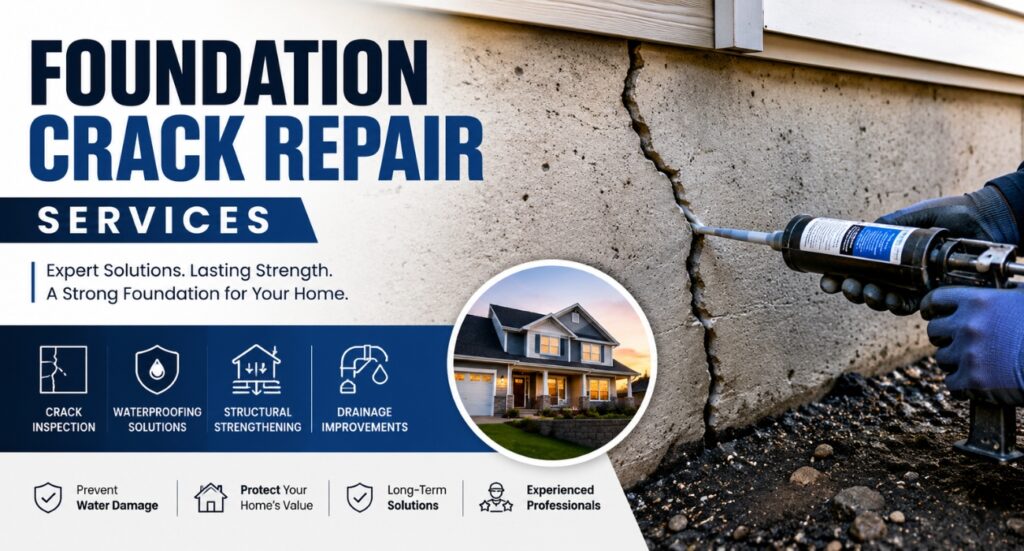
Foundation crack repair services involve identifying, repairing, and preventing foundation cracks to restore the stability and strength of your home. Since foundation cracks can develop for different reasons, every repair begins with a thorough inspection to determine the underlying cause rather than simply sealing the visible damage. Treating the source of the problem helps prevent recurring cracks and long-term structural issues.
During the inspection, contractors assess the crack’s size, depth, direction, and location while checking for signs of settlement, hydrostatic pressure, water intrusion, drainage problems, and structural movement. They also evaluate the condition of the foundation walls and surrounding soil to determine the most effective repair approach.
Depending on the inspection results, foundation crack repair services may include:
- Epoxy injection for structural concrete cracks.
- Polyurethane injection to stop water seepage.
- Carbon fiber reinforcement for weakened foundation walls.
- Wall anchors or steel reinforcement for bowing walls.
- Exterior waterproofing to reduce hydrostatic pressure.
- Drainage improvements around the property.
- Foundation underpinning for severe settlement.
The right repair method depends on the condition of the foundation and the cause of the damage. Professional foundation crack repair services are designed to provide a long-term solution by addressing both the crack and the factors contributing to its development.
Why Do Foundation Cracks Develop?
Concrete is one of the strongest materials used in home construction, but it constantly responds to changes in the surrounding soil, moisture levels, seasonal weather, and structural loads. When these conditions create uneven stress, foundation cracks can develop, making professional foundation crack repair services necessary to prevent further damage.
Identifying what caused the crack is just as important as repairing it. Similar-looking cracks can have different underlying causes, so a professional inspection helps determine the right solution and ensures the most effective foundation crack repair services are used.
Soil Settlement
Soil settlement is one of the most common causes of foundation cracks. As the soil beneath a home gradually compresses under the building’s weight, uneven settlement can place stress on the foundation, resulting in cracks along walls or basement floors. While minor settlement is expected, significant movement should be inspected to determine whether professional repairs are needed.
Hydrostatic Pressure
Hydrostatic pressure occurs when groundwater builds up around the foundation after prolonged rainfall or snowmelt. As saturated soil pushes against basement walls, it can create horizontal cracks, water seepage, and even wall movement. In these situations, foundation crack repair services often include waterproofing and drainage improvements to reduce pressure and prevent recurring damage.
Freeze-Thaw Cycles
In colder climates, water trapped in the surrounding soil expands as it freezes and contracts when temperatures rise. Over time, this repeated freeze-thaw cycle places stress on the foundation and contributes to cracking, particularly in older homes with aging waterproofing systems or drainage issues.
Poor Drainage Around the Foundation
Poor drainage is another leading cause of foundation damage because it allows water to collect around the home instead of flowing away. Excess moisture weakens the supporting soil and increases hydrostatic pressure, creating conditions that make foundation cracks more likely.
Common drainage problems include:
- Clogged or damaged gutters.
- Downspouts that discharge water too close to the foundation.
- Improper yard grading.
- Standing water after heavy rainfall.
- Blocked footing drains.
Correcting these issues helps protect the foundation and reduces the likelihood of needing future foundation crack repair services.
Concrete Shrinkage
Concrete naturally shrinks as it cures, which often results in thin hairline cracks during the first year after construction. These cracks are generally cosmetic and remain stable over time. However, if they begin widening, allow moisture inside, or appear alongside other structural symptoms, they should be professionally evaluated.
Tree Roots and Changing Soil Conditions
Large trees growing close to a home can gradually change the moisture content of the surrounding soil. During extended dry periods, tree roots absorb water, causing the soil to shrink and settle unevenly. Although roots are not always the direct cause of foundation damage, the changing soil conditions they create can contribute to settlement and increase the need for foundation crack repair services if movement continues.
Construction Deficiencies
Although less common, some foundation cracks originate during the construction process. Poor soil preparation, inadequate reinforcement, improper concrete placement, or insufficient curing can all reduce the long-term performance of a foundation. These deficiencies may remain hidden for years before gradually appearing as settlement-related cracks or structural movement.
| Common Cause | Possible Impact | Can It Be Prevented? |
|---|---|---|
| Soil Settlement | Uneven foundation movement | Partially |
| Hydrostatic Pressure | Water intrusion and wall movement | Yes |
| Poor Drainage | Saturated soil and settlement | Yes |
| Freeze-Thaw Cycles | Seasonal foundation stress | Limited |
| Concrete Shrinkage | Minor curing cracks | No |
| Tree Roots | Uneven soil moisture | Often |
| Construction Deficiencies | Premature foundation damage | No |
Knowing why a crack developed provides valuable insight, but it doesn’t always indicate how serious the problem is. Some cracks remain stable throughout the life of a home, while others continue to expand as the foundation moves. Understanding this difference is the next step in determining whether professional foundation crack repair services are needed.
Common Types of Foundation Cracks
Not all foundation cracks have the same appearance or the same cause. The pattern, direction, and location of a crack often provide valuable clues about what is happening beneath or around the foundation. Recognizing these differences helps homeowners better understand why certain cracks require simple monitoring while others call for immediate professional attention.
Hairline Foundation Cracks
Hairline cracks are thin, narrow surface cracks that commonly appear as concrete cures during the first months after construction. They are usually considered cosmetic because they result from natural concrete shrinkage rather than structural failure. However, if a hairline crack begins widening or allows water to seep into the basement, it should be evaluated to determine whether additional movement is occurring.
Vertical Foundation Cracks
Vertical foundation cracks are among the most common cracks found in poured concrete foundations. They usually develop because of normal settlement as the home adjusts to the soil beneath it. In many cases, these cracks remain stable and do not affect the structural integrity of the building. However, if they allow water to enter the basement or continue to widen over time, professional evaluation is recommended.
Depending on their condition, vertical cracks are often repaired using:
- Epoxy injection for structural restoration.
- Polyurethane injection for leaking cracks.
- Exterior waterproofing if moisture infiltration is present.
- Drainage improvements to prevent recurring water pressure.
Horizontal Foundation Cracks
Horizontal cracks are generally considered more serious because they often indicate excessive pressure against the foundation wall. As saturated soil pushes inward, the wall begins resisting forces that increase over time. If this pressure is not relieved, the wall may eventually bow inward or lose structural stability.
These cracks are commonly associated with:
- Hydrostatic pressure.
- Poor exterior drainage.
- Expansive soil.
- Freeze-thaw movement.
- Aging foundation walls.
Because horizontal cracks may signal structural movement, they should always be inspected by a qualified foundation repair contractor before the condition worsens.
Diagonal Foundation Cracks
Diagonal cracks usually develop when one section of the foundation settles more than another. They often appear near windows, doors, or foundation corners where structural stress naturally concentrates. While some diagonal cracks stabilize once settlement stops, others continue growing if the underlying movement remains active.
Professional contractors evaluate the size, direction, and progression of diagonal cracks before recommending repairs. In many cases, addressing drainage or settlement issues prevents further movement and protects the foundation from additional damage.
Stair-Step Foundation Cracks
Stair-step cracks are commonly found in brick, concrete block, and stone foundations. Rather than passing directly through masonry units, these cracks follow the mortar joints in a staircase pattern. They frequently indicate uneven settlement or shifting foundation walls and should not be dismissed without an inspection.
If stair-step cracks are accompanied by bowing walls, uneven floors, or recurring water intrusion, additional structural repairs may be required to restore the foundation’s stability.
Foundation Floor Cracks
Cracks in basement floors are often less concerning than wall cracks because many result from concrete shrinkage during curing. However, wide floor cracks, uneven slabs, or water entering through the floor may indicate settlement or hydrostatic pressure beneath the slab.
Although not every floor crack requires structural repairs, professional evaluation helps determine whether the damage is isolated or related to larger foundation issues.
| Crack Type | Common Cause | Typical Concern | Common Repair |
|---|---|---|---|
| Hairline | Concrete shrinkage | Low | Monitor or seal |
| Vertical | Settlement | Low to Moderate | Injection repair |
| Horizontal | Hydrostatic pressure | High | Structural reinforcement |
| Diagonal | Uneven settlement | Moderate | Stabilization |
| Stair-Step | Masonry movement | Moderate to High | Masonry & foundation repair |
| Floor Slab | Shrinkage or soil movement | Low to Moderate | Slab repair or drainage correction |
Understanding the type of crack helps homeowners recognize potential problems, but appearance alone never tells the whole story. A thorough inspection determines whether the foundation is still moving and which repair solution will provide the best long-term results.
Foundation Crack Repair Methods Explained
No single repair method works for every foundation crack. The most effective foundation crack repair services depend on the cause of the damage, the condition of the foundation, and whether the crack is actively moving. A professional inspection helps determine the right repair solution for long-term protection.
Epoxy Injection
Epoxy injection is commonly used to repair structural cracks in poured concrete foundations that are no longer moving. The epoxy bonds the concrete together, helping restore structural strength while preventing the crack from spreading further. This method is most effective for dry, stable cracks where water intrusion is not the primary concern.
Polyurethane Injection
Polyurethane injection is designed to stop water from entering through foundation cracks. As the material expands inside the crack, it creates a flexible waterproof seal that can accommodate slight movement over time. It is frequently used in basement foundation crack repair where moisture infiltration is the main issue.
Carbon Fiber Reinforcement
Carbon fiber reinforcement is often recommended for foundation walls showing signs of inward movement. High-strength carbon fiber straps are bonded to the wall, providing additional support without requiring extensive excavation. This repair method helps stabilize walls before more severe structural damage develops.
Wall Anchors and Steel Reinforcement
When foundation walls have already begun bowing inward, wall anchors or steel reinforcement systems may be required. These systems gradually stabilize and, in some cases, straighten the affected wall while reducing the pressure caused by surrounding soil.
Foundation Underpinning
Foundation underpinning is used when severe settlement affects a home’s stability. The process transfers the structure’s weight to deeper, more stable soil using specialized piers, providing a long-term solution for ongoing foundation movement. As part of professional foundation crack repair services, underpinning is typically recommended only for significant structural settlement.
The right repair method depends on the inspection findings rather than the appearance of the crack alone, ensuring foundation crack repair services provide a lasting solution instead of a temporary fix.
How to Prevent Future Foundation Cracks
While not every foundation crack can be prevented, proper maintenance can significantly reduce the risk of future damage. Keeping water away from the foundation and addressing small issues early helps protect your home and may reduce the need for costly foundation crack repair services in the future.
To help prevent foundation cracks:
- Keep gutters clean and extend downspouts away from the foundation.
- Maintain proper grading so water drains away from your home.
- Repair drainage issues before they lead to excess moisture.
- Monitor existing cracks for changes in size or shape.
- Schedule regular foundation inspections to identify potential problems early.
Taking these preventive steps can improve the long-term stability of your foundation and help minimize the need for extensive foundation crack repair services later on.
Why Choose NuEra Contractors NYC for Foundation Crack Repair Services?
Choosing the right contractor is just as important as selecting the right repair method. At NuEra Contractors NYC, we understand that every foundation crack has a different cause, which is why we never rely on one-size-fits-all solutions. Our team begins every project with a thorough inspection to identify the source of the problem before recommending the most effective repair.
Our foundation crack repair services are designed to provide long-term protection, not temporary fixes. Whether the issue is caused by settlement, hydrostatic pressure, water intrusion, or structural movement, we use proven repair methods and quality materials to restore the strength and stability of your foundation.
When you choose NuEra Contractors NYC, you benefit from:
- Comprehensive foundation inspections.
- Customized repair solutions for every property.
- High-quality materials and proven repair methods.
- Experienced professionals who understand NYC homes.
- Honest recommendations with no unnecessary repairs.
- Long-term solutions focused on protecting your home’s value.
Our goal is to provide reliable foundation crack repair services that address both the visible damage and the underlying cause, giving homeowners confidence that their foundation is protected for years to come.
Frequently Asked Questions
Can foundation cracks be permanently repaired?
Yes. Many foundation cracks can be permanently repaired when the underlying cause is properly identified and treated. Lasting repairs focus on correcting both the visible crack and the conditions that caused it.
How do I know if a foundation crack is structural?
Structural cracks are often accompanied by additional warning signs such as bowing walls, uneven floors, sticking doors, or recurring water intrusion. A professional inspection is the most reliable way to determine their severity.
Are horizontal foundation cracks dangerous?
Horizontal cracks should always be inspected because they often indicate pressure against the foundation wall. Although not every horizontal crack represents an emergency, they are generally considered more serious than vertical or hairline cracks.
Does homeowners insurance cover foundation crack repair?
Coverage depends on the cause of the damage and the terms of the insurance policy. Damage resulting from sudden covered events may qualify, while settlement and normal wear are often excluded.
How long does foundation crack repair take?
Minor crack injection repairs may be completed within a day, while larger structural repairs or underpinning projects require more time depending on the complexity of the work.
Can foundation cracks cause basement leaks?
Yes. Even narrow cracks can allow groundwater to enter the basement during heavy rainfall or periods of high groundwater pressure, making timely repairs important for preventing moisture damage.
Should I buy a house with foundation cracks?
Foundation cracks are not always a reason to avoid purchasing a home. However, the foundation should be professionally inspected to determine the cause, extent of the damage, and any repairs that may be required.
When should I call a foundation repair contractor?
You should schedule an inspection if a crack widens over time, water begins entering through the foundation, basement walls bow inward, or multiple structural warning signs appear throughout the home.
Conclusion
Foundation cracks are common, but they should never be evaluated based on appearance alone. While some cracks are simply the result of normal concrete shrinkage or minor settlement, others indicate structural movement, hydrostatic pressure, or drainage issues that require professional attention. Understanding the cause of the crack is the key to selecting the right repair and preventing additional damage.
Professional foundation crack repair services provide more than a cosmetic solution. By identifying the underlying problem, evaluating the condition of the foundation, and recommending repairs tailored to your home’s specific needs, experienced contractors help protect your property’s structural integrity and long-term value. If you’ve noticed widening cracks, water seepage, or other signs of foundation movement, scheduling a professional inspection is the most reliable way to determine the next steps before a minor issue develops into a more costly repair.
Have Questions? Call NuEra Contracting Today!
📞 347-444-9028
We’re here to help with expert construction, brickwork, roofing, and waterproofing services. Get reliable solutions, friendly support, and professional results for your next project.

