A roof problem rarely starts with a major leak. In many cases, small issues such as damaged flashing, missing shingles, or clogged gutters develop over time and go unnoticed until costly repairs become necessary.
For NYC property owners, regular roof inspection services are especially important. Heavy rain, snow, strong winds, and freeze-thaw cycles can gradually wear down roofing materials and shorten the life of your roof. Identifying problems early helps prevent water damage, protects your investment, and reduces unexpected repair costs.
Whether you own a residential home, apartment building, or commercial property, understanding what to look for during a roof inspection can help you make informed maintenance decisions. This guide covers when to inspect your roof, key warning signs, common roofing issues, inspection costs, and practical maintenance tips.
What Is a Roof Inspection?
A roof inspection is a detailed evaluation of a roofing system to identify damage, assess overall condition, and determine whether repairs or maintenance are needed. The goal is to find problems early before they become expensive or compromise the structure of the building.
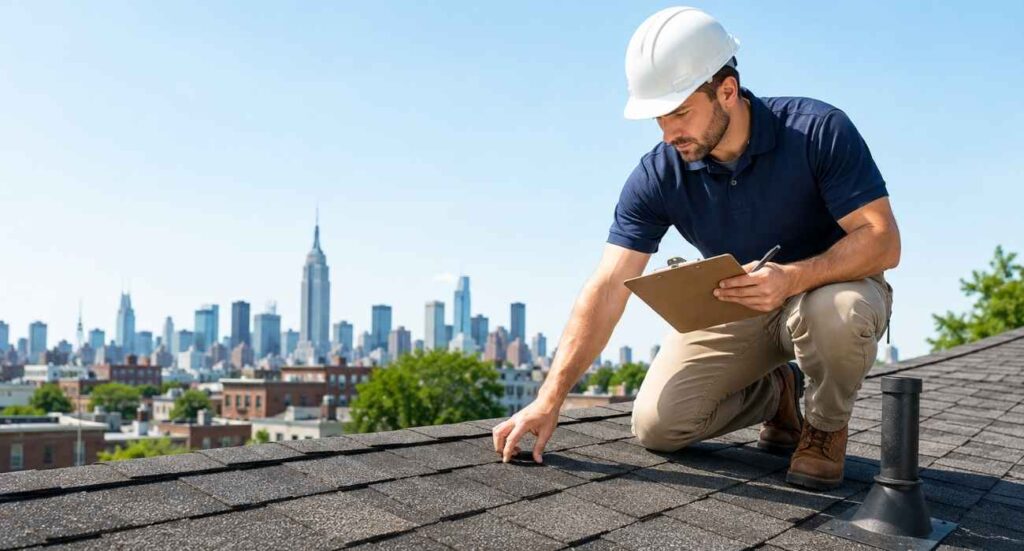
A typical inspection focuses on:
- Roofing materials
- Flashing and sealants
- Gutters and drainage systems
- Roof penetrations
- Structural components
- Signs of moisture intrusion
Both residential roof inspection and commercial roof inspection services follow similar principles, but commercial roofs often require additional attention due to larger surface areas, rooftop equipment, and complex drainage systems.
Professional inspections provide valuable insight into the current condition of a roof and help property owners make smarter maintenance decisions.
Why Regular Roof Inspections Matter in NYC
New York City’s climate can be tough on roofing systems. Seasonal weather changes, moisture, and temperature fluctuations create conditions that gradually wear down roofing materials.
Prevent Expensive Repairs
One of the biggest benefits of a roof inspection checklist is identifying small issues before they become major problems. A minor flashing defect or loose shingle may seem insignificant today, but it can eventually lead to leaks, mold growth, and structural damage.
Addressing small concerns early is usually far less expensive than repairing widespread water damage.
Extend Roof Lifespan
Every roof has a limited lifespan. However, roofs that receive routine inspections and maintenance often last significantly longer than neglected systems.
Regular inspections help identify:
- Early roof deterioration
- Roof flashing damage
- Drainage problems
- Roof membrane damage
- Wear caused by weather exposure
Resolving these issues promptly can add years to the life of your roofing system.
Protect Property Value
The condition of a roof directly affects property value. Buyers and investors often view the roof as one of the most important structural components of a building.
A well-maintained roof demonstrates responsible ownership and reduces concerns about future repair expenses.
Improve Safety
Roof damage can create safety hazards for both occupants and visitors. Water intrusion may weaken structural components, while loose roofing materials can become dangerous during high winds.
Routine inspections help ensure the roof remains stable, secure, and functional.
Support Insurance Claims
After severe storms, insurance companies often require documentation of roof conditions. A roof damage inspection performed by a professional can help establish the extent of storm-related damage and support the claims process.
NYC Weather Challenges That Affect Roofs
Weather is one of the leading causes of roofing problems in New York City. Understanding these challenges helps explain why regular inspections are so important.
Winter Snow and Ice
Heavy snow places additional weight on roofing systems. As snow melts and refreezes, ice dams can form along roof edges, preventing proper drainage and increasing the risk of leaks.
Freeze-Thaw Cycles
Water can enter small cracks and openings in roofing materials. When temperatures drop, the water freezes and expands, causing cracks to grow larger over time.
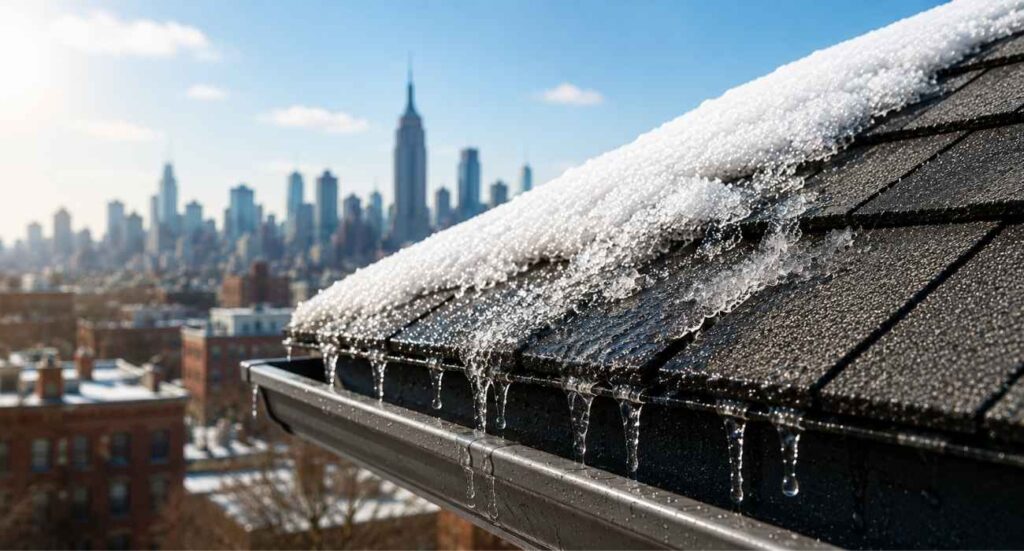
This process commonly affects:
- Flashing
- Roofing membranes
- Sealants
- Masonry components
Heavy Rainfall
NYC experiences periods of intense rainfall throughout the year. Even minor drainage issues can quickly become major problems when water cannot properly leave the roof surface.
Strong Winds
High winds can loosen roofing materials, damage flashing, and expose vulnerable areas of the roof to moisture intrusion.
After severe weather events, a roof condition assessment is strongly recommended.
Summer Heat and UV Exposure
Prolonged exposure to sunlight gradually breaks down roofing materials. UV radiation can cause roofing systems to age prematurely, especially on flat roofs where surfaces receive direct sun exposure for extended periods.
Recommended Roof Inspection Schedule
| Property Type | Inspection Frequency |
|---|---|
| Residential Home | Twice Per Year |
| Multi-Family Building | Twice Per Year |
| Commercial Building | 2–4 Times Per Year |
| Flat Roof Property | Every 6 Months |
| After Severe Storms | Immediate Inspection |
Property owners should ideally schedule inspections during spring and fall. These seasons allow professionals to identify winter damage and prepare the roof for upcoming weather conditions.
Commercial properties and flat roofs often require more frequent inspections because drainage issues and wear can develop more quickly.
When Should You Schedule a Roof Inspection?
While annual inspections are important, certain situations call for immediate attention.
Seasonal Roof Inspections
Spring inspections help identify damage caused by snow, ice, and winter moisture. Fall inspections prepare the roof for freezing temperatures and winter weather.
Scheduling a seasonal roof inspection twice per year is often the most effective maintenance strategy.
After Storm Damage
Following severe weather, property owners should inspect for:
- Missing shingles
- Roof leak signs
- Damaged flashing
- Debris impacts
- Water stains on ceiling surfaces
Even if damage is not immediately visible, hidden problems may still exist.
Before Buying or Selling Property
A professional inspection provides valuable information during real estate transactions. Buyers gain confidence in the property’s condition, while sellers can address concerns before negotiations begin.
Before Major Roof Repairs
If significant repairs are being considered, an inspection should be completed first. Understanding the true condition of the roof helps property owners make informed decisions and avoid unnecessary expenses.
Complete Roof Inspection Checklist for NYC Property Owners
A thorough roof inspection involves much more than looking for obvious leaks. Many roofing problems begin in areas that are difficult to see from the ground, which is why inspectors evaluate multiple components during every inspection.
Use the following checklist to understand what should be examined during a professional roof inspection.
Inspect Roofing Materials
Roofing materials are the first line of defense against weather exposure. Over time, shingles, tiles, and roofing membranes can deteriorate due to age, UV exposure, moisture, and temperature fluctuations.
During an inspection, look for:
- Missing shingles
- Cracked shingles
- Curling edges
- Loose roofing materials
- Granule loss on asphalt shingles
- Surface deterioration
Missing shingles may expose the roof deck to moisture and accelerate deterioration. Granule loss often indicates aging materials and reduced weather resistance.
Property owners should also look for uneven roof surfaces, as these may signal underlying structural concerns.
Check Roof Flashing
Flashing protects vulnerable areas where water is most likely to enter the building. Even a high-quality roof can develop leaks if flashing becomes damaged.
Common flashing locations include:
- Chimneys
- Skylights
- Plumbing vents
- Roof valleys
- Wall intersections
Inspectors look for:
- Rust
- Cracks
- Loose sections
- Missing sealant
- Gaps around penetrations
Roof flashing damage is one of the most common causes of roof leaks in NYC buildings. Small gaps can allow water to enter beneath roofing materials and create hidden moisture problems.
Inspect Gutters and Drainage Systems
A roof’s drainage system plays a major role in preventing water damage. When water cannot drain properly, it may pool on the roof or overflow onto walls and foundations.
During an inspection, check for:
- Clogged gutters
- Damaged downspouts
- Standing water
- Loose gutter sections
- Drain blockages
- Improper water flow
A blocked roof drainage system can lead to premature roof deterioration and increase the risk of leaks.
NYC properties surrounded by trees often experience more drainage problems due to leaf accumulation and debris buildup.
Look for Water Damage
Water damage is often one of the earliest signs of roofing failure. However, leaks do not always appear directly below the damaged area.
Inspectors typically look for:
- Water stains on ceiling surfaces
- Peeling paint
- Mold growth
- Damp insulation
- Interior leaks
- Discolored walls
Even a small stain may indicate a larger roofing issue that requires attention.
Prompt roof leak inspection services can help identify the source before significant structural damage occurs.
Examine Flat Roof Conditions
Flat roofs are common throughout New York City and require specialized inspection procedures.
Unlike sloped roofs, flat roofing systems are more susceptible to drainage issues and ponding water.
Inspectors evaluate:
- Ponding water
- Roof membrane damage
- Open seams
- Surface cracks
- Blisters
- Membrane shrinkage
Small membrane defects can allow moisture to penetrate the roofing system and damage underlying components.
Routine flat roof inspection services are especially important for commercial buildings and multi-family properties.
Evaluate Structural Components
Structural issues can compromise the safety and performance of an entire roofing system.
Inspectors examine:
- Sagging roof sections
- Deck deterioration
- Structural movement
- Support systems
- Roof framing
- Signs of settlement
Any evidence of structural roof damage should be addressed immediately to prevent further deterioration.
Roof Inspection Checklist Summary
| Inspection Area | What to Look For | Potential Risk |
|---|---|---|
| Roofing Materials | Missing, cracked, or curled shingles | Water intrusion and reduced protection |
| Flashing | Rust, gaps, loose sections | Roof leaks |
| Gutters | Debris, clogs, poor drainage | Overflow and water damage |
| Interior Ceilings | Stains and moisture | Hidden roof leaks |
| Flat Roof Surface | Ponding water and membrane damage | Premature roof failure |
| Structural Components | Sagging and movement | Structural instability |
This checklist provides a strong foundation for evaluating roof condition and identifying areas that may require maintenance or repairs.
Common Roof Problems Found During Inspections
Regular inspections often reveal issues that property owners were unaware of. Catching these problems early can prevent extensive repairs and help extend roof lifespan.
Roof Leaks
Roof leaks remain one of the most common roofing issues.
Leaks may result from:
- Damaged flashing
- Missing shingles
- Membrane failures
- Drainage problems
Many leaks begin as small moisture intrusions and gradually worsen over time.
Flashing Failures
Flashing is designed to direct water away from vulnerable roof areas.
When flashing becomes damaged or separated from surrounding materials, water can penetrate the roofing system and cause interior damage.
Drainage Issues
Poor drainage can create significant roofing problems.
Common causes include:
- Clogged gutters
- Blocked roof drains
- Improper roof slope
- Debris accumulation
These issues often lead to standing water and accelerated material deterioration.
Ponding Water
Flat roofs are particularly vulnerable to ponding water.
Standing water that remains for more than 48 hours can weaken roofing materials and increase the likelihood of leaks.
Storm Damage
Strong winds, hail, and severe weather frequently damage roofing systems.
A storm damage assessment should be performed after significant weather events to identify:
- Missing shingles
- Impact damage
- Flashing failures
- Water intrusion
Roof Aging
Every roof experiences gradual wear over time.
Signs of aging include:
- Granule loss
- Surface cracking
- Fading materials
- Reduced flexibility
Older roofs often require more frequent inspections to maintain performance.
Ventilation Problems
Improper ventilation can contribute to:
- Excess moisture
- Mold growth
- Higher energy costs
- Reduced roof lifespan
Roof inspections often identify ventilation deficiencies that may otherwise go unnoticed.
DIY Roof Inspection vs Professional Roof Inspection
Some property owners perform basic visual inspections themselves. While this can help identify obvious concerns, it rarely replaces the expertise of a trained professional.
| Factor | DIY Inspection | Professional Roof Inspection |
|---|---|---|
| Safety | Higher risk | Safer procedures |
| Accuracy | Limited | Comprehensive |
| Equipment | Basic tools | Professional equipment |
| Hidden Damage Detection | Difficult | More effective |
| Inspection Report | Not available | Detailed documentation |
A DIY inspection may help identify visible problems such as missing shingles or clogged gutters. However, hidden moisture damage, flashing defects, and structural concerns often require professional evaluation.
Professional roof inspection services provide detailed reports, repair recommendations, and documentation that may be useful for insurance claims or maintenance planning.
For NYC property owners, combining occasional visual checks with scheduled professional inspections is often the most effective approach.
Why Choose NuEra Contractors for Roof Inspections?
At NuEra Contractors, we understand the challenges NYC roofs face throughout the year. From storm damage and roof leaks to drainage issues and aging materials, our team provides detailed roof inspections for residential and commercial properties.
We carefully assess roofing materials, flashing, drainage systems, and structural components to identify potential problems before they lead to costly repairs. Our goal is to help property owners make informed decisions and maintain safe, reliable roofing systems.
Frequently Asked Questions
How often should a roof be inspected?
Most NYC properties should have a professional roof inspection twice per year, typically in spring and fall. Additional inspections are recommended after severe storms.
What is included in a roof inspection?
A roof inspection evaluates roofing materials, flashing, gutters, drainage systems, structural components, and signs of water damage or deterioration.
How much does a roof inspection cost in NYC?
Costs vary based on roof size and complexity, but most residential inspections range from $150 to $600.
Can I inspect my roof myself?
You can perform a basic visual check from the ground, but professional inspections are safer and more effective for identifying hidden issues.
What are the most common roof problems?
Roof leaks, damaged flashing, missing shingles, drainage problems, ponding water, and aging roofing materials are among the most common issues.
How long does a roof inspection take?
Most residential inspections take one to two hours, while larger commercial properties may require additional time.
Are roof inspections necessary after storms?
Yes. Storms can cause hidden damage that may not be visible immediately. An inspection helps identify problems before they worsen.
Can a roof inspection help extend roof lifespan?
Absolutely. Regular inspections and timely repairs can prevent small issues from becoming major problems, helping your roof last longer.
Conclusion
Regular roof inspections are one of the best ways to protect your property from unexpected repairs and water damage. By identifying issues early, property owners can improve roof performance, extend roof lifespan, and reduce long-term maintenance costs.
If you’re looking for a professional roof inspection in NYC, NuEra Contractors provides thorough evaluations for residential and commercial properties. Our experienced team helps identify roofing concerns early, giving you the information needed to protect your investment and maintain a dependable roofing system.
Have Questions? Call NuEra Contracting Today!
📞 347-444-9028
We’re here to help with expert construction, brickwork, roofing, and waterproofing services. Get reliable solutions, friendly support, and professional results for your next project.

