
If you are planning a roofing project, one of the first questions you may ask is, how many bundles of shingles in a square? Understanding this calculation is important because roofing materials are sold by roofing squares rather than by square foot. Knowing the correct number of bundles helps homeowners estimate costs, avoid material shortages, and plan their projects more accurately.
In most cases, one roofing square covers 100 square feet of roof area and requires three bundles of standard asphalt shingles. However, the exact number can vary depending on the type of shingles, roof design, and the amount of waste generated during installation. Features such as valleys, dormers, and steep roof pitches can increase material requirements.
This guide explains everything homeowners need to know about how many bundles of shingles in a square, including roofing square calculations, shingle bundle requirements, waste factors, and material estimates. Whether you are replacing an old roof or comparing contractor quotes, understanding how many bundles of shingles in a square can help you plan your project accurately, control costs, and avoid costly mistakes.
What Is a Roofing Square?
Before calculating shingle bundles, you need to understand the roofing industry’s standard measurement system.
A roofing square is equal to 100 square feet of roof surface area. Contractors, manufacturers, suppliers, and insurance companies use this measurement because it simplifies estimating materials and labor.
Rather than discussing thousands of individual shingles or hundreds of square feet, roofers can quickly calculate how many roofing squares a project contains.
For example:
| Roof Area | Roofing Squares |
|---|---|
| 100 sq ft | 1 Square |
| 500 sq ft | 5 Squares |
| 1,000 sq ft | 10 Squares |
| 1,500 sq ft | 15 Squares |
| 2,000 sq ft | 20 Squares |
Many homeowners assume that a 2,000-square-foot house automatically has a 2,000-square-foot roof. That is not always true.
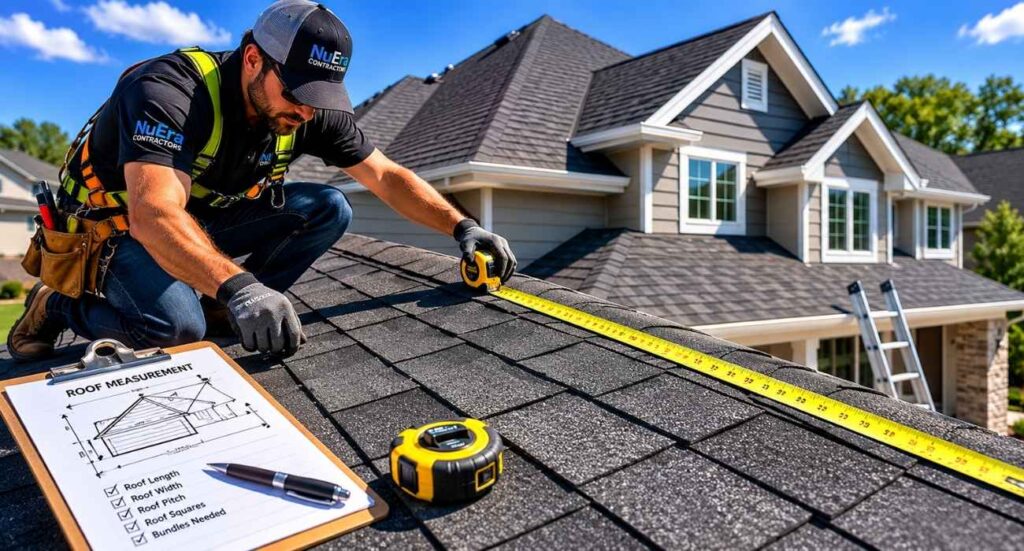
Roofs often have:
- Overhangs
- Dormers
- Valleys
- Multiple roof planes
- Steep pitches
These features increase the actual roof surface area beyond the home’s floor area.
Professional contractors measure the roof itself rather than relying on interior square footage. This provides a more accurate material estimate and reduces the risk of shortages during installation.
How Many Bundles of Shingles in a Square?
Knowing how many bundles of shingles in a square makes it easier to calculate roofing materials for projects of any size.
For most standard asphalt roofing systems, three bundles of shingles equal one roofing square.
Since one roofing square covers 100 square feet, each bundle typically covers approximately 33.3 square feet.
The standard formula looks like this:
100 square feet = 1 roofing square
1 roofing square = 3 bundles of shingles
However, not all shingle products are packaged the same way.
Manufacturers design heavier premium shingles differently than standard three-tab products. Some specialty shingles require four or even five bundles per square.
The exact number depends on:
- Shingle thickness
- Product design
- Manufacturer specifications
- Exposure requirements
- Coverage area per bundle
The table below provides a general comparison.
| Shingle Type | Bundles Per Square |
|---|---|
| Three-Tab Shingles | 3 |
| Architectural Shingles | 3 |
| Laminated Shingles | 3 |
| Premium Designer Shingles | 4-5 |
| Luxury Roofing Shingles | 4-5 |
Architectural shingles remain the most popular option in today’s residential market because they offer better durability and curb appeal while still requiring approximately three bundles per square.
Why Contractors Verify Manufacturer Specifications
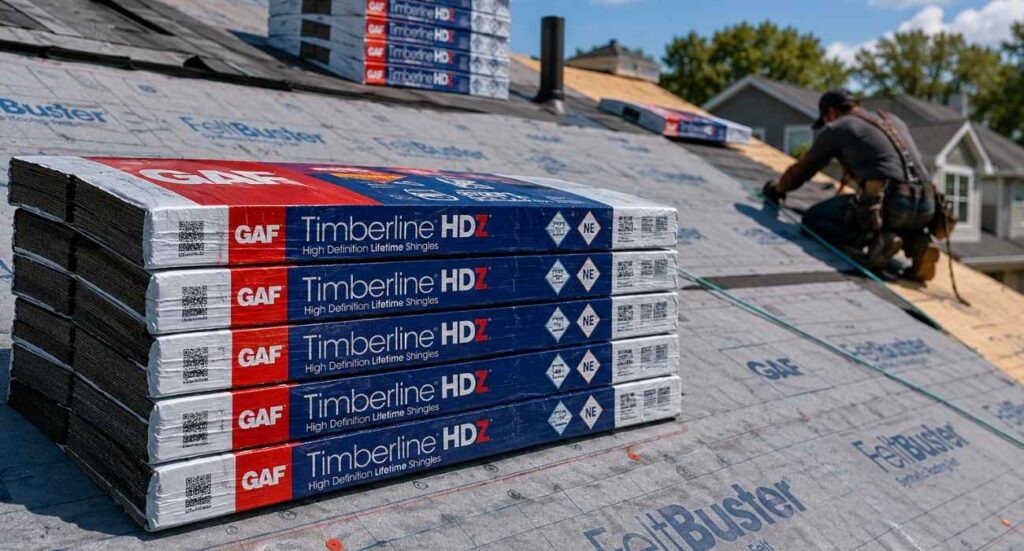
Even experienced roofers check manufacturer specifications before ordering materials.
Coverage can vary slightly between products. Ordering based on assumptions can create shortages or leave you with excess materials.
Always verify bundle coverage before placing an order.
Why Roofing Contractors Use Squares Instead of Square Footage?
The roofing industry adopted the roofing square because it simplifies project planning.
Imagine ordering shingles for a 2,743-square-foot roof.
Without roofing squares, contractors would need to calculate every material item individually.
Instead, they simply convert:
2,743 ÷ 100 = 27.43 roofing squares
This allows contractors to quickly estimate:
- Shingle bundles
- Underlayment
- Ice and water shield
- Ridge cap shingles
- Labor requirements
- Disposal costs
Using roofing squares creates consistency across manufacturers, suppliers, estimators, and installers.
This standardized approach improves accuracy and helps prevent expensive mistakes.
Pro Tip
When comparing roofing estimates from different contractors, ask how many roofing squares each estimate includes. Differences in measurements often explain price variations.
How to Calculate How Many Shingle Bundles You Need
Calculating shingle bundles is not difficult when you follow a proven process.
Step 1: Measure Roof Dimensions
Measure the length and width of each roof section.
If your roof contains multiple planes, measure each section separately.
Step 2: Calculate Total Roof Area
Multiply length by width for each section.
Add all sections together.
Example:
Section A = 800 sq ft
Section B = 400 sq ft
Section C = 300 sq ft
Total Roof Area = 1,500 sq ft
Step 3: Convert to Roofing Squares
Divide the total roof area by 100.
1,500 ÷ 100 = 15 roofing squares
Step 4: Calculate Bundle Requirements
Multiply roofing squares by bundles per square.
15 × 3 = 45 bundles
Step 5: Add Waste Factor
Most roofing projects require additional material.
Recommended waste allowances:
| Roof Type | Waste Factor |
|---|---|
| Simple Roof | 10% |
| Moderate Roof | 12% |
| Complex Roof | 15-20% |
For a 15-square roof:
45 bundles + 10% waste
45 + 4.5
Rounded Total = 50 bundles
This ensures enough material for cuts, valleys, ridges, and unexpected adjustments during installation.
Roofing Bundle Calculator Chart
One of the easiest ways to estimate roofing materials is by using a roofing bundle calculator chart. While every roof has unique characteristics, these estimates provide a helpful starting point for homeowners planning a roofing project.
| Roof Area (Sq Ft) | Roofing Squares | Approximate Bundles Needed |
|---|---|---|
| 1,000 | 10 | 30 |
| 1,200 | 12 | 36 |
| 1,500 | 15 | 45 |
| 1,800 | 18 | 54 |
| 2,000 | 20 | 60 |
| 2,500 | 25 | 75 |
| 3,000 | 30 | 90 |
| 3,500 | 35 | 105 |
Remember that these numbers represent basic calculations before adding waste allowances.
Calculation Example #1
A homeowner has a roof measuring 2,000 square feet.
Calculation:
2,000 ÷ 100 = 20 roofing squares
20 × 3 bundles = 60 bundles
Add 10% waste:
60 × 1.10 = 66 bundles
Recommended order quantity: 66 bundles
Calculation Example #2
A homeowner has a 2,500-square-foot roof with multiple valleys and dormers.
Calculation:
2,500 ÷ 100 = 25 squares
25 × 3 bundles = 75 bundles
Add 15% waste:
75 × 1.15 = 86.25 bundles
Recommended order quantity: 87 bundles
Pro Tip
Always round up rather than down. Running short on shingles during installation can delay your project and create color matching issues if materials come from a different manufacturing batch.
Important Factors That Affect How Many Bundles You Need
Although the standard answer is three bundles per square, several factors can increase the amount of material required.
Roof Pitch
Steeper roofs contain more surface area than they appear to from the ground.
For example, two homes may have identical footprints, but the steeper roof will require more shingles because it covers more surface area.
Roof Valleys
Valleys occur where two roof planes meet.
Roofers must cut shingles carefully in these areas, creating additional waste.
Dormers and Skylights
Architectural features improve curb appeal but increase material requirements.
Each cut around a skylight, chimney, or dormer generates waste that must be considered during ordering.
Roof Complexity
Simple gable roofs require less material than complex roofs with multiple elevations and intersecting sections.
Shingle Type
Premium and designer shingles often require more bundles per square due to their thickness and coverage design.
Local Building Codes
Some regions require enhanced roofing systems, starter strips, and additional accessories that impact overall material estimates.
Common Mistakes Homeowners Make When Estimating Shingles
Over the years, I have seen homeowners make the same estimating mistakes repeatedly.
Avoiding these errors can save both time and money.
Measuring the House Instead of the Roof
The house footprint rarely matches the roof surface area.
Always calculate actual roof dimensions.
Forgetting the Waste Factor
Many homeowners purchase the exact number of bundles needed.
This often leads to shortages.
Ignoring Roof Pitch
A steep roof contains more surface area than a low-slope roof.
Failing to account for pitch produces inaccurate calculations.
Ordering the Wrong Shingle Type
Not every shingle bundle provides the same coverage. Always verify manufacturer specifications.
Forgetting Accessories
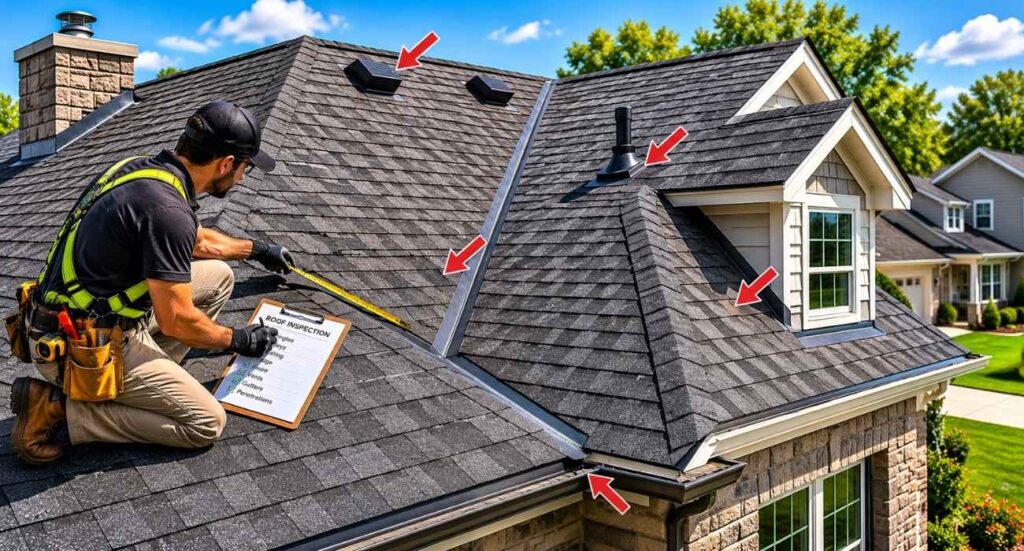
Roofing projects often require:
- Starter shingles
- Ridge cap shingles
- Ice and water shield
- Synthetic underlayment
- Drip edge
These materials should be included in project planning.
How Much Does a Bundle of Shingles Weigh?
Weight is another important consideration when planning a roofing project.
Different shingle products vary significantly in weight.
| Shingle Type | Average Weight Per Bundle |
|---|---|
| Three-Tab Shingles | 50-65 lbs |
| Architectural Shingles | 65-80 lbs |
| Premium Shingles | 80-100+ lbs |
A complete roofing project may involve several thousand pounds of material.
For example:
60 bundles × 70 lbs = 4,200 lbs
This is one reason professional roof delivery and material handling are so important.
Homeowners should avoid storing excessive roofing materials in locations that may not support the load safely.
General Roofing Cost Estimates
Before budgeting for a roof replacement, homeowners should understand how many bundles of shingles in a square are required and how that affects overall material costs.
| Roof Size | Estimated Material Bundles |
|---|---|
| 1,500 sq ft | 45-50 |
| 2,000 sq ft | 60-66 |
| 2,500 sq ft | 75-87 |
| 3,000 sq ft | 90-100 |
Actual project pricing varies based on local labor rates and roofing specifications.
When to Hire a Professional Roofing Contractor
DIY roofing projects may appear simple, but roofing work carries significant risks.
Consider hiring a professional when:
- The roof is steep
- The roof exceeds one story
- Structural damage exists
- Water intrusion is present
- Insurance claims are involved
- Large areas require replacement
Professional contractors provide:
- Accurate measurements
- Safety compliance
- Proper installation
- Warranty protection
- Code compliance
For homeowners, professional installation often delivers better long-term value than attempting complex roofing work alone.
Roofing and Waterproofing Solutions
A successful roofing project involves more than calculating bundles.
A complete roofing system includes:
- Shingles
- Underlayment
- Flashing
- Ridge ventilation
- Waterproofing components
At NuEra Contractors, roofing and waterproofing solutions work together to protect homes from moisture intrusion, leaks, and structural damage.
Whether a homeowner needs roof repairs, waterproofing services, roof inspections, or a complete roof replacement, addressing the entire roofing system provides the best long-term results.
Frequently Asked Questions
How many bundles of shingles in a square are?
In most cases, one roofing square requires three bundles of standard asphalt shingles. Since a roofing square equals 100 square feet, each bundle typically covers about 33.3 square feet. Some premium or designer shingles may require four or five bundles per square, so always check the manufacturer’s specifications.
How many bundles of shingles in a square do I need for a 2,000-square-foot roof?
If you’re wondering how many bundles of shingles in a square are needed for a 2,000-square-foot roof, the calculation is fairly straightforward.
A 2,000-square-foot roof contains 20 roofing squares.
Calculation:
2,000 ÷ 100 = 20 squares
20 × 3 bundles = 60 bundles
After adding a 10% waste factor, most homeowners should plan on approximately 66 bundles.
How many shingles are in one bundle?
The number of individual shingles varies by manufacturer and product type. Most bundles contain enough shingles to cover approximately 33 square feet of roof area. Rather than counting individual shingles, roofing professionals calculate coverage based on bundle and square measurements.
What is a roofing square?
A roofing square is a unit of measurement used throughout the roofing industry. One roofing square equals 100 square feet of roof surface area. Contractors use roofing squares to estimate materials, labor, and project costs more efficiently.
How much waste should I add when ordering shingles?
Waste allowances vary based on roof complexity.
General recommendations include:
- Simple roof: 10%
- Moderate roof: 12–15%
- Complex roof: 15–20%
Ordering slightly more material helps prevent project delays and ensures sufficient shingles for cuts, valleys, and roof penetrations.
Can I calculate roofing materials from my home’s square footage?
Not accurately.
The home’s living space rarely matches the actual roof surface area. Roof pitch, overhangs, dormers, and multiple roof sections increase the amount of roofing material needed. Professional roof measurements provide the most accurate results.
Why does how many bundles of shingles in a square vary by manufacturer?
Because shingle size and thickness vary by brand, how many bundles of shingles in a square can differ. Standard shingles usually require 3 bundles per square, while premium shingles may require 4 or 5 bundles.
Final Thoughts
Understanding how many bundles of shingles in a square is essential when planning a roofing project. In most cases, one roofing square equals 100 square feet and requires three bundles of standard asphalt shingles. However, factors such as roof pitch, roof design, waste allowance, and shingle type can affect the total number of bundles needed.
To estimate materials accurately, calculate your roof area, convert it into roofing squares, and multiply by the required bundles per square. Adding a 10% to 15% waste factor helps prevent material shortages during installation.
Whether you are replacing an old roof or comparing contractor estimates, knowing how many bundles of shingles in a square can help you budget more effectively and make informed decisions. For the most accurate results, consider a professional roof inspection to assess your roof’s size, condition, and material requirements.
Have Questions? Call NuEra Contracting Today!
📞 347-444-9028
We’re here to help with expert construction, brickwork, roofing, and waterproofing services. Get reliable solutions, friendly support, and professional results for your next project.

